



Introduction
A brief overview reveals a mixed landscape.
It concerns representation of women in applied mathematics in Nigeria.
Women have made significant strides in recent years.
Challenges still persist in achieving gender parity in this STEM field.
Importance of Highlighting Achievements and Challenges
It is crucial to highlight accomplishments of women in applied mathematics in Nigeria.
Such highlights inspire the next generation of female mathematicians.
Showcasing achievements challenges stereotypes and biases.
This helps prevent hindrance to women’s advancement in the field.
Highlighting challenges faced by women helps identify needed support areas.
Directing resources to those areas creates a more inclusive environment.
Such efforts promote equity among all mathematicians.
Addressing these challenges head-on can lead to a more diverse community.
It can also foster innovation in applied mathematics in Nigeria.
Historical perspectives
- Women have played a significant role in applied mathematics in Nigeria for many decades.
- Although historically underrepresented in STEM fields, women mathematicians have made notable contributions in Nigeria.
- Early societal norms deterred women from pursuing mathematics careers, especially applied mathematics.
- Despite these challenges, pioneering women broke barriers for future generations of mathematicians.
- A key milestone was the establishment of the first mathematics department in the 1960s.
- This development provided women opportunities to pursue advanced studies and research in mathematics.
- Throughout the 20th century, more women entered applied mathematics in Nigeria, albeit slowly.
Key milestones and achievements
- One early pioneering woman in applied mathematics was Professor Grace Alele-Williams.
- In the 1980s, she became the first female vice-chancellor of a Nigerian university.
- Professor Alele-Williams’ tenure marked a significant milestone for women mathematicians in Nigeria.
- Her leadership inspired many young women to pursue careers in mathematics and related fields.
- Over the years, more women have excelled in applied mathematics, contributing to research and innovation.
- Dr. Olabisi Ugbebor has made significant contributions to mathematical research in Nigeria.
- Her work in mathematical modeling and analysis has garnered international recognition.
- Women mathematicians in Nigeria continue to break barriers and challenge stereotypes.
- Several organizations and initiatives now support and promote women in STEM fields, including mathematics.
- With increasing access to education and opportunities, the future looks bright for women in applied mathematics in Nigeria.
Current status
Statistics on the current representation of women in the field of applied mathematics in Nigeria
- According to recent data, women make up only 30% of professionals in applied mathematics in Nigeria.
- This low representation is a challenge that needs to be addressed to achieve gender equality in the field.
- There is a need for more inclusive policies and programs to encourage women to pursue careers in applied mathematics.
- With the right support and opportunities, women in Nigeria can excel in this male-dominated field.
Institutions and organizations supporting women in mathematics
- The African Women in Mathematics Association (AWMA) is a notable organization that aims to empower women mathematicians in Africa.
- They provide networking opportunities, mentorship, and resources for women in mathematics to thrive in their careers.
- Universities like the Obafemi Awolowo University and the University of Lagos have initiatives to support female mathematicians.
- These institutions offer scholarships, research grants, and workshops specifically designed for women in mathematics.
Uncover the Details: How to Excel in Nigerian Agricultural Science Exams
Challenges Faced by Women Mathematicians in Nigeria
Women mathematicians in Nigeria face numerous barriers when pursuing applied mathematics careers.
These barriers hinder their professional growth and restrict contributions to the field.
The following sections summarize the key challenges encountered by women mathematicians.
Gender Bias
Gender bias appears in academic and professional settings.
Often women encounter discrimination and stereotype threats that affect confidence.
Consequently men may receive unequal opportunities compared with female colleagues.
- Encounters bias in academic and workplace environments
- Experience discrimination and stereotype threats
- See impacts on confidence, career progression, and resource access
Lack of Mentorship
Many women mathematicians lack supportive mentors to guide careers.
This absence of role models makes navigating a male-dominated field harder.
Mentorship remains crucial for professional development, networking, and skills enhancement.
- Have insufficient access to career mentors
- Face scarcity of role models in the field
- Require mentorship for networking and skill growth
Limited Access to Resources
Women face limited access to research grants, funding, and advanced training opportunities.
As a result they may struggle to conduct research and publish papers.
Furthermore restricted resources impede conference attendance and career advancement.
- Limited access to research grants and funding
- Insufficient training opportunities hinder research output
- Lack of support reduces career advancement prospects
Strategies to Empower Women Mathematicians
Addressing these challenges is essential to create an inclusive and equitable environment.
Targeted initiatives should promote gender equality and expand mentorship programs.
Moreover increasing access to funding and advanced training will empower women to succeed.
Find Out More: Scholarships for Nigerian Students in Applied Zoology
Success stories
Women mathematicians in Nigeria have made significant contributions to applied mathematics.
Here are some successful women mathematicians and their achievements.
Their impact on the mathematical community is profound and inspiring.
Dr. Rukayat Adeyemo
- Dr. Adeyemo researches mathematical modeling.
- Additionally, her publications appear in top-tier journals.
- She has received several awards for her research.
Dr. Olivia Johnson
- Dr. Olivia Johnson is a pioneer in mathematical biology in Nigeria.
- Furthermore, those models aided understanding of disease dynamics.
- Her research led to collaborations with international institutions.
Prof. Fatima Mohammed
- Prof. Fatima Mohammed specializes in mathematical optimization and operations research.
- Moreover, she has mentored numerous students who have made significant contributions.
- Her work advanced theory and supported practical applications.
Dr. Maryam Abubakar
- Dr. Maryam Abubakar is a rising star in mathematical finance in Nigeria.
- She developed innovative models for risk assessment and portfolio optimization.
- Consequently, her work has attracted funding from both government and private institutions.
Learn More: Top Geology Conferences and Seminars in Nigeria
Initiatives and Programs
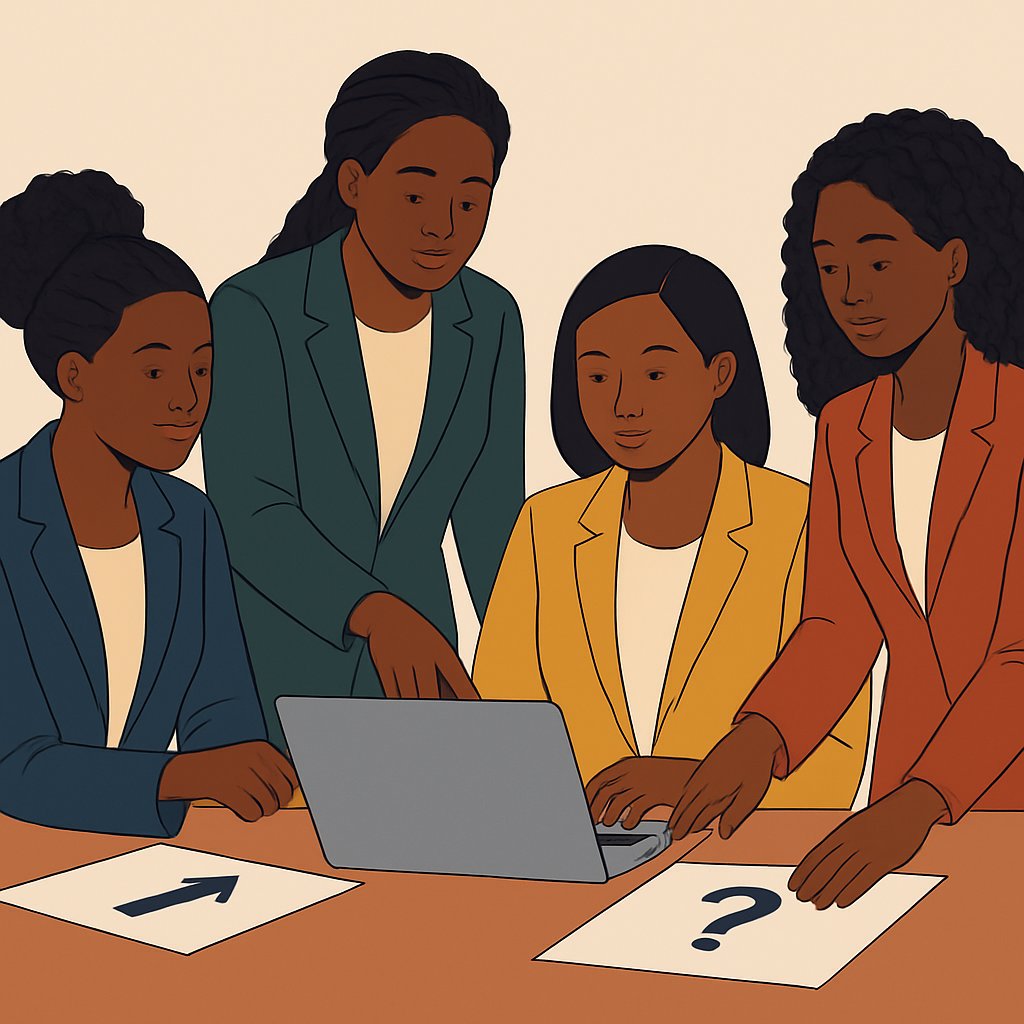
In Nigeria, initiatives and programs promote women in mathematics.
These initiatives advance participation and success in the field.
They provide organized support across mentoring, networking, and training.
Mentorship Programs
Mentorship programs play a vital role in supporting women in applied mathematics.
They pair experienced professionals with aspiring mathematicians.
Transform Your Career with Expert Guidance
Get personalized mentorship consulting that’s tailored to your unique path. Our expert advice is actionable and exclusive.
Get StartedMentors give guidance, professional support, and career advice.
Networking Opportunities
Networking events and platforms create spaces for women to connect.
They allow participants to share ideas and collaborate.
Such contacts help build professional relationships and open opportunities.
Capacity-Building Programs
Capacity-building programs aim to enhance skills and knowledge.
They offer training, workshops, and resources for participants.
These efforts help women advance their careers in applied mathematics.
Collectively, the initiatives support women across stages.
They promote mentorship, networking, and skill development for career growth.
Programs like these contribute to advancing women in the field.
You Might Also Like: Community-Based Ecological Projects in Nigeria
Supporting and Celebrating Women in Applied Mathematics in Nigeria
Women in Nigeria advance applied mathematics through meaningful contributions.
Their work supports national growth and development.
We must continue empowering and celebrating women to inspire future generations.
For example, highlighting achievements can break down professional barriers.
Furthermore, promoting gender equality in STEM remains crucial.
Together, society can create more equitable opportunities for all individuals.
Finally, continued support will uplift women and strengthen the mathematical community.
Let us sustain these efforts for a brighter future for everyone.
Additional Resources
Google search results for Women in Applied Mathematics in Nigeria Sciences
Bing search results for Women in Applied Mathematics in Nigeria Sciences


