



Geophysics in Nigeria
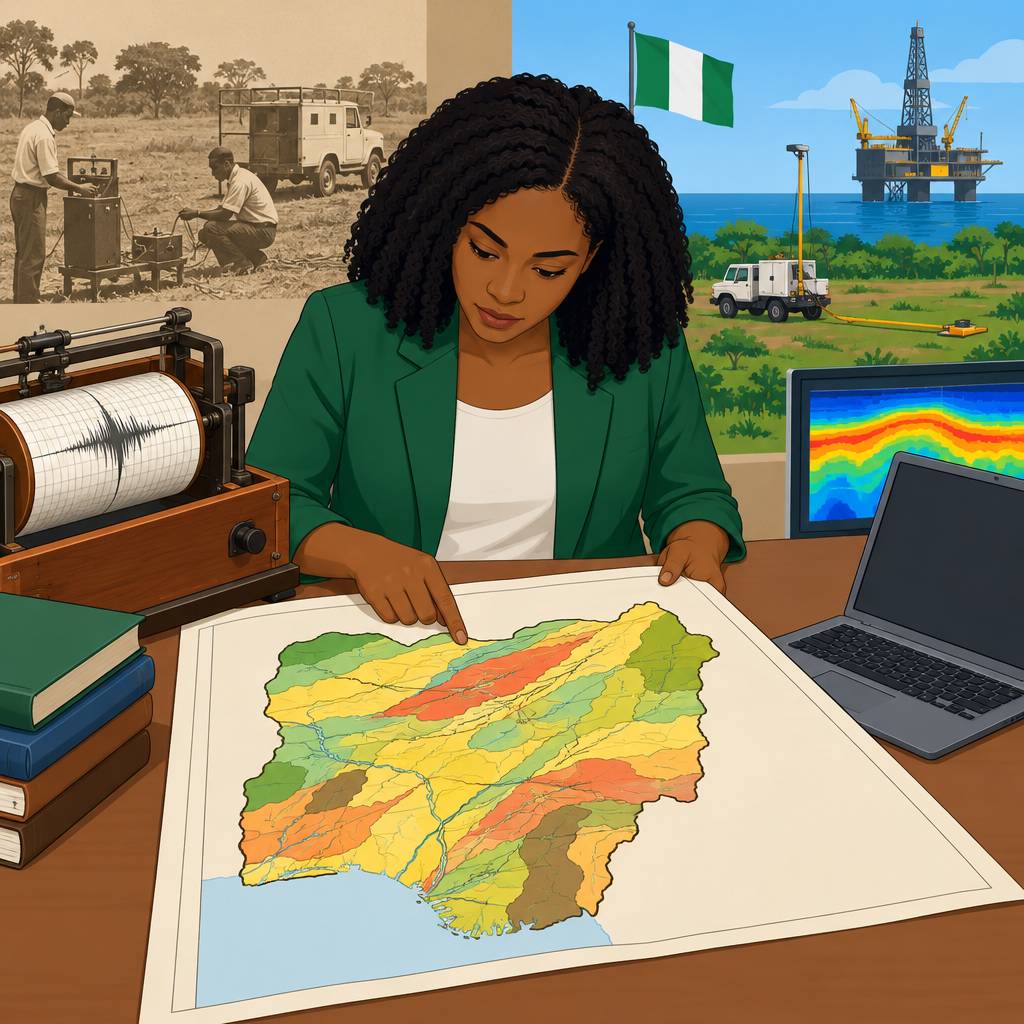
Geophysics helps Nigeria understand the Earth’s structure and resources.
This field studies the Earth’s physical properties through various methods.
In Nigeria, geophysics identifies natural resources and examines seismic activities.
Traditional Geophysical Exploration in Pre-Colonial Nigeria
During the Pre-Colonial Era, Nigerian communities primarily used traditional methods for geophysical exploration.
Indigenous communities relied on divination, dowsing, and geomancy to locate resources.
They interpreted natural signs, including animal movements and landscape patterns.
- Geophysics supported early geological studies by revealing information about the Earth’s subsurface.
- Researchers used magnetic surveys, gravity measurements, and seismic studies to map geological structures.
- These studies helped identify mineral deposits, groundwater resources, and geologic hazards.
- Magnetic surveys revealed iron ore deposits in pre-colonial Nigeria.
- The discovery supported the development of regional ironworking technologies.
These practices established an early foundation for geophysics in Nigeria.
Traditional knowledge also demonstrated the value of careful environmental observation.
Furthermore, early exploration connected local knowledge with developing scientific investigation.
Colonial Foundations of Geophysics in Nigeria
- Modern geophysical techniques entered Nigeria through European colonial powers.
- The Geological Survey of Nigeria became an important institution.
- The survey supported geophysical research and collected valuable geological data.
- Magnetic and seismic studies advanced during this period.
European colonial powers introduced modern geophysical techniques to Nigeria.
These methods transformed regional geophysical practice and encouraged later advancements.
The establishment of the Geological Survey of Nigeria marked a pivotal development in national geophysics.
Through geological and geophysical surveys, the institution examined different Nigerian regions.
It produced data that supported research and exploration activities.
Meanwhile, the survey mapped geological structures across the country.
This information clarified underlying geology and mineral resources.
Consequently, researchers identified valuable deposits in different areas.
Magnetic surveys mapped variations in the Earth’s magnetic field.
Seismic studies identified subsurface structures and potential oil and gas reserves.
Together, these activities established foundations for future research and exploration.
Gain More Insights: Key Zoological Research Institutes in Nigeria
Post-Independence Growth of Geophysics
Nigeria expanded geophysics after gaining independence.
Increased funding and resources supported this growth.
Consequently, geophysics served oil and gas exploration, mining, and environmental studies.
Growth of Geophysics as a Discipline
Geophysics became increasingly important across several Nigerian sectors.
Its applications included oil and gas exploration, mining, and environmental studies.
Thus, post-independence resources strengthened geophysical activities in Nigeria.
Establishment of Academic Programs
Nigerian universities recognized the importance of geophysics.
They established academic programs in the field.
Therefore, aspiring geophysicists gained opportunities for formal education and specialized training.
Notable Nigerian Geophysicists
Several Nigerian geophysicists contributed nationally and internationally.
Professor Adeola Adeniran advanced seismic interpretation techniques in Nigeria.
Similarly, Dr. Fatimah Lasisi conducted groundbreaking research in exploration geophysics.
Find Out More: Biochemistry and Nigerian Healthcare Advancements
Oil and Gas Exploration Technologies
Geophysics supports oil and gas discovery and extraction in Nigeria.
Geophysicists study the Earth’s subsurface to identify potential reservoirs.
Commercial oil discoveries during the 1950s rapidly increased demand for geophysical exploration.
Consequently, the oil industry strongly influenced geophysics development in Nigeria.
Technological advances have transformed exploration practices across Nigeria’s oil and gas sector.
For example, three-dimensional seismic imaging produces detailed subsurface images.
Transform Your Career with Expert Guidance
Get personalized mentorship consulting that’s tailored to your unique path. Our expert advice is actionable and exclusive.
Get StartedThese images help geophysicists locate potential oil and gas reserves.
Additionally, electromagnetic surveys map underground structures and identify hydrocarbon traps.
Such technologies improve the efficiency and accuracy of oil exploration.
Furthermore, computational modeling and simulation help geophysicists analyze seismic data.
These methods also help predict reservoir behavior and improve drilling success rates.
Therefore, continued investment in technology advances exploration and production capabilities.
Gain More Insights: Internship Opportunities for Nigerian Chemistry Students
Challenges and Opportunities
Geophysics in Nigeria faces several challenges that limit its growth and effectiveness.
However, targeted investments and partnerships can create valuable opportunities for further development.
Current projects also demonstrate the field’s importance across exploration, environmental management, and hazard assessment.
Challenges Facing Geophysics in Nigeria
High equipment costs can restrict access to modern geophysical technology.
Furthermore, limited expertise and inadequate research funding can slow professional and scientific progress.
Poor infrastructure and limited training opportunities can also hinder survey operations and workforce development.
- High costs of geophysical equipment and technology.
- Lack of skilled professionals in the field.
- Inadequate funding for research and development.
- Poor infrastructure that hinders geophysical survey operations.
- Limited access to advanced training and education programs.
Opportunities for Further Development and Growth
International collaboration can transfer knowledge and strengthen professional capabilities in Nigeria.
Meanwhile, government support and local investment can expand research activities and develop national expertise.
Geophysics can also support mineral exploration and wider applications within industries such as oil and gas.
- Collaboration with international institutions for knowledge transfer.
- Government support for research initiatives and projects.
- Investment in developing local talent and expertise.
- Exploration and exploitation of untapped mineral resources.
- Integration of geophysics into other industries like oil and gas.
Current Geophysical Research Projects and Initiatives
Researchers currently apply geophysical methods to exploration, water management, and natural hazard assessment.
Additionally, these initiatives examine subsurface conditions across different regions of Nigeria.
The projects address energy resources, groundwater, earthquakes, minerals, and volcanic activity.
- Seismic surveys for oil and gas exploration in the Niger Delta region.
- Groundwater mapping and management projects in various states.
- Earthquake monitoring and risk assessment studies in urban areas.
- Magnetotelluric surveys for mineral exploration in northern Nigeria.
- Geophysical studies of volcanic activity in the Jos Plateau region.
Discover More: Role of Applied Biology in Nigeria's Agriculture
Geophysics and Nigeria’s Resource Development
Geophysics developed substantially in Nigeria from the 1950s onward.
Geophysical exploration supported discoveries of oil and mineral resources.
The field also revealed important information about Nigeria’s geology and natural resources.
Moreover, these insights helped specialists identify promising areas for exploration and extraction.
Consequently, geophysics supported Nigeria’s economic development.
Looking ahead, technological advances will strengthen geophysicists’ ability to investigate Nigeria’s mineral and energy reserves.
Continued investment can help Nigeria develop these resources more sustainably.
Ultimately, this progress may promote economic growth and improve prosperity for its people.
Additional Resources
Google search results for Historical Development of Geophysics in Nigeria Sciences
Bing search results for Historical Development of Geophysics in Nigeria Sciences


