



Applied biology is the application of biological principles to practical problems.
It is vital in fields like medicine, biotechnology, and environmental conservation.
Transitioning to its role in Nigeria’s agriculture is crucial for sustainable development.
Applied Biology in Nigeria
Applied biology uses biological knowledge to solve practical problems in Nigeria.
Furthermore, the discipline supports agriculture, medicine, and environmental conservation.
These applications improve human life by addressing important real-world challenges.
- Applied biology focuses on practical biological applications.
- The discipline supports agriculture and food production.
- It also contributes to healthcare and environmental protection.
Scope of Applied Biology
Applied biology uses biological knowledge to address specific issues.
It connects scientific principles with practical solutions across several fields.
For example, biotechnology, genetics, and ecosystem management form important areas.
- Biotechnology applies biological processes to practical needs.
- Genetics supports the understanding and improvement of biological traits.
- Ecosystem management promotes responsible environmental practices.
Applied Biology and Theoretical Biology
Theoretical biology develops and tests theories about biological processes.
It mainly seeks to explain fundamental biological phenomena.
In contrast, applied biology uses biological concepts to create practical solutions.
- Theoretical biology emphasizes theories and scientific models.
- It examines fundamental biological processes and phenomena.
- Applied biology emphasizes useful applications of biological knowledge.
Importance for Agriculture, Health, and Conservation
Applied biology supports sustainable agriculture and strengthens food security.
Additionally, it advances healthcare through medical biotechnology and drug development.
It also protects biodiversity by encouraging sustainable environmental practices.
- Researchers develop high-yielding crop varieties.
- Farmers can use more efficient farming practices.
- Biological applications improve disease resistance in plants and animals.
- These improvements can reduce agricultural losses.
- Conservation practices help preserve biodiversity.
- Medical biotechnology supports drug development and modern healthcare.
Applied Biology in Nigerian Agriculture
Applied biology helps Nigerian farmers improve crop production.
It applies scientific knowledge to plant growth, pest control, and crop development.
These practices support sustainable production and help meet the needs of a growing population.
Applied Biology and Improved Crop Yield
Farmers use biological knowledge to improve plant growth and development.
Additionally, they apply fertilizers and nutrients according to plant requirements.
Crop breeding techniques can also increase agricultural productivity.
- Scientific knowledge enhances plant growth and development.
- Plant biology guides fertilizer and nutrient application.
- Biological pest control methods protect growing crops.
- Crop breeding techniques can increase productivity.
Biological Pest Control and Disease Management
Biological principles help farmers manage pests and crop diseases.
Natural enemies can reduce pest populations without relying solely on other control methods.
Furthermore, sustainable farming practices can minimize disease incidence.
- Natural enemies help control pest populations.
- Predators and parasitoids serve as biological control agents.
- Resistant crop varieties can help manage diseases.
- Sustainable farming practices can reduce disease incidence.
Biotechnology and New Crop Varieties
Biotechnology supports the development of improved crop varieties.
Genetic engineering can introduce traits that improve disease resistance and stress tolerance.
Moreover, biotechnology can improve crop yield potential and nutritional content.
- Genetic engineering can create disease-resistant crops.
- Biotechnology can introduce biotic stress tolerance traits.
- Genetically modified crops can have improved yield potential.
- Biotechnological interventions can enhance crop nutrition.
Gain More Insights: Bioinformatics Scholarships for Nigerian Students
Impact on Sustainable Agriculture
- Applied biology practices promote sustainable farming methods.
- Moreover, biological control measures reduce agriculture’s dependence on chemical inputs.
- Additionally, these practices enhance soil fertility and biodiversity, providing long-term benefits for farmers.
Discover More: Top Universities Offering Applied Botany in Nigeria
Challenges in Implementing Applied Biology
Implementing applied biology practices in Nigeria still faces several limitations.
These limitations can reduce the practical use of biological methods in agriculture.
However, targeted support can help stakeholders address these barriers.
- Farmers and agricultural practitioners often lack information about biological methods and their benefits.
- Insufficient laboratories, research facilities, and extension services hinder implementation.
- Traditional farming methods can discourage stakeholders from adopting new technologies.
- Inconsistent policies and regulations create uncertainty for farmers and researchers.
- Limited research funding restricts innovation and the wider use of applied biology solutions.
Opportunities for Applied Biology in Nigeria
Nigeria also has several opportunities to expand applied biology.
These opportunities can support biological solutions for agriculture and related markets.
Furthermore, collaboration and training can improve adoption and development.
- Growing interest in sustainable agriculture increases demand for environmentally friendly biological solutions.
- Biotechnology and genetic engineering can produce improved biological tools for agriculture.
- Training programs can strengthen the abilities of farmers, researchers, and extension workers.
- Interest in organic and natural products creates opportunities for bio-based agricultural solutions.
- Partnerships can connect research institutions, government agencies, and private sectors.
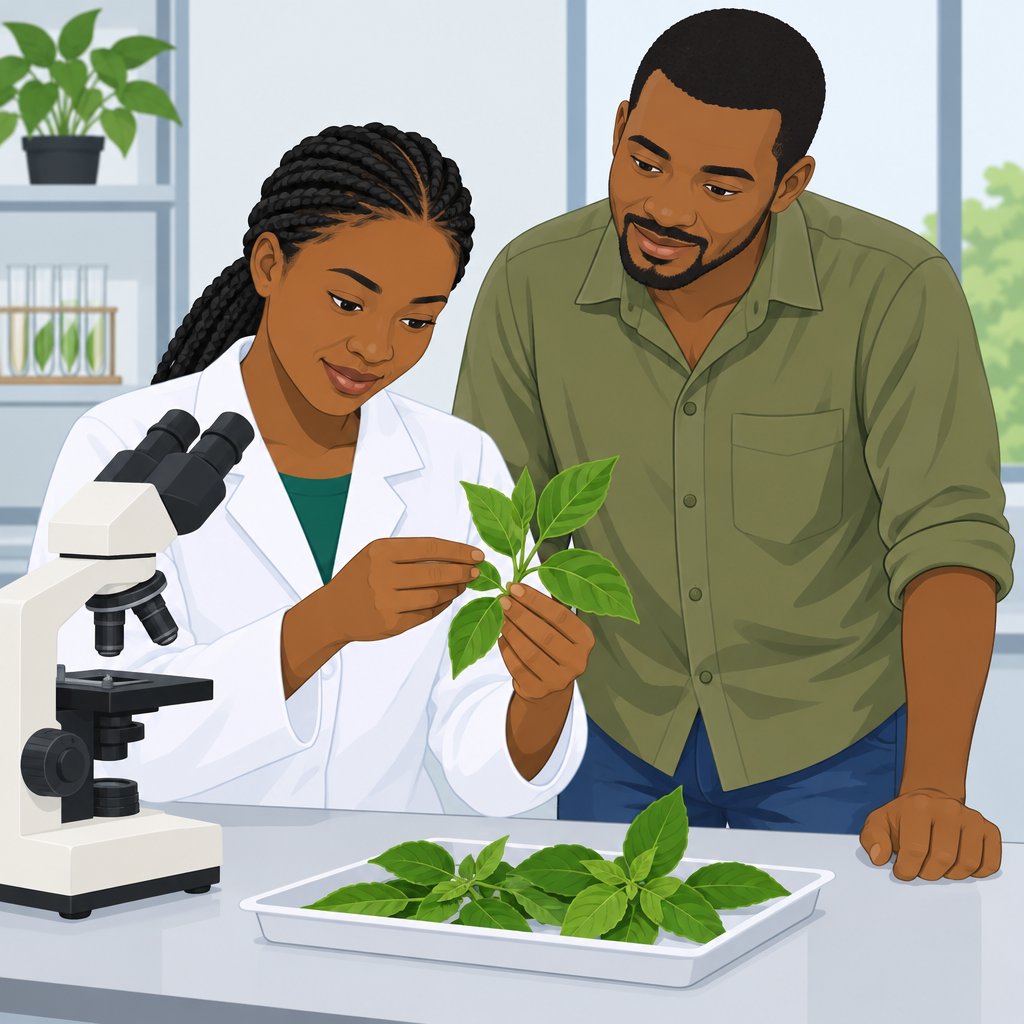
Research and Collaboration Priorities
Research and collaboration can help Nigeria address implementation challenges.
They can generate knowledge, transfer technology, guide policy, and develop skills.
Together, these activities can support context-specific innovation for agriculture.
- Research generates evidence about the effectiveness and benefits of biological agricultural solutions.
- International collaboration can transfer advanced technologies and practical knowledge to Nigerian stakeholders.
- Research findings can help policymakers develop supportive policies and regulations.
- Expert collaboration can strengthen the skills of researchers, farmers, and extension officers.
- Research partnerships can develop solutions suited to Nigeria’s agricultural challenges.
Explore Further: Internships for Agricultural Science Students in Nigeria
Government Support and Policies
- Current government initiatives support applied biology in agriculture.
- Policy frameworks promote sustainable farming practices.
- Funding opportunities advance research and innovation.
Government support strongly influences applied biology’s integration into Nigeria’s agriculture sector.
Transform Your Career with Expert Guidance
Get personalized mentorship consulting that’s tailored to your unique path. Our expert advice is actionable and exclusive.
Get StartedFurthermore, government policies create conditions that support innovative biological practices in farming.
These measures can help farmers improve productivity and strengthen agricultural sustainability.
They also encourage cooperation among farmers, researchers, institutions, and other agricultural stakeholders.
Current Government Initiatives
- The government has launched initiatives that promote applied biology in agriculture.
- Training programs help farmers understand biological practices.
- Workshops and capacity-building activities develop agricultural knowledge and skills.
- Support for research institutions and universities strengthens applied biology research.
Through these initiatives, the government increases awareness of applied biology’s agricultural value.
Farmers receive knowledge that supports modern biological practices.
These practices can improve crop yields, soil health, and pest management.
Consequently, training and research support contribute to agricultural development in Nigeria.
Policy Frameworks for Sustainable Farming
- Government policy frameworks promote sustainable farming practices in Nigeria.
- These policies encourage eco-friendly biological inputs.
- They also support organic farming methods and conservation agriculture.
- Sustainable policies protect the environment and conserve natural resources.
- They also support food security and resilient farming systems.
These frameworks align with applied biology’s focus on biological processes in farming.
Moreover, they encourage farmers to adopt practices that benefit the environment and their livelihoods.
Such practices can increase productivity while conserving essential natural resources.
They can also strengthen farming systems against climate change and other external pressures.
Funding and Grant Opportunities
- Funding and grants support applied biology research and innovation in agriculture.
- Government agencies provide financial support for biological agricultural projects.
- Research institutions and international organizations also support relevant projects.
- These resources help researchers develop biological techniques and innovative products.
Funding gives researchers resources for experiments, pilot projects, and field trials.
Researchers can then test biological solutions under agricultural conditions.
Successful research can support wider adoption of applied biology among agricultural practitioners.
Additionally, investment encourages innovation and continuous improvement throughout the agricultural value chain.
Implications for Agricultural Development
Government initiatives and policies create stronger conditions for applied biology in Nigerian agriculture.
They support biological practices that can improve productivity, sustainability, and farming resilience.
Continued collaboration among stakeholders can help applied biology transform Nigeria’s agriculture sector.
Learn More: Ecology and Environmental Policies in Nigeria
Future Priorities for Agricultural Innovation
Applied biology offers innovative solutions to challenges in Nigerian agriculture.
Therefore, government and stakeholders must continue investing in research and development.
Meanwhile, sustainable practices can strengthen food security and protect the environment for future generations.
Additional Resources
Google search results for Role of Applied Biology in Nigeria's Agriculture Sciences
Bing search results for Role of Applied Biology in Nigeria's Agriculture Sciences


