



Introduction
Animal biology plays a crucial role in Nigeria’s ecosystem.
Environmental biology supports biodiversity conservation across the country.
Together, these disciplines help preserve Nigeria’s rich natural resources.
Importance of Animal and Environmental Biology
These disciplines explain how organisms interact with their environment.
They also help identify threats to biodiversity.
Furthermore, they support the development of conservation strategies.
Contribution to Biodiversity Conservation
Animal biology examines the behavior of different species.
It also studies their physiology and ecology within habitats.
Environmental biology examines human impacts and suggests sustainable solutions.
Diverse Ecosystems and Species in Nigeria
Nigeria contains diverse ecosystems, including rainforests, savannas, and wetlands.
The country supports many plant, animal, and microorganism species.
Some of these species are endemic to the region.
Overview of Animal Biology
Animal biology examines animals, their behaviors, physiology, and evolution.
It helps scientists understand how animals interact with their environments and other species.
Furthermore, this field reveals adaptations and survival strategies across different animal species.
Branches of Animal Biology
Zoology examines animal classification and characteristics.
Meanwhile, ethology studies animal behavior in natural habitats.
Comparative anatomy analyzes anatomical structures across different animal species.
Research and Conservation Projects in Nigeria
The Nigerian Conservation Foundation researches endangered species, including the African elephant and pangolin.
Similarly, the Wildlife Conservation Society of Nigeria protects the Cross River gorilla and other rare species.
Additionally, Nigerian researchers study climate change impacts on animal populations across different ecosystems.
Environmental Biology and Its Importance
Environmental biology examines relationships between organisms and the places where they live.
It helps researchers understand how living systems depend on surrounding conditions.
Furthermore, this knowledge supports strategies that reduce environmental harm and encourage sustainable practices.
Definition and Role of Environmental Biology
Environmental biology includes ecology, conservation biology, and environmental impact assessment.
Researchers examine how organisms, including humans, interact with their surroundings.
Therefore, environmental studies can reveal harmful effects and guide practical responses.
Core Concepts in Environmental Biology
Ecosystem dynamics describe changes and interactions within living systems.
Energy and nutrients move through ecosystems, while organisms maintain relationships with one another.
Conservation biology protects biodiversity, prevents species extinction, and supports sustainable resource use.
Environmental impact assessments evaluate proposed activities and identify necessary mitigation measures.
Environmental Challenges Facing Nigeria
Nigeria faces environmental challenges including deforestation, pollution, and habitat loss.
People clear forests for agriculture, logging, and urban development, reducing habitats and contributing to climate change.
Industrial activity, poor waste management, and urbanization pollute air, water, and soil.
Consequently, pollution harms human health, wildlife, and ecosystems.
As habitats disappear or deteriorate, species lose homes and food sources.
Conservation efforts can protect endangered species and preserve Nigeria’s unique ecosystems.
See Related Content: Understanding Seismic Surveys in Nigeria
Overview of Nigeria’s Biodiversity
Nigeria is blessed with rich biodiversity across rainforests, savannas, and mangroves.
These ecosystems support diverse plants, animals, and ecological relationships.
Transform Your Career with Expert Guidance
Get personalized mentorship consulting that’s tailored to your unique path. Our expert advice is actionable and exclusive.
Get StartedTogether, they form an important natural heritage that requires careful protection.
Diverse Ecosystems
Nigeria’s rainforests support many plant and animal species within lush environments.
Meanwhile, savannas contain broad grasslands, acacia trees, elephants, and giraffes.
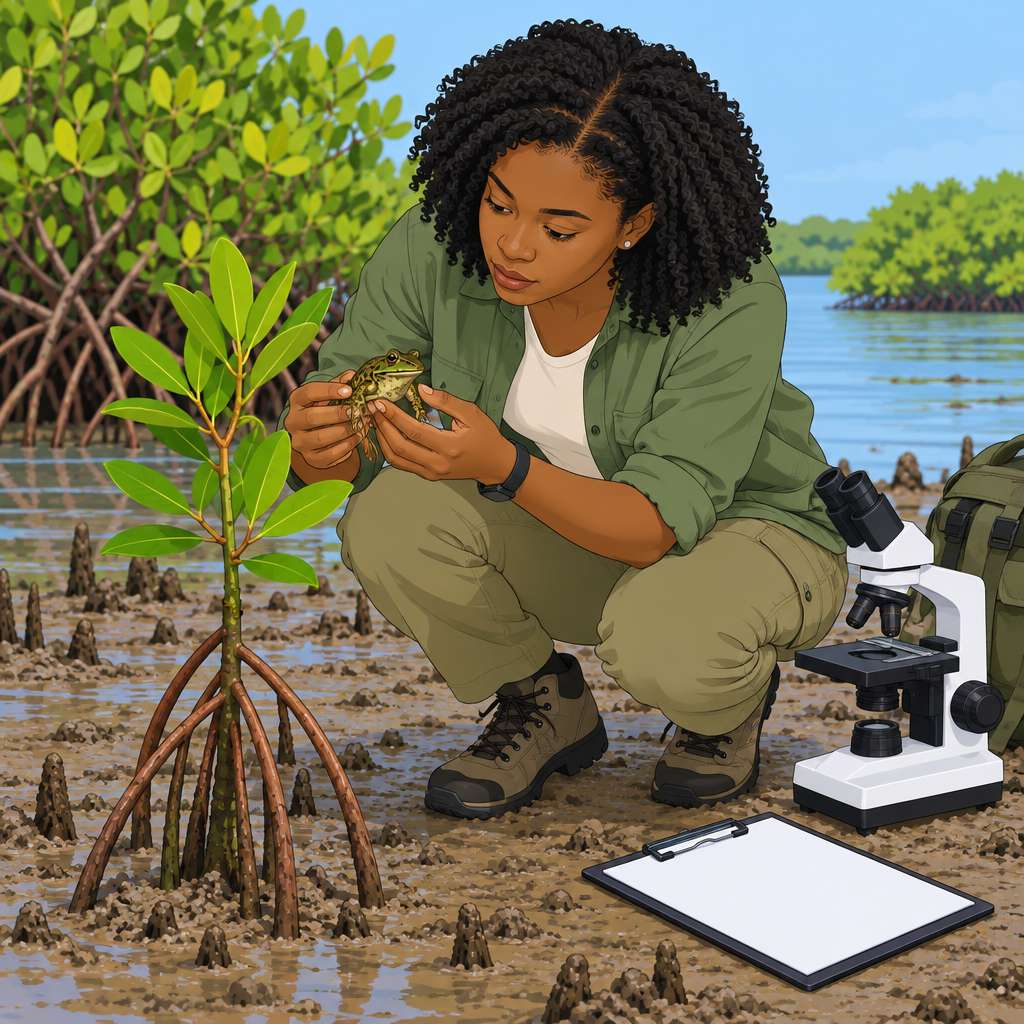
Along the coast, mangroves shelter numerous marine organisms and bird species.
Unique Species
The Nigerian lion, also known as the West African lion, is critically endangered and occurs only in Nigeria.
The drill monkey is a rare primate with striking facial features and a restricted Nigerian range.
The yellow baboon has distinctive golden fur and inhabits Nigeria’s forests and savannas.
Challenges to Biodiversity Conservation
Despite this richness, conservation efforts face serious pressures from human activities and climate change.
These pressures damage habitats, threaten species, and disrupt ecological processes.
Consequently, effective conservation requires attention to both environmental and human influences.
Human Activities
Deforestation, poaching, and illegal wildlife trade threaten Nigeria’s biodiversity.
Agricultural expansion and urbanization destroy habitats and separate wildlife populations.
Additionally, industrial pollution and waste disposal worsen environmental degradation.
Climate Change
Climate change raises temperatures and creates unpredictable weather patterns across ecosystems.
These changes disrupt ecosystems and shift species distributions.
Rising sea levels also threaten coastal mangroves and their distinctive biodiversity.
Biodiversity loss affects ecosystems and communities that depend on natural resources for their livelihoods.
Protecting Nigeria’s species and ecosystems can preserve this natural heritage for future generations.
Uncover the Details: Latest Research Publications in Applied Biology
Conservation Efforts
Conservation in Nigeria protects the country’s rich biodiversity.
Organizations and initiatives preserve endangered species and their habitats.
These efforts combine protection, research, community engagement, and sustainable development.
Conservation Organizations in Nigeria
- The Nigerian Conservation Foundation, established in 1980, focuses on biodiversity conservation and sustainable development.
- The Cross River State government manages Afi Mountain Wildlife Sanctuary, which protects species like the Cross River gorilla.
- The Wildlife Conservation Society supports Nigerian wildlife and habitats through research and community engagement.
Successful Conservation Projects
- Yankari Game Reserve helps protect African elephants, lions, and other wildlife species in the region.
- The Osun-Osogbo Sacred Grove conserves its unique ecosystem and cultural heritage as a UNESCO World Heritage Site.
- Gashaka-Gumti National Park benefits from conservation efforts that protect its diverse wildlife and biodiversity.
Importance of Community Involvement
Community involvement supports successful conservation efforts in Nigeria.
Local communities help protect wildlife and habitats through their insights and support.
Their participation strengthens conservation activities across affected areas.
Sustainable Practices in Conservation
Eco-friendly tourism supports long-term conservation success.
Responsible waste management and habitat restoration also protect natural areas.
By promoting sustainable practices, conservation efforts become more effective and impactful.
Protecting Nigerian wildlife and habitats requires collaboration, dedication, innovation, and shared responsibility.
Learn More: Top Geophysical Software Used in Nigeria
Overview of Academic Institutions
Nigeria has several universities and colleges offering programs in animal and environmental biology.
These institutions provide academic opportunities for students interested in animals, ecosystems, and environmental studies.
They represent federal, state, and private education providers across the country.
Federal Universities
- Federal University of Agriculture, Abeokuta
- University of Nigeria, Nsukka
- University of Ibadan
- Ahmadu Bello University, Zaria
State Universities
- Ekiti State University
- Lagos State University
- Rivers State University
- Nasarawa State University
Private Universities
- Covenant University, Ota
- Babcock University, Ilishan-Remo
- Redeemer’s University, Ede
- Bowen University, Iwo
Research Opportunities in Nigerian Wildlife and Ecosystems
Students and professionals can explore various research opportunities involving Nigerian wildlife and ecosystems.
These opportunities include field studies and laboratory investigations.
Researchers can examine species, habitats, genetic diversity, pollution, and conservation techniques.
Field Studies
Field studies allow researchers to observe indigenous species within their natural environments.
Researchers can gather information about biodiversity hotspots and threatened ecosystems.
They can also examine migration patterns, habitat use, and climate change effects.
- Conduct field surveys to study the behavior of indigenous species.
- Collect data on biodiversity hotspots and threatened ecosystems.
- Track wildlife migration patterns and habitat use.
- Monitor climate change effects on local flora and fauna.
Laboratory Research
Laboratory research supports detailed investigations of wildlife populations and environmental processes.
Scientists can analyze genetic material and examine pollution effects on aquatic ecosystems.
They can also study microorganisms and evaluate conservation techniques for endangered species.
- Analyze DNA samples to understand genetic diversity in wildlife populations.
- Study pollution effects on aquatic ecosystems.
- Investigate microorganisms’ roles in nutrient cycling.
- Test conservation techniques for endangered species.
Potential Career Paths in Animal and Environmental Biology
People with backgrounds in animal and environmental biology can pursue several career paths.
These careers connect scientific knowledge with wildlife protection, environmental management, and public education.
Career choices may involve research, conservation, consulting, or sustainable energy development.
Wildlife Biology
Wildlife biology focuses on animals, their behavior, and their habitats.
Professionals in this area may study anatomy, physiology, genetics, and natural environments.
Their work can support understanding of wildlife and ecological relationships.
- Wildlife Biologist: Studies animal behavior and habitats in natural environments.
- Conservation Scientist: Works to protect endangered species and ecosystems.
- Zoologist: Researches animal anatomy, physiology, and genetics.
Conservation
Conservation careers focus on protecting wildlife, habitats, and natural resources.
These roles may combine policy implementation, field protection, and public education.
Professionals can help communities understand and support conservation practices.
- Conservation Officer: Implements conservation policies and practices.
- Park Ranger: Protects wildlife and enforces park regulations.
- Environmental Educator: Teaches the public about conservation issues.
Environmental Consulting
Environmental consulting applies scientific knowledge to business practices and sustainability concerns.
Ecology and renewable energy also provide opportunities within this broader career area.
These professionals can advise organizations, study ecosystems, or develop sustainable energy solutions.
- Environmental Consultant: Advises businesses on environmental regulations and sustainability practices.
- Ecologist: Studies relationships between organisms and their environments.
- Renewable Energy Specialist: Develops sustainable energy solutions to reduce environmental impact.
Discover More: Geology and Environmental Management in Nigeria
Shared Responsibility for Nigeria’s Environmental Future
Animal and environmental biology play crucial roles in Nigeria’s ecosystem health.
By understanding organism interactions, we can better protect Nigeria’s natural resources.
Individuals should actively participate in conservation efforts and support research in these disciplines.
Through purposeful action, we can help preserve Nigeria’s rich biodiversity.
Continued education and awareness support environmental sustainability.
Therefore, everyone must help balance human activities with the natural world.
Let us work together to safeguard Nigeria’s unique flora and fauna.
Each person can advocate for environmental and wildlife protection.
Get involved today.
Additional Resources
Google search results for Introduction to Animal and Environmental Biology in Nigeria Sciences
Bing search results for Introduction to Animal and Environmental Biology in Nigeria Sciences


