




Overview of Radiology as a Career Field
Radiology combines imaging technology with medical diagnosis and treatment.
It supports modern medicine by helping healthcare professionals identify and treat diseases.
Therefore, the field connects advanced technology with essential patient care.
Women Advancing Radiology Careers in Nigeria
In Nigeria, more women are pursuing careers in radiology.
They find opportunities across a field that combines technology with patient care.
Additionally, technological advances have made radiology vital to modern healthcare.
Women are breaking barriers and contributing significantly to radiology.
Meanwhile, the profession increasingly recognizes the value of diversity and inclusion.
As a result, women continue embracing radiology’s challenges and opportunities.
Support and encouragement are also increasing.
Consequently, radiology offers Nigerian women promising ways to make meaningful healthcare contributions.
Historical Development of Radiology in Nigeria
Radiology has a rich history in Nigeria dating back to the early 20th century.
During the colonial era, British expatriates and missionaries introduced radiology in Nigeria.
They established the first radiological services in missionary hospitals across the country.
Technological Growth and Historical Gender Barriers
Over time, radiology in Nigeria developed through more sophisticated imaging centers and advanced technologies.
Historically, women faced limited access to radiology training opportunities.
They also encountered promotion discrimination and gender bias in the workplace.
Nigerian Women’s Contributions to Radiology
Despite these challenges, Nigerian women have contributed significantly to radiology.
They have excelled in various subspecialties and held leadership positions in academic and clinical settings.
Recently, the profession has increasingly recognized the importance of gender equality.
Opportunities for Women’s Future Advancement
Initiatives now support and empower women in radiology.
The future of radiology in Nigeria offers increasing opportunities for women.
Women can pursue rewarding careers, break barriers, and contribute to healthcare advancement.
Educational Requirements for Radiology
- A related bachelors degree in biology, chemistry, or physics provides an appropriate foundation for radiology.
- Next, candidates must complete medical school and earn an MD or DO degree.
- After medical school, aspiring radiologists complete a radiology residency lasting approximately four years.
- Subspecialty fellowships offer further training in areas such as musculoskeletal imaging or neuroradiology.
- Candidates must pass the USMLE or COMLEX-USA to obtain a medical license.
- Continuing education helps radiologists maintain current knowledge of technology and imaging techniques.
- In Nigeria, women follow the same core educational requirements as men pursuing radiology careers.
- However, mentorship programs and scholarships may support women entering radiology.
- The Nigerian Medical Association may provide resources and networking opportunities for women in radiology.
- Ultimately, radiology requires dedication, hard work, and lifelong learning.
Uncover the Details: How to Become a Medical Biochemist in Nigeria
Career Opportunities for Women in Radiology
Radiology offers women several professional paths in Nigeria.
Each specialty presents distinct responsibilities, challenges, and rewards.
Women can pursue diagnostic, interventional, or radiation oncology careers.
Diagnostic Radiology
Diagnostic radiologists interpret medical images to identify and manage diseases.
They use X-rays, CT scans, magnetic resonance imaging, and ultrasound examinations.
Furthermore, their findings help healthcare professionals make timely treatment decisions.
- Women can specialize in diagnostic radiology and interpret various medical images.
- They can work with multiple imaging techniques across different clinical settings.
- Diagnostic radiologists support patient care through accurate interpretations.
Interventional Radiology
Interventional radiologists use imaging guidance to perform minimally invasive procedures.
They treat conditions involving blood vessel blockages, cancer, and uterine fibroids.
Additionally, this specialty combines diagnostic knowledge with therapeutic skills.
- Women can use image-guided techniques to treat several medical conditions.
- Interventional radiologists manage blockages in blood vessels and other conditions.
- This specialty offers challenging and rewarding professional responsibilities.
Radiation Oncology
Radiation oncologists use radiation therapy to treat patients with cancer.
They develop personalized treatment plans with other healthcare professionals.
Moreover, their work supports coordinated care and improved patient outcomes.
- Women can build careers delivering radiation therapy to cancer patients.
- Radiation oncologists collaborate with multidisciplinary healthcare teams.
- This specialty allows women to contribute meaningfully to cancer care.
Workplaces and Professional Opportunities
Demand for radiology professionals in Nigeria continues to create job opportunities.
Healthcare facilities need skilled radiologists as they expand and modernize.
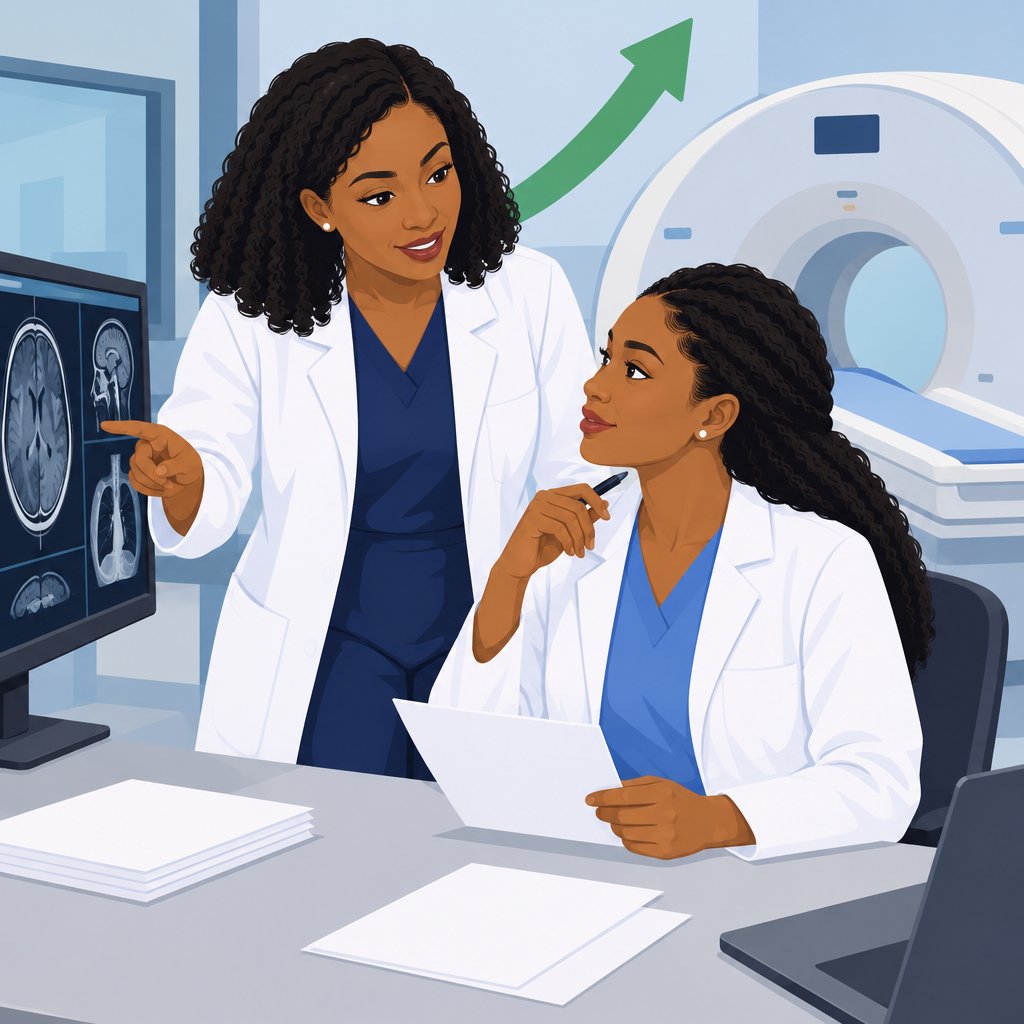
Women can seek roles in hospitals, diagnostic imaging centers, research institutions, and academic settings.
They can also explore private practice, consulting, and healthcare administration.
Transform Your Career with Expert Guidance
Get personalized mentorship consulting that’s tailored to your unique path. Our expert advice is actionable and exclusive.
Get StartedWith suitable training and dedication, women can develop fulfilling radiology careers in Nigeria.
Delve into the Subject: Radiography Professional Associations in Nigeria
Challenges Women Face in Radiology
Women pursuing radiology in Nigeria may encounter professional, educational, social, and cultural obstacles.
Gender expectations can complicate career planning when women balance professional duties with family responsibilities.
Additionally, limited mentorship and training access may restrict their development and advancement.
- Gender bias and stereotypes can affect women’s experiences within the healthcare industry.
- Balancing professional responsibilities with family duties can create significant challenges.
- Limited access to training and educational opportunities may hinder career progression.
- A lack of mentorship and professional support can limit women’s advancement.
- Cultural barriers may discourage women from pursuing careers in radiology.
Opportunities for Women’s Growth in Radiology
Healthcare institutions can expand opportunities by promoting gender equality and supporting women’s professional goals.
Flexible work arrangements can help women manage professional responsibilities alongside family commitments.
Furthermore, targeted financial and career support can encourage more women to enter and advance within radiology.
- Increasing awareness and advocacy can strengthen gender equality in healthcare.
- Flexible work arrangements can support healthier work-life balance.
- Mentorship programs can guide women’s professional development.
- Scholarships and grants can encourage more women to pursue radiology.
- Diversity and inclusion initiatives can promote fairness within healthcare organizations.
Supportive Conditions for Women’s Advancement
Women can thrive in radiology when institutions address workplace barriers and provide meaningful support.
Healthcare organizations should prioritize gender equality and make relevant resources accessible to women.
With appropriate support and opportunities, women can make significant contributions to radiology in Nigeria.
Delve into the Subject: Radiography Career Growth: Tips for Nigerian Professionals
Support Systems for Women in Radiology
- Mentorship and networking help women navigate radiology and advance their careers.
- Relationships with experienced professionals provide guidance, support, and growth opportunities.
- Mentors share experience, help women avoid pitfalls, and encourage leadership development.
- Networking connects women with peers, knowledge, and career-enhancing resources.
Importance of Mentorship for Women in Radiology
- Mentorship creates a supportive setting where women ask questions and gain professional insights.
- Additionally, mentors guide career development, skill-building, and responses to challenges affecting women.
- Mentors also help women set goals, prioritize responsibilities, and make strategic career decisions.
- Furthermore, mentorship builds community, empowerment, and camaraderie among women in radiology.
Importance of Networking for Women in Radiology
- Networking expands professional connections, strengthens relationships, and supports collaboration across radiology.
- Through networking, women exchange ideas, share practices, and follow industry developments.
- Strong professional networks provide access to jobs, conferences, and development events.
- Moreover, networking increases visibility, credibility, recognition, and access to leadership opportunities.
Organizations and Initiatives Supporting Women in Radiology
- The Association of Women in Radiology, or AWIR, advances women’s careers in radiology.
- The American Association for Women Radiologists, or AAWR, offers mentorship, networking, and educational resources.
- The Radiology Business Management Association, or RBMA, supports leadership and management development.
- Women in Radiology, or WIR, promotes diversity, equity, and inclusion within radiology.
These organizations provide guidance, opportunities, and community for women building careers in radiology.
Consequently, mentorship and networking help women develop professionally while strengthening support within the field.
Discover More: Nutrition Education Programs in Nigerian Schools
Success Stories of Women in Radiology
- Dr. Jumoke Ogunwale is a renowned radiologist who has paved the way for many women in Nigeria.
- Her dedication and passion have supported groundbreaking advancements in radiology.
- Her research on early breast cancer detection has saved countless lives in Nigeria.
- She has received numerous local and international awards for her contributions to radiology.
- Dr. Ogunwale mentors young women who aspire to enter radiology.
- Her story inspires women who want to make a difference in healthcare.
Dr. Ifeoma Nwachukwu and Pediatric Radiology
- Dr. Ifeoma Nwachukwu is a trailblazer in pediatric radiology in Nigeria.
- Although she faced early career challenges, Dr. Nwachukwu persevered and excelled.
- Her imaging expertise has transformed the diagnosis of childhood diseases.
- She has helped train Nigeria’s next generation of pediatric radiologists.
- Her innovative research has improved radiological services for children.
- Dr. Nwachukwu’s success highlights the importance of women in Nigerian radiology.
These stories can inspire more women to pursue radiology in Nigeria.
Both professionals demonstrate how determination, hard work, and passion can strengthen radiology and healthcare.
Their achievements motivate aspiring female radiologists to pursue excellence and challenge barriers in a traditionally male-dominated profession.
Dr. Ogunwale and Dr. Nwachukwu show how women can influence radiology and inspire future generations.
Women’s Contributions to Radiology in Nigeria
Women play a vital role in radiology in Nigeria.
Their presence brings diversity and different perspectives to the field.
Moreover, encouraging more women to pursue radiology can support the profession’s growth in the country.
A diverse workforce can better address the unique healthcare needs of the Nigerian population.
Women can also serve as role models for aspiring radiologists.
Additionally, they can help bridge the field’s gender gap.
Those interested in radiology can access various resources in Nigeria.
For example, they can seek mentorship from experienced radiologists.
They can also join professional associations and participate in workshops.
Furthermore, conferences can help them enhance their knowledge and skills.
The future of radiology in Nigeria depends on women’s active participation.
Therefore, stakeholders should recognize and support women in radiology.
This support can strengthen the delivery of high-quality healthcare services to the Nigerian population.
Gender diversity can help create a more inclusive and innovative healthcare system.
The profession should continue empowering women and promoting diversity in radiology.
Additional Resources
Google search results for Radiology Career Opportunities for Women in Nigeria Health Sciences
Bing search results for Radiology Career Opportunities for Women in Nigeria Health Sciences


