



Physiotherapy plays a crucial role in sports by helping athletes prevent injuries and enhance performance.
For Nigerian athletes, physiotherapy provides essential support during rigorous training and intense competitions.
By incorporating physiotherapy into their routines, athletes can improve flexibility, strength, and overall physical well-being.
This specialized care can help athletes recover from injuries faster and reduce future setbacks.
Physiotherapy and Nigerian Sports Performance
Physiotherapy supports Nigerian athletes by refining movement, conditioning, and recovery.
These services help athletes prepare for demanding training and competition.
Moreover, individualized care connects physical health with consistent sporting performance.
- Improved flexibility
- Greater strength
- Enhanced endurance
- Injury prevention
Improving Physical Capacities
Targeted exercises increase flexibility and expand each athlete’s range of motion.
Strength training develops muscular control, while endurance work supports sustained effort.
Consequently, athletes can meet the physical demands of track, football, and basketball.
Preventing Common Sports Injuries
Physiotherapists identify vulnerable areas before minor problems disrupt training.
They address movement patterns and biomechanical issues linked with strains, sprains, and stress fractures.
Additionally, recovery strategies help athletes manage demanding schedules and uneven training surfaces.
Individualized Support for Athletes
Physiotherapists assess each athlete’s strengths and weaknesses before designing care plans.
They monitor progress and adjust treatment throughout the sporting season.
For Nigerian athletes, this guidance can support performance despite limited access to advanced facilities.
Regular physiotherapy can help athletes remain healthy while pursuing demanding sporting goals.
It also supports faster recovery when injuries occur and helps maintain training continuity.
Therefore, physiotherapy remains an important part of Nigerian athletes’ preparation for international competition.
Common Injuries Among Nigerian Athletes
- Nigerian athletes commonly experience sprains, strains, fractures, and dislocations.
- These injuries affect athletes in football, basketball, track and field, and boxing.
- Early intervention and physiotherapy rehabilitation support prompt recovery and help prevent long-term complications.
Early Intervention and Rehabilitation
- Early physiotherapy helps athletes regain strength, flexibility, and mobility after injury.
- Physiotherapists design personalized treatment plans that address specific injuries and support athletic performance.
- Prompt treatment can prevent secondary injuries, reduce pain, and accelerate the healing process.
Physiotherapy Treatments for Common Sports Injuries
- For ankle sprains, therapists use manual therapy, taping, and strengthening exercises during rehabilitation.
- These ankle rehabilitation techniques have produced excellent recovery results among athletes.
- For knee injuries, therapists combine ultrasound, electrical stimulation, and proprioceptive training.
- Shoulder injury treatment includes strengthening exercises, range of motion drills, and postural correction.
- For back pain and muscle strains, therapists use spinal manipulation and core stabilization exercises.
- Ergonomic education also helps track and field athletes reduce their risk of future injury.
- Additionally, physiotherapists teach proper biomechanics and injury prevention strategies.
You Might Also Like: Common Gynaecological Issues in Nigerian Women
Tailored Physiotherapy Programs for Nigerian Athletes
Customized physiotherapy programs meet Nigerian athletes’ distinct needs across multiple sports.
These programs address physical demands, training goals, and recovery requirements.
They also help athletes manage injuries while pursuing consistent development.
Significance of Customized Physiotherapy Programs
- Tailored programs address sport-specific injuries, including football joint strains and tennis shoulder injuries.
- Additionally, targeted exercises correct weaknesses and imbalances that may limit performance.
- Consequently, structured rehabilitation helps athletes return to training and competition sooner.
Collaboration Between Physiotherapists and Coaches
- Physiotherapists and coaches coordinate rehabilitation with each athlete’s schedule and goals.
- They review progress and adjust programs according to recovery responses and coach feedback.
- Regular communication keeps athlete development and well-being at the center.
Effectiveness of Individualized Physiotherapy Sessions
- Individual sessions let physiotherapists focus closely on each athlete’s needs.
- Moreover, targeted interventions support recovery and address performance requirements.
- Trust between athletes and physiotherapists can encourage treatment compliance and stronger outcomes.
Tailored programs support Nigerian athletes across diverse sports disciplines.
Physiotherapists can help athletes pursue performance goals through coordinated rehabilitation and individualized care.
These approaches also help athletes prevent and manage injuries effectively.
See Related Content: Professional Organizations for Anatomical Pathologists Nigeria
Importance of Pre-competition Physiotherapy
Pre-competition physiotherapy prepares Nigerian athletes for upcoming events.
These sessions address underlying physical issues before competition.
They also improve athletes’ overall physical performance.
- Pre-competition physiotherapy addresses muscle imbalances, improves flexibility, and reduces injury risks.
- It promotes blood flow, reduces muscle soreness, and supports faster recovery after intense training.
- Physiotherapists identify potential concerns early, helping athletes prevent injuries during competition.
Successful Pre-competition Physiotherapy Strategies
Several strategies help Nigerian athletes reach strong physical condition before competitions.
Physiotherapists select strategies according to each athlete’s needs and goals.
These approaches improve preparation, movement quality, and injury prevention.
- Physiotherapists create customized exercise plans that develop strength, flexibility, and endurance.
- Manual therapy, massage, joint mobilization, and stretching release tension and improve range of motion.
- Injury prevention programs target weak areas and address biomechanical issues before competition.
- Functional movement screenings assess movement patterns, strength, and stability for targeted interventions.
These strategies help Nigerian athletes maintain physical readiness during competitions.
They also support athletes as they pursue their competition goals.
Explore Further: How to Choose a Veterinary School in Nigeria
Post-injury Rehabilitation for Nigerian Athletes
- Physiotherapy supports athletes throughout the rehabilitation process after sports injuries.
- Specialized rehabilitation exercises support gradual recovery and help prevent re-injury.
- Nigerian athletes have achieved successful recoveries through dedicated physiotherapy support.
Importance of Physiotherapy in Post-injury Rehabilitation
After a sports injury, athletes need proper rehabilitation to regain strength, flexibility, and function.
Physiotherapy helps athletes restore mobility and reduce pain during recovery.
It also supports athletes’ overall physical well-being.
Through manual therapy, physiotherapists address physical limitations affecting movement.
Transform Your Career with Expert Guidance
Get personalized mentorship consulting that’s tailored to your unique path. Our expert advice is actionable and exclusive.
Get StartedThey prescribe exercises that gradually rebuild strength and function.
Furthermore, physiotherapists educate athletes about effective recovery practices.
Gradual Recovery and Prevention of Re-injury
Post-injury rehabilitation prioritizes gradual recovery to reduce the risk of re-injury.
Physiotherapists create personalized plans that guide athletes through progressive exercises.
These exercises strengthen muscles, increase range of motion, and improve proprioception.
By addressing weaknesses and biomechanical imbalances, athletes can support safer performance.
Success Stories of Nigerian Athletes
Several Nigerian athletes have overcome significant injuries with physiotherapy support.
For example, one track and field athlete suffered a hamstring strain during competition.
Consistent physiotherapy sessions and targeted exercises supported the athlete’s recovery.
The athlete returned to competition after completing dedicated rehabilitation.
Find Out More: Choosing a Gynaecologist in Nigeria: Tips
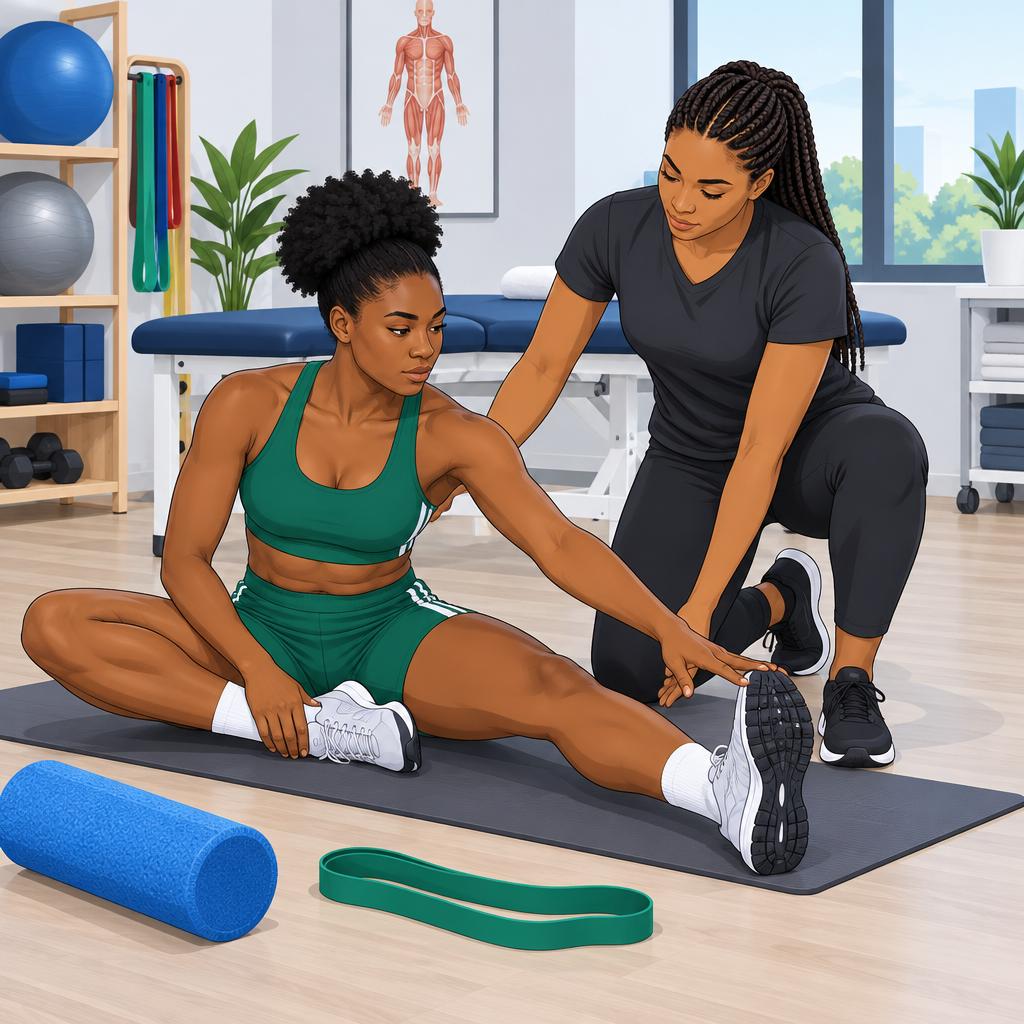
Challenges Faced by Physiotherapists in Nigeria
Sports physiotherapists in Nigeria encounter several barriers while supporting athletes and sports organizations.
These barriers can restrict service quality, professional development, and access to effective treatment resources.
Consequently, physiotherapists need stronger institutional support, improved communication, and better access to professional resources.
- Physiotherapists lack advanced training and education opportunities.
- Sports physiotherapy receives inadequate funding for equipment and facilities.
- Professionals have limited access to updated research and technology.
- Sports organizations provide insufficient recognition and support for physiotherapists.
- A limited number of trained professionals must meet high demand for services.
- Communication barriers affect interactions with athletes and other healthcare professionals.
Opportunities for Growth in Sports Physiotherapy in Nigeria
Despite these limitations, sports physiotherapy in Nigeria offers meaningful opportunities for expansion.
Growing awareness can encourage teams, organizations, and athletes to seek physiotherapy support.
Furthermore, collaboration and education can strengthen services while improving athlete care.
- Awareness of physiotherapy’s importance in sports performance continues to increase.
- Physiotherapists can collaborate with sports teams and organizations to provide comprehensive care.
- Education and training programs can expand for aspiring sports physiotherapists.
- Investment can provide state-of-the-art facilities and equipment for optimal treatment.
- Sports science disciplines can support a holistic approach to athlete care.
- International partnerships can encourage knowledge exchange and the sharing of best practices.
Recommendations for Enhancing Physiotherapy Services for Athletes in Nigeria
Targeted improvements can help Nigerian sports organizations strengthen physiotherapy services for athletes.
Standardized practices can improve consistency, while mentorship can support developing professionals.
Additionally, collaboration and digital access can help physiotherapists respond to athletes’ needs more effectively.
- Organizations should develop standardized protocols and guidelines for sports physiotherapy practices.
- Professional bodies should establish mentorship programs for young physiotherapists.
- Stakeholders should advocate for increased government support and sports healthcare funding.
- Institutions should provide regular training workshops and conferences for professional development.
- Physiotherapists should collaborate with coaches and sports medicine specialists.
- Providers should use telehealth and digital platforms to improve athlete access to services.
These actions can help physiotherapists deliver stronger support to Nigerian athletes.
Better resources, collaboration, and training can also strengthen sports physiotherapy services.
As the field develops, physiotherapists can contribute more effectively to Nigerian athletes’ success on the international stage.
Physiotherapy’s Role in Athlete Longevity
Physiotherapy supports Nigerian athletes’ performance and well-being.
It prevents injuries, guides rehabilitation, and improves athletic performance.
Therefore, athletes, coaches, and sports stakeholders can integrate physiotherapy into training and rehabilitation.
This approach supports stronger results during competition.
Furthermore, consistent physiotherapy can help athletes optimize potential and extend sporting longevity.
Additional Resources
Google search results for Physiotherapy for Nigerian Athletes: Best Practices Medical
Bing search results for Physiotherapy for Nigerian Athletes: Best Practices Medical


