




Telemedicine Training in Nigerian Medical Schools
Telemedicine uses communication technology to provide healthcare from a distance.
This approach improves access and efficiency.
In Nigeria, telemedicine remains in its early stages, with limited implementation and training.
Therefore, Nigerian medical schools increasingly need to train medical students in telemedicine.
Such training equips future healthcare professionals with skills to leverage technology for patient care.
The Significance of Telemedicine Training
Telemedicine training prepares medical students to use technology during healthcare delivery.
Moreover, it connects technical learning with remote consultations and virtual patient interactions.
These skills support communication, data management, and collaboration in healthcare environments.
Benefits of Incorporating Telemedicine into Medical School Curriculums
Medical schools can introduce telemedicine through technology-focused lessons and practical consultation opportunities.
Students can also practice communication and data management during virtual healthcare activities.
Consequently, training helps students understand telemedicine’s role in modern healthcare delivery.
- Telemedicine allows medical students to learn about the latest technology in healthcare.
- It provides opportunities for students to gain real-world experience in remote consultations.
- Students can develop skills in telecommunication, data management, and virtual patient interactions.
How Telemedicine Can Improve Healthcare Accessibility in Remote Areas
Telemedicine connects healthcare providers with patients who live far from traditional medical services.
Furthermore, remote consultations can help patients reach specialized care without extensive travel.
This approach can also support faster consultations and timely intervention during emergencies.
- Telemedicine bridges the gap between healthcare providers and patients in underserved regions.
- Patients in remote areas can access specialized medical care without traveling long distances.
- It reduces wait times for consultations and allows for timely intervention in emergencies.
Telemedicine’s Potential to Enhance Medical Education and Training
Telemedicine creates opportunities for interactive learning between students and faculty.
In addition, virtual activities can support discussions, collaboration, and professional mentorship.
Students can observe remote consultations and learn from experts across various medical fields.
- Telemedicine offers a platform for interactive learning and collaboration among students and faculty.
- It enables virtual grand rounds, case study discussions, and mentorship programs.
- Students can observe live teleconsultations and learn from experts in various medical fields.
Challenges in Implementing Telemedicine Training
Nigerian medical schools face several challenges when integrating telemedicine training into their educational programs.
These challenges affect curriculum planning, technological access, and professional acceptance.
Addressing these issues can help schools prepare students for digital healthcare practice.
- Medical schools may face obstacles when integrating telemedicine into their curriculum.
- Some Nigerian regions lack the technological resources required for telemedicine.
- Traditional medical practitioners may question or resist telemedicine practices.
Identifying Curriculum Barriers
Medical schools must first identify barriers affecting telemedicine curriculum integration.
This process requires a comprehensive assessment of the existing educational framework.
Schools can then identify curriculum areas requiring modification or updating.
Addressing Infrastructure Limitations
Infrastructure limitations create another significant challenge for telemedicine training in some Nigerian regions.
Effective training requires reliable internet connectivity and suitable technological resources.
Limited access to hardware, software, and related tools can hinder implementation.
Managing Resistance from Traditional Practices
Traditional medical practitioners may resist telemedicine for several reasons.
Some practitioners may consider telemedicine a threat to established medical practices.
Others may question the effectiveness and reliability of telemedicine technologies.
Strengthening Telemedicine Training Implementation
Medical schools must address these challenges when developing telemedicine training programs.
Investing in infrastructure can support access to essential training resources.
Promoting acceptance can help students develop skills for an increasingly digital healthcare environment.
Learn More: Medical Conferences and Workshops in Nigeria: 2025 Guide
Strategies for Incorporating Telemedicine Training
Medical schools can integrate telemedicine education through curriculum modules, electives, simulations, and expert instruction.
These approaches combine foundational learning with practical exposure to telemedicine tools.
Partnerships with industry can strengthen access to resources and technical support.
Curriculum Integration Methods
Curriculum modules can introduce students to telemedicine principles and healthcare applications.
Elective courses and workshops can expand learning about telemedicine technology.
Additionally, virtual simulations can help students develop practical telemedicine skills.
- Introduce telemedicine modules within existing medical education programs.
- Offer elective courses that examine telemedicine technology and healthcare roles.
- Conduct workshops focused on practical telemedicine applications.
- Use virtual simulations to strengthen students’ practical abilities.
Expert Contributions to Telemedicine Education
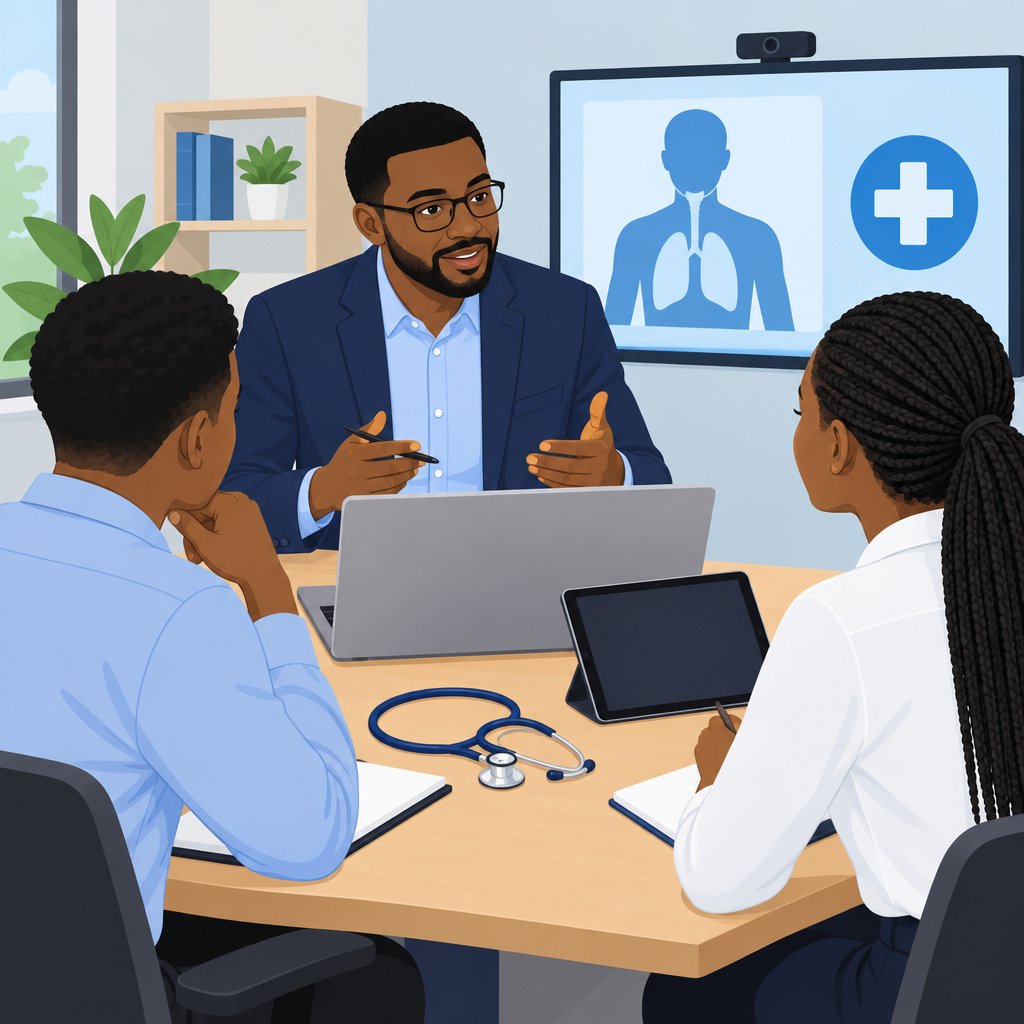
Telehealth experts can enrich classroom teaching with professional knowledge.
Transform Your Career with Expert Guidance
Get personalized mentorship consulting that’s tailored to your unique path. Our expert advice is actionable and exclusive.
Get StartedThey can also explain practical applications through real-world case studies.
Furthermore, expert involvement can connect academic learning with current telemedicine practice.
- Invite telehealth experts to deliver guest lectures.
- Use real-world case studies to clarify telemedicine applications.
- Encourage discussions about professional experiences in remote healthcare.
- Connect students with specialists who understand telemedicine delivery.
Partnerships with Technology Providers
Partnerships can provide medical schools with access to current telemedicine tools.
Industry collaboration can also support training programs aligned with existing standards.
Moreover, providers can guide schools during telemedicine implementation.
- Partner with telecommunication companies to access relevant resources.
- Collaborate with technology leaders to develop tailored training programs.
- Seek technical guidance for implementing telemedicine solutions effectively.
- Provide students with access to telemedicine platforms for practice.
Hands-On Telemedicine Experience
Practical training helps students build competence with telemedicine technologies.
It also improves communication during virtual consultations.
Realistic scenarios can clarify the challenges and benefits of remote healthcare delivery.
- Practice using telemedicine technologies during supervised learning activities.
- Develop communication skills for conducting virtual consultations.
- Explore realistic scenarios involving remote healthcare delivery.
- Build confidence for future telemedicine practice.
These strategies can prepare Nigerian medical students to use telemedicine effectively.
Hands-on learning can strengthen their readiness for future healthcare practice.
Consequently, medical schools can help students apply telemedicine in quality healthcare delivery.
Discover More: Dental Sealants: Key to Preventive Dentistry
Curriculum Development for Telemedicine Training
A telemedicine training program combines technical knowledge, clinical practice, and professional requirements.
These elements help learners use telemedicine platforms during remote healthcare delivery.
Practical activities connect equipment, software, and clinical scenarios.
Key Components of Telemedicine Training
The curriculum introduces technologies, communication systems, clinical services, and professional responsibilities.
It also combines practical exercises with case studies and simulations.
This structure gives learners experience with telemedicine equipment and software.
- The program introduces telemedicine technologies and platforms.
- It covers telecommunication and data management in telemedicine.
- Learners study remote patient monitoring and teleconsultation.
- The curriculum addresses legal and regulatory aspects of telemedicine practice.
- Hands-on sessions use telemedicine equipment and software.
- Case studies and simulations provide practical learning experiences.
Telemedicine Roles Across Medical Specialties
Different specialties use telemedicine for remote services, monitoring, consultation, and diagnostic support.
Each specialty applies telemedicine according to its clinical needs.
Specialty-focused examples help learners understand varied applications.
- Telepsychiatry provides mental health services remotely.
- Telecardiology supports remote monitoring and consultation for heart conditions.
- Teledermatology supports diagnosis and treatment of skin conditions through telemedicine.
- Teleoncology enables remote consultations and follow-ups for cancer patients.
- Telepathology uses digital imaging for pathology analysis from a distance.
Ethical Standards in Telemedicine Training
Telemedicine training must address ethical responsibilities alongside technical and clinical skills.
These responsibilities guide privacy, consent, professional conduct, and legal compliance.
Continuing education helps professionals remain updated on telemedicine practices and guidelines.
- Confidentiality protects patient data and privacy.
- Informed consent records patient agreement for telemedicine services.
- Professionalism maintains high ethical standards during remote care.
- Licensure and jurisdiction requirements apply across different locations.
- Continuing education supports updated telemedicine practices and guidelines.
See Related Content: Cataract Treatment: Nigerian Clinics Offering Advanced Care
The Role of Faculty and Resources
- Training faculty members remains essential for teaching telemedicine concepts effectively.
- Faculty members need ongoing support and resources to follow current telemedicine trends.
- International collaboration can strengthen telemedicine training quality through shared expertise and experience.
Faculty members play a critical role in implementing telemedicine training within Nigerian medical schools.
Medical schools must equip these educators with the skills and knowledge required to teach telemedicine effectively.
This preparation helps educators provide comprehensive instruction to future healthcare professionals.
Students need current technology and learning resources to practise telemedicine skills through practical experiences.
Faculty members also require continuous professional development to remain informed about telemedicine advancements.
Medical schools can support educators through updated materials, training opportunities, and sustained institutional assistance.
International collaboration offers Nigerian medical schools valuable opportunities to improve telemedicine education.
Partnerships with experienced institutions and experts can provide useful insights and effective educational practices.
These partnerships can also introduce research and technology that Nigerian institutions may not readily access.
Furthermore, collaboration can connect students and faculty members with global conferences, workshops, and telemedicine training programs.
Such opportunities can broaden professional exposure and encourage continued learning among participants.
Faculty preparation, reliable resources, and international cooperation can strengthen telemedicine training in Nigerian medical schools.
These priorities can help students develop the preparation required for modern healthcare practice.
Discover More: Professional Associations for Biomedical Technologists
Evaluation and Assessment of Telemedicine Training
Medical schools can evaluate telemedicine training through several complementary methods.
These methods measure knowledge, practical skills, and participant experiences.
Pre- and post-assessments can measure knowledge gained during the program.
Simulation exercises can gauge learners’ practical telemedicine skills.
Surveys can gather useful feedback from participants.
- Pre- and post-assessments measure knowledge gain.
- Simulation exercises gauge practical skills.
- Surveys gather participant feedback.
Furthermore, continuous assessment and stakeholder feedback support ongoing program improvement.
Regular quizzes can monitor learners’ understanding throughout the training.
Feedback sessions can identify challenges and guide improvements.
Industry experts can provide additional insights into training quality.
- Regular quizzes monitor understanding.
- Feedback sessions address challenges and improvements.
- Industry experts provide relevant insights.
Additionally, medical schools should include telemedicine training outcomes in accreditation standards.
This inclusion aligns educational programs with industry best practices.
It also demonstrates a commitment to quality education.
Moreover, strong outcomes can enhance a medical school’s reputation.
- Accreditation standards support industry alignment.
- Training outcomes demonstrate educational quality.
- Strong outcomes enhance institutional reputation.
This evaluation approach can shape effective telemedicine training programs in Nigerian medical schools.
It can also support continuous improvement in telemedicine education delivery.
Telemedicine Training’s Future Impact in Nigeria
Telemedicine training in Nigerian medical schools will prepare future healthcare professionals for technology-enabled patient care.
By integrating telemedicine into medical education, schools can help students develop practical digital healthcare skills.
Consequently, graduates can apply these skills during appropriate patient care activities.
This integration can improve access to healthcare services and reduce healthcare costs.
It can also support better patient outcomes through remote consultations, diagnosis, and monitoring.
These services can assist regions with limited medical resources.
Telemedicine can help bridge gaps between urban and rural healthcare delivery in Nigeria.
Furthermore, it can increase delivery efficiency and reduce pressure on healthcare facilities.
Nigerian medical schools can prepare professionals for the growing demand for digital healthcare services.
This preparation can support healthcare improvements across the population.
Additional Resources
Google search results for Telemedicine Training in Nigerian Medical Schools Medical
Bing search results for Telemedicine Training in Nigerian Medical Schools Medical


