



ICT Integration in Nigerian Medical Education
Medical education in Nigeria faces limited resources and outdated teaching methods.
ICT integration can improve learning outcomes and prepare students for digital healthcare environments.
Therefore, medical schools can use technology to strengthen teaching and student development.
Access and Collaboration in Medical Education
Students can access current medical resources and research materials online.
Additionally, ICT tools support discussions, idea sharing, and collaboration among students and instructors.
These connections can expand learning opportunities within medical education.
Technology-Enabled Learning and Assessment
Simulation software lets students practice medical procedures in controlled environments.
Moreover, adaptive ICT tools can support individual learning styles and customized educational experiences.
Online quizzes help instructors track progress and provide instant feedback.
Workplace Preparation and Global Connectivity
ICT integration equips students with skills required in modern healthcare settings.
Students can connect with healthcare professionals worldwide and exchange knowledge.
Consequently, medical schools can better prepare future healthcare professionals through technology.
Technology can also help Nigerian medical schools improve teaching methods.
Enhanced Learning Through Interactive Medical Education
Virtual simulations and interactive modules help Nigerian medical students understand complex concepts more effectively.
These tools provide hands-on practice in safe environments and prepare students for real-world scenarios.
Online resources also support detailed research and encourage students to pursue self-directed learning.
- Virtual simulations support practical understanding.
- Online resources expand research opportunities.
- Multimedia content improves engagement and information retention.
Students can examine medical advancements, review cases from around the world, and access peer-reviewed articles.
Consequently, learners broaden their knowledge while developing stronger independent research habits.
Videos, animations, and interactive presentations capture attention and make medical education more engaging.
Visual aids improve comprehension and support memory recall of complex medical information.
Therefore, ICT tools help students develop deeper understanding, conduct research, and retain essential medical knowledge.
Bridging the Gap
- Facilitating distance learning and remote access to resources for students in different locations
- Bringing expertise from around the world through online courses and webinars
- Ensuring uniformity in curriculum and training standards across different institutions
ICT integration in Nigerian medical education can bridge gaps between students and essential learning resources.
Therefore, distance learning and remote access can support students in different locations.
All students can access quality education regardless of their physical location.
This access matters in Nigeria, where rural students often lack resources available in urban centers.
Furthermore, online courses and webinars can connect Nigerian medical students with experts worldwide.
This exposure can introduce global perspectives and best practices into medical education.
Students can also interact with experts in their fields through these online learning opportunities.
Consequently, they can expand their knowledge and develop valuable professional networks.
ICT can also promote consistent curricula and training standards across different medical institutions.
Standardized online platforms can help institutions provide the same high-quality educational resources.
As a result, students in different regions can access comparable learning experiences.
This approach creates a more level playing field for medical students.
It also helps prepare graduates for evolving healthcare challenges in Nigeria and beyond.
Find Out More: Future Prospects of Anatomy Education in Nigeria
Improving Diagnostic Skills
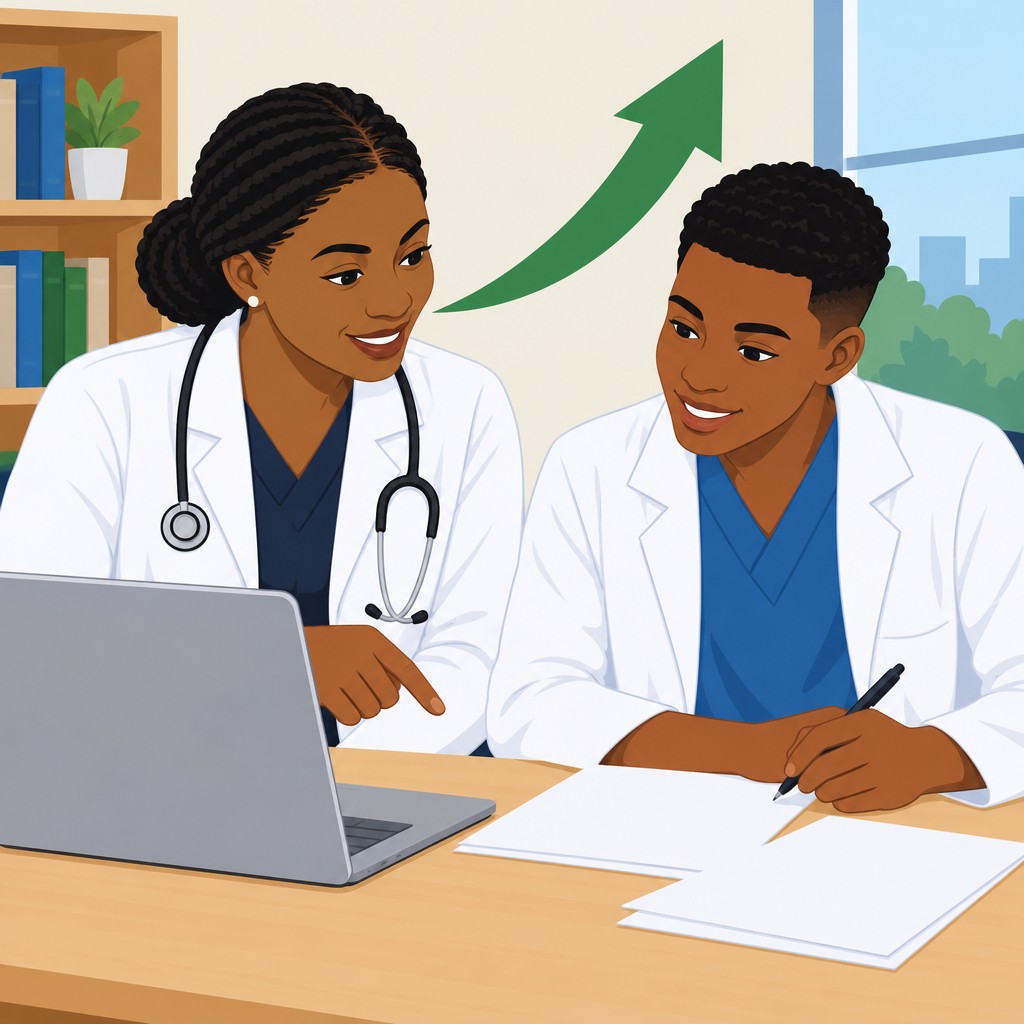
- Diagnostic software and virtual patient cases help students practice and strengthen their diagnostic skills.
- Simulations and case studies expose students to realistic medical scenarios and prepare them for future challenges.
- Interactive platforms help students develop critical thinking and decision-making skills for medical practice.
ICT has reshaped how Nigerian medical students develop essential healthcare skills.
Diagnostic training is one area that benefits from this educational shift.
Students can now practice clinical reasoning through structured digital experiences.
Previously, students relied on textbooks, lectures, and practical sessions with patients.
Those methods remain valuable, but digital tools now add controlled opportunities for practice.
Transform Your Career with Expert Guidance
Get personalized mentorship consulting that’s tailored to your unique path. Our expert advice is actionable and exclusive.
Get StartedDiagnostic software presents simulated patient cases for student analysis.
Students review symptoms, request tests, and reach provisional diagnoses.
This process lets them practice without exposing actual patients to unnecessary risk.
Virtual patient cases create a more responsive learning experience.
Students work through varied scenarios and receive feedback about their diagnostic approaches.
They can then identify mistakes and improve their understanding of clinical reasoning.
Simulations and case studies also connect classroom knowledge with realistic medical situations.
They can represent emergency care, surgical procedures, or complex medical conditions.
Students apply their knowledge while working within a realistic setting.
These exercises strengthen diagnosis, critical thinking, and decision-making.
Students assess situations, prioritize tasks, and choose informed responses under pressure.
Such preparation supports the demanding pace of healthcare practice.
Interactive platforms further support diagnostic learning through virtual classrooms and online discussion forums.
Students share ideas, examine difficult cases, and request feedback from peers and instructors.
These exchanges encourage collaboration and expose learners to different perspectives.
Students consider patient history, symptoms, test results, and ethical considerations during diagnosis.
This broader approach supports accurate diagnoses and appropriate treatment decisions.
Together, these ICT tools strengthen the diagnostic abilities of Nigerian medical students.
They also build problem-solving skills needed for quality patient care.
You Might Also Like: Advancements in Nigerian Restorative Dentistry
Collaborative Learning in Medical Education
Information and communication technology (ICT) tools can strengthen collaboration among medical students, teachers, and professionals.
Educators can use online forums, virtual group projects, and real-time communication channels to connect participants.
These tools support collaboration across learning activities and professional interactions.
- Facilitating collaboration between students, teachers, and professionals
- Creating online communities for sharing knowledge and experiences
- Fostering interdisciplinary approaches to problem-solving and research
Online communities allow students and professionals to share knowledge and experiences.
These communities support learning, networking, and mentorship among people from different backgrounds.
Consequently, participants gain new perspectives on medical issues through shared discussions.
Furthermore, ICT tools encourage interdisciplinary problem-solving and research.
Students can work with experts from various fields to address complex medical challenges.
This approach enriches learning and prepares students for modern healthcare practice.
Collaborative learning helps develop adaptable and innovative healthcare professionals.
Delve into the Subject: Career Opportunities in Dentistry in Nigeria
Increasing Efficiency
- Streamlining administrative processes through digital platforms
- Utilizing electronic health records for better patient management
- Reducing paperwork and manual processes for a more efficient learning environment
ICT integration brings numerous benefits to Nigerian medical education.
One major benefit involves improving efficiency across medical schools.
Digital platforms help institutions streamline administrative processes and manage tasks more effectively.
Consequently, schools can operate more smoothly while saving time and resources.
Streamlining Administrative Processes: Medical schools can automate student registrations, exam scheduling, and result processing.
Administrative staff can manage these activities efficiently through digital platforms.
As a result, institutions can reduce delays and improve administrative coordination.
Utilizing Electronic Health Records: ICT integration also supports electronic health records for improved patient management.
Electronic health records help healthcare providers access patient information more quickly.
Faster access can support improved diagnosis and treatment outcomes.
Students can also learn to manage patient records effectively.
This experience prepares them for responsibilities in modern healthcare practice.
Reducing Paperwork and Manual Processes: Digital workflows can reduce paperwork and manual activities within medical schools.
Therefore, students can spend less time completing administrative tasks.
Online resources and tools can also strengthen their understanding of medical concepts.
Additionally, digital platforms support easier communication between students and faculty members.
They also encourage collaboration and create a more interactive learning experience.
Technology therefore helps medical schools create more efficient learning environments.
These environments can prepare students for modern healthcare practices.
Delve into the Subject: The Future of Surgery in Nigeria: Trends and Innovations
Addressing Resource Constraints in Medical Education
ICT integration helps Nigerian medical education address limitations in physical learning resources.
Online platforms give students access to extensive information without depending on available textbooks or classroom materials.
Digital resources also help institutions reduce costs and expand access to essential educational materials.
- Online platforms overcome limited access to physical learning resources.
- Digital materials reduce costs associated with traditional textbooks and learning resources.
- Online databases provide access to current research and medical advancements.
Furthermore, students can access digital materials from various locations and study without physical resource constraints.
These resources often cost less than traditional textbooks, reducing financial pressure on students.
Consequently, more students can obtain the materials required for their education.
Medical knowledge continually develops through new research and advancements.
Online databases help students follow current information, practices, and developments within medicine.
This access strengthens their preparation and supports their future medical careers.
By using ICT, Nigerian medical institutions can improve resource access while controlling educational costs.
They can also help students develop knowledge that reflects current developments in medicine.
Future Opportunities for ICT in Nigerian Medical Education
Integrating ICT in Nigerian medical education offers improved information access, stronger learning outcomes, and more efficient healthcare delivery.
Furthermore, virtual simulation, telemedicine, and digital libraries create significant opportunities for technological growth.
Healthcare stakeholders should prioritize ICT integration to support a stronger future for healthcare in Nigeria.
Additional Resources
Google search results for Integrating ICT in Nigerian Medical Education: Benefits Medical
Bing search results for Integrating ICT in Nigerian Medical Education: Benefits Medical


