



Medical Rehabilitation Equipment in Nigeria
Medical rehabilitation equipment improves the quality of life for people with disabilities or injuries in Nigeria.
These devices help patients regain mobility and restore physical function.
Common examples include wheelchairs, walking aids, orthoses, and prostheses.
Additionally, these devices support recovery and help patients manage daily activities.
Common Rehabilitation Equipment in Nigeria
Medical rehabilitation centers in Nigeria use several equipment types during recovery programs.
These devices support movement, stability, strength, flexibility, and physical independence.
Providers select equipment according to each person’s rehabilitation needs.
Mobility Support Devices
Mobility aids help people who have difficulty walking or cannot walk independently.
Different designs provide varying levels of support during movement.
Healthcare providers can match each aid with the user’s mobility requirements.
- Wheelchairs support people with limited mobility or an inability to walk.
- Manual wheelchairs require arm movement, while electric wheelchairs use batteries.
- Walkers provide support and stability for people who struggle to walk independently.
- Rollators include wheels, while knee walkers assist people with lower leg injuries.
- Crutches transfer weight from the legs to the upper body during walking.
- Underarm and forearm crutches offer different support options for users.
- Canes provide balance and stability for people needing minimal walking support.
- Standard and quad canes offer different stability levels during movement.
Exercise Equipment for Rehabilitation
Exercise equipment supports strength, flexibility, balance, and overall mobility during rehabilitation.
Patients can use different tools to support their recovery exercises.
Healthcare providers can include suitable equipment within individual rehabilitation activities.
- Resistance bands help patients perform strengthening exercises.
- Balance boards support activities designed to improve balance.
- Stationary bikes provide equipment for rehabilitation exercise sessions.
Equipment Access and Rehabilitation Needs
Rehabilitation centers need access to varied equipment for different patient requirements.
Suitable tools can help patients develop mobility, independence, and confidence.
Quality equipment can support better rehabilitation outcomes for individuals in Nigeria.
Medical Rehabilitation Equipment and Recovery
Medical rehabilitation equipment supports patient mobility and independence.
These devices aid recovery and improve physical abilities after injury or illness.
Additionally, patients can use them to prevent further injuries or complications during recovery.
They help patients regain strength, flexibility, and functional independence in daily activities.
Furthermore, rehabilitation equipment supports well-being and quality of life during treatment.
Proper use can shorten recovery time, reduce pain, and improve patient outcomes.
Targeted exercises help patients rebuild strength, balance, coordination, and endurance.
These tools create a safe, controlled environment for practicing movements and regaining lost functions.
As patients progress, equipment can build confidence and motivation during recovery.
Therefore, medical rehabilitation equipment remains important for achieving optimal recovery and rehabilitation.
See Related Content: Top Biomedical Technology Research Centers Nigeria
Challenges of Accessing Medical Rehabilitation Equipment in Nigeria
People in Nigeria face several barriers when seeking medical rehabilitation equipment.
These barriers affect equipment availability and affordability.
Consequently, many individuals struggle to obtain tools that support their recovery.
Limited Availability in Healthcare Facilities
Many healthcare facilities across Nigeria lack essential medical rehabilitation equipment.
Hospitals and clinics may therefore struggle to provide comprehensive rehabilitation services.
As a result, patients may not receive the equipment required during recovery.
High Equipment Costs
High equipment costs create another significant barrier for people in need.
Specialized devices, including wheelchairs, crutches, and walkers, can remain unaffordable for many individuals.
Therefore, some patients cannot obtain equipment that supports their rehabilitation needs.
Limited Awareness of Rehabilitation Benefits
Many people in Nigeria have limited awareness of rehabilitation’s importance.
They may not fully understand how proper rehabilitation supports recovery.
Consequently, some individuals may not prioritize necessary equipment and rehabilitation services.
Improving Access to Rehabilitation Equipment
Addressing these challenges can improve access to medical rehabilitation equipment in Nigeria.
Transform Your Career with Expert Guidance
Get personalized mentorship consulting that’s tailored to your unique path. Our expert advice is actionable and exclusive.
Get StartedGreater awareness can encourage more people to seek appropriate rehabilitation support.
Additionally, reducing costs and increasing facility availability can help more individuals regain their quality of life.
Explore Further: Community-Based Health Programs in Nigeria
Government Initiatives and Support for Medical Rehabilitation Equipment
Government initiatives help people access medical rehabilitation equipment across Nigeria.
These efforts combine public programs, financial support, and partnerships with organizations.
Together, these measures can strengthen access to rehabilitation services for people who need equipment.
- Programs and policies aimed at improving access to equipment
- Subsidies or financial assistance for patients in need
- Collaboration with non-profit organizations and international partners
Programs and Policies Improving Equipment Access
The government has implemented programs and policies to improve access to medical rehabilitation equipment.
Through the National Health Insurance Scheme (NHIS), individuals may access equipment at reduced costs.
Additionally, government collaboration with healthcare providers and manufacturers supports equipment availability in different areas.
Subsidies and Financial Assistance for Patients
The government also assists individuals who cannot afford necessary medical rehabilitation equipment.
Government hospitals and specialized rehabilitation centers often provide this financial support.
Furthermore, partnerships with non-profit organizations help identify people who need assistance.
Collaboration with Non-Profit Organizations and International Partners
Non-profit organizations help identify individuals who need equipment.
They can also facilitate equipment donations or direct provision for affected individuals.
International partners provide technical support and training for healthcare professionals using advanced equipment.
This cooperation helps improve rehabilitation service quality across the country.
Delve into the Subject: Importance of Anatomical Pathology in Nigerian Medicine
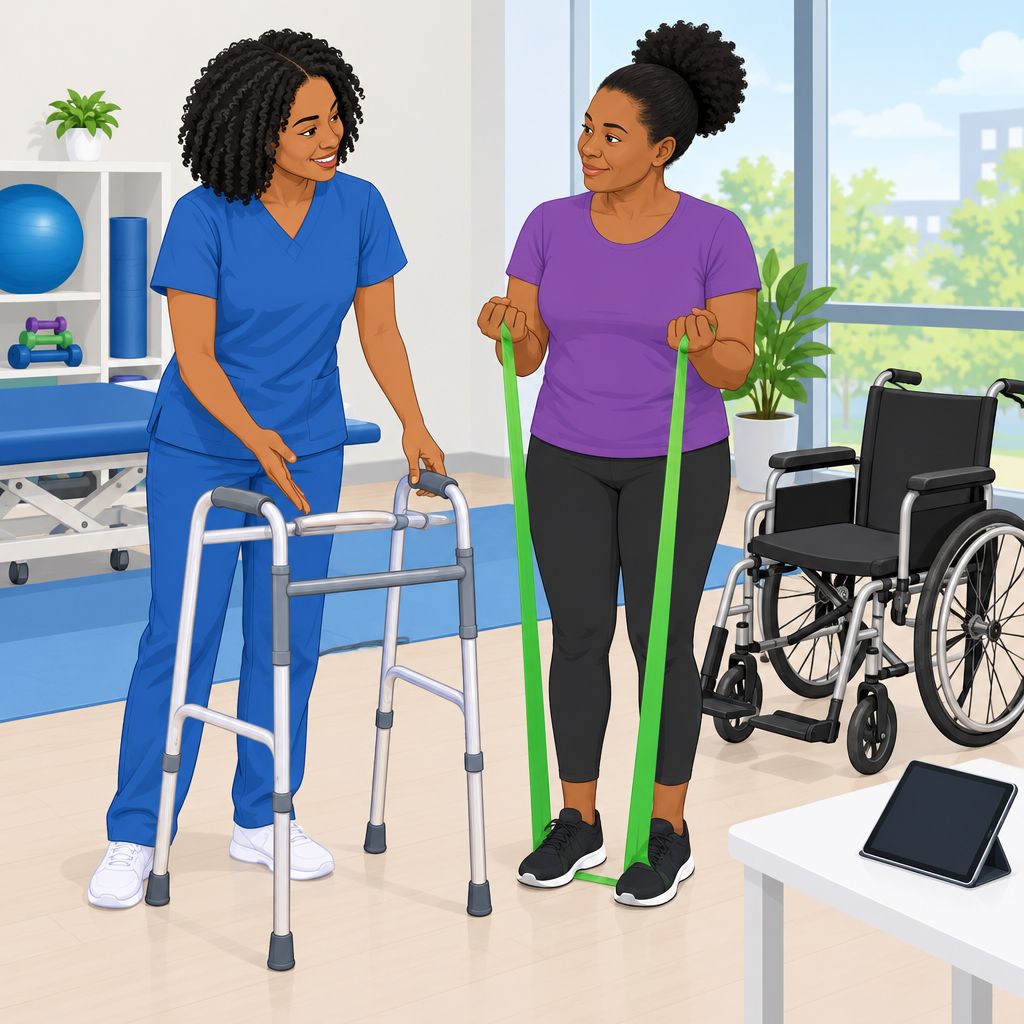
Role of Healthcare Professionals in Prescribing and Using Medical Rehabilitation Equipment
Healthcare professionals guide the prescription and use of medical rehabilitation equipment in Nigeria.
They match equipment choices with patient needs and rehabilitation goals.
Their involvement supports safe use, consistent monitoring, and meaningful functional progress.
Assessment and Evaluation of Patient Needs
Professionals assess each patient before recommending rehabilitation equipment.
They examine the condition’s type and severity during this evaluation.
This process helps them address specific functional limitations effectively.
- They conduct thorough assessments to determine each patient’s specific needs.
- They consider the condition’s type and severity when selecting equipment.
- They ensure the recommended equipment addresses the patient’s functional limitations.
Proper Fitting and Training on Equipment Usage
Professionals fit each device to improve comfort and functionality.
They teach patients to operate equipment correctly and safely.
They also explain maintenance practices that help preserve equipment condition.
- They adjust equipment properly to support comfort and effective use.
- They provide detailed instructions for safe and correct operation.
- They offer maintenance guidance to help extend the equipment’s lifespan.
Monitoring Progress and Making Adjustments
Professionals review patient progress regularly after equipment use begins.
They observe performance and identify changes affecting rehabilitation.
They adjust settings or recommend alternatives when necessary.
- They monitor progress and performance during the rehabilitation process.
- They modify settings or recommend different equipment for better outcomes.
- They support and motivate patients throughout rehabilitation.
Patient Empowerment Through Professional Guidance
Professional guidance helps patients use rehabilitation equipment with greater confidence.
Proper prescription and training can support safer and more effective rehabilitation.
This coordinated support can improve patient independence and quality of life.
See Related Content: Patient Guide to Anatomical Pathology Procedures in Nigeria
Technological Advances in Medical Rehabilitation Equipment
- Introduction of innovative devices for improved rehabilitation outcomes
- Use of digital tools for tracking progress and enhancing therapy sessions
- Potential for virtual reality and tele-rehabilitation methods
Technology has significantly improved medical rehabilitation equipment and practices.
These advances help patients recover more efficiently after injuries or surgeries.
They also help healthcare professionals deliver more targeted and effective rehabilitation services.
Innovative Devices for Rehabilitation
Innovative devices now support specific rehabilitation goals and improve treatment precision.
These devices use advanced technology to target particular areas of the body.
Consequently, patients can follow more focused recovery programs.
Robotic exoskeletons can help patients with mobility impairments regain limb strength and coordination.
These devices provide support during exercises and activities that patients may otherwise find difficult.
Digital Tools for Therapy Monitoring
Digital tools help therapists track patient progress accurately and efficiently.
Wearable sensors and mobile applications can monitor movement, strength, and therapy performance.
Therapists can use this information to assess progress during rehabilitation sessions.
Real-time feedback helps patients perform exercises correctly.
It also helps therapists adjust guidance when necessary.
Furthermore, digital systems support remote monitoring and tele-rehabilitation outside clinical settings.
Virtual Reality in Rehabilitation
Virtual reality offers immersive experiences that can support medical rehabilitation.
VR systems create simulated environments that resemble real-life situations.
Patients can practise movement, coordination, and cognitive activities within these environments.
Moreover, VR therapy can increase patient motivation and engagement.
Patients interact with virtual objects while completing structured tasks.
These activities can support motor skills, balance, and physical well-being.
They may also support cognitive function and mental well-being.
Tele-Rehabilitation Methods
Tele-rehabilitation delivers therapy services through video conferencing and online platforms.
Therapists can conduct sessions with patients who cannot travel to clinics.
Distance, mobility limitations, and other constraints may prevent clinic visits.
Remote sessions provide continuous care and support during rehabilitation.
They also help patients remain engaged with their rehabilitation plans.
Additionally, tele-rehabilitation can expand access in underserved areas.
Healthcare professionals in Nigeria can use these technologies to provide comprehensive rehabilitation services.
Digital tools, virtual reality, and remote care create new opportunities for patient support.
Rehabilitation Equipment Supports Lasting Independence
Medical rehabilitation equipment helps people in Nigeria regain independence and improve their quality of life.
Furthermore, increased awareness, access, and support can strengthen rehabilitation opportunities across the country.
With suitable equipment, patients can recover and participate more fully in society.
Additional Resources
Google search results for Medical Rehabilitation Equipment Used in Nigeria Medical
Bing search results for Medical Rehabilitation Equipment Used in Nigeria Medical


