




Health Campaigns Against Parasites in Nigeria
Poor sanitation and limited access to clean water contribute to prevalent parasitic infections in Nigeria.
Moreover, health campaigns educate the public about prevention measures and treatment options.
This blog post highlights the importance of health campaigns against parasites in Nigeria.
Parasitic Infections Affecting Health in Nigeria
Parasitic infections pose a major health concern for many people in Nigeria.
Several common parasites threaten public health across the country.
These infections can affect children, pregnant women, and other vulnerable populations.
Malaria
Malaria is a life-threatening disease caused by parasites.
Infected female Anopheles mosquitoes transmit malaria parasites through their bites.
Malaria causes substantial illness and death, especially among young children and pregnant women.
Intestinal Worms
Roundworms, hookworms, and whipworms commonly affect people in Nigeria.
These parasites can cause abdominal pain, diarrhea, weight loss, and fatigue.
Untreated infections can contribute to malnutrition and stunted growth among children.
Schistosomiasis
Schistosomiasis, also called bilharzia, results from infection with parasitic flatworms.
People acquire the infection through freshwater contaminated with the parasites’ larvae.
Communities near rivers and lakes face greater risks when clean water and sanitation remain limited.
Lymphatic Filariasis
Lymphatic filariasis, also known as elephantiasis, results from thread-like parasitic worms.
Infected mosquitoes transmit these worms to people through their bites.
The disease can cause severe swelling, disfigurement, and disability without treatment.
Prevention Strategies for Parasitic Infections
People can reduce malaria risk by using insecticide-treated bed nets.
Good hygiene, including handwashing with soap and clean water, can help prevent intestinal worms.
Improved WASH infrastructure can reduce schistosomiasis transmission through contaminated water sources.
- Use insecticide-treated bed nets to prevent mosquito bites and reduce malaria transmission.
- Wash hands with soap and clean water to help prevent intestinal worms.
- Improve water, sanitation, and hygiene infrastructure to reduce schistosomiasis transmission.
- Provide antiparasitic medicines to at-risk populations through mass drug administration programs.
Community Engagement and Parasite Control
Health education helps people understand parasite transmission, symptoms, and prevention.
Community engagement encourages individuals to take responsibility for their health and well-being.
Government agencies, healthcare providers, nonprofit organizations, and community leaders can support effective health campaigns.
These collaborations can help reach vulnerable populations in remote or underserved areas.
Prioritizing parasite control can improve health outcomes across Nigerian communities.
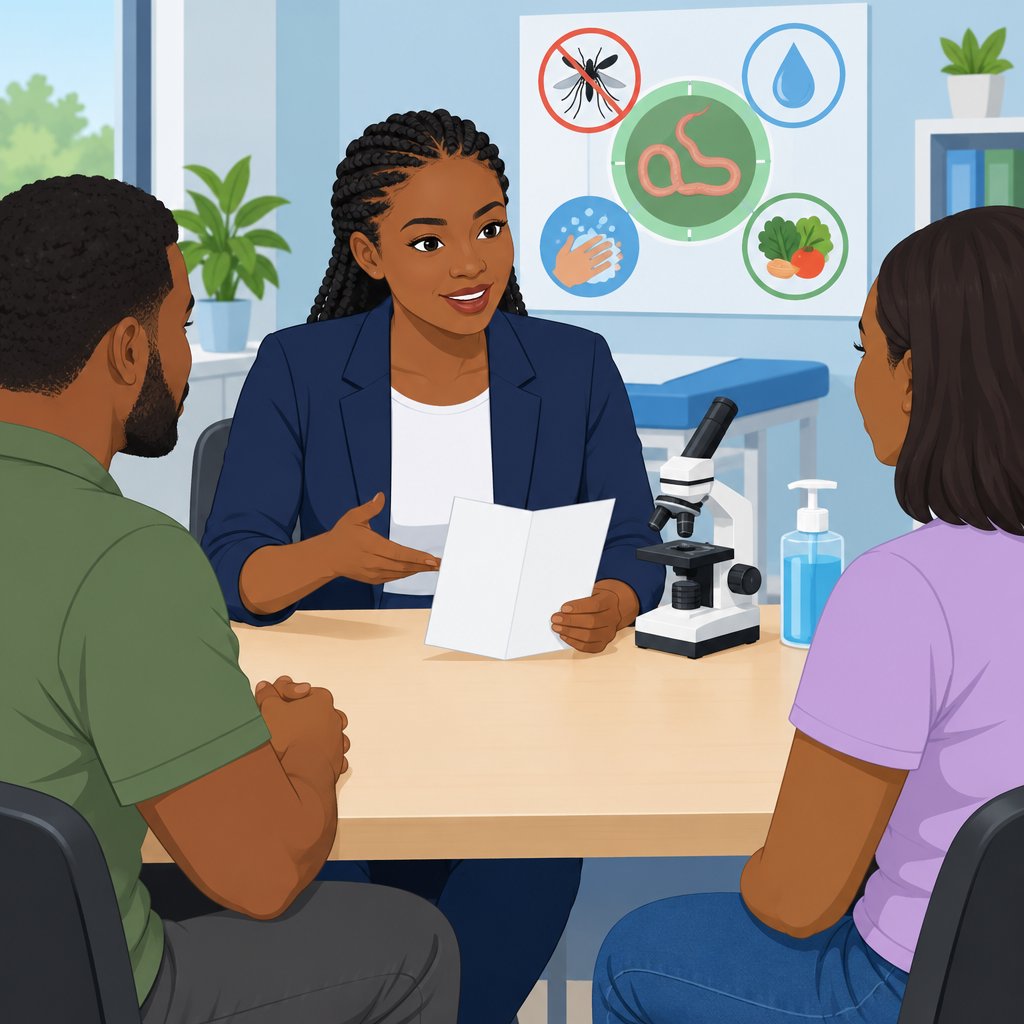
Current Parasite Control Initiatives in Nigeria
Nigeria uses several coordinated initiatives to control parasitic diseases.
Government programs combine prevention, treatment, community distribution, and external support.
Together, these efforts target malaria and neglected tropical diseases across affected communities.
- National Malaria Elimination Programme
- Neglected Tropical Diseases control programs
- Mass drug administration campaigns
- Partnerships with international organizations, such as WHO and UNICEF
National Malaria Elimination Programme
The NMEP leads Nigeria’s national response to malaria.
It promotes insecticide-treated bed nets and indoor residual spraying.
Additionally, the program supports prompt malaria diagnosis and treatment.
Neglected Tropical Diseases Control Programs
Nigeria works with international organizations to control neglected tropical diseases.
These programs target schistosomiasis, onchocerciasis, lymphatic filariasis, and soil-transmitted helminths.
Their objectives include preventing, controlling, and eliminating these infections.
Mass Drug Administration Campaigns
Health campaigns deliver preventive medicines to high-risk populations.
They distribute treatments throughout entire communities during mass drug administration campaigns.
Consequently, these efforts aim to reduce parasitic infection prevalence.
Partnerships with International Organizations
Nigeria collaborates with WHO and UNICEF to strengthen parasite control efforts.
These partnerships provide technical support, funding, and expertise.
Transform Your Career with Expert Guidance
Get personalized mentorship consulting that’s tailored to your unique path. Our expert advice is actionable and exclusive.
Get StartedAs a result, national programs receive added support for disease control activities.
Find Out More: Future Prospects for Orthopaedic Tech in Nigeria
Challenges Facing Parasite Health Campaigns
Health campaigns against parasites in Nigeria face several obstacles.
These obstacles affect prevention, treatment, education, and community support.
Furthermore, campaigns must address financial, geographic, sanitation, and communication difficulties.
- Lack of funds and resources
- Limited access to remote areas
- Poor sanitation and hygiene practices
- Misinformation and misconceptions about parasitic diseases
Funding and Resource Limitations
Health campaigns in Nigeria often lack adequate funds and resources.
This shortage hinders preventive measures, treatment services, and public awareness programs.
Consequently, campaigns cannot fully provide the support communities need.
Access to Remote Communities
Many parasitic diseases occur in remote areas that campaigns struggle to reach.
Limited access prevents health workers from delivering necessary support and resources.
As a result, remote communities may receive less campaign assistance.
Sanitation and Hygiene Challenges
Poor sanitation and hygiene practices help parasitic diseases spread in Nigeria.
Health campaigns must teach communities how proper hygiene can prevent these diseases.
However, poor practices make prevention efforts more difficult.
Misinformation About Parasitic Diseases
Many people lack sufficient awareness and understanding of parasitic diseases.
Misconceptions and misinformation can prevent campaigns from educating the public effectively.
Therefore, campaigns must provide clear information about these diseases.
Delve into the Subject: Scholarships for Nigerian Medical Students: Top Sources
Community Involvement in Parasite Health Campaigns
Community involvement strengthens health campaigns against parasites in Nigeria.
Local participation helps campaigns reach more people and encourage lasting behavior change.
Several strategies can help communities prevent infections and improve health.
Training Community Health Workers
Community health workers provide an effective link between campaigns and local residents.
Trusted workers can teach neighbors about parasite prevention, treatment, and control.
With proper training, they can share essential information and encourage healthy practices.
Health Education and Awareness Programs
Health education programs explain why personal hygiene, sanitation, and waste disposal matter.
They help residents recognize parasite risks and learn practical prevention measures.
Consequently, informed individuals can take proactive steps to protect their health.
Distribution of Insecticide-Treated Bed Nets
Insecticide-treated bed nets help prevent malaria, which infected mosquitoes transmit through bites.
These nets create a physical barrier that reduces mosquito contact during sleep.
Distributing them gives communities an important tool for reducing malaria transmission.
This intervention can reduce malaria cases and improve health outcomes in Nigeria.
Advocacy for Better Sanitation and Hygiene
Advocates also promote better sanitation and hygiene during parasite health campaigns.
Poor sanitation and hygiene create conditions that increase the risk of infection.
Community advocacy can support improved facilities, safe water sources, and proper hygiene practices.
These changes help communities create healthier environments and reduce parasitic disease burdens.
Community Participation in Health Protection
Active community participation supports successful parasite health campaigns in Nigeria.
Residents can help prevent infections through education, bed net use, sanitation, and hygiene.
These actions also support broader health and well-being.
Delve into the Subject: Common Mental Health Disorders Among Nigerians
Success Stories and Impact of Health Campaigns Against Parasites
Health campaigns against parasites have produced important public health gains in Nigeria.
These efforts combine prevention, treatment, education, and community outreach.
Consequently, campaigns have improved access to care and reduced the effects of parasitic infections.
- Reduction in malaria cases and deaths
- Decrease in intestinal worm prevalence
- Increased access to treatment and preventive measures
- Improvement in public health indicators
Reduction in Malaria Cases and Deaths
Health campaigns have helped reduce malaria cases and deaths in Nigeria.
For example, mosquito net distribution supports protection against mosquito bites.
Additionally, insecticide spraying and prevention education strengthen malaria control efforts.
Decrease in Intestinal Worm Prevalence
Health campaigns have also reduced the prevalence of intestinal worms.
School and community deworming programs provide regular treatment for affected populations.
As a result, regular deworming helps reduce the burden of these parasites.
Increased Access to Treatment and Prevention
Campaigns have expanded access to treatment for people with parasitic infections.
They also distribute medicines and promote preventive health practices.
Furthermore, hygiene education and regular health check-ups support continued prevention.
Improvement in Public Health Indicators
Reduced parasitic infections have contributed to better public health indicators.
Fewer infections can reduce pressure on healthcare facilities.
Therefore, health services can allocate more resources to other health needs.
Find Out More: Top Physiotherapy Exercises for Nigerians
Future Directions for Parasite Health Campaigns
Future health campaigns in Nigeria need stronger systems and coordinated action.
These priorities can improve prevention, diagnosis, treatment, and long-term parasite control.
The following recommendations connect healthcare services with research, education, and sanitation efforts.
- Strengthening healthcare infrastructure
- Integrating parasite control programs with primary healthcare services
- Researching and developing new interventions
- Collaborating with education and sanitation sectors
Strengthening Healthcare Infrastructure
Healthcare facilities need better equipment and training for workers who diagnose and treat parasite-related illnesses.
Additionally, stronger infrastructure can help communities access essential prevention and treatment resources.
Investment in healthcare systems can support more effective parasite control across communities.
Integrating Parasite Control with Primary Healthcare
Campaigns should include parasite prevention and treatment within routine primary healthcare services.
This approach can make care easier for communities to access.
Furthermore, integrated services can reach more people while addressing acute and chronic parasite infections.
Researching and Developing New Interventions
Researchers should develop new treatments, vaccines, and other interventions for evolving parasite threats.
Studying parasite behavior can also guide more effective control strategies.
Continued innovation can strengthen campaigns and reduce the population’s parasite burden.
Collaborating with Education and Sanitation Sectors
Parasite control also requires cooperation beyond the healthcare sector.
Education initiatives can increase awareness of prevention methods and support informed health decisions.
Sanitation partnerships can address conditions that enable parasite transmission.
Together, these sectors can address poor hygiene practices and limited prevention awareness.
Such collaboration creates a broader approach to parasite control.
Sustaining Parasite Prevention Efforts in Nigeria
Health campaigns against parasites in Nigeria play a crucial role in improving public health.
They can reduce parasitic infections by promoting sanitation, hygiene, and regular deworming.
Moreover, sustained efforts remain essential for combating parasites in Nigeria.
Government agencies, NGOs, and community members must provide continuous funding, support, and collaboration.
Therefore, Nigeria needs increased support and investment in parasite health campaigns.
Investing in education, prevention, and treatment programs can reduce infections and improve the overall health of Nigeria’s population.
Additional Resources
Google search results for Health Campaigns Against Parasites in Nigeria Medical
Bing search results for Health Campaigns Against Parasites in Nigeria Medical


