



Introduction
Medical microbiology internships in Nigeria give students practical experience.
Internships help students apply theoretical knowledge in real-world settings.
This blog post provides guidance for securing medical microbiology internships in Nigeria.
Medical microbiology internships require applicants to meet specific eligibility requirements.
These requirements help institutions assess candidates for internship opportunities in Nigeria.
Applicants should review each institution’s expectations before submitting their applications.
Educational Background and Qualifications
Applicants typically need a Bachelor’s degree in microbiology or a related field.
Some institutions may prefer candidates who hold a Master’s degree in medical microbiology.
Additionally, institutions usually consider academic standing and grade point average during selection.
- A Bachelor’s degree in microbiology or a related field is typically required.
- Some institutions may prefer candidates with a Master’s degree in medical microbiology.
- Good academic standing and a strong grade point average are usually necessary.
Skills and Competencies
Successful interns demonstrate strong research skills and analyze data effectively.
They also communicate clearly in written and verbal interactions.
Furthermore, attention to detail and independent work support effective laboratory performance.
- Strong research skills and effective data analysis are essential.
- Good written and verbal communication skills support collaboration.
- Attention to detail and independent work remain valuable traits.
Availability of Medical Microbiology Internships
Hospitals, research institutes, and laboratories offer medical microbiology internships across Nigeria.
Several prominent institutions provide opportunities for aspiring medical microbiology interns.
These placements expose interns to clinical microbiology, molecular biology, and epidemiology.
- Nigerian Institute of Medical Research in Lagos.
- University College Hospital in Ibadan.
- Federal Medical Centre in Abuja.
- Lagos University Teaching Hospital.
- Reddington Hospital in Lagos.
Interns work alongside experienced professionals during their placements.
They also contribute to real-world research projects in relevant scientific areas.
Benefits of Medical Microbiology Internships
These internships develop practical laboratory skills for future healthcare and research careers.
They also introduce interns to various pathogens and microorganisms affecting human health.
Additionally, interns learn from experienced professionals and researchers in medical microbiology.
- Practical experience in laboratory tests and experiments
- Exposure to different pathogens and microorganisms
- Opportunities to work with experienced professionals and researchers
Practical Experience in Laboratory Testing
Interns gain hands-on experience conducting laboratory tests and experiments.
This practice strengthens their technical skills and precision when handling laboratory equipment.
They prepare samples, identify bacteria, and interpret test results accurately.
Consequently, laboratory participation improves their understanding of microbiological techniques and procedures.
Exposure to Pathogens and Microorganisms
Interns encounter a broad range of pathogens and microorganisms during their placement.
This exposure reveals how different microorganisms behave and affect human health.
Under professional guidance, interns observe and study pathogens safely.
As a result, they broaden their microbiology knowledge and public health perspective.
Guidance from Experienced Microbiology Professionals
Interns work alongside experienced professionals and medical microbiology researchers.
They can collaborate on research projects and learn about developments within the field.
Furthermore, professional collaboration helps interns build networks and seek career guidance.
Mentorship supports interns as they develop their future medical microbiology careers.
Active participation helps interns strengthen their skills and establish a solid professional foundation.
Learn More: Sinus Surgery Recovery: Tips for Nigerians
Application Process for Medical Microbiology Internships
Applicants can search for medical microbiology internships in Nigeria through several channels.
They should track deadlines and prepare required documents before applying.
A tailored resume and cover letter can strengthen each application.
- Search for internship opportunities in Nigeria
- Review application deadlines and requirements
- Prepare a strong application and resume
Searching for Internship Opportunities in Nigeria
Finding medical microbiology internships in Nigeria can seem challenging.
Start by checking hospitals, research institutes, and universities with microbiology departments.
Online platforms, social media, and professional networking sites can also reveal available internships.
Transform Your Career with Expert Guidance
Get personalized mentorship consulting that’s tailored to your unique path. Our expert advice is actionable and exclusive.
Get StartedAdditionally, networking with professionals can provide insight into potential opportunities.
Application Deadlines and Requirements
Before applying, review the deadlines and requirements for each medical microbiology internship.
Deadlines vary among institutions and organizations, so research these dates in advance.
Most internships require a cover letter and resume.
Some opportunities may also request letters of recommendation.
Furthermore, certain internships may require specific coursework or certifications.
Review every qualification carefully before submitting your application.
Preparing a Strong Application and Resume
To strengthen your application, tailor your resume to each medical microbiology internship.
Highlight relevant experience, coursework, and microbiology skills.
Customize your cover letter for every internship opportunity.
Use the letter to demonstrate your passion for medical microbiology.
Proofread your resume and cover letter carefully.
Careful proofreading helps remove errors from your application.
Finally, ask mentors or career counselors for feedback.
Their feedback can help you strengthen your application further.
Delve into the Subject: Children's Dental Health Awareness in Nigeria
Challenges in Medical Microbiology Internships
Medical microbiology internships in Nigeria provide valuable experience but also present demanding responsibilities.
Interns must manage laboratory duties while maintaining accuracy, focus, and professional discipline.
They can address these challenges by staying organized, following procedures, and seeking guidance when necessary.
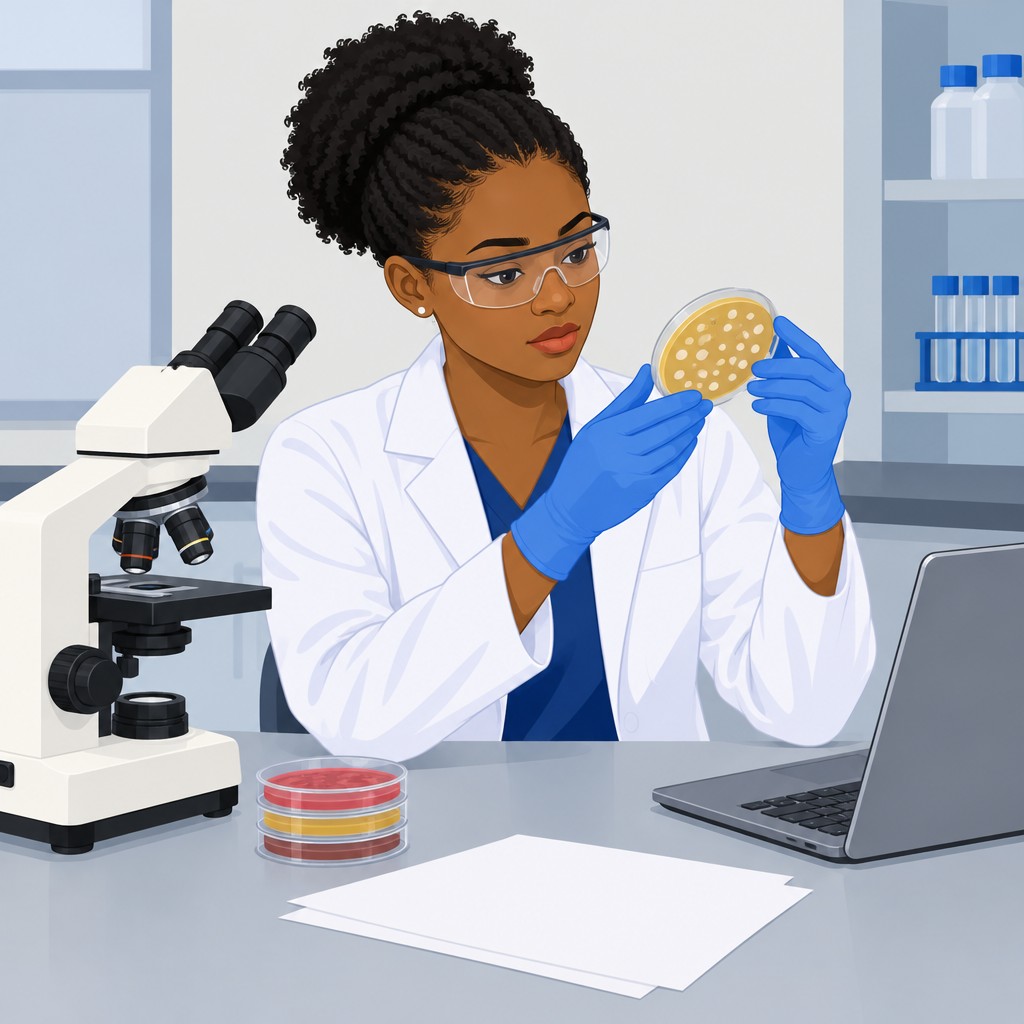
Long Working Hours and Demanding Schedules
Medical microbiology interns often spend extended periods conducting experiments and analyzing laboratory results.
This demanding schedule can cause physical and mental exhaustion during busy internship periods.
Furthermore, interns may work weekends or public holidays to complete assignments and meet deadlines.
- Interns often work long hours in medical microbiology laboratories while conducting experiments and analyzing results.
- The demanding schedule requires interns to remain focused and alert for extended periods.
- Some interns work weekends or public holidays when their responsibilities require additional time.
Handling Biohazardous Materials and Pathogens
Medical microbiology interns handle biohazardous materials and pathogens as part of their daily laboratory responsibilities.
These materials can threaten their health if interns ignore established safety procedures.
Therefore, interns must remain vigilant and use appropriate protective equipment during laboratory activities.
- Interns work with biohazardous materials and pathogens that may pose health risks.
- They must follow strict safety protocols and use personal protective equipment.
- Accidental exposure can cause serious health consequences, so interns must remain careful at all times.
Balancing Academic Studies and Internship Responsibilities
Interns often balance academic studies with their medical microbiology internship responsibilities.
Coursework, assignments, and examinations can become difficult to manage alongside laboratory duties.
Interns can create balance by prioritizing tasks and requesting support from supervisors or mentors.
- Interns juggle coursework, assignments, examinations, and internship responsibilities.
- Managing academic work alongside internship duties can feel challenging and overwhelming.
- Interns should prioritize tasks, establish a study-work balance, and seek guidance when necessary.
Interns can make the most of these opportunities by staying organized and following laboratory safety protocols.
They should also seek help promptly whenever academic or workplace demands become difficult to manage.
Discover More: Impact of COVID-19 on Medical Education in Nigeria
Success Stories of Medical Microbiology Interns in Nigeria
Past interns describe practical learning, professional guidance, and stronger preparation for medical microbiology careers.
They also report research development, networking, teamwork, and exposure to real-life medical cases.
Afterward, many interns pursue employment, further education, specialization, public health, or diagnostic laboratory work.
Testimonials from Past Interns
Interns highlighted hands-on training in medical laboratories.
They described valuable exposure to real-life medical cases.
Experienced mentors provided guidance throughout their internship experiences.
- Several interns gained research skills during their internships.
- Networking with professionals created a common benefit for participating interns.
- Interns emphasized the importance of teamwork in laboratory settings.
Career Growth After Medical Microbiology Internships
Many interns secured job offers from their internship sites.
Internships also served as stepping stones toward higher education.
Some interns started diagnostic laboratories after completing their internships.
- Other interns entered public health microbiology.
- Internships helped participants gain confidence and useful skills for future endeavors.
- Several interns pursued specialization in medical microbiology.
Strategies for Maximizing Internship Learning
Interns should set clear learning goals at the beginning of their placements.
They can seek mentorship from experienced professionals in medical microbiology.
Participating in research projects can strengthen practical skills.
- Interns should take initiative when learning new techniques and procedures.
- Networking with peers and professionals can support future opportunities.
- Regular reflection helps interns evaluate their experiences and encourage personal growth.
Find Out More: Profiles of Notable Veterinarians in Nigeria
Professional Exposure Through Medical Microbiology Internships
Medical microbiology internships place Nigerian students in practical professional environments.
They expose interns to workplace situations that classroom instruction cannot fully reproduce.
Moreover, interns work alongside experienced professionals and observe established techniques and practices.
This guided exposure helps students connect academic concepts with laboratory activities.
Interns can also strengthen their understanding by applying medical microbiology knowledge to practical situations.
Building Professional Direction Through Initiative
Internships allow students to connect with professionals in the industry.
Those connections may create opportunities for future career development.
Aspiring interns should explore hospitals, research institutions, and diagnostic laboratories across Nigeria.
They should also contact potential mentors and supervisors proactively.
By pursuing placements actively, students show commitment to their professional development.
Finally, early research and applications can help them seek placements within desired organizations.
Additional Resources
Google search results for Medical Microbiology Internships in Nigeria Medical
Bing search results for Medical Microbiology Internships in Nigeria Medical


