



Introduction
Medical microbiologists study microorganisms.
They use this work to diagnose and prevent infectious diseases.
Their role is crucial for accurate diagnosis and treatment in Nigerian healthcare.
Academic Qualifications and Professional Credentials
Medical microbiologists in Nigeria need a strong academic background in microbiology.
A bachelor’s degree in microbiology or a related field provides basic entry-level preparation.
Many professionals pursue master’s or doctoral degrees to develop advanced microbiology expertise.
These degrees support specialization, research participation, and contributions to microbiology advancements.
Professionals also need relevant certifications and licenses to practice in Nigeria.
Continuous Learning and Professional Development
Continuous learning helps medical microbiologists remain current with developments in their field.
It also strengthens their knowledge and skills while supporting continued professional competitiveness.
Conferences, workshops, and seminars introduce professionals to new research, technologies, and treatment options.
These activities also encourage networking, collaboration, and knowledge sharing among experts.
By maintaining current knowledge, professionals can improve patient care and address emerging challenges.
Duties of Medical Microbiologists in Nigeria
Medical microbiologists play a crucial role in Nigeria’s healthcare system.
Their responsibilities include laboratory testing, microbial surveillance, and treatment guidance for healthcare providers.
Together, these duties support infection management and appropriate antibiotic use in healthcare settings.
- Conducting tests to identify pathogens
- Monitoring and analyzing microbial trends in healthcare settings
- Advising on appropriate treatment options based on microbiological findings
Pathogen Identification Through Laboratory Testing
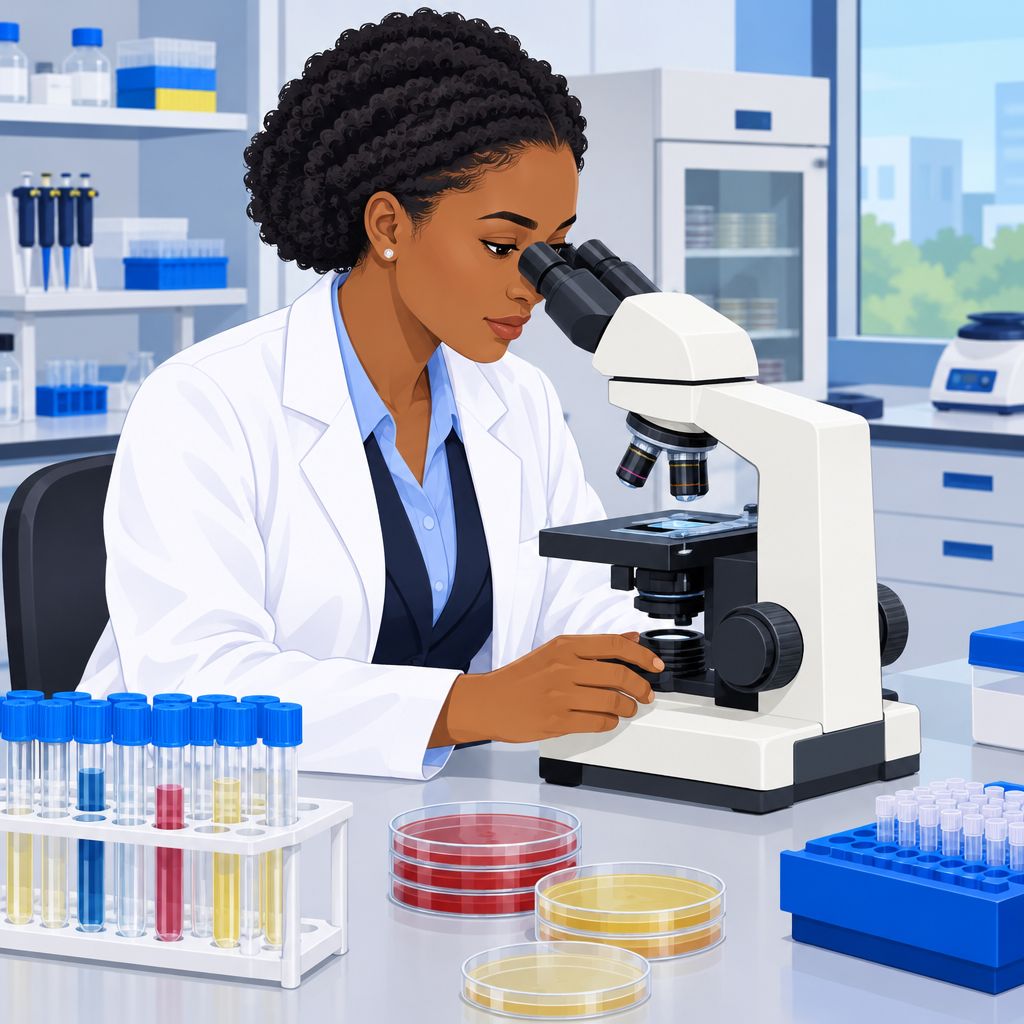
Medical microbiologists perform tests to detect and identify pathogens causing infections.
They culture samples and use molecular techniques to support accurate pathogen identification.
Furthermore, susceptibility testing helps determine which treatments may work most effectively.
Microbial Trend Monitoring in Healthcare Settings
Medical microbiologists track the prevalence of specific pathogens in healthcare settings.
This surveillance can reveal outbreaks and patterns of antibiotic resistance.
Additionally, trend analysis can identify emerging infectious diseases.
Treatment Guidance Based on Microbiological Findings
Medical microbiologists use laboratory findings to guide treatment recommendations.
They may recommend effective antibiotics or suggest adjustments to existing treatment regimens.
They can also recommend preventive measures to control infectious disease transmission.
Their work supports patient care, infection prevention, and responsible antibiotic use.
Explore Further: ENT Surgery: When to Seek a Second Opinion
Impact of Medical Microbiologists on Public Health in Nigeria
Medical microbiologists strengthen public health by detecting infections and supporting effective disease control.
They provide scientific evidence that helps health authorities respond to infectious disease threats.
Additionally, their work supports safer treatment practices and limits the spread of resistant infections.
Role in Disease Surveillance and Outbreak Investigations
Medical microbiologists monitor diseases to help detect outbreaks early in Nigeria.
They analyze and interpret surveillance data to identify infectious disease trends and patterns.
Furthermore, they work with public health officials during outbreak investigations.
They identify pathogens, trace possible sources, and support appropriate control measures.
Their knowledge of transmission dynamics strengthens responses to public health emergencies.
Contribution to Antibiotic Stewardship and Antimicrobial Resistance Control
Medical microbiologists monitor antibiotic use and resistance patterns in Nigeria.
They recommend suitable antibiotic therapies to reduce unnecessary exposure and resistance development.
Moreover, they research antimicrobial resistance mechanisms and develop strategies to address them.
They also promote responsible antibiotic use among healthcare providers.
Consequently, their efforts help preserve antibiotic effectiveness and protect public health.
Transform Your Career with Expert Guidance
Get personalized mentorship consulting that’s tailored to your unique path. Our expert advice is actionable and exclusive.
Get StartedYou Might Also Like: Dental Veneers: Restorative and Aesthetic Benefits
Challenges Faced by Medical Microbiologists in Nigeria
Medical microbiologists in Nigeria face several challenges that affect their ability to deliver quality healthcare services.
These challenges involve laboratory resources, staffing, workloads, and result reporting.
Therefore, healthcare institutions need stronger support to help laboratories operate effectively.
Limited Resources and Infrastructure for Laboratory Testing
Many laboratories lack basic equipment and reagents required for accurate disease diagnosis.
Consequently, limited infrastructure can delay testing and produce incorrect diagnoses.
These problems can affect patient outcomes and reduce confidence in laboratory services.
Shortage of Qualified Staff in Microbiology Departments
Microbiology departments often lack enough qualified staff to manage their responsibilities.
Limited funding and incentives make it difficult for laboratories to attract and retain skilled professionals.
As a result, remaining staff may face heavier workloads and reduced operational efficiency.
Pressure to Provide Quick Results Amidst High Workloads
Medical microbiologists often process many samples within short periods.
Meanwhile, limited staffing and resources increase pressure to report results quickly.
This pressure can cause testing or reporting errors and compromise patient care.
Support for Effective Laboratory Operations
Investment in infrastructure can help laboratories operate more effectively.
Training and staffing support can strengthen laboratory capacity.
Together, these measures can help professionals deliver accurate and timely patient results.
Find Out More: Radiography Job Market Trends in Nigeria
Medical microbiologists in Nigeria collaborate with healthcare professionals to support patient care.
They interpret laboratory findings and contribute to responses against healthcare challenges.
This teamwork helps healthcare professionals address microbial infections more effectively.
Collaboration with Physicians
- Medical microbiologists help physicians interpret microbiological results accurately for effective patient care.
- They provide recommendations based on laboratory findings to guide treatment protocols.
- Therefore, physicians can select treatments suited to patients’ specific microbial infections.
- This collaboration improves patient outcomes and reduces the risk of antibiotic resistance.
Multidisciplinary Healthcare Teams
- Medical microbiologists serve as integral members of multidisciplinary healthcare teams.
- They contribute expertise in identifying and controlling infectious diseases.
- Moreover, they help teams develop comprehensive treatment strategies.
- Collaboration across professional backgrounds supports coordinated and effective healthcare delivery.
These professional partnerships support quality patient care in Nigeria.
They also improve microbiological result interpretation and treatment decisions.
Additionally, coordinated teamwork helps healthcare professionals address infectious disease challenges effectively.
Find Out More: Continuing Education for Nigerian Dental Therapists
Research Opportunities for Medical Microbiologists in Nigeria
- Studies on Emerging Pathogens and Resistance Patterns
- Contributions to Global Infectious Disease Knowledge
Medical microbiologists in Nigeria can study emerging pathogens and resistance patterns.
This research helps them understand how pathogens evolve and adapt to treatments.
Researchers can use this understanding to develop effective strategies against these pathogens.
By publishing their findings, medical microbiologists in Nigeria can contribute to global infectious disease knowledge.
Such contributions benefit microbiology and support efforts to address global health challenges.
Role of Medical Microbiologists in Nigeria
Medical microbiologists in Nigeria support healthcare by diagnosing and treating infectious diseases.
They conduct laboratory tests to identify pathogens responsible for infections.
Consequently, accurate and timely diagnoses help prevent disease spread.
They also contribute to antibiotic stewardship programs that address antimicrobial resistance.
Moreover, their expertise supports outbreak management and infectious disease control within communities.
Through surveillance, they help identify infectious disease trends and patterns in Nigeria.
Research further strengthens understanding of these trends.
They collaborate with healthcare professionals to develop effective treatment plans for patients.
Therefore, their findings help patients receive appropriate care.
Their work also supports effective public health strategies.
Value of Medical Microbiology in Nigerian Healthcare
Medical microbiologists remain integral to Nigeria’s healthcare system.
They connect laboratory evidence with clinical decisions about infectious diseases.
Supporting their work can improve public health outcomes.
Additional Resources
Google search results for Role of Medical Microbiologists in Nigeria Medical
Bing search results for Role of Medical Microbiologists in Nigeria Medical


