




Medical Laboratory Science Student Experiences
Medical Laboratory Science analyzes body fluids and tissues.
The discipline aids disease diagnosis and treatment.
Student experiences provide hands-on learning opportunities that shape future careers.
Importance and Range of Student Experiences
These experiences help students apply theoretical knowledge in real-life scenarios.
They also foster critical thinking and problem-solving skills.
Laboratory work helps students develop technical skills.
Students conduct tests, perform experiments, and use specialized equipment.
Clinical rotations allow students to work alongside professionals in laboratory settings.
These rotations expose students to hematology, microbiology, and clinical chemistry departments.
Furthermore, students may participate in research projects, conferences, and workshops.
These activities enhance their understanding of current trends and advancements.
Theoretical Knowledge
Theoretical knowledge plays a vital role in Medical Laboratory Science.
Students develop this knowledge through lectures and textbooks.
However, complex theoretical concepts can challenge students’ understanding.
Students can improve understanding through active listening, questions, and help-seeking.
Practical Skills in Medical Laboratory Science
Practical skills help medical laboratory science students produce accurate and precise test results.
Through laboratory practice, students develop confidence with techniques, equipment, samples, reagents, and result interpretation.
Additionally, hands-on learning prepares students to manage procedures carefully and record findings accurately.
- Students engage in hands-on activities that develop essential laboratory techniques.
- Experiments use specialized equipment to analyze blood, urine, and tissue samples.
- Students prepare reagents, perform tests, and interpret the resulting findings.
Challenges in Laboratory Experiments and Result Interpretation
Students may struggle when they first master complex procedures and laboratory techniques.
Equipment malfunctions and inadequate supplies can also interrupt experiments and limit practical learning.
Furthermore, careful sample handling and accurate data recording support reliable interpretation of test results.
- Students may find complex procedures and techniques difficult to master.
- Equipment malfunctions or inadequate supplies can disrupt laboratory experiments.
- Accurate result interpretation requires critical thinking and careful analysis.
- Sample handling or recording mistakes can produce inaccurate results.
Ways to Strengthen Laboratory Skills
Regular practice helps students improve their proficiency with laboratory techniques.
Active participation also encourages students to ask questions whenever procedures or results seem unclear.
Moreover, collaboration and laboratory experience allow students to develop practical abilities through shared learning.
- Students should participate actively in practical sessions and seek clarification when necessary.
- Regular practice can improve proficiency in essential laboratory techniques.
- Internships or laboratory volunteering can provide valuable real-world experience.
- Peer collaboration helps students learn from one another and strengthen their skills.
Practical training supports students as they prepare for future careers in medical laboratory science.
By addressing challenges and gaining hands-on experience, students can improve their laboratory proficiency.
Discover More: Starting a Private Nutrition Practice in Nigeria
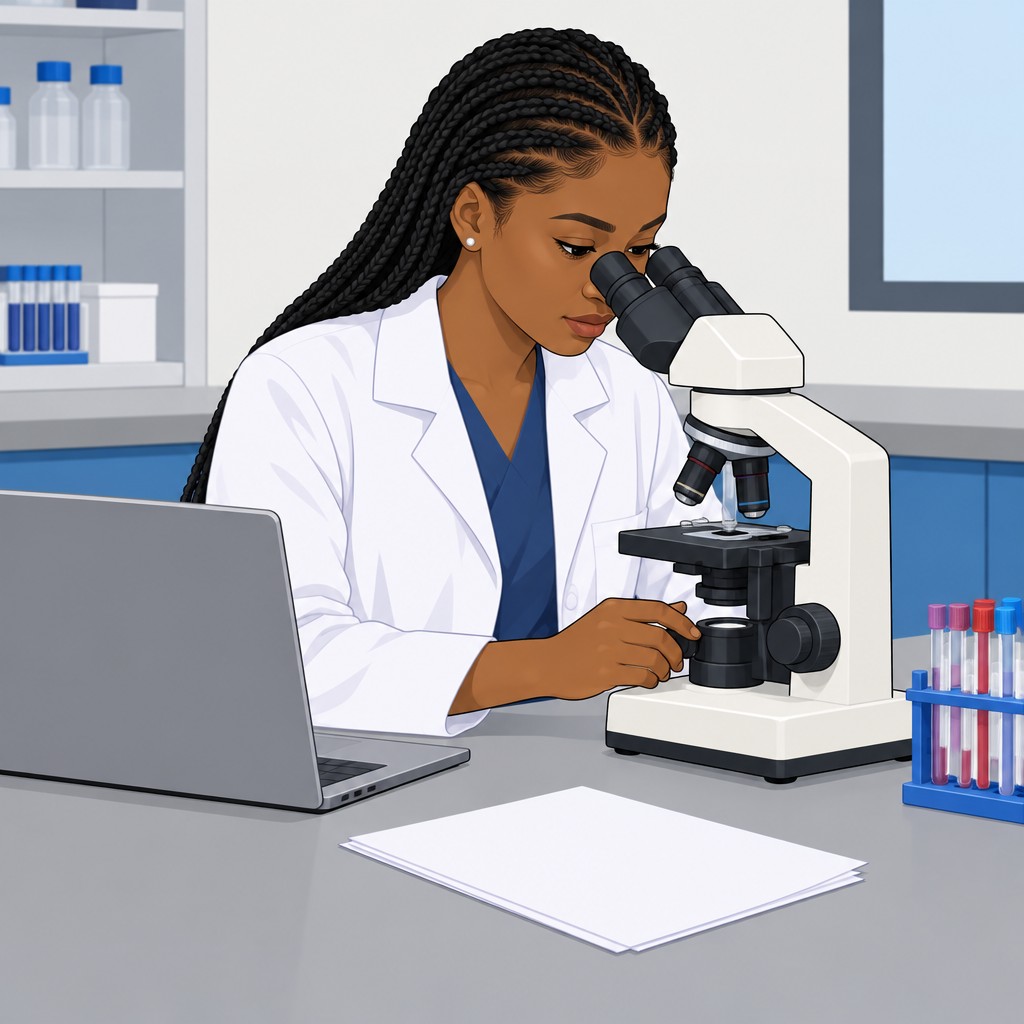
Clinical Rotations in Medical Laboratory Science
Clinical rotations connect classroom learning with daily laboratory responsibilities.
They also expose students to professional routines, diverse departments, and patient-centered diagnostic work.
Through supervised practice, students prepare for responsibilities in their future laboratory careers.
Benefits of Clinical Rotations
Clinical rotations let students apply concepts while working through authentic laboratory situations.
They also strengthen communication, teamwork, critical thinking, and troubleshooting abilities.
Furthermore, professional interactions can help students build useful career connections.
- Students gain hands-on experience by applying classroom knowledge to real-life laboratory situations.
- Rotations expose students to multiple departments and provide varied professional experiences.
- Interactions with healthcare professionals strengthen communication and teamwork skills.
- Students develop problem-solving skills by thinking critically and troubleshooting clinical issues.
- Professional connections may create future employment opportunities for students.
Departments Included in Clinical Rotations
Students typically visit multiple departments during their rotation schedules.
Each department presents distinct testing processes and diagnostic questions.
This variety helps students understand how laboratory sections contribute to healthcare.
- Hematology introduces blood cell morphology and related diseases.
- Clinical chemistry examines bodily fluids for diagnostic purposes.
- Microbiology focuses on identifying pathogens that cause infectious diseases.
- Immunology examines the immune system and its role in detecting disease.
- Molecular diagnostics analyzes DNA and RNA for genetic testing.
Challenges in Clinical Settings
Clinical settings require students to manage responsibilities while maintaining accuracy and efficiency.
They must also respond calmly when samples require urgent attention.
As students gain experience, they learn to adapt their routines to demanding laboratory environments.
- Students balance clinical responsibilities with coursework and other academic demands.
- Urgent samples and time-sensitive results can create significant pressure.
- Students need training before using sophisticated laboratory equipment effectively.
- They must interpret complex results accurately and carefully.
- Fast-paced environments require efficiency and timely decision-making.
Opportunities to Apply Knowledge and Skills
Clinical rotations give students supervised opportunities to perform diagnostic tests.
Transform Your Career with Expert Guidance
Get personalized mentorship consulting that’s tailored to your unique path. Our expert advice is actionable and exclusive.
Get StartedThey also encourage students to connect test findings with appropriate conclusions.
Additionally, students can observe how laboratory teams support patient care.
- Students perform diagnostic tests under the supervision of experienced professionals.
- They analyze test results and draw conclusions from their findings.
- Students support quality control by checking laboratory accuracy and standards.
- They collaborate with healthcare teams by communicating results to physicians and nurses.
- Some students assist with ongoing research projects during their rotations.
Clinical rotations provide a valuable setting for students to connect learning with laboratory responsibilities.
They build experience, professional confidence, and preparation for future careers in medical laboratory science.
Uncover the Details: Government Initiatives in Public Health Technology
Research Projects in Medical Laboratory Science
Research projects play a crucial role in Medical Laboratory Science.
They allow students to explore the discipline and contribute to existing knowledge.
These projects also develop critical thinking, research abilities, and practical experience with experiments and data analysis.
Importance of Research Projects
Research projects give students hands-on experience.
They also support scientific advancement through organized investigation.
Furthermore, students strengthen critical thinking, problem-solving, research, and analytical skills while encouraging collaboration and innovation.
- Provide students with hands-on experience
- Contribute to scientific advancements
- Enhance critical thinking and problem-solving skills
- Develop research and analytical skills
- Encourage collaboration and innovation
Types of Research Projects
Students may investigate clinical questions through several research formats.
Some projects examine laboratory processes, while others gather information through surveys.
Students can also compare existing studies through meta-analysis and systematic reviews.
- Clinical research studies
- Laboratory-based experiments
- Survey and questionnaire-based research
- Meta-analysis and systematic reviews
Challenges in Research and Data Analysis
Students may struggle to access suitable resources and laboratory equipment.
They may also find it difficult to formulate questions, collect data, and complete analysis.
Additionally, limited time can complicate interpretation and delay final conclusions.
- Lack of access to resources and equipment
- Difficulty in formulating research questions
- Issues with data collection and analysis
- Time constraints and deadlines
- Difficulty in interpreting results and drawing conclusions
Ways to Improve Research Skills
Students can improve their research skills by learning established research methods.
Mentorship can provide guidance during proposal development, data analysis, and report writing.
Moreover, collaboration and online tools can help students produce stronger research projects.
- Attend workshops and seminars on research methodology
- Seek mentorship from faculty members and researchers
- Practice writing research proposals and reports
- Collaborate with peers on research projects
- Utilize online resources and tools for data analysis
Research Projects and Future Opportunities
Research projects form an essential part of learning in Medical Laboratory Science.
Through research, students enhance their skills and contribute to the field.
These experiences also prepare students for future career opportunities.
Learn More: Collaboration Opportunities in Pathology Research
Interpersonal Skills in Healthcare
Interpersonal skills support effective patient care and collaboration among healthcare professionals.
They help healthcare workers communicate clearly, cooperate effectively, and maintain professional relationships.
Therefore, students should develop these skills alongside their academic and technical knowledge.
Importance of Interpersonal Skills in Healthcare
Effective communication helps healthcare professionals share information clearly during patient care.
Furthermore, teamwork allows professionals to coordinate their responsibilities and support quality healthcare services.
Professionalism strengthens interactions among patients, colleagues, and healthcare providers.
Communication, Teamwork, and Professionalism for Students
Medical Laboratory Science students need strong communication skills when working with colleagues.
They also use teamwork to cooperate effectively with healthcare providers.
Additionally, professionalism prepares students for responsible work within healthcare environments.
Challenges in Developing Interpersonal Skills
Students may have limited classroom time to practice communication skills.
Meanwhile, technical laboratory requirements can make interpersonal development feel overwhelming.
Students may also struggle to balance coursework with opportunities to build interpersonal skills.
- Limited classroom time can restrict communication practice.
- Technical laboratory work may feel overwhelming.
- Academic coursework can compete with interpersonal development.
- Shyness or introverted traits may hinder social interactions.
Strategies for Improving Communication and Teamwork
Students can strengthen teamwork by participating actively in group projects.
They can improve communication by attending relevant workshops or seminars.
Moreover, active listening helps students communicate more effectively with classmates and instructors.
- Participate in group projects to develop teamwork skills.
- Attend workshops or seminars about communication and professionalism.
- Practice active listening during classroom interactions.
- Work in diverse teams to strengthen collaboration skills.
- Use role-playing exercises to practice real-world communication scenarios.
Preparing for Healthcare Careers
Students can prepare for healthcare careers by intentionally developing their interpersonal abilities.
These abilities support effective collaboration with colleagues and healthcare providers.
Consequently, continued practice can help students communicate and work more effectively.
Find Out More: Radiography Equipment Maintenance and Safety in Nigeria
Time Management Skills in Medical Laboratory Science
- Effective time management helps Medical Laboratory Science students meet deadlines, balance coursework, and protect personal well-being.
- Meanwhile, experiments and data analysis create demanding workloads within limited time.
- Students often struggle to balance classes, assignments, and personal commitments.
- A daily or weekly schedule clarifies tasks, priorities, and deadlines.
- Furthermore, realistic goals and smaller task segments keep students organized and focused.
- Digital calendars and planners help students track deadlines and manage assignments.
- During study sessions, quiet spaces and disabled notifications reduce distractions.
- By starting early and working consistently, students avoid procrastination and last-minute stress.
- Students should prioritize urgent tasks according to importance and deadline.
- Finally, declining unnecessary commitments and delegating suitable tasks preserves time for essential academic responsibilities.
Effective time management supports academic excellence, personal balance, and future success in Medical Laboratory Science.
Professional Development
Professional development plays a crucial role in Medical Laboratory Science.
Because technology and research evolve, students must continue learning and follow current best practices.
Continuous growth helps them adapt their skills and knowledge to changing laboratory demands.
- The significance of continuous learning and professional growth in Medical Laboratory Science.
- Ways students can stay updated with advancements in the field.
- Challenges students face in pursuing extra certifications or training.
- Opportunities for students to network and build relationships within the industry.
Students can attend conferences, workshops, and seminars to learn about new technologies and methodologies.
These events also present research findings that can strengthen their professional knowledge.
However, extra certifications and training can challenge students who already manage academic responsibilities.
Additional coursework and examinations require dedication, careful planning, and perseverance.
Meanwhile, students can join professional organizations and participate in online forums.
Connecting with industry experts can support mentorship, employment opportunities, and future collaborations.
Therefore, professional development requires commitment, adaptability, and a lasting passion for learning.
By pursuing growth and building industry relationships, students can strengthen their careers in Medical Laboratory Science.
Preparing for a Career in Medical Laboratory Science
Student experiences in Medical Laboratory Science shape their education and preparation for future employment.
Moreover, students develop through challenges and opportunities that strengthen their field-related knowledge and abilities.
Therefore, they should engage actively with their programs, pursue experience, and collaborate with peers and mentors.
These efforts can deepen learning, build confidence, and refine technical abilities.
As their studies continue, students should pursue internships and other professional development opportunities.
Through these activities, they can strengthen expertise, connect with industry professionals, and gain valuable field insights.
Ultimately, students should use every educational opportunity to prepare for rewarding careers in Medical Laboratory Science.
By showing dedication, commitment, and curiosity, they can position themselves for future success in healthcare.
As future professionals, students can support healthcare advances, improve patient outcomes, and encourage innovation.
Thus, every student should maximize their education, embrace challenges, and pursue excellence in this dynamic field.
Additional Resources
Google search results for Student Experiences in Medical Laboratory Science Health Sciences
Bing search results for Student Experiences in Medical Laboratory Science Health Sciences


