



Current State of Anatomy Education in Nigeria
Anatomy education forms a fundamental part of medical and healthcare training in Nigeria.
The curriculum typically examines human body structures.
It also addresses their functions.
Importance of Anatomy Education in Healthcare
Anatomy education helps train medical professionals to diagnose and treat patients effectively.
It provides a strong foundation for understanding the complexities of the human body.
Furthermore, anatomy education supports research and advances in medical science.
It helps develop surgical techniques and improve patient care outcomes.
Challenges Facing Anatomy Education in Nigeria
Limited funding prevents anatomy departments from developing and maintaining quality educational programs.
Furthermore, obsolete equipment and insufficient materials restrict students’ practical learning experiences.
The scarcity of experienced educators limits mentorship and guidance for anatomy students.
Additionally, outdated curricula and traditional teaching methods hinder student learning and development.
Implications for Anatomy Education
Consequently, students may lack the skills and competencies required for anatomy-related careers.
Limited resources and expertise can also reduce research productivity within the discipline.
Moreover, outdated teaching methods may discourage students and weaken their educational experience.
Strategies for Improving Anatomy Education
Increased government funding can strengthen anatomy departments and improve their educational infrastructure.
Investing in modern laboratories and advanced technology can enhance practical anatomy education.
Recruiting qualified anatomy professionals can provide students with stronger instruction and mentorship.
Finally, curriculum revisions and interactive teaching approaches can improve engagement and learning outcomes.
Building a Stronger Future for Anatomy Education
Addressing these challenges can improve the quality and relevance of anatomy education in Nigeria.
Strategic investment in resources, faculty, and curricula can support stronger student development.
These improvements can empower students to pursue anatomy-related opportunities with greater competence.
Collaboration with International Universities
International collaboration can strengthen anatomy education in Nigeria.
Such partnerships can provide faculty training opportunities and student exchange programs.
Moreover, Nigerian universities can gain advanced teaching methods and global best practices through these partnerships.
Investment in Modern Anatomy Labs and Technology
Modern anatomy laboratories can give students valuable practical learning opportunities.
Additionally, state-of-the-art equipment can strengthen their practical skills and understanding of human anatomy.
Upgraded facilities can also create an environment that encourages innovation and scientific curiosity.
Development of an Updated Anatomy Curriculum
Nigeria needs an updated anatomy curriculum aligned with global standards.
This curriculum should incorporate new research findings and technological advances in anatomy education.
Consequently, students can prepare more effectively for a changing healthcare industry.
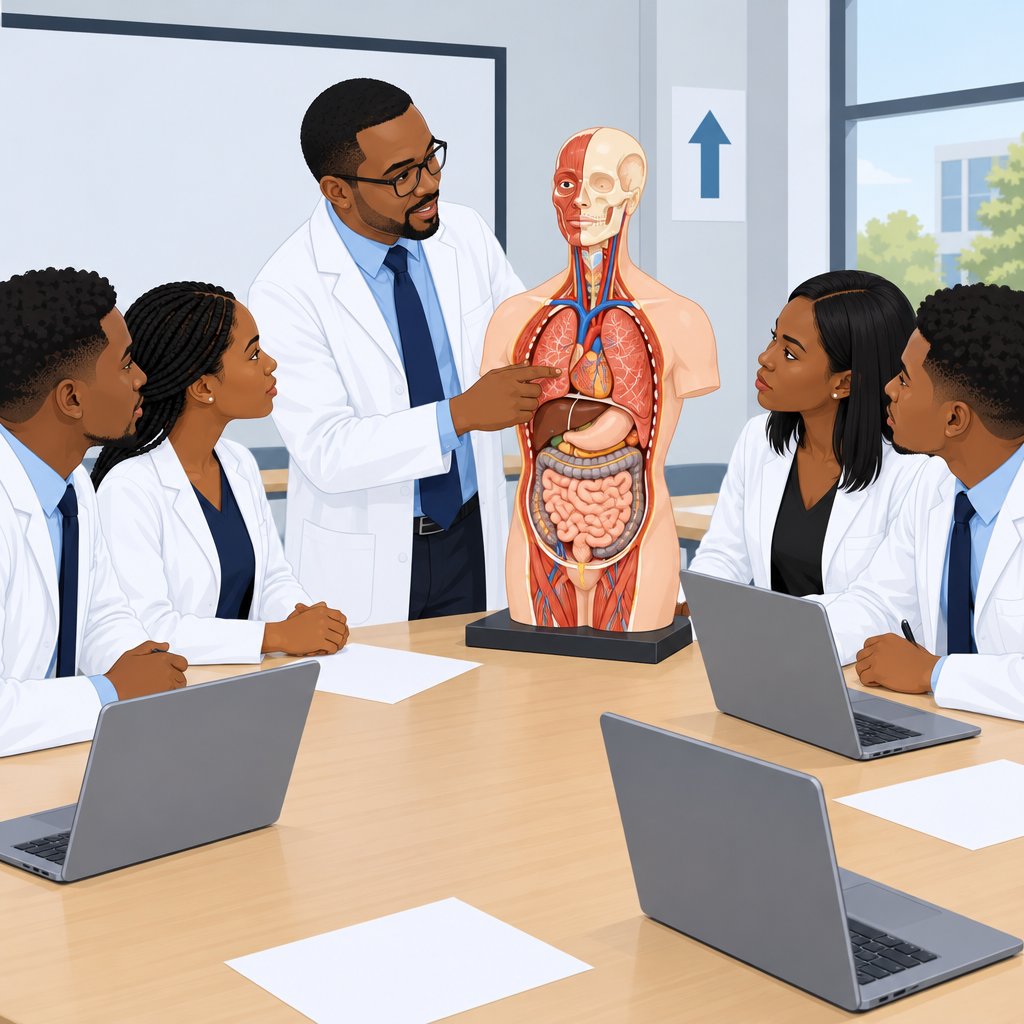
Increased Support for Anatomy Research and Publications
Greater research support can help elevate anatomy education in Nigeria.
Funding, academic journal access, and mentorship can support research projects involving faculty members and students.
Furthermore, research participation can improve academic quality and expand knowledge within the discipline.
See Related Content: Advancements in Nigerian Restorative Dentistry
Potential Career Opportunities for Anatomy Graduates in Nigeria
Anatomy graduates in Nigeria can pursue careers across healthcare, research, teaching, and specialized anatomical fields.
These pathways allow graduates to apply anatomical knowledge in different professional settings.
Additionally, graduates can select roles that match their interests and developing expertise.
- Employment opportunities in hospitals and healthcare facilities.
- Research positions in universities and research institutions.
- Teaching positions in university anatomy departments.
- Specialization opportunities in forensic anatomy, neuroanatomy, and orthopedic anatomy.
Employment Opportunities in Hospitals and Healthcare Facilities
Hospitals and healthcare facilities can employ anatomy graduates in several roles.
Graduates may work as anatomists, medical illustrators, or anatomical laboratory technicians.
In these positions, they work with medical professionals to study human body structure.
Transform Your Career with Expert Guidance
Get personalized mentorship consulting that’s tailored to your unique path. Our expert advice is actionable and exclusive.
Get StartedTheir work can support the diagnosis and treatment of patients.
Research Positions in Universities and Research Institutions
Universities and research institutions offer another pathway for anatomy graduates.
Researchers can examine systems such as the musculoskeletal, cardiovascular, and nervous systems.
Through research, graduates contribute to medical knowledge and technological advancement.
Teaching Positions in Anatomy Departments of Universities
Anatomy graduates can also teach in university anatomy departments.
They can educate future healthcare professionals about human body structure and function.
Furthermore, teaching enables them to share knowledge and skills with future anatomists and medical professionals.
Specialization in Advanced Anatomical Fields
Graduates can specialize in forensic anatomy, neuroanatomy, or orthopedic anatomy.
Specialization lets them focus on a particular area of anatomical interest.
As they develop expertise, they may access more specialized career opportunities and higher earning potential.
Professional Contributions Through Anatomy Careers
These career paths give anatomy graduates several ways to contribute to healthcare.
They can support clinical work, advance research, educate professionals, or develop specialized expertise.
Therefore, anatomy education offers promising prospects for graduates in Nigeria.
Learn More: Career Opportunities in Dentistry in Nigeria
Healthcare Benefits of Improved Anatomy Education in Nigeria
Improved anatomy education would produce medical professionals with deeper knowledge of human anatomy.
This knowledge would help healthcare providers make accurate diagnoses and deliver better patient care.
Moreover, anatomy provides a foundation for understanding the human body’s complex functions.
Healthcare professionals could use comprehensive anatomical knowledge to identify medical conditions more accurately.
Consequently, they could develop more precise treatment plans and improve patient outcomes.
Understanding organ and system relationships could help practitioners identify illness causes and choose targeted interventions.
Anatomy education also supports safe and effective surgical procedures.
With improved anatomy education, Nigerian surgeons could strengthen their skills and navigate the body’s complexities.
Therefore, surgeons could reduce complications and support better patient recovery.
Anatomy education also supports medical research and healthcare innovation.
A strong anatomical foundation could encourage scientific inquiry among Nigerian healthcare professionals.
Researchers could explore new treatments and develop innovative medical devices.
These efforts could improve healthcare services throughout the country.
Nigeria can strengthen healthcare by ensuring professionals receive thorough and practical anatomy education.
Well-trained professionals could deliver higher-quality care to patients.
Furthermore, stronger anatomy education could support the overall well-being of Nigeria’s population.
Explore Further: The Future of Surgery in Nigeria: Trends and Innovations
Strengthening Anatomy Education in Nigeria
Anatomy education helps medical students understand the human body’s structure and function.
This knowledge supports their preparation for healthcare practice.
Therefore, strong anatomy education remains vital to medical training in Nigeria.
Improved anatomy education can help Nigeria produce well-trained healthcare professionals.
These professionals can develop the knowledge needed to address the country’s healthcare needs.
Consequently, better anatomy education offers hope for a brighter future in healthcare.
Government agencies should support the growth of anatomy education through resources and funding.
Educational institutions and healthcare organizations should also invest in its improvement.
Through coordinated support, stakeholders can strengthen anatomy education across the country.
Additional Resources
Google search results for Future Prospects of Anatomy Education in Nigeria Medical
Bing search results for Future Prospects of Anatomy Education in Nigeria Medical


