




Importance of Anatomy in Nigerian Medical Education
Anatomy provides a foundation for effective medical education.
It supports accurate diagnosis and effective patient treatment.
Furthermore, anatomy holds specific importance in Nigerian medical education.
History of Anatomy in Nigerian Medical Education
Anatomy has shaped medical education in Nigeria since the country’s early healthcare training.
It has supported learning about the human body throughout the development of healthcare education.
Over time, Nigerian institutions have expanded how they teach and apply anatomical knowledge.
Evolution of Anatomy in Nigerian Medical Schools
Early Nigerian medical schools taught anatomy as one of the core subjects for medical students.
The subject helped students understand the body’s structure and function.
As medical schools expanded, educators developed anatomy teaching alongside broader medical training.
Initially, students learned through traditional cadaver dissection methods.
Later, advanced imaging technologies improved the learning experience and supported healthcare education.
Colonial Influence on Anatomy Education
During the colonial era, British educational practices strongly influenced medical education in Nigeria.
Nigerian medical schools used European textbooks and teaching methods to deliver anatomy instruction.
These practices established an early framework for anatomy education in the country.
However, Western medical emphasis sometimes marginalized traditional African healing practices.
Those practices included using native plants and herbs for treatment.
Consequently, modern medical education became less connected with indigenous healthcare practices.
Development of the Anatomy Curriculum
Over the years, Nigerian medical schools have revised anatomy curricula alongside advances in medical science.
Traditional basic anatomy now connects with radiological, surgical, and clinical anatomy.
These specialties broaden students’ understanding of anatomical knowledge in medical practice.
Modern educators also use interactive methods to strengthen student engagement.
Virtual dissection software and simulation technologies now support anatomy learning.
These tools help students prepare for contemporary healthcare practice.
Continuing Development of Anatomy Education
Anatomy remains a central part of medical education in Nigeria.
Its history reflects continuing efforts to improve education and professional training.
Medical schools continue developing anatomy instruction for future healthcare practitioners.
Anatomy Curriculum in Nigerian Medical Schools
Nigerian medical schools teach anatomy as part of medical education.
The curriculum covers several areas of human structure and development.
Students study anatomy to understand the body’s structure and function.
Anatomy Curriculum Overview
The curriculum covers gross anatomy, histology, embryology, and neuroanatomy.
Gross anatomy helps students examine the body’s larger structures.
Histology, embryology, and neuroanatomy extend learning into specialized areas.
Comparison With Other Countries
The Nigerian curriculum resembles anatomy curricula in other countries.
However, medical schools may differ in their teaching methods and available resources.
Some countries use more advanced technology to support anatomy education.
Challenges Affecting Anatomy Education
Nigerian medical schools face several challenges when teaching anatomy.
These challenges can limit students’ practical exposure and individual learning support.
Additionally, institutions may need updated curricula and stronger instructional resources.
- Medical schools may face a shortage of trained anatomy faculty.
- This shortage can limit expertise when instructors explain complex anatomical concepts.
- Some institutions lack anatomical models, specimens, and cadavers for practical learning.
- Without these resources, students may struggle to visualize anatomical structures.
- Increasing enrollment can create large anatomy classes.
- Large classes can reduce personalized learning and individual attention.
- Some schools may use anatomy curricula that no longer reflect current developments.
- Outdated curricula can limit students’ exposure to recent anatomical knowledge.
Improving Anatomy Education
Addressing faculty shortages could strengthen anatomy instruction in Nigerian medical schools.
Providing adequate models, specimens, and cadavers could improve hands-on learning.
Transform Your Career with Expert Guidance
Get personalized mentorship consulting that’s tailored to your unique path. Our expert advice is actionable and exclusive.
Get StartedUpdating curricula could help students engage with current anatomical knowledge.
Delve into the Subject: Innovations in Preventive Dentistry in Nigeria
Anatomy as a Basis for Clinical Learning
Anatomy gives medical students essential knowledge about human structure.
This knowledge supports their understanding of diseases and available treatments.
Students therefore develop a reliable base for later clinical learning.
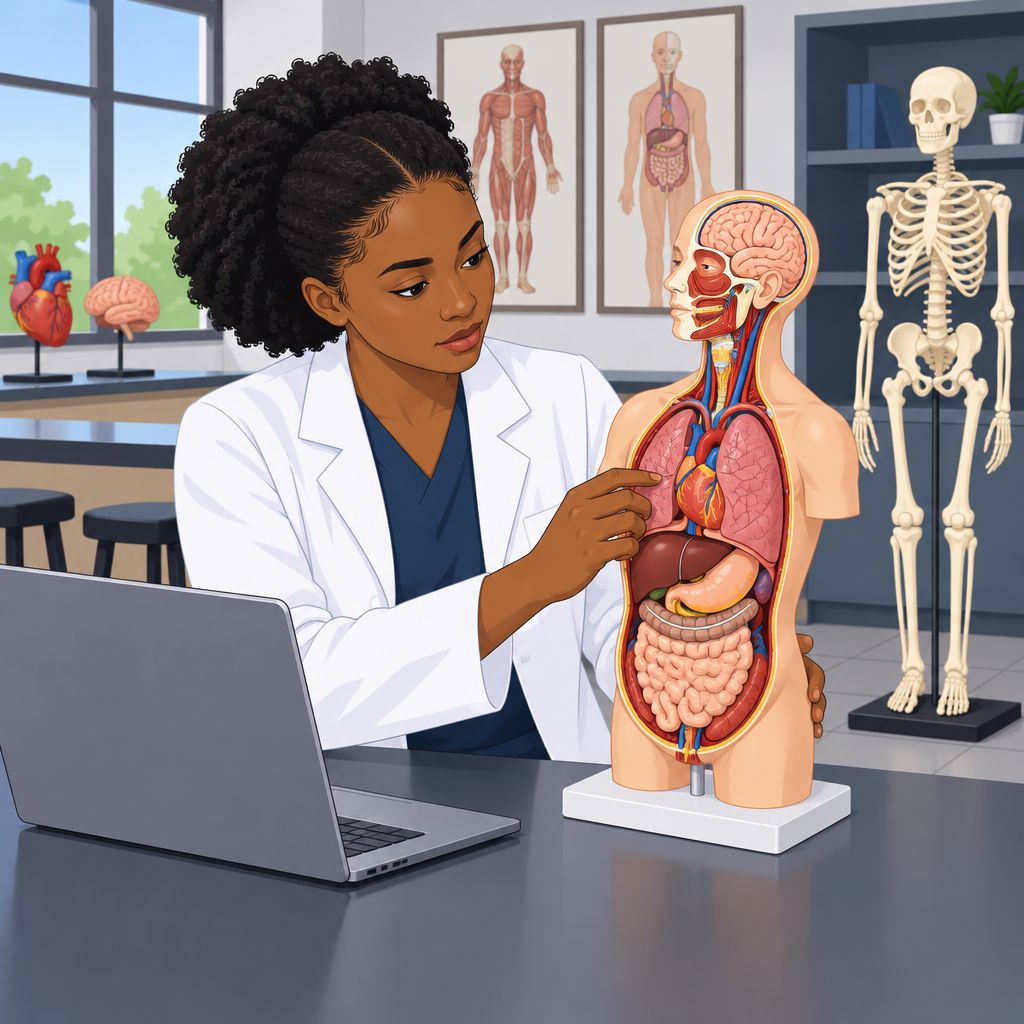
Understanding Structure and Function
Through anatomical study, students examine the body’s intricate structures.
They learn how body parts relate to one another.
This perspective helps them interpret medical conditions more accurately.
Anatomy’s Connection with Medical Disciplines
Anatomy connects medical disciplines through shared structural knowledge.
It helps students relate anatomy to physiology, pathology, and surgery.
Consequently, learners can combine ideas from several areas of medical study.
Anatomy’s Role in Healthcare Preparation
This integrated knowledge prepares students for professional healthcare responsibilities.
It supports clearer clinical reasoning during diagnosis and treatment.
Therefore, anatomy remains an essential part of medical education in Nigeria.
Discover More: Importance of Radiographers in Healthcare Teams
Anatomy in Clinical Practice
Anatomy supports clinical practice in Nigeria by helping health professionals understand the body’s structures and relationships.
That knowledge informs diagnosis, treatment, surgery, imaging, and the use of emerging medical technologies.
Medical professionals apply anatomical understanding to provide accurate and safer patient care.
Diagnostic and Treatment Decisions
Physicians use anatomical knowledge to locate structures and identify abnormalities during clinical assessment.
Recognizing organ positions and relationships helps clinicians investigate cancers, tumors, and infections.
Moreover, anatomical insight helps physicians select suitable treatments, including medication, surgery, or other interventions.
Surgical Relevance of Anatomy
Surgeons require detailed anatomical knowledge to perform procedures safely and effectively.
They use this understanding to plan operations, protect vital structures, and support favorable patient outcomes.
Furthermore, anatomical knowledge helps surgeons manage complex regions with greater precision during procedures.
Anatomy in Medical Imaging and Technology
Anatomy helps radiologists and other professionals interpret images of internal body structures accurately.
Imaging methods such as MRI, CT scans, and ultrasound support diagnosis and surgical planning.
Additionally, three-dimensional printing and virtual reality create accurate models for anatomy education and clinical simulation.
These technologies make complex structures easier for students and professionals to visualize and study.
Explore Further: Future Trends in Nigerian Preventive Medicine
Challenges in Teaching Anatomy in Nigerian Medical Schools
Teaching anatomy in Nigerian medical schools presents several challenges.
These challenges can hinder effective delivery of this crucial subject.
Therefore, medical schools need adequate resources, qualified faculty, and engaging teaching approaches.
Lack of Resources and Infrastructure
Many Nigerian medical schools lack the resources and infrastructure required for effective anatomy teaching.
Insufficient cadavers can limit students’ opportunities for hands-on learning.
Additionally, limited anatomical models and modern imaging equipment can restrict practical instruction.
Shortage of Qualified Anatomy Faculty
Nigerian medical schools also face a shortage of qualified anatomy faculty.
This shortage can affect the quality and consistency of anatomy education.
Qualified instructors remain essential for teaching anatomical knowledge and practical skills effectively.
Need for Innovative Anatomy Teaching Methods
Traditional anatomy teaching methods may not always engage modern medical students effectively.
Consequently, educators increasingly need interactive and technology-based learning approaches.
Virtual anatomy resources can also support learning when practical resources remain limited.
You Might Also Like: Challenges Facing Physiotherapy in Nigeria
Strengthening Medical Education Through Anatomy
Anatomy remains central to Nigerian medical education because it supports preparation for medical practice.
Medical students need strong anatomical knowledge to diagnose and treat patients effectively.
Consequently, medical schools must prioritize anatomy to develop competent future healthcare professionals.
Anatomy’s Educational Value for Medical Students
Anatomy provides the knowledge base for understanding the human body’s structure and function.
This foundation helps students approach complex medical concepts and procedures with greater clarity.
Without sufficient anatomical knowledge, students may struggle during later medical learning and practical work.
Improving Anatomy Education in Nigerian Medical Schools
Medical schools can strengthen anatomy education through modern teaching methods and improved learning resources.
Such investment can benefit students and support better healthcare delivery across the country.
By prioritizing anatomy, schools can prepare skilled professionals to address population healthcare needs effectively.
Additional Resources
Google search results for Role of Anatomy in Nigerian Medical Education Medical
Bing search results for Role of Anatomy in Nigerian Medical Education Medical


