



Marine and Coastal Conservation in Nigeria
Nigeria actively engages in various marine and coastal conservation efforts.
These efforts protect the country’s rich biodiversity and ecological resources.
Marine and coastal conservation preserves Nigeria’s diverse habitats and species.
Furthermore, these areas support marine life, including fish, sea turtles, and dolphins.
Conservation measures safeguard these ecosystems and promote sustainable marine resource use.
Meanwhile, Nigeria addresses threats such as pollution and overfishing.
By implementing conservation measures, Nigeria protects marine and coastal environments for future generations.
Additionally, efforts establish marine protected areas and reserves around critical habitats.
Community involvement and stakeholder engagement strengthen Nigeria’s conservation strategies.
Through collaboration, Nigeria advances its conservation goals and protects its natural heritage.
History of Marine and Coastal Conservation in Nigeria
Nigeria’s marine and coastal conservation history began during the early colonial period.
Initially, authorities focused on protecting marine resources for economic purposes.
During the 1960s, Nigeria recognized the importance of sustainable marine and coastal conservation.
Consequently, the government developed policies and regulations to protect the marine environment.
Evolution of Marine and Coastal Conservation Policies in Nigeria
Nigeria’s marine and coastal conservation policies began evolving during the 1970s.
During this period, the government enacted laws regulating activities in marine and coastal areas.
In 1979, the government established the National Parks Service to strengthen conservation efforts.
Later, Nigeria adopted the National Policy on the Environment during the 1990s.
Today, various policies and strategies protect Nigeria’s marine and coastal resources.
Major Milestones in Marine and Coastal Conservation
Nigeria established marine protected areas as a major conservation milestone.
These areas provide sanctuaries for marine species and support biodiversity conservation.
Additionally, Nigeria implemented sustainable fishing practices to help prevent overfishing.
The country also addressed pollution and habitat destruction in coastal areas.
These efforts helped preserve Nigeria’s rich marine biodiversity.
Current Challenges Facing Marine and Coastal Conservation in Nigeria
Marine and coastal conservation in Nigeria faces several challenges.
These pressures threaten ecosystem sustainability along the country’s coastlines.
Therefore, urgent action must protect marine life and coastal ecosystems.
Pollution and Waste Management Issues
Oil spills and industrial waste contaminate coastal waters.
Improper disposal leaves litter on beaches and in the ocean.
Meanwhile, limited waste infrastructure worsens these pollution problems.
- Pollution from oil spills and industrial waste contaminates coastal waters.
- Improper waste disposal practices contribute to litter on beaches and in the ocean.
- Lack of proper waste management infrastructure exacerbates pollution problems.
Overfishing and Illegal Fishing Practices
Overexploitation reduces fish stocks and threatens marine ecosystem sustainability.
Illegal practices, including dynamite fishing, further deplete fish populations.
Additionally, weak enforcement allows illegal fishing activities to continue.
- Overexploitation of fish stocks threatens the sustainability of marine ecosystems.
- Illegal fishing practices, such as dynamite fishing, further deplete fish populations.
- Lack of enforcement of fishing regulations allows continued illegal fishing activities.
Climate Change and Its Impact on Marine and Coastal Ecosystems
Rising sea temperatures and levels affect marine habitats and species.
Higher carbon dioxide levels cause ocean acidification and harm marine life.
Furthermore, extreme weather events disrupt coastal ecosystems.
- Rising sea temperatures and sea levels affect marine habitats and species.
- Ocean acidification from increased carbon dioxide levels impacts marine life.
- Extreme weather events, such as storms and hurricanes, disrupt coastal ecosystems.
Addressing these challenges requires coordinated action from governments, communities, and international partners.
Consequently, stakeholders must reduce pollution, combat overfishing, and mitigate climate change impacts.
These efforts support the long-term sustainability of Nigeria’s marine and coastal environments.
Explore Further: Overview of Estate Management Courses in Nigeria
Transform Your Career with Expert Guidance
Get personalized mentorship consulting that’s tailored to your unique path. Our expert advice is actionable and exclusive.
Get StartedInitiatives and Programs for Marine and Coastal Conservation
These initiatives protect marine and coastal ecosystems through coordinated conservation programs.
They combine protected areas, community participation, and wildlife management.
Together, these approaches support biodiversity and encourage sustainable resource management.
National Parks and Wildlife Conservation Authority
Through national parks and wildlife reserves, the authority protects biodiversity and important habitats.
These protected areas include marine and coastal environments.
Additionally, they provide sanctuaries for sea turtles, dolphins, and numerous fish species.
By preserving habitats, the authority supports healthier ecosystems and marine life.
Marine Protected Areas and Marine Sanctuaries
Nigeria has designated several Marine Protected Areas and Marine Sanctuaries.
These areas protect vulnerable ecosystems and conserve marine biodiversity.
Furthermore, managers can use them to promote sustainable fishing practices.
They also reduce exposure to overfishing, habitat destruction, and pollution.
Consequently, protected areas strengthen the long-term resilience of marine and coastal ecosystems.
Community-Based Conservation Projects
Community-based conservation projects involve local residents in protecting marine and coastal resources.
These initiatives raise awareness about the value of conservation.
Moreover, participation encourages communities to support sustainable resource management.
Local involvement also fosters responsibility and accountability for conservation efforts.
Delve into the Subject: Nigerian Government Policies on Fisheries
Success Stories in Marine and Coastal Conservation in Nigeria
Marine and coastal conservation efforts in Nigeria have achieved significant successes in recent years.
Dedicated initiatives protect the country’s rich marine biodiversity.
Together, these achievements demonstrate the value of protecting marine ecosystems.
Rehabilitation of Degraded Mangrove Forests
Nigeria has rehabilitated degraded mangrove forests along its coast.
These forests provide habitat for diverse marine species.
Moreover, they protect coastlines from erosion.
Through reforestation and community involvement, restoration has increased biodiversity and strengthened coastal resilience.
Restored mangroves also absorb carbon dioxide and help mitigate climate change effects.
Conservation of Endangered Marine Species
Nigeria has advanced conservation efforts for endangered marine species.
Sea turtles, manatees, and dolphins face habitat loss, pollution, and poaching.
Therefore, protected areas, monitoring programs, and community education support their protection.
These efforts have produced signs of population recovery in some coastal areas.
Sustainable Fisheries Management Practices
Nigeria promotes sustainable fisheries management to protect marine ecosystems and fishing livelihoods.
These practices encourage responsible management of fish stocks over time.
Managers use quotas, bycatch reduction, and responsible fishing techniques to prevent overfishing.
Consequently, these measures support the regeneration of fish populations.
They also maintain marine ecosystem balance and sustain fishing livelihoods.
Learn More: Estate Management in Rural vs. Urban Areas
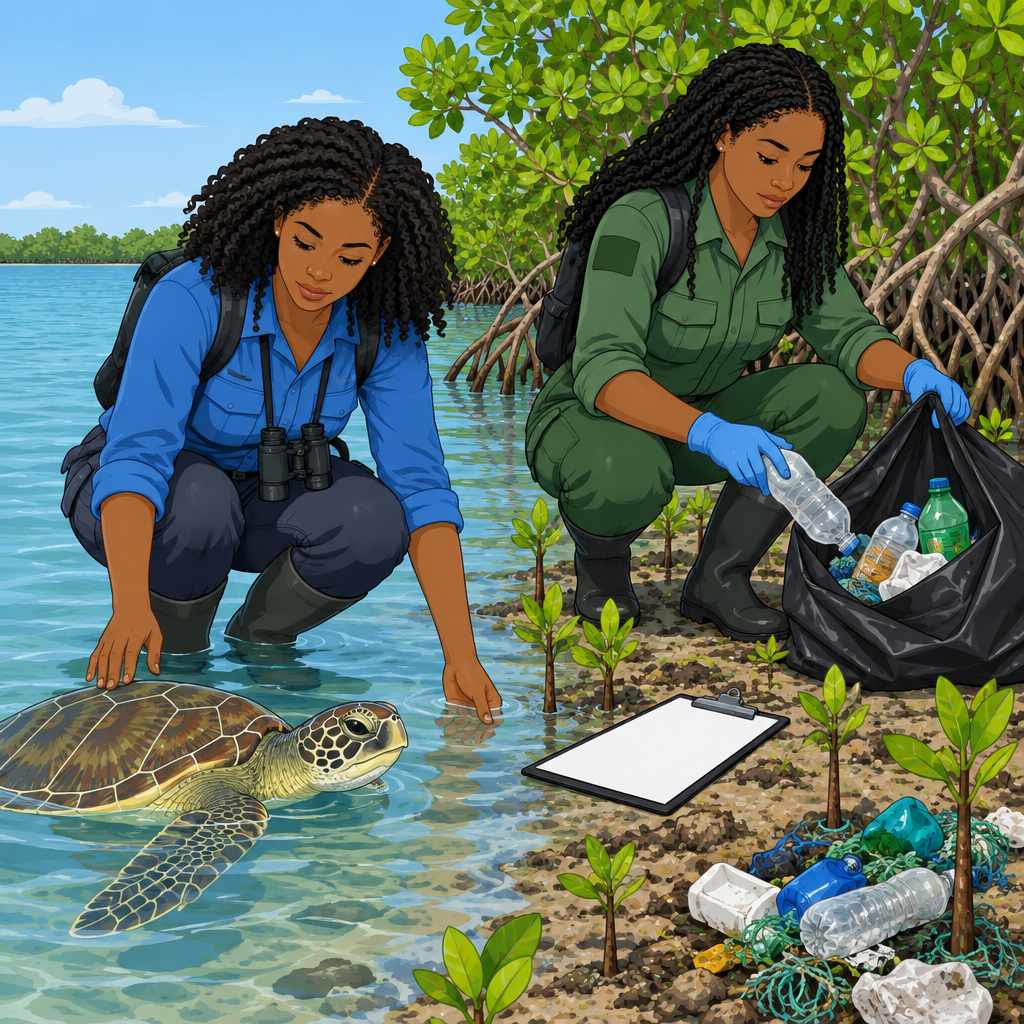
Partnerships and Collaborations in Marine and Coastal Conservation
Partnerships and collaborations strengthen marine and coastal conservation efforts in Nigeria.
International organizations, communities, NGOs, government agencies, and businesses contribute different resources and expertise.
Together, these stakeholders support protection of marine biodiversity and sustainable coastal ecosystems.
International Organizations Supporting Conservation
International organizations provide important support for marine and coastal conservation in Nigeria.
UNEP and WWF offer technical expertise, funding, and resources for these initiatives.
Consequently, their support helps Nigeria protect marine and coastal ecosystems.
Community and NGO Collaborations
Local communities and NGOs help conservation efforts remain practical and sustainable.
These partnerships engage residents in conservation activities and increase awareness of ecosystem importance.
Moreover, community-led initiatives encourage local participation in protecting marine and coastal resources.
NCF and ERA work with communities to implement projects, conduct research, and advocate protective policies.
Public-Private Partnerships for Conservation
Public-private partnerships unite government agencies, private companies, and civil society organizations.
These partnerships combine resources and expertise to support sustainable conservation strategies.
For example, NIMASA collaborates with oil and gas companies to develop marine protection practices.
Those practices aim to reduce pollution in coastal areas.
Strengthening Sustainable Conservation Efforts
Effective collaboration helps Nigeria preserve its rich marine biodiversity.
Furthermore, shared responsibilities support sustainable futures for coastal ecosystems.
By working together, stakeholders can advance marine and coastal conservation across Nigeria.
Gain More Insights: Fieldwork Experiences in Environmental Biology
Importance and Future of Marine and Coastal Conservation
Nigeria’s marine and coastal ecosystems support biodiversity, livelihoods, and the economy.
Therefore, these ecosystems represent invaluable resources for the country.
All stakeholders must work together to protect these vital ecosystems.
Moreover, individuals and organizations should support marine and coastal conservation efforts.
With collective commitment, Nigeria can achieve a sustainable and thriving marine and coastal environment.
This future can benefit generations to come.
Additional Resources
Google search results for Nigeria's Marine and Coastal Conservation Efforts Environmental
Bing search results for Nigeria's Marine and Coastal Conservation Efforts Environmental


