



Sustainable Boat Building in Nigeria
Sustainable practices play an important role in preserving the environment during boat building.
Nigeria has maintained a boat building tradition for centuries.
Therefore, modern builders can combine this heritage with sustainable techniques.
Locally Sourced Materials
Nigerian boat builders use locally sourced materials, including wood, bamboo, and palm fronds.
These materials remain readily available within the region.
Consequently, builders reduce the environmental impact of transporting materials from distant locations.
Traditional Boat Building Techniques
Many Nigerian boat builders use techniques passed down through generations.
These methods help communities preserve their cultural heritage.
Moreover, traditional techniques often provide more sustainable alternatives to modern methods.
Eco-Friendly Boat Designs
Recently, Nigerian builders have increasingly developed eco-friendly boat designs.
These designs improve fuel efficiency and reduce emissions.
As a result, boat owners can lower environmental impacts and operating costs.
Renewable Energy for Boats
Some Nigerian boat builders integrate renewable energy sources into their vessels.
Solar panels and wind turbines can help boats reduce fossil fuel use.
Therefore, renewable energy can significantly lower a boat’s carbon footprint.
Future Directions for Nigerian Boat Building
Nigeria’s boat building industry should continue prioritizing sustainable practices.
Builders can combine innovative materials and techniques to protect the environment.
These efforts can produce efficient, cost-effective, and environmentally friendly vessels for future generations.
Traditional Boat Building Techniques
Nigerian boat builders preserve age-old methods passed down through generations.
They commonly use locally sourced wood, bamboo, and palm leaves.
These abundant, renewable materials support sustainable craftsmanship.
Modern builders can adapt these methods for more sustainable boat production.
Utilization of Locally Sourced Materials
Indigenous woods such as mahogany and iroko serve as primary boat building materials.
Bamboo provides strength and flexibility for frames and paddles.
Builders use palm leaves for roofing and insulation against the elements.
Local availability reduces reliance on imported resources.
Integration of Traditional Techniques in Modern Practices
Traditional methods can reduce the environmental impact of modern boat production.
Local materials can also reduce the carbon footprint associated with boat building.
These practices preserve craftsmanship and skills developed over centuries.
Modern builders can apply this knowledge when creating sustainable vessels.
Sustainable Heritage and Future Practice
Nigerian boat building demonstrates how heritage and sustainability can support one another.
Local materials and traditional methods help builders honor their cultural heritage.
Preserving these skills allows future generations to continue sustainable boat building.
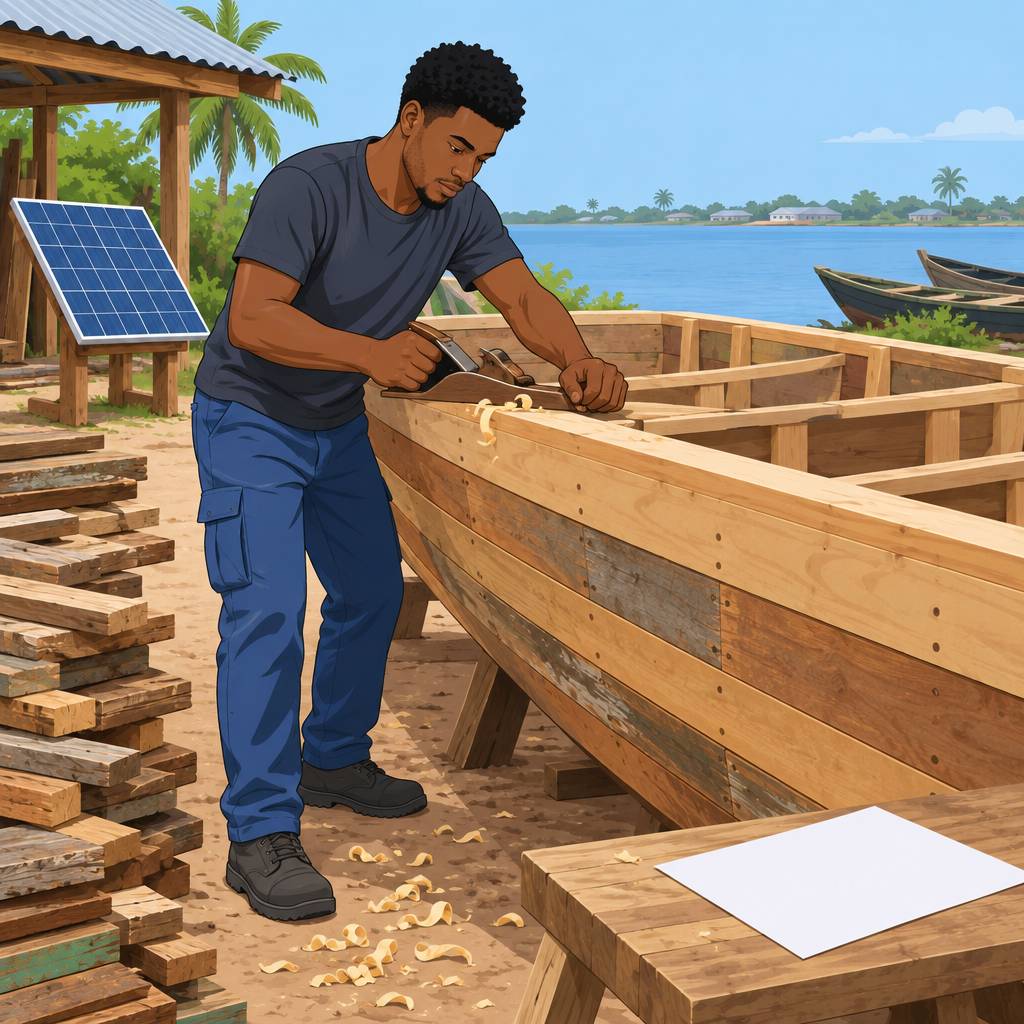
Use of Eco-Friendly Materials
Boat builders in Nigeria increasingly use eco-friendly materials to reduce boat building’s environmental impact.
These alternatives support sustainable construction while maintaining strength and durability.
Material choices also influence resource use, maintenance needs, and boat longevity.
- Types of eco-friendly materials used in boat building
- Sustainable sourcing methods for boat building materials
- Environmental and longevity benefits of these materials
Fiberglass in Nigerian Boat Building
Fiberglass provides strength and durability for boat construction.
Manufacturers can reduce its environmental impact by using recycled materials during production.
The material can also be recycled and reused, supporting more sustainable boat building.
Sustainably Sourced Wood
Wood remains a traditional material for Nigerian boat builders.
Transform Your Career with Expert Guidance
Get personalized mentorship consulting that’s tailored to your unique path. Our expert advice is actionable and exclusive.
Get StartedBuilders can select wood from sustainable forests to support renewable resource use.
Locally sourced mahogany and teak provide strength and durability while supporting the local economy.
Recyclable Aluminum
Aluminum offers a lightweight and corrosion-resistant option for boat construction.
Manufacturers can use recycled aluminum to reduce production impacts.
Responsible mining practices provide another way to improve aluminum sourcing.
Environmental and Longevity Benefits
Eco-friendly materials can reduce environmental impacts compared with traditional alternatives.
They can help lower carbon emissions and preserve natural resources.
Durable materials can also help boats withstand wear and tear for longer periods.
Explore Further: Career Paths in Applied Chemistry in Nigeria
Energy Efficiency in Nigerian Boat Building
Energy-efficient practices can strengthen sustainability within Nigeria’s boat building industry.
These methods can reduce energy consumption while supporting more efficient construction processes.
Additionally, alternative energy sources can help boat builders reduce their carbon footprint.
- Boat builders in Nigeria increasingly use solar power to reduce workshop energy consumption.
- Solar power can significantly reduce carbon emissions from boat building activities.
- Energy-efficient practices can improve the overall construction process.
- Although efficiency requires initial investment, it can produce long-term cost savings.
- Workshops with ample natural light can reduce reliance on artificial lighting.
- Builders can optimize machinery use to minimize energy consumption during construction.
- Recycling and reusing materials can further support energy efficiency.
- Training can help boat builders apply energy-efficient methods consistently.
- Government incentives and subsidies can encourage investment in energy-efficient technologies.
- Energy efficiency experts can help builders implement innovative construction solutions.
Furthermore, efficient energy use benefits both the environment and the boat building industry.
By adopting sustainable practices, Nigerian boat builders can support a more sustainable future.
Delve into the Subject: Introduction to Agricultural Economics in Nigeria
Waste Management and Recycling
Proper waste management helps Nigerian boat builders minimize environmental impact.
Additionally, builders incorporate recycling practices by repurposing waste materials.
- Builders use old tires to create boat fenders and bumpers, reducing waste.
- They melt scrap metal and reuse it to create new boat components.
- Builders shred plastic bottles and use them as insulation during construction.
- They repurpose wood scraps from other projects for decking and interior finishes.
These creative recycling methods reduce environmental impact and help boat builders save costs.
Consequently, Nigerian boat builders support more sustainable practices throughout the industry.
See Related Content: Career Opportunities in Ecology for Nigerians
Community Engagement and Skill Development
- Local communities play a vital role in sustainable boat building practices.
- Moreover, community engagement preserves traditional boat building skills.
- Passing these skills to younger generations secures the future of boat building.
- Additionally, training locals in valuable trades promotes economic empowerment.
- As a result, community skill development benefits the wider economy.
- Finally, cultural preservation helps communities maintain their traditions and identity.
Community engagement in Nigerian boat building promotes sustainability, economic empowerment, and cultural preservation.
You Might Also Like: Tips for Excelling in Nigerian Geophysics Courses
Regulatory Framework and Policy Advocacy
Regulatory frameworks shape industry behavior and can support sustainable boat building in Nigeria.
Nigerian boat building needs clear rules that protect environmental resources and support long-term industry viability.
Stakeholders must understand current oversight before proposing stronger sustainability requirements.
- Examine the existing regulatory framework for sustainability in Nigerian boat building.
- Discuss the role of government policies in promoting sustainable practices.
- Advocate stricter regulations and enforcement for long-term industry sustainability.
Existing Regulatory Framework
The National Inland Waterways Authority primarily governs boat building and operations on Nigerian inland waterways.
NIWA provides general guidance covering safety and operational standards for inland waterway activities.
However, existing regulations lack detailed sustainability requirements for boat construction.
Specific rules should address construction materials, waste management, emissions control, and energy efficiency.
Government Policies Supporting Sustainable Practices
Government policies can encourage or require sustainable practices throughout the boat building industry.
For example, tax breaks and grants could support builders who adopt environmentally responsible materials or technologies.
Such incentives could encourage wider industry adoption of sustainable construction methods.
Government policies can also require environmental impact assessments for new boat building projects.
These assessments require builders to consider environmental effects and identify appropriate mitigation measures.
Advocacy for Stronger Regulations and Enforcement
Existing oversight provides some control, but stronger regulations remain necessary for long-term sustainability.
Advocacy can raise awareness and encourage legislative changes that prioritize environmental protection and resource conservation.
Industry stakeholders, environmental organizations, and government bodies can jointly develop stronger sustainability requirements.
They can also support industry assessments, builder training, and compliance monitoring.
Effective enforcement can help builders address environmental challenges and strengthen the industry’s sustainable direction.
Integrating sustainability into regulation can support both environmental protection and the industry’s future viability.
Sustainable Boat Building and Industry Resilience
Sustainable practices play a critical role in Nigerian boat building.
Boat builders preserve the ecosystem by using environmentally friendly materials and techniques.
These practices also contribute to economic development.
Sustainable methods can reduce waste and pollution.
They can also promote the industry’s long-term viability.
As Nigeria continues to grow, sustainable boat building can support a healthy environment for future generations.
Wider Environmental and Economic Impacts
The impact of sustainable practices extends beyond individual boat builders.
Moreover, these practices create benefits across the wider ecosystem.
By embracing sustainability, Nigeria can strengthen its position in environmentally conscious boat building.
Research and Innovation for Sustainable Construction
Continued research can improve sustainable boat building practices in Nigeria.
Furthermore, investment in new technologies can support a more sustainable future.
These efforts can create positive environmental and economic effects through sustainable boat building.
Additional Resources
Google search results for Sustainable Practices in Nigerian Boat Building Sciences
Bing search results for Sustainable Practices in Nigerian Boat Building Sciences


