




Introduction
Soil conservation is crucial in Nigeria to sustain agriculture.
It also protects the environment.
Nigeria boasts diverse ecosystems and agricultural practices that rely on healthy soil.
Traditional Soil Conservation Techniques
For generations, Nigerian farmers have passed down sustainable soil conservation practices.
These practices include contour bunding, agroforestry, and mulching.
They preserve soil fertility, retain moisture, prevent erosion, and maintain soil health.
Contour Bunding
Contour bunding uses earth bunds built along the land’s contour lines.
These bunds slow water runoff, reduce erosion, and conserve moisture on sloping land.
They trap sediment, prevent gully erosion, and promote soil stability.
Agroforestry
Agroforestry integrates trees and shrubs into farmland to improve soil fertility.
Trees reduce raindrop impact, limit soil compaction, and enhance soil structure.
Furthermore, tree roots hold soil together and help sustain agricultural practices.
Mulching
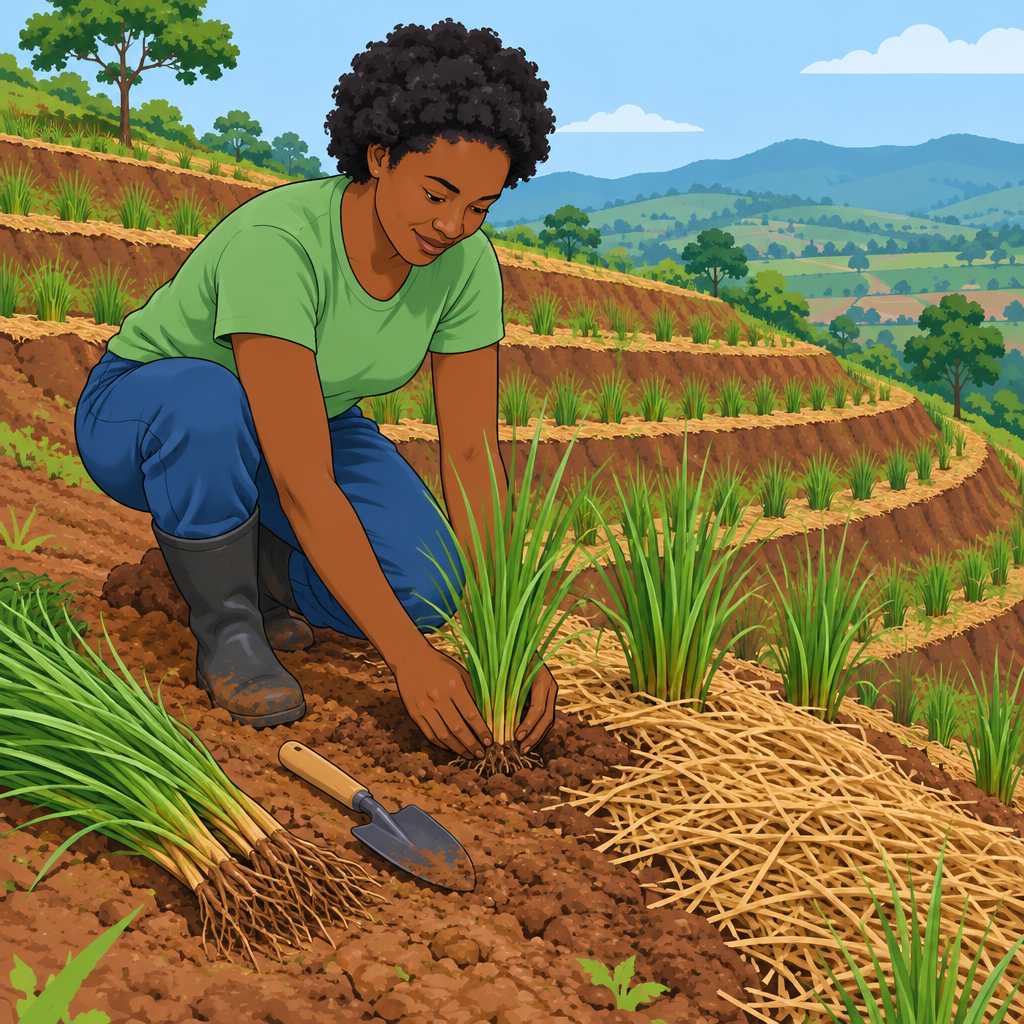
Mulching spreads organic materials, such as crop residues or leaves, across the soil surface.
This method retains moisture, reduces evaporation, improves soil structure, and supports microbial activity.
As organic mulch decomposes, it adds nutrients and supports plant growth.
Sustainable Agricultural Productivity
These traditional techniques preserve soil fertility and help prevent erosion.
Farmers can incorporate these indigenous methods into modern agricultural practices.
Consequently, they can manage land sustainably and support long-term productivity.
Modern Soil Conservation Practices
Modern soil conservation practices address soil degradation and depletion in Nigeria.
These strategies help farmers rejuvenate soil and support long-term agricultural productivity.
Terracing, cover cropping, and crop rotation improve soil structure while limiting nutrient depletion.
- Introduction of terracing
- Implementation of cover cropping
- Utilization of crop rotation
Terracing for Erosion Control
Terracing creates flat platforms on sloping land to reduce soil erosion.
Farmers use terraces in hilly areas and on steep farmlands vulnerable to erosion.
Terraces slow water flow, retain sediment, conserve moisture, and reduce nutrient loss.
Consequently, terraces support soil fertility and improve crop yields.
Cover Cropping for Soil Protection
Cover cropping protects soil during the off-season.
Farmers plant legumes, grasses, or clover to suppress weeds and add organic matter.
Their roots create channels that improve aeration, drainage, and water movement around plant roots.
These changes encourage microbial activity and support nutrient cycling.
Crop Rotation for Nutrient Management
Crop rotation grows different crops successively on the same farmland.
Farmers can rotate maize, beans, and vegetables to diversify nutrient demands.
This practice limits the depletion of nitrogen, phosphorus, and potassium.
Additionally, rotation interrupts pest and disease cycles, reduces weeds, and strengthens soil health.
Sustainable Outcomes for Nigerian Farms
Together, these practices help farmers manage land more sustainably.
They also protect the environment while maintaining productive farmland.
Over time, improved soil management can support food security for future generations.
Delve into the Subject: Environmental Management Certification Programs Nigeria
Government Initiatives for Soil Conservation
The Nigerian government supports sustainable land management through several soil conservation programs and policies.
These initiatives protect soil resources and promote responsible agricultural practices.
They also encourage farmers to adopt methods that reduce erosion and improve soil fertility.
Transform Your Career with Expert Guidance
Get personalized mentorship consulting that’s tailored to your unique path. Our expert advice is actionable and exclusive.
Get StartedGovernment agencies support these efforts through training, regulation, policy development, and environmental monitoring.
Key Programs Supporting Soil Conservation
The National Agricultural Land Development Authority improves soil fertility and reduces erosion.
NALDA promotes conservation agriculture and provides farmers with training on sustainable land management techniques.
Meanwhile, the National Environmental Standards and Regulations Enforcement Agency enforces environmental laws.
NESREA also inspects sites and monitors compliance with soil conservation requirements.
Additionally, the Federal Ministry of Agriculture and Rural Development develops policies for conserving agricultural soil resources.
Challenges Affecting Government Interventions
Government interventions face several challenges that limit their effectiveness across Nigeria.
Limited funding and insufficient resources restrict the expansion of soil conservation programs.
Consequently, many farmers may not receive adequate support for adopting conservation measures.
Stronger collaboration among government agencies, nongovernmental organizations, and local communities would improve implementation.
Such cooperation can address the complex causes of soil degradation and erosion.
Furthermore, climate change increases risks from droughts, floods, soil erosion, and land degradation.
Therefore, government policies should include climate resilience strategies that protect soil resources.
Improved coordination, increased funding, and climate-aware planning can strengthen sustainable land management.
Discover More: Environmental Justice Initiatives in Nigeria
Barriers to Effective Soil Conservation
Identifying barriers to soil conservation helps Nigeria address persistent land management challenges.
Many farmers and communities lack awareness of soil conservation techniques and their importance.
Additionally, inadequate funding limits soil conservation projects and related initiatives.
Limited resources, knowledge, and technical skills also weaken the implementation of conservation measures.
Approaches to Strengthen Soil Conservation
Several practical measures can help Nigeria address these soil conservation barriers.
Education, funding, coordination, policy, and innovation can strengthen conservation implementation.
Together, these measures can support sustainable land management for future generations.
- Education campaigns, workshops, and training sessions can increase awareness among farmers and communities.
- More funding and resources can support successful soil conservation projects and initiatives.
- Government agencies, NGOs, and local communities can coordinate efforts to improve conservation effectiveness.
- Policies and regulations can promote sustainable land management and protect soil health and fertility.
- Modern technologies and innovative practices can improve conservation efficiency and effectiveness.
Addressing these challenges can enhance Nigeria’s soil conservation practices and support sustainable land management.
See Related Content: Challenges in Environmental Safety Management Today
Role of Technology in Soil Conservation
Technology plays a significant role in Nigeria by offering innovative solutions to agricultural challenges.
Advancements have produced tools and techniques that strengthen soil conservation practices.
These tools support informed decisions about land and crop management.
Technological Innovations for Soil Conservation
Technological innovations provide farmers with useful information for protecting farmland.
- GPS technology creates accurate farmland maps and identifies areas prone to erosion and degradation.
- Soil sensors provide real-time data about moisture, temperature, and nutrient levels.
- Precision agriculture uses collected data to optimize water, fertilizer, and pesticide applications.
Technology for Productivity and Sustainability
Technology can improve agricultural productivity while supporting sustainability.
- GPS mapping and soil sensors help farmers allocate resources precisely and increase yields.
- Precision agriculture reduces water and fertilizer use, which conserves resources and limits environmental impacts.
- Soil monitoring helps farmers promote fertility, reduce erosion, and support long-term soil health.
Technology and Long-Term Agricultural Resilience
Technology integration strengthens soil conservation efforts across Nigeria.
Farmers can use digital tools to address soil degradation and erosion more effectively.
These practices support a more productive, sustainable, and environmentally responsible agricultural sector.
Explore Further: Environmental Biology and Climate Action
Community Participation in Soil Conservation
Community involvement plays a crucial role in soil conservation efforts across Nigeria.
Local participation helps conservation initiatives respond effectively to community needs.
Furthermore, community ownership strengthens the long-term sustainability of conservation activities.
Importance of Local Participation
Local communities experience the effects of soil degradation and erosion directly.
Therefore, residents provide valuable insight into local soil conservation challenges.
Their involvement also helps communities develop practical solutions suited to local conditions.
Community-Based Conservation Initiatives
Several community-based initiatives promote soil conservation in Nigeria.
These initiatives encourage residents to take ownership of conservation practices.
As a result, communities can develop strategies that protect their soil resources.
Grassroots Awareness and Action
Grassroots movements raise awareness about the importance of soil conservation.
They also mobilize residents to support sustainable land management practices.
Moreover, these movements empower individuals to advocate for conservation within their communities.
Partnerships for Effective Soil Conservation
Farmers, NGOs, and government agencies can combine their strengths to promote soil conservation.
These partnerships connect community knowledge with technical assistance and institutional support.
Consequently, collaboration can improve conservation implementation and strengthen its sustainability.
- Farmers implement conservation practices and share traditional knowledge with other community members.
- NGOs provide technical support, training, and resources for sustainable land management.
- Government agencies provide policy support, funding, and regulatory frameworks for conservation efforts.
- Stakeholder collaboration connects policy development with practical implementation.
- Joint efforts can address the root causes of soil degradation in Nigeria.
Shared Responsibility for Healthy Soil
Effective soil conservation depends on sustained cooperation among local communities and supporting organizations.
When stakeholders work together, they can protect and restore soil resources more effectively.
These shared efforts can help preserve healthy soil for future generations.
Long Term Stewardship of Nigerian Soils
Effective soil conservation will help Nigeria sustain productive agriculture while protecting environmental resources.
Terracing, reforestation, and cover cropping can preserve soil structure and limit erosion.
Meanwhile, organic practices, crop rotation, and mulching can improve fertility and reduce erosion risks.
Contour plowing and agroforestry also offer practical approaches for strengthening land management.
Therefore, individuals and organizations should prioritize soil preservation in farming and land management decisions.
Such commitment can support sustainable agricultural development and protect soil for future generations.
Finally, collective action can create a more resilient and productive agrarian landscape across Nigeria.
Every land user can help by adopting sustainable practices and acting as a responsible steward.
Additional Resources
Google search results for Soil Conservation Techniques Used in Nigeria Environmental
Bing search results for Soil Conservation Techniques Used in Nigeria Environmental


