



Introduction
Patient interaction skills support radiographers’ daily work in Nigerian healthcare settings.
Effective communication can improve the quality of healthcare services that radiographers provide.
Therefore, radiographers need strong communication skills when interacting with patients.
Understanding Cultural Sensitivities
Respecting cultural backgrounds helps radiographers serve patients appropriately in Nigeria.
Nigeria includes diverse ethnic communities with distinct customs, beliefs, and practices.
Therefore, cultural awareness can support trust, clearer discussions, and better healthcare experiences.
Importance of Respecting Cultural Backgrounds
Radiographers should recognize and respect the cultural diversity present among Nigerian patients.
Each patient may hold cultural beliefs that influence healthcare preferences and decisions.
By acknowledging these backgrounds, radiographers can build rapport and support appropriate care.
Impact of Cultural Sensitivities on Patient Interaction
However, cultural sensitivities can shape how patients respond during healthcare interactions.
Unfamiliar customs may create misunderstandings, weaken trust, and reduce cooperation.
Consequently, patients may feel misunderstood or disrespected when providers ignore their beliefs.
Strategies for Improving Cultural Competence Among Radiographers
Radiographers can strengthen cultural competence through practical, respectful approaches.
These approaches help them recognize individual preferences without making assumptions.
Additionally, collaboration can support care when cultural or language differences create challenges.
- Radiographers should complete cultural training to understand different customs and practices.
- They should use active listening and empathy when communicating with patients.
- Cultural assessments can reveal patients’ beliefs, values, and care preferences.
- Language interpretation services can improve understanding for patients with limited English proficiency.
- Respectful care requires sensitivity toward cultural taboos, practices, and preferences.
- Radiographers can consult interpreters, cultural liaisons, and community leaders when needed.
Effective Communication Techniques
Radiographers communicate with patients throughout their care.
Clear explanations help patients understand treatment plans and follow instructions correctly.
Supportive conversations can also help patients feel informed during care.
Importance of Clear and Concise Communication
Clear communication reduces confusion during patient interactions.
Concise instructions help patients respond appropriately during procedures.
Furthermore, supportive language can strengthen patients’ confidence in their care.
Communication Skills for Effective Patient Care
Radiographers use several communication skills to support effective patient care.
Verbal explanations address procedures, conditions, and potential risks.
Nonverbal actions, listening, and empathy can reinforce understanding and trust.
- Radiographers explain conditions, procedures, and potential risks clearly.
- Body language and facial expressions can communicate empathy and understanding.
- Attentive listening helps radiographers respond to patient concerns and questions.
- Compassion and understanding can help radiographers build trust and rapport.
Ways to Improve Communication Skills
Radiographers can strengthen these skills through deliberate communication practices.
These practices encourage clearer discussions and more supportive patient interactions.
They can also help radiographers identify communication areas requiring improvement.
- Listen without interrupting or making quick assumptions.
- Acknowledge patient feelings and consider their perspective.
- Use plain language instead of medical jargon.
- Maintain body language and facial expressions that convey support.
- Repeat key instructions and confirm the patient’s understanding.
- Build rapport to create a comfortable, trusting environment.
- Ask patients for feedback and identify areas for improvement.
These practices can enhance patient care and satisfaction.
Gain More Insights: Technological Advances in Radiography in Nigeria
Building Trust and Rapport
Trust and rapport form the foundation of strong patient-radiographer relationships.
Patients depend on radiographers for accurate, respectful, and sensitive care.
Therefore, radiographers should create safe and supportive environments during every patient interaction.
The Role of Trust and Rapport
Patients may feel vulnerable or anxious during medical procedures.
Radiographers can reduce these feelings by building trust before and during examinations.
Consequently, positive relationships can encourage cooperation and support better patient experiences.
Strategies for Establishing Trust
Radiographers can establish trust through honesty, empathy, respect, and dependable care.
They should also explain care plans clearly and invite patients to ask questions.
These actions help patients understand their care and participate in decisions about treatment.
- Be transparent and honest about patients’ care and treatment plans.
- Listen actively to patients’ concerns and questions with empathy.
- Respect patient autonomy during care decisions.
- Use clear language that patients can easily understand.
- Provide consistent and reliable care during each interaction.
Maintaining Positive Patient Relationships
Radiographers should continue supporting patients after procedures whenever follow-up is appropriate.
They should address concerns promptly and respond to complaints with professionalism and care.
Transform Your Career with Expert Guidance
Get personalized mentorship consulting that’s tailored to your unique path. Our expert advice is actionable and exclusive.
Get StartedAdditionally, protecting privacy and confidentiality reinforces respect throughout the patient relationship.
- Follow up after procedures to check patients’ recovery.
- Address concerns and complaints promptly and professionally.
- Offer compassion, encouragement, and support during difficult experiences.
- Protect patient privacy and confidentiality at all times.
By applying these practices, Nigerian radiographers can strengthen trust during patient care.
They can also improve the patient experience through compassionate and dependable interactions.
See Related Content: Public Health Tech and the Fight Against Diseases
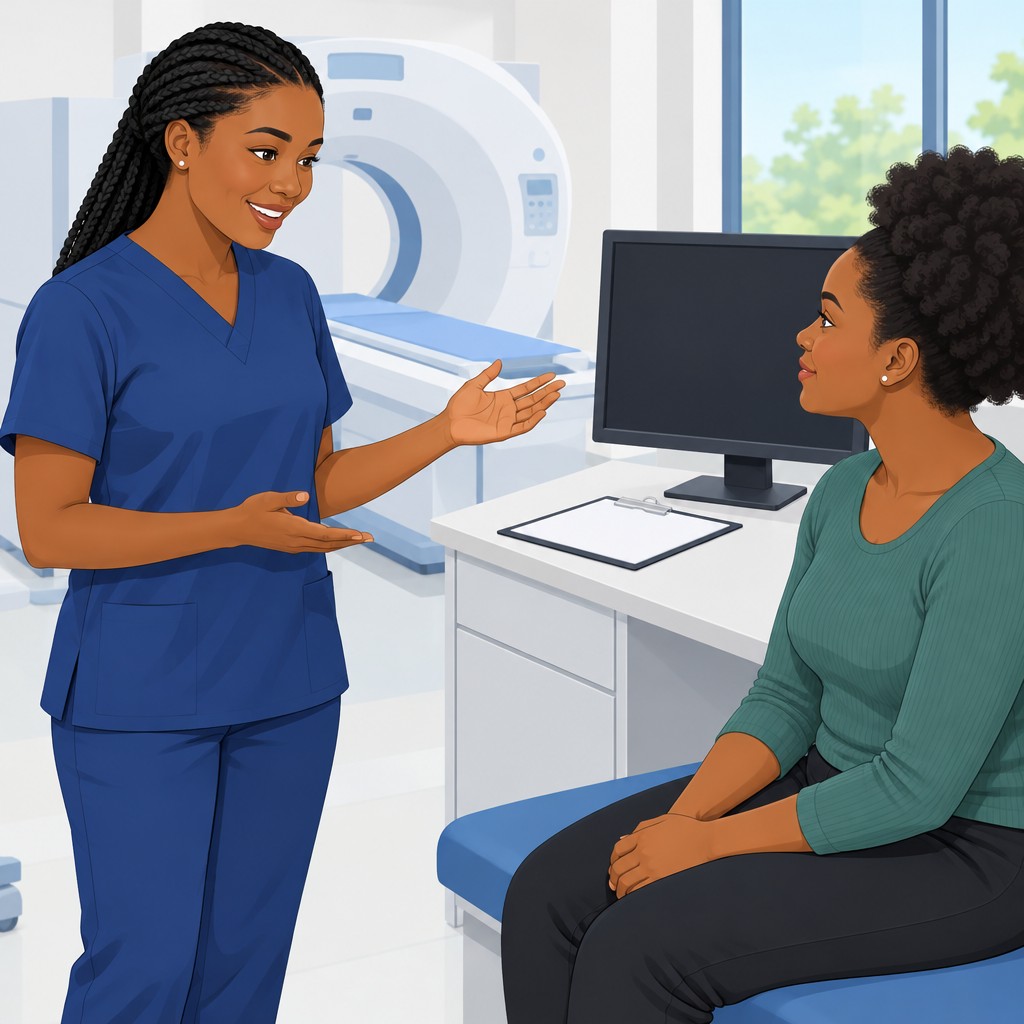
Dealing with Challenging Situations
As radiographers, we inevitably encounter challenging situations during patient interactions.
These situations may involve anxiety, anger, communication barriers, or misunderstandings.
Effective techniques help radiographers respond with professionalism, patience, and compassion.
Common Challenges in Patient Interactions
Radiographers may face several challenges while supporting patients during imaging procedures.
These challenges can affect communication, cooperation, and the patient’s experience.
Recognizing each challenge helps radiographers choose an appropriate and respectful response.
- Language barriers can make communication difficult when patients speak different languages.
- Anxious patients may feel stressed or fearful during imaging procedures.
- Angry patients may express frustration about their care or circumstances.
- Misunderstandings may arise when patients hold incorrect beliefs about procedures or diagnoses.
- Cultural differences may influence patients’ beliefs, expectations, and preferred practices.
Techniques for Handling Difficult Patient Situations
Radiographers can manage difficult interactions by listening carefully and responding deliberately.
Simple explanations and calm behavior can reduce confusion and support cooperation.
Furthermore, respectful conflict resolution can help identify solutions acceptable to both parties.
- Active listening focuses attention on patients’ concerns and validates their feelings.
- Empathy demonstrates understanding and compassion toward patients’ emotions.
- Clear communication uses simple language and provides understandable instructions.
- Conflict resolution encourages calm discussion and supports mutually acceptable solutions.
- Patience helps radiographers remain composed during challenging interactions.
Self-Awareness and Emotional Intelligence
Self-awareness and emotional intelligence support effective management of challenging patient interactions.
Self-awareness helps radiographers recognize their emotions and regulate their responses.
Consequently, radiographers can approach difficult situations with professionalism and empathy.
Emotional intelligence helps radiographers understand patients’ emotions and respond sensitively.
It also encourages supportive communication during stressful patient encounters.
Moreover, self-awareness helps radiographers identify personal biases and assumptions.
Mindful reflection can help radiographers provide respectful care to every patient.
These skills help radiographers manage challenges while enhancing patient experiences and outcomes.
Find Out More: Public Health Tech and Nigeria's Healthcare System
Ensuring Patient Comfort and Safety
Patient comfort and safety shape the quality of every radiography procedure.
They encourage cooperation during imaging and support clear diagnostic images.
Furthermore, attentive care protects dignity and reduces anxiety throughout procedures.
The Significance of Ensuring Patient Comfort and Safety
Comfort helps radiographers build trust and rapport with patients.
When patients feel secure, they usually cooperate more effectively during imaging.
Consequently, cooperation can support better image quality and diagnosis.
Radiographers also have a professional and ethical responsibility to protect patient well-being.
Creating a Welcoming and Safe Environment for Patients
A welcoming room helps patients feel valued before imaging begins.
Clear explanations and consistent communication help patients understand what will happen.
Likewise, clean surroundings and careful positioning support safety and comfort.
- Greet patients warmly and introduce yourself to make them feel welcomed and valued.
- Explain the procedure simply and address patients’ concerns or questions.
- Maintain cleanliness and hygiene in the radiography room.
- Provide clear instructions and involve patients in decisions whenever possible.
- Use suitable positioning and padding to improve patient comfort.
- Communicate regularly and reassure patients throughout the procedure.
Addressing Patient Concerns and Fears During Procedures
Active listening helps radiographers understand and validate patient concerns.
Explaining each step gives patients clearer expectations and greater reassurance.
Moreover, empathy and compassion create a supportive presence during imaging.
- Listen actively and validate patients’ feelings with empathy and understanding.
- Use music or calming visuals to distract patients during procedures.
- Explain each step and provide continuous updates about the procedure.
- Encourage patients to express fears or discomfort openly.
- Acknowledge patients’ emotions and provide a comforting presence.
- Collaborate with the healthcare team to address specific patient concerns.
See Related Content: Salary Expectations for Dietitians in Nigeria
Strengthening Patient-Centered Radiography Care
Strong patient interaction skills help radiographers in Nigeria deliver attentive, patient-centered care.
Therefore, radiographers should continually strengthen communication and empathy during every patient encounter.
Each patient has individual needs, concerns, and expectations that deserve careful attention.
By listening actively, radiographers can understand concerns and respond with appropriate support.
Additionally, respectful communication can help create a more positive patient experience.
Continuous improvement benefits patients while also supporting radiographers’ professional satisfaction.
For this reason, radiographers should invest time and effort in developing these essential skills.
Ultimately, Nigerian healthcare settings should help patients feel supported, valued, and respected.
Additional Resources
Google search results for Patient Interaction Skills for Nigerian Radiographers Health Sciences
Bing search results for Patient Interaction Skills for Nigerian Radiographers Health Sciences


