




Radiography as a Profession in Nigeria
Radiography is a crucial healthcare profession in Nigeria that uses medical imaging techniques to produce high-quality diagnostic images.
Radiographers support diagnosis and treatment by producing accurate images for healthcare professionals.
Their work helps healthcare professionals assess various medical conditions.
Educational Pathways and Professional Registration
One pathway involves earning a Bachelor’s degree in Radiography from a recognized university.
Alternatively, aspiring radiographers can pursue a Diploma in Radiography from a reputable institution.
They can then specialize through additional certifications and training.
Some candidates may also complete a Radiography Technician program for foundational knowledge and skills.
After completing an approved program, aspiring radiographers must obtain an RRBN license for professional practice.
Furthermore, workshops, seminars, and conferences help radiographers maintain continuous professional development.
Educational Requirements
Radiography programs require applicants to demonstrate suitable educational preparation.
In Nigeria, aspiring radiographers need a secondary school certificate or equivalent qualification.
This foundation prepares students for further study in medical imaging.
- Applicants need a secondary school certificate or equivalent qualification.
- Students can pursue certificate, diploma, or bachelor’s degree programs.
- Radiography programs require science subjects, including physics, chemistry, biology, and mathematics.
Available Radiography Education Levels
Aspiring radiographers can choose among certificate, diploma, and bachelor’s degree pathways.
Each pathway provides educational preparation for work in medical imaging.
However, universities and colleges may set specific science requirements for admission.
Courses and Subjects in Radiography Programs
Students study physics, chemistry, biology, and mathematics during their academic preparation.
Radiography programs also teach anatomy, physiology, medical imaging, and radiographic techniques.
Additionally, students learn patient care and radiation protection.
Some institutions require specific science subjects before students apply to radiography programs.
A strong background in science and mathematics supports academic progress.
Students also need communication skills, attention to detail, and teamwork abilities.
They must handle stressful situations while treating patients with empathy.
Successful students demonstrate dedication, hard work, and strong interest in medical imaging.
Training Programs and Institutions
Radiography training programs in Nigeria prepare students to become qualified radiographers.
Accredited institutions provide structured education for this professional path.
These programs combine classroom learning with practical experience.
Accredited Institutions Offering Radiography Programs
Several Nigerian institutions offer accredited radiography programs.
Their programs provide education for students pursuing radiography careers.
The listed institutions include the following universities.
- University of Lagos
- University of Ibadan
- Ahmadu Bello University
- University of Nigeria, Nsukka
Duration and Structure of Radiography Training Programs
Radiography programs typically last four to five years.
The exact duration depends on the institution.
Coursework combines theoretical and practical learning.
Practical Training and Internships
Students must complete practical training and internships in healthcare facilities.
These placements help students apply their knowledge in real-world scenarios.
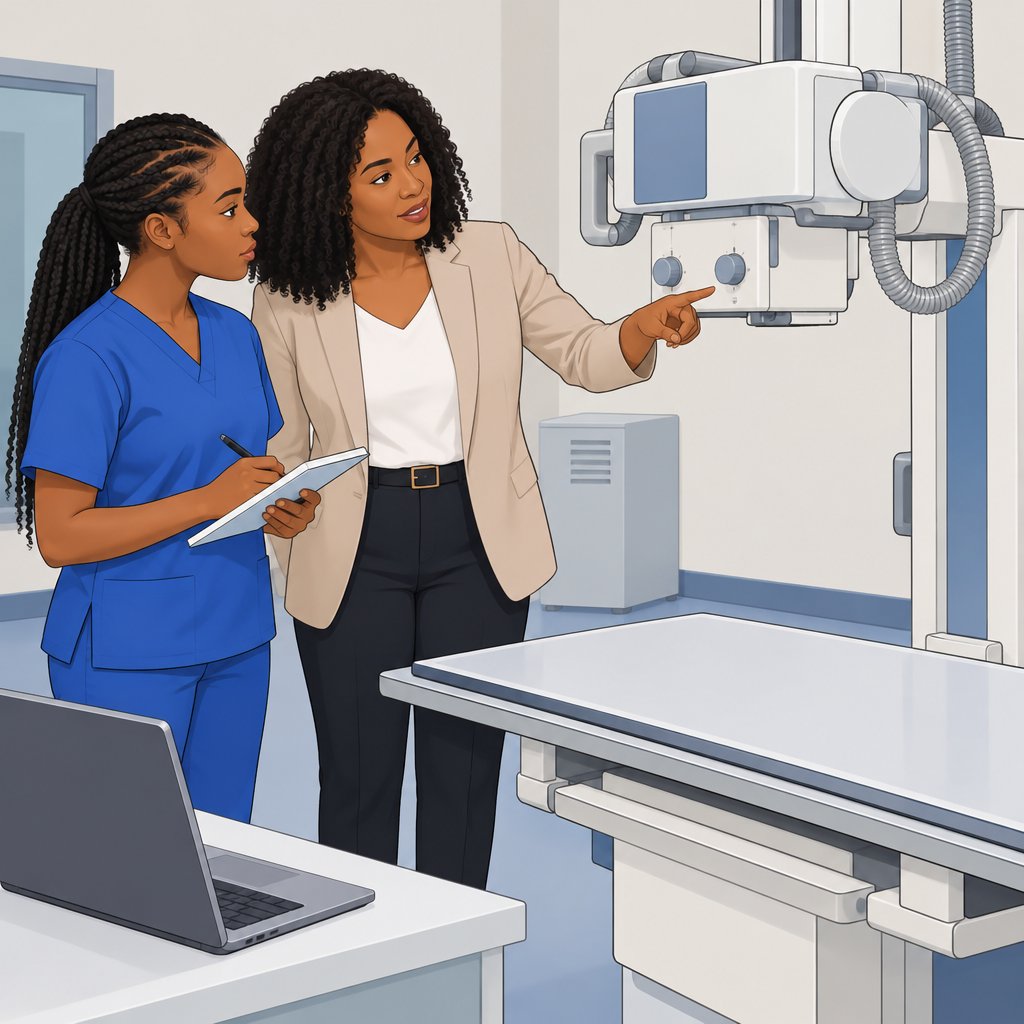
During practical sessions, students work closely with experienced radiographers.
They learn to operate diagnostic imaging equipment.
They perform imaging procedures and interact with patients.
This experience develops skills and competencies for clinical settings.
You Might Also Like: Medical Biochemistry Conferences and Workshops Nigeria
Licensing and Certification
Radiographers in Nigeria need professional licensing before they can practice legally.
Transform Your Career with Expert Guidance
Get personalized mentorship consulting that’s tailored to your unique path. Our expert advice is actionable and exclusive.
Get StartedThe Radiographers Registration Board of Nigeria, known as RRBN, issues this required license.
Therefore, every radiography professional must meet the applicable licensing requirements.
Steps to Obtain Professional Licensing
Applicants begin by completing an accredited radiography program.
Next, they complete a one-year internship at a recognized institution.
Afterward, they pass the RRBN licensing examination and submit the required documents.
- Graduate from an accredited radiography program.
- Complete a one-year internship at a recognized institution.
- Pass the RRBN licensing examination.
- Submit the required documents and pay the licensing fee.
- Receive authorization to practice as a radiographer.
Importance of Professional Certification
Certification validates a radiographer’s skills and professional knowledge.
It also strengthens credibility as a healthcare professional.
Furthermore, certification demonstrates commitment to high professional standards.
Benefits of Certification for Career Advancement
Professional certification can improve employment prospects for radiographers.
It may also increase earning potential and support career growth.
Additionally, certification can enhance a radiographer’s professional reputation.
- Improves job prospects.
- Increases earning potential.
- Creates opportunities for career growth.
- Enhances professional reputation.
Continuing Education Requirements
Licensed radiographers must participate in continuing education programs.
These programs help them remain current with radiography advancements.
They also support ongoing competence and high-quality patient care.
Continuing education can strengthen practical skills and expand professional knowledge.
Moreover, it demonstrates commitment to professional development and lifelong learning.
Explore Further: How to Become a Pathologist in Nigeria
Specializations and Career Opportunities
Radiography offers several specialized career paths for professionals in Nigeria.
These paths support diagnosis, treatment, research, education, and technological development.
Career choices depend on professional interests, experience, and selected imaging technologies.
Specializations in Radiography
Radiographers can develop expertise in different areas of imaging and treatment.
Each specialization focuses on specific technologies, procedures, and patient needs.
These professional areas provide several opportunities within the healthcare sector.
- Diagnostic radiography uses imaging techniques to identify diseases and injuries.
- Therapeutic radiography uses radiation to treat cancer and other medical conditions.
- Nuclear medicine uses radioactive substances to diagnose and treat diseases.
- MRI radiography uses magnetic fields and radio waves to create detailed body images.
- CT radiography uses specialized X-ray equipment to produce cross-sectional body images.
Career Opportunities for Radiographers
Radiographers can work in several healthcare and educational settings across Nigeria.
Hospitals and diagnostic centers provide opportunities to perform imaging examinations.
Other professionals support cancer treatment, research, or radiography education.
- Hospitals employ radiographers to provide diagnostic imaging services for patients.
- Diagnostic centers use radiographers to perform X-rays, CT scans, and MRI examinations.
- Cancer treatment centers employ therapeutic radiographers to deliver radiation therapy.
- Research institutions employ radiographers to study imaging techniques and technologies.
- Academic institutions employ radiographers to train future professionals.
Salaries and Benefits in Radiography
Radiographer salaries in Nigeria vary according to specialization and professional experience.
Specialized roles may offer higher earnings than entry-level positions.
Employers may also provide benefits alongside regular salary payments.
- Entry-level radiographers typically earn between N80,000 and N120,000 monthly.
- Experienced radiographers typically earn between N150,000 and N250,000 monthly.
- Specialized radiographers may earn between N200,000 and N300,000 monthly.
- Possible benefits include health insurance, retirement plans, and professional development opportunities.
Uncover the Details: Public Health Technology Workshops and Conferences
Challenges and Future Prospects
Radiography education in Nigeria faces several obstacles that affect student preparation and professional development.
However, targeted improvements can strengthen training quality and support better radiography services.
Technology, specialization, research, and policy reforms will shape the field’s future growth.
Challenges Facing Radiography Education in Nigeria
Limited resources make it difficult for institutions to deliver consistent, high-quality radiography education.
Furthermore, inadequate funding restricts facility improvements and reduces opportunities for effective practical training.
Staff shortages also limit the number of students that qualified instructors can support effectively.
- Insufficient funding hampers the quality and sustainability of radiography programs in Nigeria.
- Limited access to modern equipment restricts students’ practical learning opportunities.
- A shortage of qualified instructors reduces training capacity and limits educational support.
Efforts to Improve Radiography Education and Training
Stakeholders can improve radiography education by directing more resources toward facilities, equipment, and teaching personnel.
In addition, partnerships can expand student access to current technologies and practical learning environments.
Continuous instructor development can also strengthen teaching methods and maintain current professional knowledge.
- Advocates seek increased government funding for facilities and training programs.
- Industry partnerships can provide access to modern equipment and additional learning resources.
- Professional development helps instructors update their knowledge and teaching approaches.
Future Trends and Advancements in Radiography
Radiography in Nigeria can advance as institutions adopt emerging technologies and strengthen professional development.
Moreover, focused research can guide innovation and improve the quality of patient care.
Regulatory improvements can support consistent education, licensing, and professional practice standards.
- Artificial intelligence and machine learning may improve radiographic diagnostic processes.
- Radiographers may pursue specializations in MRI, CT scans, and interventional radiography.
- Expanded research activity can encourage innovation and improve patient care.
- International standards can help elevate radiography service quality in Nigeria.
- Policy reforms can strengthen training, licensure, and professional practice requirements.
Despite current constraints, ongoing improvement efforts can create stronger educational and professional foundations.
Technological progress and specialization can expand opportunities for radiographers across the country.
Research and effective policy implementation can help Nigeria achieve higher standards in radiography practice.
Gain More Insights: Role of Physiology in Health Sciences
Building a Radiography Career in Nigeria
Prospective radiographers can choose bachelor’s degrees or diplomas in Radiography to develop the skills and knowledge required for this field.
However, students should remain committed to their goals and work consistently toward professional growth.
Radiographers contribute to Nigeria’s healthcare sector by providing accurate diagnostic services for patients.
Additionally, prospective students can contact institutions that offer Radiography programs for further educational information.
They can also consult professionals or explore online resources focused on Radiography education.
These sources can help applicants compare available educational pathways.
A radiography career can reward individuals who remain dedicated to improving healthcare.
By following this educational path, aspiring radiographers can support the health and well-being of Nigeria’s population.
Additional Resources
Google search results for Educational Pathways to Become a Radiographer in Nigeria Health Sciences
Bing search results for Educational Pathways to Become a Radiographer in Nigeria Health Sciences


