




Introduction
Optometry equipment aids diagnosis, treatment, and prevention of eye conditions.
Additionally, these devices support healthcare providers during clinical assessments.
Furthermore, Nigeria shows growing demand for advanced optometry equipment.
List of Basic Optometry Equipment Used in Nigeria
This list names basic optometry equipment used in Nigeria.
Each entry gives a short description of function.
Readers can reference the items for clinical awareness.
Phoropter
A phoropter helps determine a patient’s eyeglass prescription.
Optometrists use it during eye examinations.
It contributes to accurate vision correction decisions.
Autorefractor
An autorefractor automatically measures refractive error.
It provides quick objective measurements for prescriptions.
The device reduces margins of error in refractions.
Tonometer
A tonometer measures intraocular pressure in the eye.
Measuring pressure helps detect glaucoma early.
This measurement guides treatment decisions for patients.
Slit Lamp
A slit lamp is a microscope with a bright light.
Optometrists examine eye structures in detail using it.
It aids diagnosis of cataracts and retinal conditions.
Retinal Camera
A retinal camera captures high resolution images of the retina.
It images the optic nerve and other back of eye structures.
These images help detect and monitor retinal disease.
Importance of Optometry Equipment
Modern optometry equipment has improved eye care quality in Nigeria.
Such tools enable accurate and efficient eye examinations.
Better diagnosis and treatment outcomes result from their use.
- Phoropter allows precise eyeglass prescriptions.
- Autorefractor gives quick objective refractive measurements.
- Tonometer measures intraocular pressure for glaucoma detection.
- Slit lamp enables detailed examination of eye structures.
- Retinal camera provides high quality retinal imaging for monitoring.
Challenges in Accessing Optometry Equipment in Nigeria
Several challenges limit equipment availability in Nigeria.
Cost remains a major barrier for many clinics.
Limited infrastructure also affects clinic operations.
- Cost creates a significant financial burden for clinics.
- Infrastructure constraints prevent fully equipped clinics in some areas.
- Lack of training affects accurate diagnosis and equipment use.
- Supply chain issues limit access to equipment and spare parts.
- Regulatory gaps hinder quality control and standards enforcement.
Improving Access and Quality of Optometry Services
Optometry equipment plays a vital role in eye care.
Proper tools and resources support accurate diagnosis and treatment.
Addressing access challenges will enhance delivery of eye care services.
Explanation of the Functions of Each Piece of Equipment
Optometry equipment supports diagnosis and treatment of eye conditions.
These devices allow clinicians to evaluate vision and ocular health.
Additionally, the following sections explain functions of commonly used equipment.
Role of Optometry Equipment in Nigerian Eye Care
Optometry equipment improves the quality of eye care services in Nigeria.
Healthcare providers rely on these tools for accurate assessments.
Furthermore, proper equipment supports ongoing patient monitoring and treatment.
Discover More: Top Dental Insurance Options Available in Nigeria
Overview of Technological Advancements in Optometry Equipment in Nigeria
This section describes recent optometry equipment advances in Nigeria.
The focus is on three key technology areas.
These areas illustrate changes in clinical practice and access.
Transform Your Career with Expert Guidance
Get personalized mentorship consulting that’s tailored to your unique path. Our expert advice is actionable and exclusive.
Get Started- Introduction of digital refractometers
- Adoption of telemedicine for remote eye screenings
- Integration of artificial intelligence in diagnostic tools
Introduction of Digital Refractometers
Digital refractometers provide accurate measurements of refractive error.
They help optometrists prescribe the correct lenses efficiently.
The digital interface streamlines the examination workflow.
Adoption of Telemedicine for Remote Eye Screenings
Telemedicine expands access to eye care in remote areas.
Patients can complete virtual screenings without traveling long distances.
This approach reduces barriers and supports early detection.
Integration of Artificial Intelligence in Diagnostic Tools
Artificial intelligence improves diagnostic accuracy and exam efficiency.
AI algorithms analyze OCT scans and retinal photographs for early signs of glaucoma and diabetic retinopathy.
Early detection enables timely intervention and improved management.
Impact on Eye Care Services
These technologies have improved accessibility for many patients.
They have also increased efficiency in clinical workflows.
Consequently, eye care services can deliver more effective care.
As technology evolves, further innovations may continue to enhance care quality.
Delve into the Subject: Nasal Polyps and ENT Surgery in Nigeria
Challenges to Accessing Quality Optometry Equipment in Nigeria
Optometrists in Nigeria face multiple challenges accessing quality equipment.
These challenges hinder their ability to provide top-notch eye care.
The obstacles affect services across the country.
High Cost of Purchasing and Maintaining Equipment
High purchase and maintenance costs burden many optometrists.
Quality optometry equipment can be quite expensive for clinics.
Cost barriers limit investment in the latest technology.
Limited Availability of Specialized Optometry Tools
Specialized optometry tools remain scarce in many areas.
Practitioners often must use outdated equipment to provide care.
Scarcity restricts detailed examinations and accurate diagnoses.
Lack of Proper Training on New Technologies
Many optometrists lack proper training on new technologies.
Without training, clinicians cannot fully utilize modern devices.
This gap reduces the potential benefits of equipment upgrades.
Impact of Equipment Access Challenges on Eye Care
Limited equipment access significantly impacts optometrists’ ability to deliver optimal care.
Patients across Nigeria feel the effects of these constraints.
Resolving these barriers will strengthen national eye care services.
Discover More: Common Haematological Tests in Nigerian Clinics
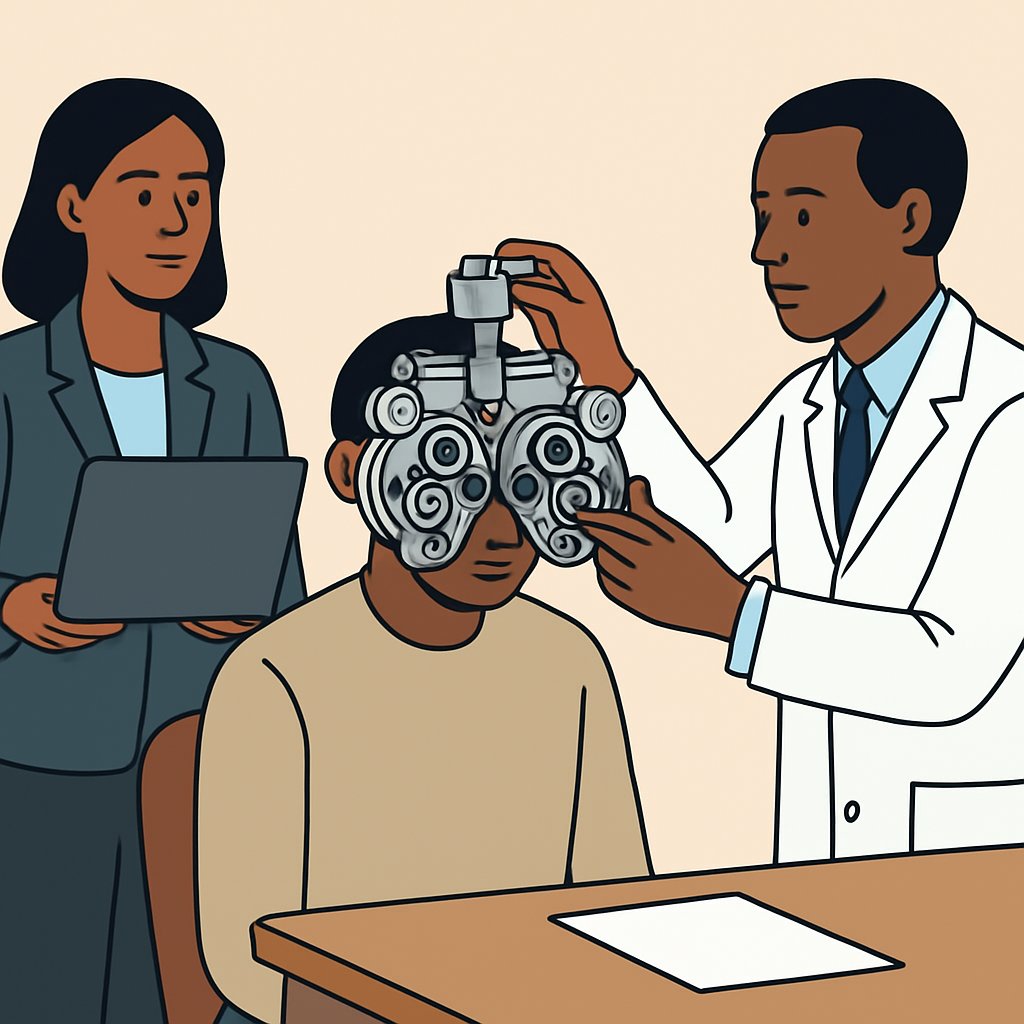
Importance of Regular Maintenance and Calibration of Optometry Equipment
Regular maintenance and calibration of optometry equipment ensure accurate measurements.
This process supports reliable results for clinical assessments.
Practitioners in Nigeria should prioritize routine maintenance and calibration.
Ensuring Accurate Measurements and Reliable Results
Regular maintenance keeps optometry equipment functioning optimally.
Consequently, measurements during eye exams become more accurate.
Accurate measurements lead to precise prescriptions for lenses.
Moreover, diagnostic test results remain reliable with proper calibration.
Extending the Lifespan of Equipment
Optometry equipment represents a significant investment for practitioners.
Regular maintenance and calibration extend equipment lifespan.
This practice prevents unexpected breakdowns and costly repairs.
Therefore, clinics maintain smoother workflows during procedures.
Improving Patient Outcomes and Satisfaction
Patients rely on accurate equipment for correct diagnoses.
Well maintained devices increase patient trust in exam results.
Consequently, providers can deliver more effective treatments.
Patients then report higher satisfaction with clinic experiences.
Maintenance and calibration remain essential for quality eye care services.
Clinics in Nigeria should prioritize these activities to provide quality services.
Uncover the Details: Biomedical Technology and Health Informatics Nigeria
Impact of Outdated Equipment on Patient Care
Outdated optometry equipment reduces the accuracy of clinical assessments.
This shortcoming can harm patient care and increase clinical uncertainty.
Therefore practitioners should consider equipment updates to protect vision outcomes.
Inaccurate Prescriptions Leading to Vision Problems
Outdated devices can produce incorrect refractive measurements.
Consequently patients may receive wrong eyeglass prescriptions that worsen vision.
These prescription errors often cause discomfort and reduced daily functioning.
Delayed Diagnosis of Eye Conditions
Older imaging tools may miss early signs of eye disease.
For example clinicians could fail to detect glaucoma or macular degeneration early.
As a result treatment may start too late to prevent vision loss.
Decreased Efficiency in Eye Examinations
Antiquated tools often prolong examination times and require manual adjustments.
Consequently clinics see longer patient wait times and fewer daily appointments.
Updating equipment can streamline workflows and improve service capacity.
Benefits of Modern Equipment for Patient Outcomes
Modern equipment improves prescription accuracy and clinical decision making.
Also newer tools support earlier detection of sight threatening conditions.
Finally updated devices can speed examinations and reduce patient wait times.
Improving Optometry Services in Nigeria
Optometry equipment plays a vital role in providing eye care services in Nigeria.
With the right tools, optometrists can diagnose and treat a wide range of vision problems effectively.
Investment in modern equipment is essential to enhance eye care quality.
Continuous training for optometrists also supports improved clinical outcomes.
As a result, patients will receive accurate diagnoses and appropriate treatment.
By upgrading equipment and investing in training programs, Nigeria can improve access to eye care services.
Such measures will help reduce the prevalence of vision problems and improve eye health.
Stakeholders must come together to prioritize optometry service improvements.
This includes government bodies, private providers, and non-profit organizations.
The action needed is to invest in modern equipment and provide ongoing training.
By doing so, practitioners can enhance eye care quality in Nigeria.
This will help ensure better vision health for all.
Additional Resources
Google search results for Optometry Equipment: What's Used in Nigeria Medical
Bing search results for Optometry Equipment: What's Used in Nigeria Medical


