



Medical Research and Healthcare Improvement
Medical research involves conducting studies to improve healthcare practices and outcomes.
Additionally, it plays a crucial role in shaping the quality of healthcare services.
In Nigeria, medical research is essential for addressing the country’s health challenges.
Medical Advancements
Medical research advances healthcare in Nigeria.
It reveals new findings, innovative technologies, and treatment methods.
These advances can significantly influence patient care and outcomes.
Improvement in Diagnosis and Treatment
Researchers improve diagnosis and treatment for various health conditions.
They clarify disease causes and identify effective treatment options.
Consequently, healthcare professionals make more accurate and timely diagnoses.
These improvements lead to better patient outcomes.
Development of New Drugs and Vaccines
Researchers develop medications that treat diseases and improve patients’ quality of life.
They also investigate vaccines that help prevent infectious disease spread.
Additionally, vaccine research helps protect populations from potential outbreaks.
Enhancing Patient Care and Outcomes
Research studies help providers identify best practices and personalized treatment approaches.
They also support innovative healthcare solutions that optimize patient care.
As a result, patients experience greater satisfaction and better health outcomes.
These improvements can increase overall quality of life.
Medical research plays a crucial role in disease prevention and control within Nigeria’s healthcare system.
Research on Infectious Diseases
Researchers study infectious diseases to understand their causes and transmission modes.
They examine diseases such as malaria, tuberculosis, and HIV/AIDS.
This work helps healthcare professionals develop better prevention strategies and treatment protocols.
Vaccination Programs
Medical research supports the development and implementation of vaccination programs in Nigeria.
Scientists use research to identify effective vaccines for diseases prevalent in the country.
Therefore, vaccination programs help prevent dangerous diseases and protect communities from outbreaks.
Health Promotion Strategies
Medical research also guides health promotion strategies in Nigeria.
Researchers assess health education campaigns and behavior change interventions.
Healthcare providers use research evidence to promote healthier lifestyles and reduce disease burdens.
These activities strengthen disease prevention, control, and health promotion across Nigeria.
Learn More: The Role of Dental Therapists in Oral Health
Addressing Public Health Challenges
Medical research addresses public health challenges in Nigeria.
Researchers conduct studies and trials to gather health data.
That data informs healthcare policies and interventions for the population.
Research on Prevalent Diseases in Nigeria
Researchers study prevalent diseases to understand their effects across Nigeria.
They examine diseases such as malaria, HIV/AIDS, and tuberculosis.
This research supports better treatment strategies and preventive measures.
Identification of Risk Factors
Medical research identifies factors that contribute to Nigeria’s high disease burden.
Researchers examine conditions that increase individuals’ likelihood of developing specific diseases.
Healthcare providers can then implement targeted interventions to reduce those risks.
Implementation of Evidence-Based Interventions
Medical research provides evidence for implementing effective health interventions.
Researchers conduct rigorous studies and clinical trials to evaluate different interventions.
Transform Your Career with Expert Guidance
Get personalized mentorship consulting that’s tailored to your unique path. Our expert advice is actionable and exclusive.
Get StartedThe findings show which approaches improve health outcomes and prevent disease spread.
See Related Content: Regulatory Bodies for Biomedical Technology Nigeria
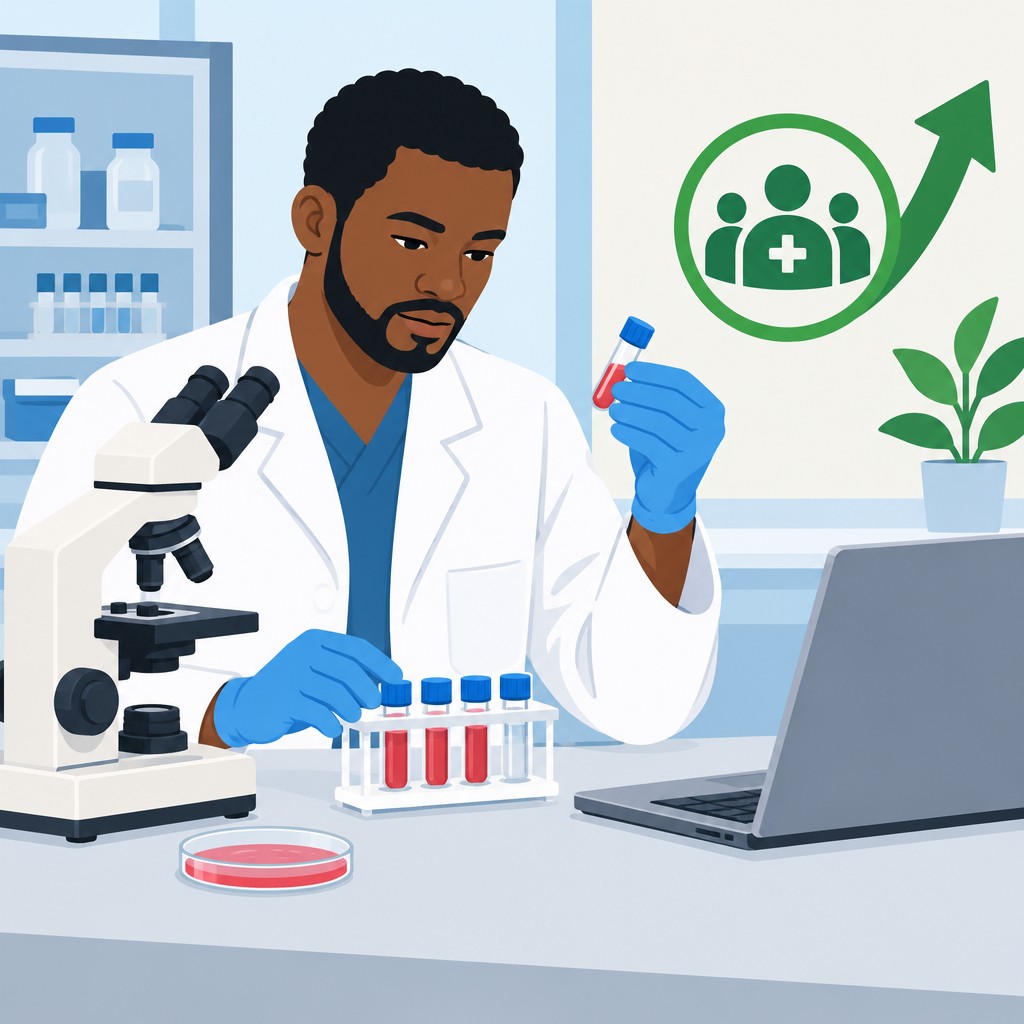
Capacity Building
Capacity building strengthens Nigeria’s ability to support medical research.
It combines professional training, research institutions, and partnerships with international collaborators.
Together, these elements give researchers skills, resources, and opportunities to exchange knowledge.
Training of Healthcare Professionals
Training equips healthcare professionals with essential research skills and knowledge.
They can then conduct studies effectively and support improvements in healthcare.
Consequently, stronger expertise expands Nigeria’s medical research capacity.
Establishment of Research Institutions
Research institutions create conducive environments for medical studies.
They provide researchers with resources, facilities, and opportunities for collaboration.
These institutions also support access to expertise and research materials.
Collaboration with International Partners
International partnerships let Nigerian researchers exchange ideas and share resources.
Joint studies can support groundbreaking discoveries in medical research.
These relationships also improve access to funding opportunities and advanced research technology.
Benefits of Medical Research in Nigeria’s Healthcare
Medical research supports stronger healthcare outcomes across Nigeria.
It helps professionals develop treatments, identify health challenges, and strengthen medical education.
Furthermore, research findings can guide healthcare improvements and support better patient care.
Improvement in Healthcare Delivery
Research supports new treatment methods, diagnostic tools, and preventive measures.
These developments can enhance healthcare delivery and improve patient outcomes.
They can also help reduce mortality rates across the country.
Identification of Health Challenges and Solutions
Researchers can identify prevalent health challenges through focused medical studies.
They can then develop innovative solutions for those challenges.
This proactive approach supports effective public health action and promotes population well-being.
Enhancement of Medical Education
Medical research strengthens education by bringing current findings into academic curricula.
This approach keeps healthcare professionals informed about current knowledge and practices.
As a result, professionals can provide better patient care and treatment.
Challenges Facing Medical Research in Nigeria
Several barriers limit the growth and effectiveness of medical research in Nigeria.
Funding shortages, weak infrastructure, and workforce losses restrict research activities.
Addressing these barriers requires sustained attention from relevant stakeholders.
Lack of Funding
Inadequate funding remains a major challenge for medical research.
Limited resources restrict detailed studies and investments in advanced technologies.
They also make it harder for researchers to publish findings in reputable journals.
Infrastructure and Equipment Deficiencies
Many research institutions lack modern facilities, laboratories, and necessary equipment.
These deficiencies limit researchers’ ability to conduct high-quality studies.
Consequently, inadequate infrastructure can affect the reliability of research results.
Brain Drain
Skilled researchers may migrate elsewhere when they seek better professional opportunities.
This loss can disrupt research projects and reduce continuity.
As a result, brain drain can slow medical research progress in Nigeria.
Future Priorities for Nigerian Medical Research
Stakeholders can strengthen medical research by investing in capacity building.
They can also support international collaboration and address funding, infrastructure, and workforce challenges.
These priorities can help Nigeria improve healthcare delivery, identify solutions, and enhance medical education.
Gain More Insights: Leading Hospitals for Anatomical Pathology Services in Nigeria
Health Policy and Decision-Making
Research findings help Nigerian policymakers understand the current health landscape.
Consequently, policymakers can develop policies that address important healthcare needs.
Evidence also supports informed decisions and strengthens healthcare program evaluation.
- Policymakers use research findings to identify healthcare needs and shape appropriate health policies.
- Additionally, healthcare professionals use research evidence to guide informed decisions and deliver quality patient care.
- Finally, researchers monitor healthcare programs, evaluate interventions, and identify opportunities to improve service quality.
Gain More Insights: Top Universities for Anatomical Pathology in Nigeria
Investment and Innovation for Nigeria’s Healthcare Future
Medical research helps Nigeria develop treatments, improve healthcare delivery, and shape effective health policies.
Therefore, stakeholders should increase research investment to address health challenges affecting the Nigerian population.
With adequate support, researchers can make significant progress toward better healthcare outcomes.
Looking ahead, research and innovation can help Nigeria improve health outcomes for its citizens.
Furthermore, prioritizing medical research can strengthen Nigeria’s contribution to global health advancements.
Additional Resources
Google search results for Importance of Medical Research in Nigeria's Healthcare Medical
Bing search results for Importance of Medical Research in Nigeria's Healthcare Medical


