



Medical Microbiology in Nigeria
Medical microbiology studies microorganisms that cause infectious diseases.
It helps healthcare professionals diagnose and treat infectious diseases effectively.
In Nigeria, medical microbiology supports healthcare, disease surveillance, and disease control.
Across the country, laboratories conduct microbiological tests to identify pathogens and guide treatment decisions.
Furthermore, medical microbiologists collaborate with healthcare professionals to manage infectious diseases and prevent outbreaks.
They also support research that examines disease dynamics and develops new treatment strategies.
Consequently, medical microbiology improves public health and supports population well-being.
History of Medical Microbiology in Nigeria
Medical microbiology in Nigeria developed as an important part of academic training and healthcare practice.
It gradually became central to infectious disease diagnosis, research, and public health activities.
Over time, Nigerian institutions expanded the discipline through education, laboratory services, and disease monitoring.
- Establishment of medical microbiology as a discipline in Nigeria
- Milestones and advancements in the field
- Role of medical microbiology in shaping healthcare in Nigeria
Establishment of Medical Microbiology as a Discipline in Nigeria
Nigerian universities established microbiology departments, introducing the discipline into academic and healthcare training.
This development emphasized the importance of studying microorganisms within healthcare.
As departments expanded, medical microbiologists gained greater responsibilities in diagnosis, research, and public health.
Milestones and Advancements in the Field
The field achieved important milestones through improved diagnostic techniques and broader infectious disease research.
Laboratories introduced advanced methods that strengthened the detection and understanding of pathogens.
Researchers also supported the development of vaccines and treatments for infectious diseases.
The discovery of the Ebola virus in Nigeria highlighted microbiology’s importance during public health emergencies.
That discovery improved disease understanding and encouraged preventive measures to limit transmission.
Role of Medical Microbiology in Shaping Healthcare in Nigeria
Medical microbiologists provide diagnostic services that support accurate infectious disease management.
They also investigate disease patterns and contribute research that guides public health decisions.
Additionally, microbiologists help develop strategies for preventing and controlling infectious disease outbreaks.
During outbreaks, they work with other healthcare professionals to coordinate effective disease control.
Through surveillance, they monitor infectious disease trends across the country.
They also conduct outbreak investigations that help prevent further transmission.
These activities have strengthened Nigeria’s healthcare response to infectious diseases.
Medical microbiologists continue contributing to diagnosis, treatment, prevention, and population health.
Educational and Training Requirements
This section outlines educational and training requirements for medical microbiology professionals in Nigeria.
Nigerian universities offer academic programs that prepare students for this field.
Professionals also need certification, licensure, and continuing education to maintain their skills.
Academic Programs Offering Medical Microbiology in Nigeria
Several Nigerian universities offer academic programs in medical microbiology.
These institutions include the University of Lagos and the University of Ibadan.
Other listed institutions include the University of Nigeria, Nsukka, Obafemi Awolowo University, and Ahmadu Bello University.
- University of Lagos
- University of Ibadan
- University of Nigeria, Nsukka
- Obafemi Awolowo University
- Ahmadu Bello University
Certification and Licensure Requirements for Professionals
Medical microbiology professionals in Nigeria must obtain certification and licensure before practicing.
The Medical Laboratory Science Council of Nigeria regulates licensing for professionals in this field.
Applicants must complete an approved academic program and pass a certification examination.
Applicants must also fulfill additional requirements established by the MLSCN.
Importance of Continued Education and Training
Continuing education helps professionals remain current with advances in medical microbiology.
It also helps them strengthen their technical knowledge and professional skills.
Training supports compliance with continuing licensure and certification requirements.
- Keeping up with emerging diseases and pathogens
- Learning new diagnostic techniques and technologies
- Enhancing problem-solving and critical thinking skills
- Meeting licensure and certification requirements
- Networking with other professionals in the field
Delve into the Subject: Innovative Teaching Methods for Anatomy in Nigeria
Transform Your Career with Expert Guidance
Get personalized mentorship consulting that’s tailored to your unique path. Our expert advice is actionable and exclusive.
Get StartedDiagnosis and Treatment of Infectious Diseases
Medical microbiologists identify infectious agents through laboratory testing.
They use test results to guide appropriate antibiotic or antiviral treatment.
They monitor patient responses and adjust therapy when necessary.
- They identify the causative agents of infections through laboratory testing.
- They prescribe appropriate antibiotics or antiviral medications based on test results.
- They monitor patient responses and adjust treatment as needed.
Monitoring and Controlling Disease Outbreaks
Medical microbiologists track disease patterns within communities and healthcare settings.
They implement measures that prevent pathogens from spreading further.
They collaborate with public health agencies to contain and manage outbreaks.
- They track patterns of disease spread within communities or healthcare settings.
- They implement measures to prevent further transmission of pathogens.
- They collaborate with public health agencies to contain and manage outbreaks.
Research and Development of New Treatments
Medical microbiologists investigate how microbes resist existing drugs.
They test novel compounds and vaccines against specific pathogens.
Their research supports the discovery of treatments for infectious diseases.
- They investigate mechanisms of microbial resistance to existing drugs.
- They test novel compounds or vaccines for effectiveness against specific pathogens.
- They contribute to discovering breakthrough treatments for infectious diseases.
Medical microbiologists promote public health and advance medical science through infectious disease expertise.
Explore Further: How to Start a Private Medical Practice in Nigeria
Challenges Affecting Medical Microbiology in Nigeria
- Limited funding for research and facilities
- Lack of public awareness about medical microbiology’s importance
Medical microbiology in Nigeria faces several challenges that hinder its progress and development.
One major challenge is limited funding for research and facility improvement.
Inadequate financial support prevents researchers from conducting cutting-edge studies and purchasing advanced equipment.
Another significant challenge involves limited public awareness of medical microbiology’s importance.
Many people in Nigeria may not fully understand microbiologists’ roles in healthcare and disease prevention.
This gap can hinder efforts to control infectious diseases and promote public health.
Opportunities for Growth in Medical Microbiology
Despite these challenges, medical microbiology in Nigeria offers opportunities for growth and expansion.
Technological advances and improved research methods could help the field expand.
These developments could strengthen healthcare and scientific knowledge.
Medical microbiologists can collaborate with international partners and join global research initiatives.
They can also contribute to developing new treatments and diagnostic tools.
By addressing existing challenges, the field can support efforts against infectious diseases and improve public health.
Uncover the Details: Understanding Preventive Dentistry in Nigeria
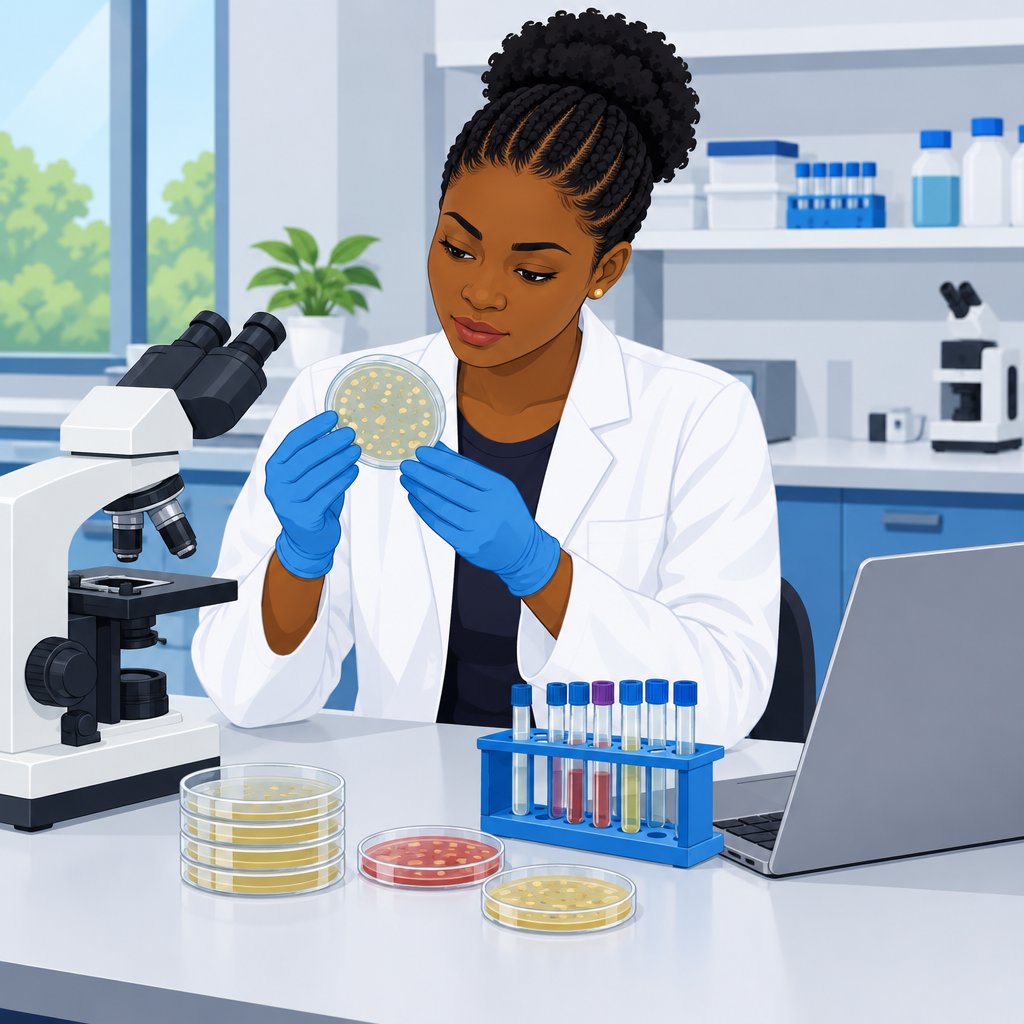
Impact of Medical Microbiology on Public Health
- Importance of surveillance and monitoring of infectious diseases
- Vaccination programs and disease prevention strategies
- Collaboration with other healthcare professionals for optimal patient care
Medical microbiology supports public health by monitoring infectious diseases and helping communities control pathogen spread.
Through surveillance, medical microbiologists track pathogen trends and identify emerging public health threats.
These efforts provide evidence for timely prevention and control measures.
Moreover, epidemiological knowledge helps healthcare professionals design effective strategies against infectious diseases.
Vaccination programs protect individuals and communities from vaccine-preventable diseases.
Medical microbiologists contribute evidence that supports vaccine delivery and broader disease prevention efforts.
Furthermore, collaboration with healthcare professionals strengthens public health responses and supports coordinated patient care.
By sharing laboratory findings, healthcare teams can improve decisions and help prevent further transmission.
These partnerships also support better patient outcomes during infectious disease management.
Medical microbiology also informs public health policies and guidelines.
Evidence-based recommendations help policymakers make informed decisions that protect population health.
Consequently, medical microbiologists help shape measures that promote healthier communities in Nigeria and beyond.
Discover More: Mental Health Support for Nigerian Children
Advancements in Diagnostic Tools and Techniques
Recent advances have strengthened medical microbiology in Nigeria.
These tools help healthcare providers identify and characterize pathogens responsible for various diseases.
Notably, PCR and gene sequencing detect pathogens rapidly and accurately.
Consequently, healthcare providers can diagnose infections more efficiently.
Mass spectrometry also identifies pathogens through their protein profiles.
This information supports targeted treatment strategies.
Genetic Sequencing and Bioinformatics in Research
Genetic sequencing and bioinformatics have transformed medical microbiology research in Nigeria.
Researchers can sequence complete pathogen genomes and examine their genetic characteristics.
Furthermore, genetic analysis helps researchers identify new strains and understand their spread.
Researchers also use these findings to develop targeted treatment strategies.
Bioinformatics tools organize and analyze the extensive data generated through sequencing.
As a result, Nigerian researchers can study infectious diseases in greater detail.
These technologies support targeted interventions and preventive measures.
Automation of Laboratory Processes
Automation has changed medical microbiology laboratories across Nigeria.
Automated systems manage sample preparation, testing, and data analysis.
Therefore, laboratories can produce results more quickly and accurately.
Automation reduces human error and supports consistent, reliable results.
Moreover, automated systems allow laboratories to process more samples efficiently.
They also improve laboratory throughput and streamline daily workflows.
Standardized protocols strengthen quality control and shorten result turnaround times.
These improvements benefit infectious disease diagnosis and surveillance in Nigeria.
Technology and innovation have reshaped medical microbiology practice in Nigeria.
Diagnostic tools, sequencing, bioinformatics, and automation improve understanding of infectious diseases.
They also help researchers and healthcare providers develop more effective responses.
Ultimately, these advances can support better health outcomes for the Nigerian population.
Case Studies and Success Stories
- Successful interventions in Nigeria
- Contributions to global infectious disease efforts
- Lives changed through medical microbiology
Medical microbiologists in Nigeria have helped identify new pathogens, research drug resistance, and develop infectious disease surveillance systems.
During the 2014 Ebola outbreak, Nigerian medical microbiologists helped contain the virus.
They used rapid diagnosis and implemented infection control measures.
Nigerian medical microbiologists have participated actively in global efforts against infectious diseases.
They collaborated with the World Health Organization and the Centers for Disease Control and Prevention.
These collaborations strengthened disease surveillance and improved laboratory capacity.
They also enhanced public health response strategies.
A young child received life-saving treatment after medical microbiologists identified suitable antibiotics.
The child had multidrug-resistant tuberculosis.
Similarly, a pregnant woman tested positive for HIV.
Medical microbiologists provided accurate diagnosis and counseling services.
Consequently, she received timely antiretroviral therapy.
Medical microbiology plays a crucial role in healthcare in Nigeria.
It focuses on diagnosing, treating, and preventing infectious diseases.
Significance of Medical Microbiology
Medical microbiology helps identify pathogens responsible for infectious diseases.
Consequently, healthcare professionals can select appropriate treatments for patients.
It also supports monitoring and controlling infectious disease outbreaks.
Furthermore, medical microbiology strengthens public health outcomes through reliable laboratory information.
It also supports antimicrobial resistance surveillance, which remains a growing global concern.
Support and Investment Priorities
Government, healthcare institutions, and stakeholders should increase support for medical microbiology.
Investment in research, infrastructure, and laboratory facilities can strengthen Nigeria’s response to infectious diseases.
Additionally, training healthcare professionals can reinforce the healthcare system.
Better training can also improve patient outcomes across healthcare settings.
Future Directions for Nigerian Healthcare
Continued advances in medical microbiology offer hope for Nigeria’s healthcare future.
New technologies and innovations can help the country overcome existing challenges.
As a result, Nigeria can improve the overall health of its population.
Ultimately, sustained investment can support a healthier and more prosperous future.
Additional Resources
Google search results for Overview of Medical Microbiology in Nigeria Medical
Bing search results for Overview of Medical Microbiology in Nigeria Medical


