




Introduction
Mechanical engineering is a crucial industry in Nigeria.
It serves various sectors across the country.
Moreover, its activities respond to changing national demands.
Brief Overview of the History and Development
Mechanical engineering in Nigeria has evolved rapidly since its inception.
This development has helped the field meet changing demands.
Consequently, the industry reflects the country’s evolving needs.
Importance of the Industry in the Country’s Economy
The industry supports infrastructure development in Nigeria.
It also creates jobs and encourages technological advancement.
As a result, mechanical engineering strengthens overall industrial growth nationwide.
Current State of Mechanical Engineering in Nigeria
Mechanical engineering supports manufacturing, construction, and other sectors in Nigeria.
It also helps drive innovation and development across these fields.
As a core discipline, it remains important to national industry.
Number of Mechanical Engineers in Nigeria
Nigeria has more than 10,000 mechanical engineers registered with COREN.
This professional population continues to grow as universities graduate more mechanical engineering students.
Consequently, university programs continue contributing to the engineering workforce.
Companies and Industries Employing Mechanical Engineers
Mechanical engineers work across Nigeria’s oil and gas, manufacturing, construction, and automotive industries.
Major employers include Shell, Dangote Group, and Julius Berger.
These companies represent several important sectors that employ mechanical engineering professionals.
Challenges Affecting Mechanical Engineering Professionals
Despite strong demand, professionals face limited access to advanced training and technology.
Inadequate infrastructure also makes professional work more difficult.
Additionally, stiff competition creates further pressure within the job market.
Emerging Technologies in Mechanical Engineering in Nigeria
Technological advancements are introducing innovative solutions to challenges in Nigeria’s mechanical engineering sector.
These developments are changing how engineers approach design, production, monitoring, and maintenance.
Several technologies now support more efficient and cost-effective engineering processes.
Additive Manufacturing
Additive manufacturing, also called 3D printing, is gaining popularity in Nigeria’s mechanical engineering sector.
It enables engineers to create complex geometries quickly and cost-effectively.
Consequently, the technology is changing prototyping and production processes.
Internet of Things
Internet of Things technology improves the efficiency of mechanical systems in Nigeria.
Engineers integrate IoT sensors into equipment and machinery.
These sensors collect real-time data for predictive maintenance and remote monitoring.
Robotics and Automation
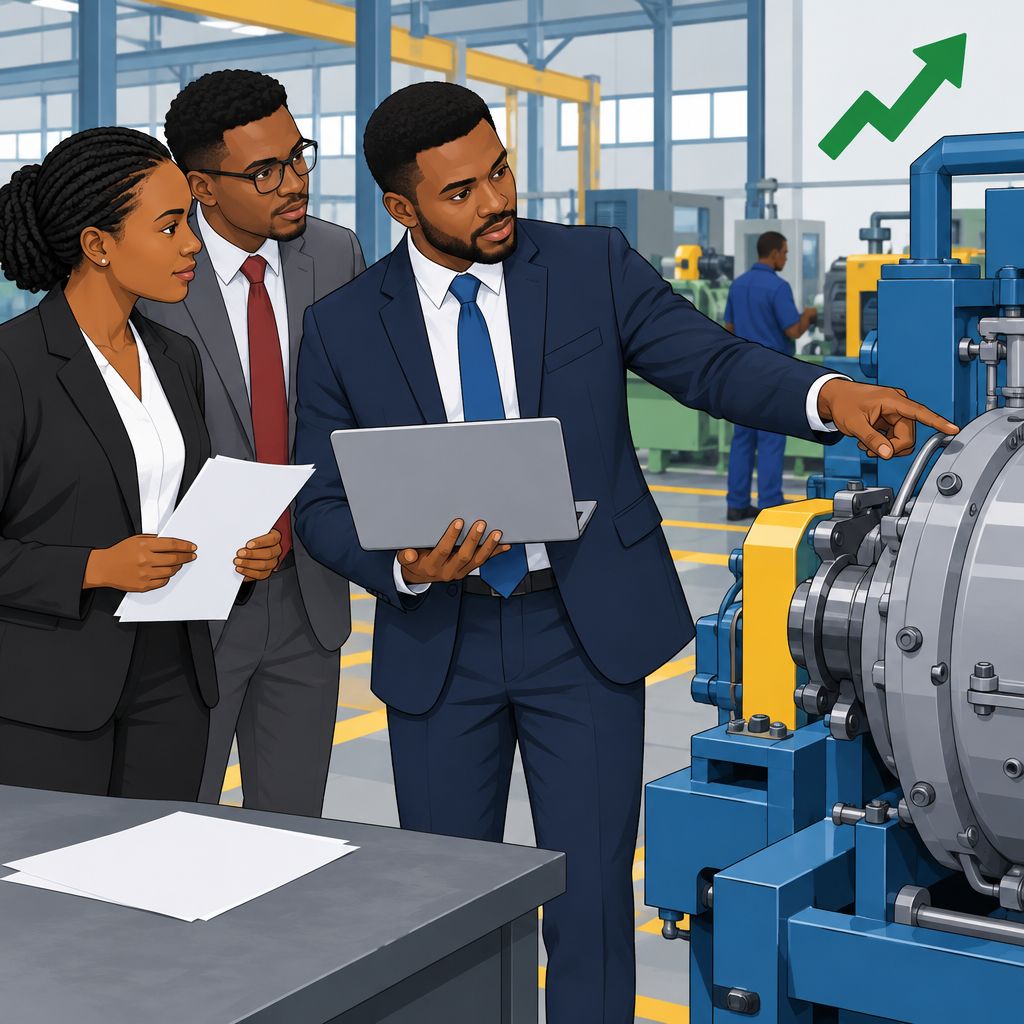
Robotics and automation are becoming more common in Nigerian manufacturing and construction industries.
Companies use robots for hazardous and repetitive tasks.
As a result, automation can improve workplace safety and productivity.
Artificial Intelligence and Machine Learning
Mechanical engineers use artificial intelligence and machine learning to optimize design processes.
These technologies can help predict equipment failures and automate decisions.
Therefore, they can improve efficiency and reduce operational costs.
Impact on Mechanical Engineering
The adoption of emerging technologies is transforming mechanical engineering practices in Nigeria.
Professionals can now develop innovative solutions more efficiently.
This progress supports greater competitiveness and sustainability across the industry.
Employment Opportunities for Mechanical Engineers
Technology adoption is expanding employment opportunities for mechanical engineering professionals in Nigeria.
Transform Your Career with Expert Guidance
Get personalized mentorship consulting that’s tailored to your unique path. Our expert advice is actionable and exclusive.
Get StartedEmployers increasingly need expertise in additive manufacturing, IoT, robotics, artificial intelligence, and machine learning.
Consequently, mechanical engineers can pursue diverse career paths within technology-focused roles.
Examples of Technology Implementation in Nigeria
Several Nigerian organizations have implemented emerging technologies in their mechanical engineering operations.
A manufacturing company in Lagos uses additive manufacturing to prototype new products.
This approach has significantly reduced development time and costs.
A construction firm in Abuja uses IoT sensors to monitor machinery performance.
The firm also schedules maintenance proactively through equipment monitoring.
This implementation has improved operational efficiency, reduced downtime, and lowered company costs.
By embracing these technologies, Nigerian mechanical engineers can support innovation and national development.
Gain More Insights: Importance of Networking Security in Nigerian Economy
Educational Opportunities in Mechanical Engineering in Nigeria
Nigeria offers several educational opportunities for aspiring mechanical engineers.
These opportunities include university programs, professional development, scholarships, and other funding options.
This section examines institutions, continuous learning, skills development, and financial support.
Universities and Institutions Offering Mechanical Engineering Programs
Several Nigerian universities and institutions offer comprehensive mechanical engineering programs.
Notable institutions include the University of Lagos and Obafemi Awolowo University.
Additionally, students can study mechanical engineering at the University of Ilorin and other institutions.
These programs cover thermodynamics, fluid mechanics, materials science, robotics, and related subjects.
- University of Lagos
- Obafemi Awolowo University
- University of Ilorin
- Federal University of Technology, Akure
- University of Nigeria, Nsukka
Continuous Learning and Skills Development
Mechanical engineers must continue learning as technology and industry trends change.
By staying current, engineers can remain competitive and relevant within the industry.
Advanced degrees, workshops, seminars, and certifications can strengthen professional skills and knowledge.
Consequently, continued development can support career growth and create new opportunities.
Scholarships and Funding Opportunities
Various scholarships and funding opportunities support aspiring mechanical engineers in Nigeria.
The Nigerian Society of Engineers, Shell Nigeria, and Chevron Nigeria offer engineering scholarships.
Many universities also provide financial aid and grants to deserving students.
These resources can reduce educational expenses and help students focus on their studies.
Choosing a suitable institution and developing relevant skills can support a successful engineering career.
Discover More: Top Nigerian Universities for Cartography
Government Policies and Regulations Affecting Mechanical Engineering in Nigeria
Government policies shape mechanical engineering activities throughout Nigeria.
These policies influence equipment access, production costs, environmental practices, and business operations.
They also affect workforce development, investment decisions, and industry competitiveness.
Government Regulations Affecting the Industry
Importation policies influence the availability of machinery and engineering equipment.
Additionally, tax policies affect production costs and overall competitiveness.
Environmental regulations guide equipment design and manufacturing processes.
- Licensing requirements influence how mechanical engineering firms operate.
- Labor laws affect the recruitment and retention of skilled workers.
Government Support for Industry Growth
Government support can strengthen mechanical engineering development across Nigeria.
Furthermore, public initiatives can improve innovation, skills development, and manufacturing capacity.
Strategic support can also encourage stronger cooperation between industry and academia.
- Government funding and grants can support research and development projects.
- Tax incentives can encourage investment in mechanical engineering.
- Technical and vocational programs can train aspiring engineers.
- Infrastructure development can facilitate manufacturing activities.
- Government can promote collaboration between industry stakeholders and academia.
Advocacy for Innovation and Sustainable Growth
Industry professionals can advocate for policies that encourage innovation and sustainable growth.
They can engage policymakers and industry associations when shaping regulatory decisions.
Moreover, coordinated advocacy can promote knowledge sharing, research investment, and sustainable engineering practices.
- Professionals can engage policymakers to support a conducive regulatory environment.
- Industry associations can help shape policy decisions.
- Stakeholders can highlight technology transfer and knowledge sharing.
- Advocates can campaign for increased research and development investment.
- Engineers can promote sustainability and green technologies.
You Might Also Like: Tips for Passing Engineering Interviews in Nigeria
Industry Partnerships and Collaborations in Nigeria
Industry partnerships and collaborations support innovation, research, and development in Nigerian mechanical engineering.
These relationships connect universities, industries, and research institutions across the sector.
Together, these organizations promote growth and advancement through shared expertise and resources.
Importance of Collaboration among Key Institutions
Universities contribute talented students and researchers to collaborative engineering projects.
Industries provide practical problems, applications, and valuable professional perspectives.
Research institutions add specialized insights and data to strengthen joint efforts.
Consequently, each partner gains access to resources and expertise unavailable alone.
Successful Partnership Models in Mechanical Engineering
One partnership connects a leading Nigerian engineering university with a multinational engineering company.
Through this relationship, students receive internships, projects, and mentorship opportunities.
Meanwhile, the company gains fresh ideas, research findings, and potential recruitment opportunities.
Another collaboration joins a renewable energy research institution with local manufacturing companies.
This partnership supports new technologies, products, and processes with societal and economic effects.
It also creates opportunities for joint funding, publications, and patents.
Benefits for Industry and Engineering Professionals
Industry-academic collaboration enhances innovation by combining research with practical expertise.
Furthermore, these partnerships transfer knowledge, skills, and effective practices between institutions.
They also prepare students and professionals through practical experience, industry insights, and networking.
- Collaborations foster innovative technologies and practical engineering solutions.
- Knowledge transfer supports continuous learning and professional improvement.
- Workforce development equips participants with skills required for engineering careers.
- Partnerships promote local capabilities, investment, and employment opportunities.
- Joint research advances methodologies and shares findings with wider audiences.
Strong relationships can help Nigeria advance technological development and engineering excellence.
Additionally, shared efforts can support sustainable development across the mechanical engineering sector.
These collaborations benefit industries, professionals, students, and research institutions throughout Nigeria.
Delve into the Subject: Sustainable Practices in Nigerian Metallurgical Engineering
Future Priorities for Mechanical Engineering in Nigeria
The blog post highlighted major trends in Nigeria’s mechanical engineering industry.
These trends include technological advancement, skilled workforce needs, and sector growth.
Furthermore, the industry continues to create opportunities for professional development and innovation.
Professionals and stakeholders should monitor the latest technologies affecting mechanical engineering.
They should also acquire new skills that support changing industry requirements.
Moreover, their contributions can strengthen the sector’s growth and development across Nigeria.
Mechanical engineering has a bright future in the country.
Opportunities for innovation and collaboration with other sectors can expand its influence.
Therefore, Nigeria could become a hub for engineering excellence in Africa.
Additional Resources
Google search results for Industry Trends in Mechanical Engineering in Nigeria Engineering
Bing search results for Industry Trends in Mechanical Engineering in Nigeria Engineering


