



Introduction
A brief overview of physiotherapy practices in Nigeria reveals a healthcare system with room for growth.
Innovation is crucial for improving healthcare services, including physiotherapy.
It allows the development of new techniques and approaches that can improve patient outcomes.
This article explores innovations in Nigerian physiotherapy practices and their potential impact on patient care.
Technological Innovations in Nigerian Physiotherapy
Technology continues to shape how physiotherapists deliver rehabilitation services in Nigeria.
These tools support exercise delivery, remote consultations, patient engagement, and progress monitoring.
However, practitioners must address implementation barriers while applying these innovations effectively.
Virtual Reality Technology for Rehabilitation
Virtual reality creates immersive environments where patients can perform therapeutic exercises.
Patients can simulate real-life scenarios while developing their physical abilities.
Furthermore, physiotherapists can use these environments to support engaging rehabilitation sessions.
Telephysiotherapy Services for Remote Consultations
Telephysiotherapy enables patients in remote areas to access professional consultations without long-distance travel.
Through video consultations, physiotherapists can assess patients and develop appropriate treatment plans.
Patients can therefore receive guidance from their homes.
Mobile Applications for Home Exercise Programs
Mobile applications help physiotherapists prescribe personalized home exercise programs.
These applications provide step-by-step instructions and video demonstrations.
They also track progress, helping patients follow their rehabilitation programs consistently.
Benefits of Technological Innovations in Nigerian Physiotherapy
Technological tools can expand physiotherapy access for patients who live in remote areas.
They can also strengthen patient engagement and encourage compliance with home exercise programs.
Additionally, digital systems can improve service efficiency and support patient progress monitoring.
- Increased access to quality care for patients in remote areas
- Enhanced patient engagement and compliance with home exercise programs
- Improved efficiency in delivering physiotherapy services
- Facilitated data tracking and monitoring of patient progress
Challenges Affecting Technological Implementation
Despite these benefits, Nigerian physiotherapy practices may face significant implementation difficulties.
Limited infrastructure and internet connectivity can restrict access in remote areas.
Practitioners must also consider financial, professional, and privacy-related concerns.
- Lack of infrastructure and internet connectivity in remote areas
- Resistance to change among traditional physiotherapists
- Cost of purchasing and maintaining technology tools
- Security and privacy concerns involving telephysiotherapy services
Future Trends in Nigerian Physiotherapy Practices
Future developments may extend digital physiotherapy services across more areas of patient care.
Artificial intelligence may support personalized treatment planning for individual patients.
Wearable devices may also help physiotherapists monitor patients in real time.
- Growth of telephysiotherapy services for post-operative care
- Integration of artificial intelligence for personalized treatment plans
- Expansion of virtual reality for specialized rehabilitation programs
- Development of wearable technology for real-time patient monitoring
Impact of Technology on Physiotherapy Service Delivery
Technological innovations have changed how Nigerian physiotherapists deliver care.
They can improve access, patient engagement, treatment monitoring, and service efficiency.
Although implementation remains challenging, continued technological development offers promising opportunities for physiotherapy practices.
Collaborative Approaches to Patient Care
Physiotherapy practice in Nigeria has advanced significantly in recent years, especially through collaborative approaches to patient care.
This shift toward integrated care has improved outcomes across diverse healthcare settings.
Teams now combine professional expertise to address patient needs more comprehensively.
- Integration of physiotherapy with other healthcare professions
- Multidisciplinary teams for comprehensive patient care
- Partnerships with fitness centers and sports clubs for holistic treatment
Integration With Other Healthcare Professions
One key innovation involves integrating physiotherapy services with other healthcare professions.
This collaboration supports comprehensive treatment plans that address physical symptoms and underlying causes.
Furthermore, physiotherapists coordinate with doctors, nurses, and other professionals during patient care.
That coordination improves communication, information sharing, and the consistency of treatment decisions.
Multidisciplinary Teams for Comprehensive Care
Nigerian practices also use multidisciplinary teams to deliver comprehensive patient care.
These teams may include physiotherapists, doctors, nutritionists, and psychologists.
Each professional contributes expertise that supports a well-rounded treatment plan.
Consequently, teams can consider patient health and well-being from several perspectives.
Partnerships With Fitness Centers and Sports Clubs
Physiotherapists also partner with fitness centers and sports clubs for holistic treatment.
Transform Your Career with Expert Guidance
Get personalized mentorship consulting that’s tailored to your unique path. Our expert advice is actionable and exclusive.
Get StartedThese partnerships allow practitioners to include fitness and sports-specific exercises in rehabilitation plans.
Professionals tailor those exercises to individual patient needs.
This approach particularly supports patients recovering from sports injuries or improving physical fitness.
Combining physiotherapy techniques with specialized exercises can support recovery and performance enhancement.
Collaborative care has strengthened Nigerian physiotherapy practice and patient-focused service delivery.
By sharing expertise, professionals create more comprehensive and personalized treatment plans.
These plans address the unique needs of each patient.
See Related Content: Innovations in Eye Care by Nigerian Optometrists
Cultural Adaptations in Physiotherapy Practices
- Incorporation of traditional healing practices
- Understanding cultural beliefs and practices in patient care
- Tailoring treatment plans to meet the needs of diverse patient populations
Cultural adaptations shape physiotherapy care in Nigeria.
Traditional practices, cultural beliefs, and patient preferences influence treatment delivery.
Therefore, practitioners adapt their approaches to serve diverse patient populations effectively.
Incorporation of Traditional Healing Practices
Nigerian physiotherapists increasingly incorporate traditional healing practices into treatment plans.
Many patients still rely on traditional healers for various health concerns.
By respecting these practices, physiotherapists can build trust and strengthen treatment participation.
Furthermore, this approach connects modern healthcare techniques with traditional beliefs.
Consequently, practitioners create a more holistic approach to patient care.
Understanding Cultural Beliefs and Practices in Patient Care
Physiotherapists must understand patients’ cultural beliefs and practices during care.
Cultural competence helps practitioners tailor their methods to individual needs and preferences.
Learning about cultural backgrounds also helps physiotherapists build rapport and establish trust.
Moreover, cultural sensitivity can create a more supportive healing environment.
It can also help practitioners address language barriers and improve communication.
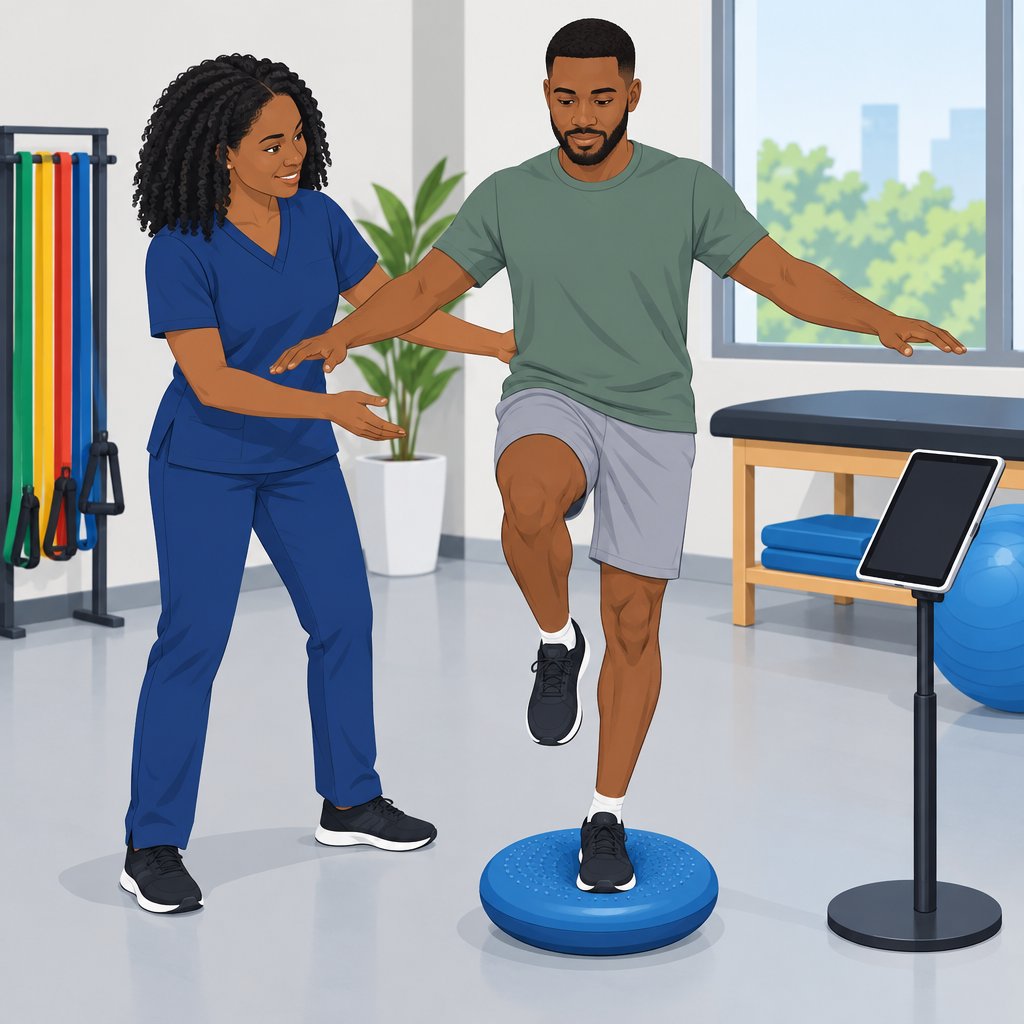
Tailoring Treatment Plans for Diverse Patient Populations
Nigeria includes diverse ethnic groups, languages, and cultural practices.
Accordingly, physiotherapists should tailor treatment plans to each patient population.
This process may involve adapting exercises or modifying treatment techniques.
Practitioners may also use alternative therapies that reflect patients’ cultural preferences.
A patient-centered approach considers the cultural context surrounding each treatment.
As a result, personalized care can improve treatment adherence and patient satisfaction.
It can also support recovery and enhance patients’ quality of life.
Explore Further: Challenges in the Radiography Profession in Nigeria
Research in Nigerian Physiotherapy
Research enables physiotherapists to explore new techniques and treatments.
This exploration can enhance patient care and improve physiotherapy outcomes.
Furthermore, research supports continued advancement within Nigerian physiotherapy practice.
Evidence-Based Treatment Guidelines
Evidence-based guidelines help physiotherapists select effective treatments for their patients.
They connect clinical decisions with available research findings.
Consequently, practitioners can deliver care that reflects current evidence.
Academic Collaboration for Research
Academic partnerships give physiotherapists access to research resources and relevant expertise.
These collaborations support the design and completion of high-quality research studies.
Moreover, shared initiatives can strengthen research activity within Nigerian physiotherapy.
Advancing Physiotherapy Practice
Integrating research into practice can improve patient outcomes.
Evidence-based care can also promote more effective treatment decisions.
Together, these practices can advance physiotherapy across Nigeria.
Gain More Insights: Continuing Education for Optometrists in Nigeria
Innovations in Nigerian Physiotherapy Practices
Community outreach and education programs support the growth of physiotherapy practices in Nigeria.
These programs help physiotherapists reach communities and explain how treatment can support health.
They also connect practitioners with residents who may need accessible care.
- Organizing workshops and seminars to raise awareness about physiotherapy
- Providing free or low-cost services to underserved communities
- Engaging in public health campaigns to promote physical activity and injury prevention
Organizing workshops and seminars: Physiotherapists organize workshops and seminars to share information about physiotherapy.
These events provide platforms for sharing best practices and presenting recent developments in physiotherapy.
They also bring experts, practitioners, and community members together.
As a result, participants can build collaborations that support improved patient care.
Providing free or low-cost services: Affordable services can improve healthcare access for underserved communities.
Many individuals cannot afford traditional medical treatment.
Therefore, physiotherapists can reach more people by offering free or low-cost services.
This approach can improve quality of life and strengthen community relationships.
Engaging in public health campaigns: Physiotherapists participate in campaigns that promote physical activity and injury prevention.
These campaigns encourage regular exercise, proper nutrition, and safe practices.
Consequently, they can help reduce chronic diseases and musculoskeletal injuries.
Through partnerships with local organizations and government agencies, practitioners can reach wider audiences.
Community engagement therefore strengthens innovative physiotherapy practice in Nigeria.
Accessible services and public education can improve the population’s health and well-being.
Explore Further: Insurance Coverage for Restorative Dental Work
Professional Development and Training
- Physiotherapists should pursue continuing education to remain current with advances in their field.
- Additionally, workshops and conferences help physiotherapists strengthen their clinical skills and knowledge.
- Moreover, mentorship programs can support graduates and students as they develop into competent practitioners.
Quality Assurance and Standards of Practice
Nigerian physiotherapy practices use quality assurance to promote safe, effective, and patient-focused care.
Regulatory compliance helps practitioners follow recognized professional expectations.
Similarly, ethical conduct strengthens trust and supports responsible clinical relationships.
Furthermore, outcome monitoring helps physiotherapists improve treatment decisions and patient care.
- Compliance with regulatory bodies and professional organizations
- Adherence to ethical guidelines and codes of conduct
- Monitoring and evaluating treatment outcomes for quality improvement
Physiotherapists should follow guidance from regulatory bodies and professional organizations.
This practice helps them maintain appropriate standards while delivering treatment.
Ethical guidelines require respect for confidentiality, informed consent, and patient interests.
Therefore, physiotherapists can build trust by applying these principles consistently.
Meanwhile, treatment evaluations show whether interventions meet each patient’s needs.
Practitioners can then adjust treatment plans when progress or effectiveness requires review.
Through this process, Nigerian physiotherapists can strengthen care quality and support professional advancement.
Advancing Physiotherapy Care in Nigeria
Physiotherapy in Nigeria has adopted innovative practices that strengthen patient care and support better health outcomes.
These advances include new technologies and evidence-based approaches.
Moreover, physiotherapists continue adapting their methods to meet changing patient needs.
Continuous improvement remains essential across healthcare services, including physiotherapy.
Practitioners can improve care by following current research, techniques, and tools.
This commitment can also support positive health outcomes for patients.
Healthcare stakeholders should support innovative physiotherapy practices across Nigeria.
They can fund research and development to encourage new approaches.
They can also provide resources for training and education.
Additionally, stakeholders can create opportunities for professional collaboration and knowledge sharing.
Through these efforts, the physiotherapy sector can continue growing and addressing evolving patient needs.
Consequently, collective action can improve care quality and advance healthcare services throughout Nigeria.
Supporting innovation can help build a healthier and more prosperous future for all.
Additional Resources
Google search results for Innovations in Nigerian Physiotherapy Practices Medical
Bing search results for Innovations in Nigerian Physiotherapy Practices Medical


