



Preventive Dentistry and Oral Health
Preventive dentistry helps people maintain optimal oral health.
Regular dental check-ups support early detection of oral health issues.
Moreover, preventive practices help people avoid serious dental problems.
Benefits of Regular Dental Check-ups
Regular check-ups help dentists detect cavities early.
They also help prevent gum disease and other oral health issues.
During each appointment, the dentist examines your teeth and gums.
Additionally, the dentist cleans your teeth thoroughly.
Recommended Preventive Dental Visits
Most individuals should visit a preventive dentist twice a year.
However, your dentist may recommend more frequent visits when necessary.
Following the recommended schedule supports lasting oral health.
Therefore, do not skip your dental check-ups.
Prevention remains better than treatment.
Understanding Preventive Dentistry
- Preventive dentistry focuses on maintaining oral health and preventing dental issues.
- Its aim involves stopping problems before they start and promoting overall well-being.
- Regular preventive care can help people avoid costly and invasive treatments.
Benefits of Preventive Dentistry
- Preventive dentistry promotes healthy teeth and gums throughout life.
- Additionally, it reduces the risk of cavities, gum disease, and other oral problems.
- Regular check-ups can detect issues early and support prompt treatment.
Reasons to Visit a Preventive Dentist
- Regular preventive dental visits help maintain optimal oral health.
- Furthermore, preventive care can address issues before they worsen and cause complications.
- Professional cleanings and exams help keep your smile looking and feeling great.
Recommended Preventive Dental Visit Frequency
- Generally, dentists recommend visiting a preventive dentist twice each year.
- Biannual visits allow thorough cleanings and comprehensive check-ups.
- However, people with specific oral health concerns may need more frequent visits.
Factors That Influence Visit Frequency
- Your oral health history and risk factors influence how often you should visit.
- Age, lifestyle habits, and overall health can also affect visit frequency.
- Therefore, your dentist may recommend more or fewer visits for your unique needs.
Advantages of Regular Preventive Dental Visits
- Early detection of oral issues can prevent them from becoming serious problems.
- Professional cleanings remove plaque and tartar buildup, reducing the risk of decay.
- Moreover, dentists can provide personalized advice for improving oral hygiene habits.
Risks of Infrequent Preventive Dental Visits
- Skipping dental appointments can allow undetected issues to progress unnoticed.
- Untreated dental problems may worsen, causing pain, infection, and potential tooth loss.
- Delaying preventive care may require more extensive and costly treatments.
Maintaining Long-Term Oral Health
Regular visits to a preventive dentist support optimal oral health.
Following the recommended appointment schedule helps you prioritize preventive care.
As a result, you can enjoy a healthy smile for years to come.
Finding the right balance for dental visits supports good oral health.
Knowing how often to visit a preventive dentist helps you maintain your dental care routine.
Here are general recommendations, influencing factors, and age-specific guidance for dental visits.
Recommended Frequency for Preventive Dental Visits
- Recommendations vary, but most dentists suggest visiting a preventive dentist every six months.
- Regular six-month check-ups help your dentist monitor your oral health and catch issues early.
- If you have gum disease or cavities, your dentist may recommend more frequent visits.
Factors That Influence Visit Frequency
- Age can influence how often you should visit the dentist.
- Children may need more frequent visits while their teeth grow and develop.
- Existing conditions, including gum disease or cavities, may require additional preventive visits.
- Overall health can also affect your dental appointment schedule.
- Diabetes or heart disease may require more frequent check-ups to prevent oral complications.
Dental Visit Guidance for Different Age Groups
- Pediatric dentists typically recommend visits every six months for routine childhood check-ups.
- Children should begin routine dental visits at a young age.
- Teens and young adults may benefit from more frequent visits because of diet and hygiene habits.
- Most adults can maintain good oral health with visits every six months.
- Adults with risk factors may need more frequent check-ups.
- Seniors may need additional visits for age-related concerns, including decay, gum disease, and tooth loss.
Your dentist can tailor your visit schedule to your oral health needs and history.
Therefore, discuss preventive care timing with your dentist to support a healthy smile.
Gain More Insights: Dental Technology Training Programs in Nigeria
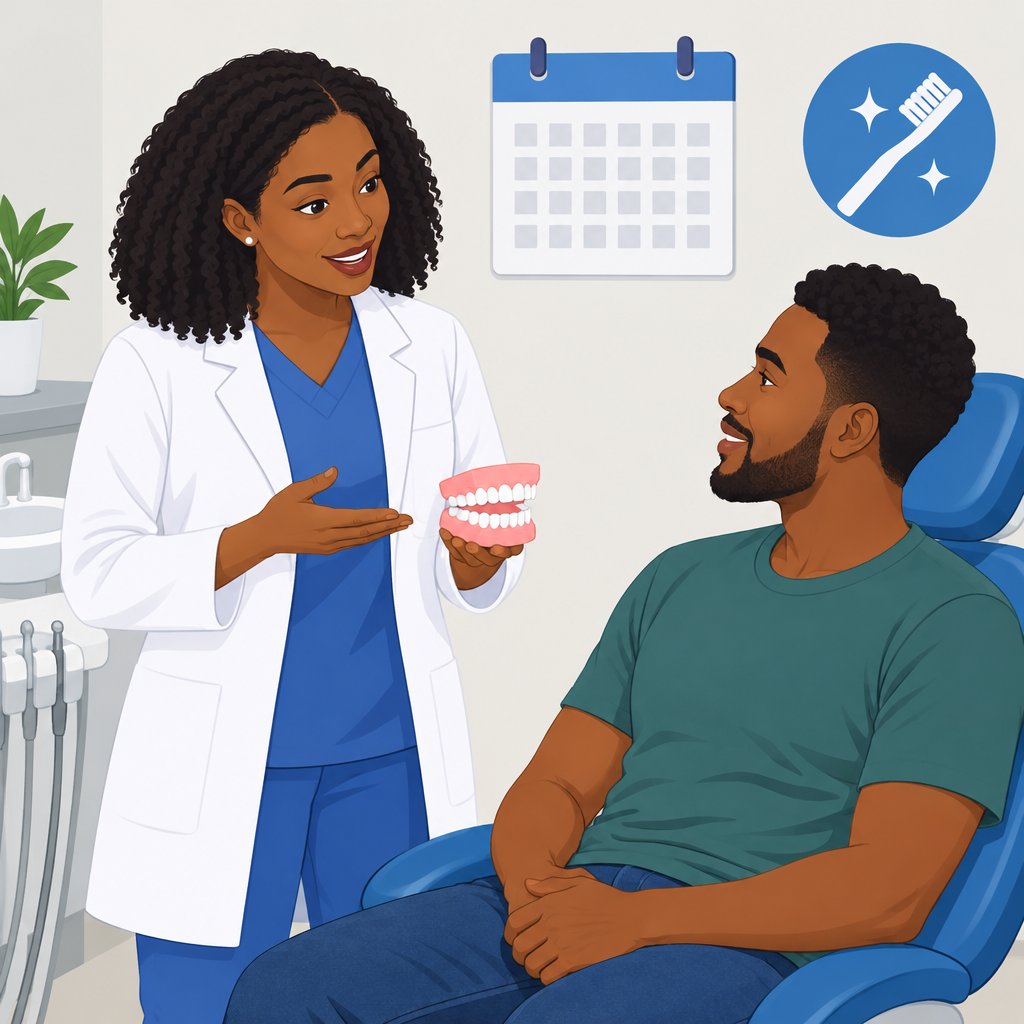
Factors That Influence Preventive Dental Visits
Your oral health condition can influence how often you need preventive dental visits.
Additionally, your age, risk factors, and medical history can affect your recommended schedule.
Your dentist can also consider your specific oral care needs and personal health goals.
- Your overall oral health condition
- Your age and risk factors for dental issues
- Your dental and medical history
- Your specific oral care needs and goals
Most dental professionals recommend preventive check-ups and cleanings at least every six months.
This schedule helps your dentist monitor changes and identify potential concerns early.
However, your dentist may recommend a different frequency based on your individual circumstances.
Signs That May Require More Frequent Visits
Some symptoms suggest that routine six-month visits may not provide enough monitoring.
- Bleeding gums or gum disease
- Increased tooth sensitivity or pain
- Frequent cavities or dental problems
Bleeding gums may indicate a need for closer professional attention.
Similarly, sensitivity, pain, or recurring cavities can justify additional appointments.
Schedule a visit promptly when these signs appear to address concerns before they worsen.
Lifestyle Choices and Dental Visit Frequency
Your daily habits can affect your oral health and the frequency of dental monitoring.
Diet, smoking, alcohol consumption, and oral hygiene practices can all influence dental risks.
Therefore, discuss these habits with your dentist during preventive appointments.
Frequent sugary foods and beverages can increase the risk of cavities and gum disease.
Tobacco use can contribute to oral cancer and other serious dental issues.
These factors may require your dentist to monitor your mouth more closely.
Responding to Changes in Oral Health
Pay attention to changes in your mouth instead of ignoring possible warning signs.
Regular examinations can help your dentist detect and treat problems before they become more serious.
Even strong home care cannot replace professional examinations and cleanings.
Transform Your Career with Expert Guidance
Get personalized mentorship consulting that’s tailored to your unique path. Our expert advice is actionable and exclusive.
Get StartedFollow your dentist’s recommendations to maintain healthy teeth and gums over time.
Staying proactive supports a healthy mouth and a confident smile.
Learn More: Eye Care Tips for Nigerians with Allergies
Routine Dental Exam Procedures
A dentist examines your mouth for tooth decay, gum disease, and other oral health concerns.
During this examination, the dentist may take x-rays to inspect your teeth and jawbone more closely.
Next, professional cleaning removes plaque and tartar buildup from your teeth.
This process also helps reduce bad breath and keeps your teeth looking their best.
Together, these steps give the dentist a clearer view of your current oral health.
Benefits of Early Dental Care
Regular exams help dentists identify cavities, gum disease, and other concerns before they worsen.
As a result, early treatment can save time, money, and potential discomfort.
For instance, a newly detected cavity may require only a simple filling.
However, an untreated cavity can progress to a root canal or tooth extraction.
Early attention can therefore reduce the need for more invasive treatment later.
Guidance for Daily Oral Hygiene
Additionally, dental exams let your dentist explain effective brushing and flossing techniques.
You can receive personalized tips based on your oral hygiene needs.
Your dentist may also recommend treatments or procedures when necessary.
Consistent guidance supports a healthy, beautiful smile over time.
See Related Content: How to Choose the Right Optometry School in Nigeria
Benefits of Professional Cleanings
Professional cleanings support a healthy mouth and contribute to general well-being.
These visits remove deposits that brushing and flossing cannot fully eliminate.
They also help dental professionals identify concerns before those problems become more difficult to manage.
- Professional cleanings remove built-up plaque and tartar.
- Regular cleanings lower the risk of cavities and gum disease.
- Removing deposits helps prevent decay and gum inflammation.
- Cleanings give dentists opportunities to notice early dental problems.
- Patients can enjoy fresher breath and a brighter smile.
Professional Cleanings and Preventive Care
Professional cleanings form an important part of preventive dental care.
Plaque is a sticky bacterial film that develops on teeth.
When plaque remains, it can contribute to tooth decay and gum disease.
Tartar develops when plaque hardens against the teeth.
Dental professionals remove tartar through scaling and polishing.
Improved Oral Health Through Professional Cleanings
Regular cleanings help maintain a healthier oral environment.
They remove substances that support harmful bacterial activity.
As a result, cleanings can reduce conditions that contribute to cavities and gum inflammation.
Clean teeth also make daily brushing and flossing more effective.
Reduced Risk of Gum Disease and Cavities
Professional cleanings help protect gums from the effects of accumulated plaque and tartar.
Removing these deposits can reduce the conditions associated with gum disease.
Cleanings also help limit bacterial buildup that may contribute to cavities.
Therefore, consistent appointments support healthier teeth and gums.
Early Identification of Dental Problems
Cleaning appointments give dentists opportunities to examine the mouth closely.
They may notice cavities, gum inflammation, or other concerning changes.
Dentists may also identify signs that require further evaluation.
Early identification allows patients to address problems before they worsen.
Prompt attention can help prevent dental concerns from becoming more serious.
Fresher Breath and a Brighter Smile
Professional cleanings remove plaque, tartar, and surface stains from teeth.
This process can improve the visible appearance of a smile.
Cleanings also remove bacteria that contribute to unpleasant mouth odors.
Consequently, patients may experience fresher breath after their appointments.
Regular professional care supports confidence in a clean, healthy smile.
Maintaining the Benefits of Professional Cleanings
Professional cleanings provide benefits when patients maintain their recommended dental care routine.
Regular appointments help remove deposits before they create additional oral health concerns.
Patients should schedule their next cleaning with their dentist.
See Related Content: Challenges Faced by Optometrists in Nigeria
Preventive Dental Visit Frequency
Many dentists recommend preventive visits twice a year, or once every six months.
This schedule allows dental professionals to monitor changes and identify concerns at an early stage.
However, people with gum disease or frequent cavities may need appointments more often.
Value of Regular Preventive Care
Regular preventive appointments help people protect their teeth and maintain a healthy smile.
Early attention to cavities, gum disease, or oral cancer can support prompt treatment.
Prompt treatment may help people avoid more extensive procedures later.
Financial Benefits of Preventive Dentistry
Preventive care requires an investment, but it may reduce future dental expenses.
Regular check-ups and cleanings can help people avoid costly treatments for preventable problems.
Good oral health also supports overall well-being and preserves a healthy smile.
- Compare preventive care costs with potential treatment costs for avoidable dental problems.
- Consider regular appointments an investment in long-term oral health.
- Use preventive care to support oral health while managing future expenses.
The Value of Ongoing Preventive Dental Care
Regular preventive dental visits support a healthy, confident smile.
These appointments also help people maintain consistent oral care.
Visiting a preventive dentist every six months can reveal developing concerns early.
Consequently, timely attention may reduce the need for painful or costly treatment later.
By choosing preventive care, individuals can limit the need for extensive dental procedures.
A preventive dentist provides professional cleanings, examinations, and practical oral hygiene guidance.
Furthermore, consistent care can save time, money, and discomfort over the long term.
Schedule your next appointment and make oral health a continuing priority.
Additional Resources
Google search results for How Often Should You Visit a Preventive Dentist? Medical
Bing search results for How Often Should You Visit a Preventive Dentist? Medical


