




Introduction to Prosthetic Services in Nigeria
Prosthetics are artificial body parts used to replace missing limbs or improve function.
They play a crucial role in healthcare by restoring mobility and independence after limb loss.
Demand for prosthetics in Nigeria continues to increase because of injuries, congenital anomalies, and diseases causing amputations.
Therefore, Nigerian health institutions now offer prosthetic services to support the growing population needing these devices.
History of Prosthetics in Nigeria
Prosthetics have a long history in Nigeria.
Ancient communities used various materials to create artificial limbs for amputees.
These early efforts established a foundation for prosthetic development in the country.
Evolution of Prosthetics in Nigeria
Early prosthetic devices were rudimentary and often uncomfortable for users.
Technological advances have made prosthetic limbs more lifelike and comfortable.
Today, Nigerian clinics and institutions offer various devices that support mobility and independence.
Organizations Supporting Prosthetic Care
Several organizations and initiatives have helped provide prosthetic limbs to amputees in Nigeria.
The International Society for Prosthetics and Orthotics Nigeria works to expand access to quality prosthetic care.
Local NGOs and government programs also provide devices to people who need assistance.
Benefits of Prosthetics for Amputees
Prosthetic limbs improve daily life for people who lose limbs through trauma, disease, or congenital conditions.
They help amputees regain independence, complete daily activities, and participate confidently in society.
Prosthetic devices may also reduce health problems associated with limb loss, including joint problems and muscle atrophy.
Major Health Institutions Offering Prosthetics in Nigeria
Several major Nigerian health institutions provide prosthetic services for individuals requiring artificial limbs or supportive devices.
These institutions offer consultations, assessments, fittings, rehabilitation, and customized prosthetic solutions.
Furthermore, patients can receive guidance and support while adjusting to their prosthetic devices.
Hospitals and Clinics Specializing in Prosthetics
The following hospitals and clinics provide prosthetic services in different parts of Nigeria.
Patients can contact these institutions to discuss assessments, device options, and rehabilitation needs.
Additionally, each institution supports patients through specialized healthcare services.
- National Orthopaedic Hospital, Enugu
- National Orthopaedic Hospital, Igbobi, Lagos
- University College Hospital, Ibadan
- Lagos University Teaching Hospital, Lagos
- Federal Medical Centre, Katsina
Prosthetic Services and Available Devices
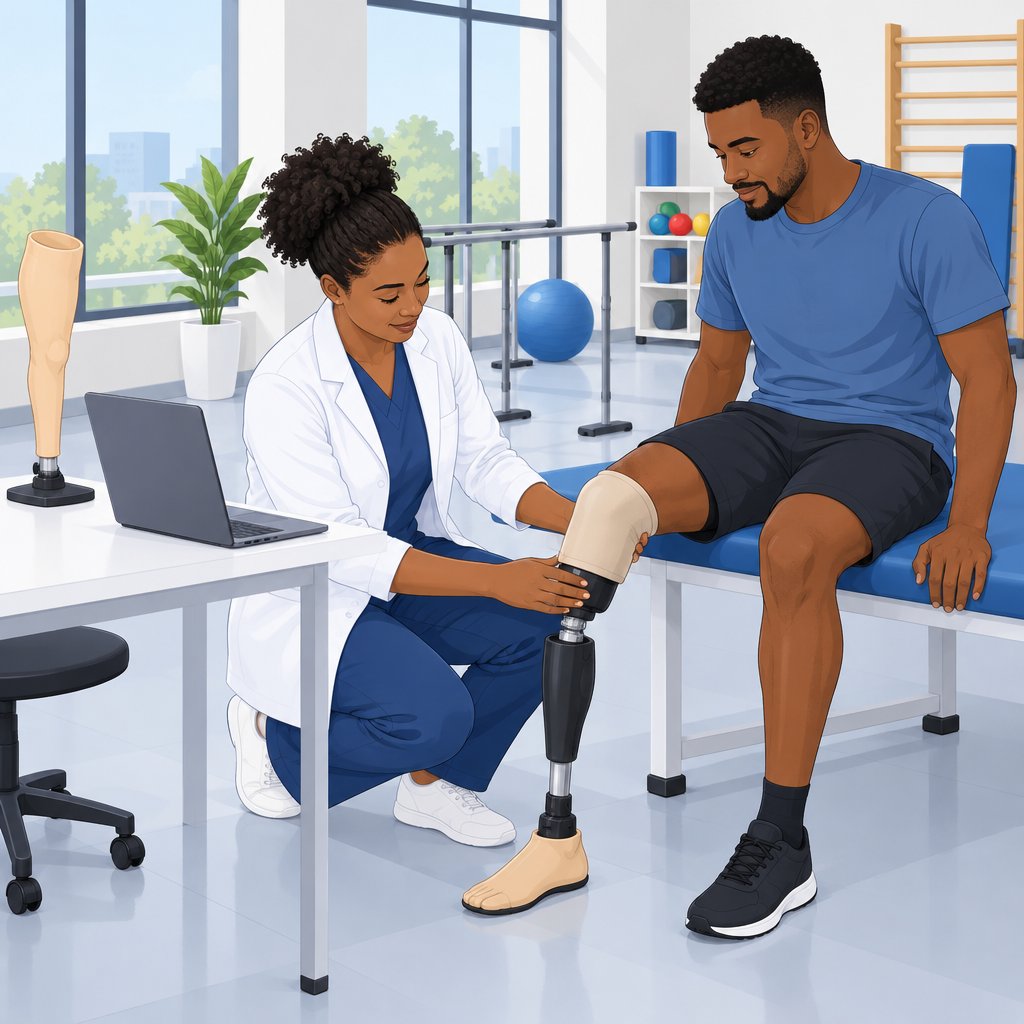
These institutions assess each patient before recommending suitable prosthetic options.
They provide fitting services and customize devices according to individual needs.
Moreover, rehabilitation services help patients use their devices effectively.
Patients may access artificial limbs, braces, and other supportive devices.
Counseling and support services also help patients adapt to prosthetic devices.
Healthcare Expertise in Prosthetic Care
Healthcare professionals at these institutions possess training and experience in prosthetic care.
They collaborate with patients to develop personalized treatment plans.
Orthopedic surgeons, prosthetists, physical therapists, and occupational therapists contribute to patient care.
These professionals monitor progress and adjust treatment to support function and mobility.
Through coordinated care, the institutions support patients throughout the prosthetic fitting process.
Discover More: Nigerian Medical Journals: Top Publications to Follow
Challenges Faced by Nigerian Health Institutions in Providing Prosthetics
Health institutions in Nigeria face several challenges when they provide prosthetic services.
These challenges limit care quality and access to prosthetic technology.
They also affect people who need prosthetic limbs.
Funding and Resource Limitations
- Health institutions often lack enough funding to purchase prosthetic materials.
- They also struggle to cover the costs of delivering prosthetic services.
- Limited government support and private funding weaken prosthetic programs.
- Consequently, financial barriers prevent many people from accessing prosthetic care.
- Insufficient resources also delay repairs and maintenance for prosthetic devices.
Limited Technology and Professional Training
- Nigerian health institutions face a shortage of professionals trained in prosthetics and orthotics.
- Specialized training programs and educational resources remain limited.
- Therefore, healthcare professionals may lack the skills needed for quality prosthetic care.
- Limited access to advanced technology further complicates prosthetic service delivery.
- Professionals also struggle to follow developments in prosthetic materials and technology.
Cultural Stigmas and Misconceptions
- Cultural stigmas surrounding disabilities can discourage people from seeking prosthetic services.
- People with limb differences may experience discrimination and social exclusion.
- Some misconceptions portray prosthetics as unnatural or inferior to natural limbs.
- These attitudes can reduce willingness to pursue prosthetic care.
- Health institutions must address these barriers through acceptance and support.
See Related Content: How to Become a Biomedical Technologist in Nigeria
Initiatives to Improve Access to Prosthetics in Nigeria
Recent efforts in Nigeria combine public action, international cooperation, and community education to improve access to prosthetic services.
These efforts address service availability, professional training, technical support, and public understanding.
Together, they focus on helping people who need prosthetic care find suitable services and support.
Transform Your Career with Expert Guidance
Get personalized mentorship consulting that’s tailored to your unique path. Our expert advice is actionable and exclusive.
Get StartedGovernment Support for Prosthetic Services
The Nigerian government has established prosthetic centers in different regions.
These centers aim to bring necessary devices closer to people who require them.
Additionally, government funding supports training for healthcare professionals specializing in prosthetics.
International Partnerships for Prosthetic Care
Nigeria has partnered with international organizations to strengthen prosthetic care.
These collaborations support capacity building, technology transfer, and knowledge exchange.
Consequently, global expertise and resources contribute to improved prosthetic services for citizens.
Community Programs for Awareness and Education
Community-based programs promote awareness and education about prosthetics across Nigeria.
They challenge myths, reduce stigma, and explain available prosthetic services.
Moreover, local engagement encourages people to seek appropriate care and support.
These combined initiatives create a broader approach to improving prosthetic access in Nigeria.
Government action, international partnerships, and community engagement each support better access to care.
Uncover the Details: Nigerian Dental Health Campaigns for Kids
Success Stories of Individuals Benefiting from Prosthetic Services in Nigeria
Tunde lost his leg in a car accident.
After receiving a prosthetic leg from a Nigerian health institution, he regained mobility.
As a result, he can walk and complete daily tasks independently.
Personal Testimonials from Amputees Receiving Prosthetic Care
Sarah received a prosthetic limb at a Nigerian health institution.
She expressed gratitude for her restored ability to walk.
Furthermore, she can participate in activities that she loves.
How Prosthetics Improve Daily Mobility
David experienced significant improvements in daily life after receiving prosthetic care in Nigeria.
He can now move around with greater ease.
Consequently, he can participate in various activities.
Prosthetic Services and Quality of Life
Studies show that prosthetic services in Nigeria positively affect amputees’ quality of life.
These services help individuals regain independence and confidence.
They also support a greater sense of normalcy in daily life.
Delve into the Subject: Surgical Training Programs in Nigeria: Comprehensive Guide
Future Prospects for Prosthetics in Nigerian Healthcare
Prosthetic services in Nigerian healthcare could grow significantly as technology advances and awareness increases.
Furthermore, more healthcare institutions may offer these services, broadening opportunities for people who need prosthetic care.
Consequently, providers can place greater emphasis on improving service quality and accessibility.
Potential Advancements in Prosthetic Technology
Prosthetic technology continues to evolve through innovations that may improve comfort, function, and appearance.
Newer limbs may look more lifelike while supporting more useful movement.
Additionally, 3D printing can create custom prosthetics, while smart technologies may improve functionality.
Expanding Access to Prosthetic Services
Funding prosthetic care programs can help underserved communities receive needed services.
Moreover, mobile prosthetic clinics could bring care closer to remote and rural communities.
Telemedicine services may also support people who cannot easily reach healthcare facilities.
Continued Support and Investment in Prosthetic Care
Continued support and investment remain essential for improving prosthetic care in Nigeria.
Government and private-sector cooperation can help make prosthetic services more accessible.
Therefore, public awareness and advocacy for increased funding should remain important priorities.
Sustaining Prosthetic Care in Nigeria
Prosthetic care remains essential for people who lose limbs through accidents, illnesses, or birth defects.
Nigerian health institutions have made significant progress in providing prosthetic services to people who need them.
This progress reflects a commitment to improving quality of life for amputees and people with disabilities across Nigeria.
However, institutions must continue developing and innovating prosthetic care to address the population’s needs.
By investing in research, training, and resources, Nigeria can strengthen prosthetic services for its population.
Additional Resources
Google search results for Nigerian Health Institutions Offering Prosthetics Medical
Bing search results for Nigerian Health Institutions Offering Prosthetics Medical


