




Introduction
Adequate surgical training programs remain essential for quality healthcare delivery in Nigeria.
However, limited resources and growth opportunities continue challenging this field.
This blog post provides a comprehensive guide to surgical training programs in Nigeria.
Surgical training programs produce competent surgeons who manage diverse medical conditions effectively.
Therefore, these programs help maintain healthcare standards and improve patient outcomes.
Nevertheless, inadequate funding limits access to modern equipment and surgical techniques.
Additionally, a shortage of qualified instructors can weaken training effectiveness.
Despite these challenges, government initiatives can support progress in surgical training.
Furthermore, international collaborations can strengthen educational opportunities for healthcare professionals.
With sustained professional dedication, Nigeria can enhance the quality of surgical training.
Focus of This Guide
This guide explores the current landscape of surgical training programs in Nigeria.
It highlights the challenges affecting training quality and professional development.
It also examines opportunities to strengthen surgical education and healthcare delivery.
Finally, it explains why investment remains important for healthcare improvement in Nigeria.
Overview of Surgical Training Programs
Surgical training programs in Nigeria equip medical professionals with specialized skills.
These programs enhance healthcare practitioners’ knowledge and expertise.
Several types of surgical training programs serve different professional development needs.
Types of Surgical Training Programs
Residency programs provide hands-on experience within a specific surgical specialty.
Fellowship programs offer advanced training in a focused area of surgery.
Continuing education programs help practicing surgeons learn about updated techniques.
- Residency programs develop practical skills in a specific surgical specialty.
- Fellowship programs provide advanced instruction in a focused surgical area.
- Continuing education programs support ongoing professional learning for practicing surgeons.
Organizations and Institutions Offering Programs
The West African College of Surgeons offers leading surgical training programs.
The National Postgraduate Medical College of Nigeria provides accredited surgical training programs.
Teaching hospitals and medical universities offer training across various surgical specialties.
- The West African College of Surgeons offers surgical training programs.
- The National Postgraduate Medical College of Nigeria provides accredited surgical training programs.
- Teaching hospitals and medical universities provide specialty training opportunities.
Importance of Accreditation and Certification
Accreditation confirms that programs meet quality standards and provide comprehensive curricula.
Certification validates the skills and knowledge surgeons gain through formal training.
Regulatory bodies recognize accredited programs and connect them with professional development.
- Accreditation supports quality standards and comprehensive surgical education.
- Certification verifies skills and knowledge gained through formal training.
- Accredited programs support recognition by regulatory bodies and professional growth.
Together, these programs help shape Nigeria’s healthcare industry and support high standards of patient care.
Requirements for Enrolling in Surgical Training Programs
Prospective surgeons in Nigeria must satisfy educational, service, residency, examination, and licensing requirements.
These requirements help candidates prepare for supervised specialist training.
Applicants should verify each requirement before submitting applications to surgical programs.
- Educational background and qualifications needed
- Residency requirements and duration of training
- Examination and licensing processes
Educational Background and Qualifications
Applicants must hold a Bachelor of Medicine, Bachelor of Surgery degree from a recognized medical school.
They must also complete their one-year internship before applying for surgical training.
Additionally, candidates need a current practicing license from the Medical and Dental Council of Nigeria.
Applicants must complete the mandatory National Youth Service Corps program before applying.
A strong academic record can support an applicant’s preparation for specialist training.
Research participation or clinical experience can also demonstrate commitment to surgery.
Residency Requirements and Training Duration
Qualified candidates apply for residency programs within their chosen surgical specialties.
Available specialties include general surgery, orthopedic surgery, and neurosurgery.
Training usually lasts between five and seven years, depending on the specialty.
Residents rotate through different departments during their training.
Transform Your Career with Expert Guidance
Get personalized mentorship consulting that’s tailored to your unique path. Our expert advice is actionable and exclusive.
Get StartedThey gain practical experience with surgical procedures under experienced surgeons’ supervision.
Residents also participate in research projects and attend academic conferences.
Examinations and Licensing Processes
After completing residency, candidates must pass a recognized postgraduate surgical examination.
They may take examinations administered by the West African College of Surgeons.
Alternatively, candidates may take examinations from the National Postgraduate Medical College of Nigeria.
These examinations assess theoretical knowledge and practical surgical skills.
Successful candidates can apply for consultant surgeon licensing in Nigeria.
The licensing application requires documentation submission to the Medical and Dental Council of Nigeria.
Applicants must also pay the required licensing fees.
Once approved, candidates receive a practicing license and can begin practicing as qualified surgeons.
Gain More Insights: Restorative Dentistry for Children in Nigeria
Curriculum and Training Structure
Surgical training programs in Nigeria combine classroom instruction, clinical rotations, and supervised practical experience.
This structure develops the knowledge and skills required for surgical practice.
Programs also encourage ethical care, research, and continuous professional improvement.
- Detailed curriculum development
- Clinical rotations and practical experience
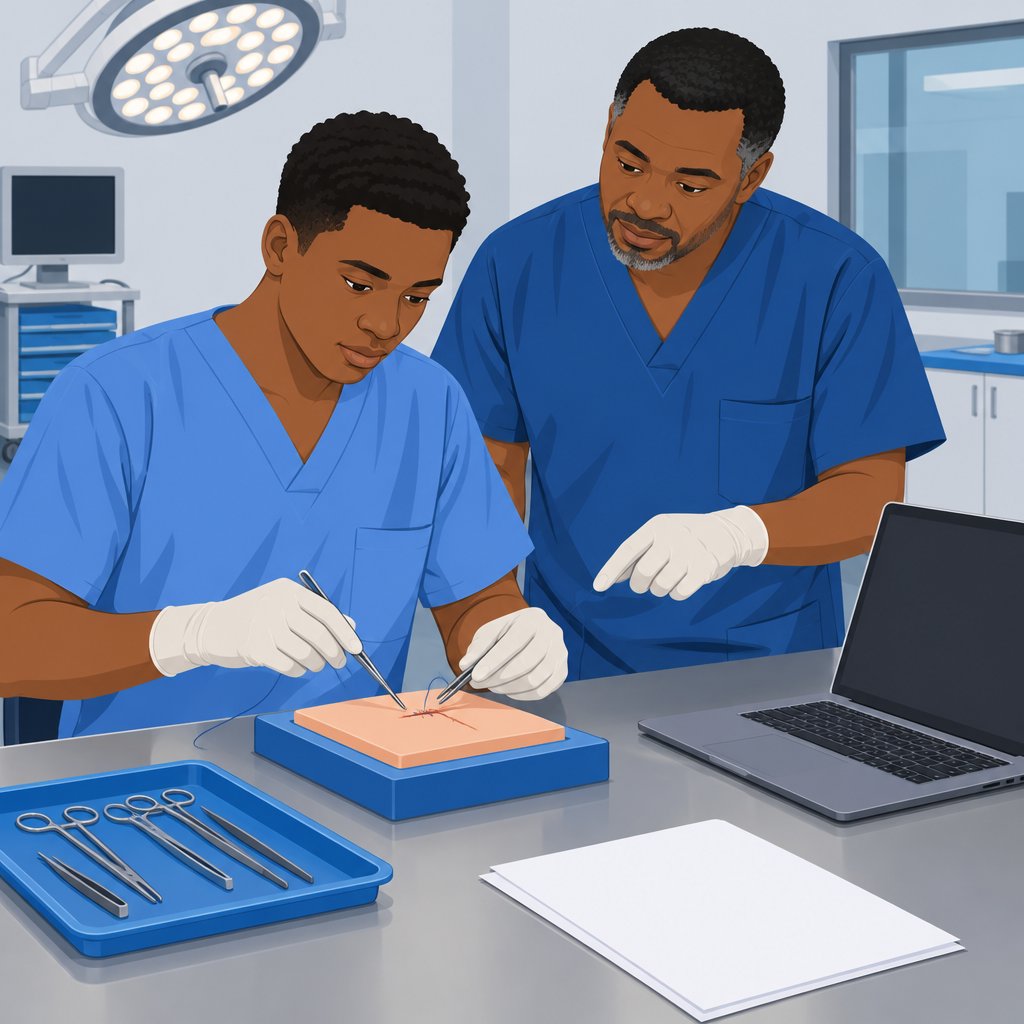
- Hands-on training and skill development
Curriculum Components
Training begins with basic sciences, including anatomy, physiology, and pathology.
Later lessons address surgical techniques, patient care, and professional ethics.
Research methodology and evidence-based practice support continuous learning.
Clinical Rotations Across Surgical Specialties
Clinical rotations expose trainees to varied surgical conditions and procedures.
Rotations commonly include general, orthopedic, pediatric, and plastic surgery.
Working with experienced surgeons helps trainees learn through direct clinical observation.
Practical Skill Development
Trainees participate in surgeries under the supervision of experienced surgeons.
Supervised practice develops suturing, knot tying, and laparoscopic technique skills.
Skills laboratories and simulated exercises strengthen proficiency and confidence.
Mentorship and Professional Growth
Senior surgeons provide mentorship and feedback throughout the training process.
Feedback helps trainees identify areas for improvement and refine their practice.
Technical development and decision-making prepare trainees for real-life surgical challenges.
Learn More: Importance of Regular Dental Checkups for Kids
Support and Resources Available
This section highlights available support and resources for aspiring surgeons.
These resources include mentorship opportunities and networking events.
They also cover professional organizations, research opportunities, and funding sources.
- Information on mentorship opportunities and networking events
- Description of professional organizations and associations related to surgical training
- Overview of research opportunities and funding sources for aspiring surgeons
Find Out More: How Restorative Dentistry Can Improve Quality of Life
Challenges in Surgical Training Programs
Medical professionals in Nigeria face several obstacles when pursuing surgical training programs.
Limited resources and infrastructure can reduce training quality and hands-on surgical experience.
Many institutions lack sufficient equipment, technology, and appropriate surgical facilities.
Furthermore, training programs often face shortages of qualified surgical trainers and mentors.
This shortage limits guidance and mentorship for trainees developing essential surgical skills.
Financial constraints also prevent some professionals from enrolling in surgical training programs.
Tuition, examination fees, and living expenses create significant financial pressure.
Consequently, these costs restrict access and perpetuate disparities within surgical education.
Growth Opportunities in Surgical Training
Despite these challenges, surgical training programs in Nigeria have considerable potential for growth.
Growing awareness of surgical care creates opportunities to expand training initiatives.
Increasing demand for skilled surgeons also supports improvements in educational quality.
Additionally, international collaboration can strengthen institutional capacity and introduce advanced surgical practices.
International partners can provide specialized training, mentorship, and access to best practices.
Technology also creates new possibilities for developing surgical skills.
Virtual reality simulations can supplement traditional instruction and provide additional practice opportunities.
Telemedicine platforms and online resources can expand access to learning materials.
Therefore, technological innovation can help bridge gaps in surgical training access.
Strategies for Strengthening Surgical Training Programs
Stakeholders can address these obstacles through coordinated investment, collaboration, and practical support.
Training institutions can also combine traditional education with technology-based learning methods.
These actions can help maximize available opportunities for aspiring surgeons.
- Advocate for increased funding and investment in surgical training programs.
- Expand collaborations with international partners and organizations.
- Implement technology-based training initiatives and virtual learning platforms.
- Establish mentorship programs and skill development workshops.
- Create scholarships and sponsorships for aspiring surgeons from underprivileged backgrounds.
Find Out More: Challenges Facing Ophthalmology Professionals in Nigeria
The Role of Surgical Training in Nigeria
Surgical training programs help shape Nigeria’s future healthcare system.
They prepare aspiring surgeons to deliver excellent patient care.
Therefore, investing in quality training remains essential for developing necessary skills and knowledge.
Benefits for Healthcare Standards
These programs produce competent surgeons who manage complex procedures with precision and expertise.
They also strengthen healthcare standards across the country.
As a result, patients can benefit from improved treatment outcomes.
Commitment to Surgical Career Goals
Aspiring surgeons should pursue their goals with dedication, focus, and persistence.
They can improve their prospects by choosing reputable training programs.
Furthermore, hands-on experience and continuous learning help them develop relevant surgical skills.
Future Directions for Surgical Training
Nigeria’s expanding healthcare system creates promising opportunities for surgical training programs.
Future investment in advanced technology can strengthen training capacity.
Additionally, international collaboration and professional development can support regional leadership.
Additional Resources
Google search results for Surgical Training Programs in Nigeria: Comprehensive Guide Medical
Bing search results for Surgical Training Programs in Nigeria: Comprehensive Guide Medical


