



Introduction
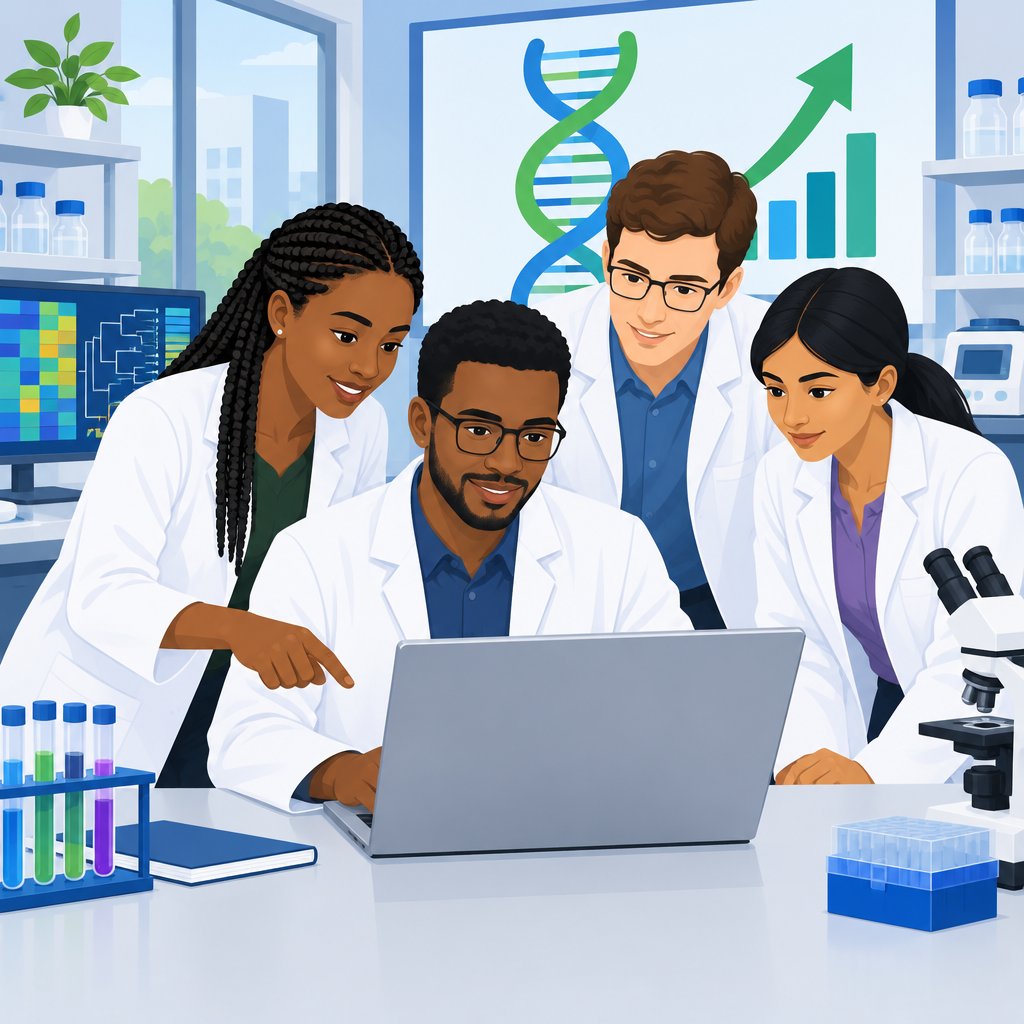
Bioinformatics combines biology, computer science, and information technology to manage and interpret biological data.
It helps researchers understand complex biological processes, genetic variations, and disease mechanisms.
Furthermore, computational tools support protein structure prediction, gene sequence analysis, and evolutionary research.
Importance of Bioinformatics
In healthcare, bioinformatics supports personalized medicine, drug discovery, and diagnostic development.
Consequently, researchers can use biological data to investigate diseases and improve scientific decision-making.
These applications demonstrate bioinformatics’ value across healthcare, research, and biological sciences.
Current Status of Bioinformatics in Nigeria
Nigeria has made significant progress integrating bioinformatics into research and healthcare.
Bioinformatics research centers, academic programs, and international collaborations continue to strengthen national capacity.
However, limited infrastructure, funding, and skilled manpower restrict wider adoption and practical application.
Despite these challenges, interest in bioinformatics continues to grow across Nigeria.
Researchers recognize its potential to address public health challenges and improve agricultural practices.
Moreover, bioinformatics can advance scientific research and support locally relevant biological investigations.
Future Development in Nigeria
Government, academic, and industry investments can expand bioinformatics education, training, and research.
International collaboration will also help Nigeria develop stronger bioinformatics capabilities.
Additionally, open-access databases can support researchers facing resource limitations.
Tailored bioinformatics solutions can address Nigeria’s public health, agricultural, and scientific needs.
Therefore, Nigeria’s prospects for applying bioinformatics remain promising as national capacity continues to develop.
Bioinformatics in Nigeria
Nigeria has expanded bioinformatics activity in recent years.
The field supports research across genomics, proteomics, drug discovery, and healthcare.
These applications give Nigerian researchers several ways to study biological data.
Bioinformatics also offers potential benefits for agriculture and biotechnology.
Current Applications of Bioinformatics
- Genomics: Researchers examine Nigerian genetic makeup for personalized medicine, disease risk assessment, and population genetics.
- Proteomics: Researchers analyze protein structure and function to clarify diseases, drug targets, and biomarkers.
- Drug discovery: Pharmaceutical companies identify candidates, predict interactions, and optimize drug design with bioinformatics.
Research Projects and Collaborative Initiatives
- Human Genome Project Nigeria: This initiative aims to sequence diverse Nigerian populations to support precision medicine.
- Biobanking initiatives: Nigerian biobanks collect biological samples, while bioinformatics manages and analyzes their data.
- Collaborative research partnerships: Nigerian institutions work with international partners on advanced bioinformatics research.
Future Prospects for Bioinformatics in Nigeria
Nigeria’s future prospects in bioinformatics remain promising.
Technological advances and increased research funding can strengthen the country’s capabilities.
A growing pool of skilled professionals can help improve healthcare, agriculture, and biotechnology.
Challenges Facing Bioinformatics in Nigeria
Bioinformatics in Nigeria faces several obstacles that limit its growth and development.
These obstacles include inadequate infrastructure, limited funding, and a shortage of trained professionals.
Addressing these barriers can strengthen research capacity and encourage innovation within the country.
- Researchers should identify the challenges that hinder bioinformatics growth in Nigeria.
- They should discuss how these challenges affect bioinformatics development across the country.
Infrastructure Limitations
Inadequate infrastructure remains a major barrier to bioinformatics research and development in Nigeria.
Many researchers lack modern facilities and high-performance computing systems for complex analyses.
Furthermore, unreliable internet connectivity disrupts data access, collaboration, and research activities.
Funding Constraints
Limited funding restricts the progress of bioinformatics research in Nigeria.
Financial constraints prevent institutions from acquiring essential equipment, software, and analytical tools.
Additionally, insufficient funding reduces opportunities for professional training and skills development.
Shortage of Trained Professionals
Nigeria has too few trained professionals who can advance bioinformatics research and innovation.
Limited educational programs and training opportunities contribute significantly to this shortage.
Consequently, researchers face difficulties when undertaking complex analyses and specialized projects.
Effects on Bioinformatics Development
Infrastructure shortages and funding limitations reduce the quality and scope of bioinformatics studies.
These conditions slow scientific advancement and restrict the acquisition of essential research capabilities.
Meanwhile, the professional shortage limits Nigeria’s capacity to complete complex bioinformatics research projects.
Strengthening Bioinformatics Capacity
Nigeria can improve bioinformatics by investing in modern infrastructure and reliable research connectivity.
Transform Your Career with Expert Guidance
Get personalized mentorship consulting that’s tailored to your unique path. Our expert advice is actionable and exclusive.
Get StartedIncreased research funding can support equipment purchases, software access, and professional development.
Moreover, expanded educational programs can prepare more professionals to support the field’s future growth.
Discover More: Collaborative Projects Between Nigerian and Global Anthropologists
Opportunities for Growth
- International collaborations can provide expertise and funding for research projects.
- Government grants and supportive policies can encourage bioinformatics development in Nigeria.
- Greater investment in research and education can establish more bioinformatics programs.
Stakeholder Roles in Fostering Growth
- Academic institutions train future bioinformaticians and conduct advanced research.
- Industry partnerships connect academic research with practical applications and innovative solutions.
- Government agencies can create supportive regulations and allocate resources for bioinformatics initiatives.
Learn More: Overview of Agricultural Science Courses in Nigeria
Importance of Bioinformatics in Shaping the Future of Healthcare in Nigeria
Bioinformatics can strengthen healthcare planning by connecting biological information with clinical decisions.
Furthermore, genetic analysis can help healthcare professionals understand individual health differences.
Consequently, these applications can support more informed diagnosis and treatment choices.
- Bioinformatics can support personalized medicine by analyzing individual genetic data.
- It can improve disease diagnosis by identifying genetic markers and mutations linked to various conditions.
- Moreover, it can guide treatment decisions by predicting drug responses from genetic information.
Potential Impact on Healthcare Outcomes and Public Health Challenges
Bioinformatics can improve healthcare outcomes by helping researchers interpret extensive biological and health datasets efficiently.
Additionally, population-level analysis can reveal disease patterns and support more targeted public health planning.
These capabilities can help researchers respond to health threats and design interventions based on available evidence.
- Bioinformatics enables rapid analysis of large datasets, supporting faster discoveries and healthcare advancements.
- It helps identify disease patterns and outbreaks, allowing timely interventions and preventive measures.
- Finally, population genetics can clarify disease prevalence and support targeted interventions.
Explore Further: Internship Opportunities for Applied Chemistry Students
Predicted Trends and Developments in Bioinformatics
The future of bioinformatics in Nigeria holds promise for technological advances, research breakthroughs, and new opportunities.
Emerging tools can help researchers analyze biological information and examine complex biological processes.
Furthermore, broader applications can connect bioinformatics with healthcare, agriculture, environmental science, and drug discovery.
- Researchers will increasingly use machine learning and artificial intelligence to analyze biological data.
- Scientists will integrate omics data to develop a more comprehensive understanding of biological processes.
- Genomic information will support the development of personalized medicine.
- Bioinformatics applications will expand across agriculture, environmental science, and drug discovery.
- Research centers and collaborative networks will support knowledge sharing across Nigeria.
Potential Benefits of a Thriving Bioinformatics Sector
A thriving bioinformatics sector could expand research capabilities and support new drug discoveries and treatment options.
Moreover, genomic information could improve diagnostics and disease management through precision medicine approaches.
These developments could also support agriculture, healthcare, employment, and scientific innovation.
- Enhanced research capabilities could lead to new drug discoveries and treatment options.
- Precision medicine approaches could improve diagnostics and disease management.
- Efficient agricultural practices could strengthen crop breeding and food security.
- A stronger healthcare system could improve patient outcomes and reduce healthcare costs.
- The sector could create high-quality jobs and foster scientific innovation and economic growth.
By leveraging emerging technologies and research collaborations, Nigeria can position itself as a leading bioinformatics hub in Africa.
Discover More: Industry Demand for Applied Mathematicians in Nigeria
Bioinformatics and Nigeria’s Future
Bioinformatics holds immense potential for Nigeria’s future.
It can revolutionize healthcare, agriculture, and research.
Therefore, readers should stay updated with the latest bioinformatics advancements.
Supporting initiatives that promote its growth will benefit the country.
Additional Resources
Google search results for Future Prospects of Bioinformatics in Nigeria Sciences
Bing search results for Future Prospects of Bioinformatics in Nigeria Sciences


