




Introduction
- In Nigeria, dental technology equipment plays a crucial role in patient care.
- The importance of using modern dental technology equipment cannot be overstated.
- It improves patient care in Nigeria.
Digital X-rays
Digital x-rays use electronic sensors instead of traditional photographic film.
This technology allows quicker results and reduces radiation exposure for patients.
Comparison with Traditional X-rays
Unlike traditional x-rays, digital x-rays produce images instantly.
They can be easily enhanced for better diagnosis by dentists.
This makes it easier to diagnose issues accurately and efficiently.
Use of Digital X-rays in Dental Practices in Nigeria
In Nigeria, digital x-rays are becoming increasingly popular in dental practices.
Their convenience, speed, and improved image quality support this growth.
Dentists use digital x-rays to detect cavities, examine tooth roots, and assess bone health.
Intraoral Cameras
Intraoral cameras are devices used to capture images inside the mouth during dental procedures.
These cameras play a crucial role in allowing dentists to visually examine the oral cavity.
Advantages of Using Intraoral Cameras During Examinations
- Enhanced visualization: Dentists can see a detailed view of the teeth and gums.
- Early detection: Helps in identifying dental issues at an early stage.
- Patient education: Allows patients to understand their oral health condition better.
- Improved documentation: Images can be stored for future reference and comparison.
Impact of Intraoral Cameras on Patient Communication in Nigerian Dental Clinics
- Increased transparency: Patients can see the same images as the dentist.
- Enhanced understanding: Visual aid helps patients grasp their oral health status easily.
- Trust and confidence: Seeing the images instills trust in the dentist’s diagnosis.
- Engagement: Patients feel actively involved in their treatment process.
Intraoral cameras have revolutionized how dental examinations occur in Nigeria.
This technology benefits dentists in their diagnosis.
It also empowers patients to take charge of their oral health.
Delve into the Subject: Understanding Biomedical Technology Regulations Nigeria
Dental Lasers
Dental lasers are advanced technological tools used in dentistry for various procedures.
These devices emit powerful, focused light beams that can precisely target tissue.
Dental lasers are versatile instruments in dental practices.
Explanation of Dental Lasers
Dental lasers work by delivering energy in the form of light.
The energy can be absorbed by tissue, leading to a reaction that allows for cutting, shaping, or removing tissue with accuracy.
There are different types of dental lasers.
Each type is suited for specific applications based on their wavelengths and characteristics.
Applications in Dentistry
Dental lasers have a wide range of applications in dentistry.
These include the following uses.
- Soft Tissue Surgery: Dental lasers are commonly used for procedures such as gum contouring, removal of lesions, and treatment of periodontal disease.
- Cavity Detection: Laser fluorescence helps in detecting early signs of tooth decay that may not be visible to the naked eye.
- Teeth Whitening: Laser technology can enhance the effectiveness of teeth whitening treatments by activating whitening agents.
- Biopsy Procedures: Dental lasers can aid in performing soft tissue biopsies with minimal discomfort and faster healing.
Benefits of Using Dental Lasers
There are several benefits of using dental lasers for soft tissue procedures.
The benefits include the following.
- Precision: Dental lasers enable precise targeting of specific areas, minimizing damage to surrounding tissues.
- Less Pain: Patients experience less pain and discomfort during and after procedures, as lasers cauterize blood vessels and nerve endings simultaneously.
- Faster Healing: Laser treatments promote faster healing and regeneration of tissues compared to traditional methods.
- Reduced Bleeding: The precision of dental lasers results in minimal bleeding, reducing the need for sutures in many cases.
Challenges and Opportunities for Dental Lasers in Nigeria
Integrating dental lasers into Nigerian dental practices presents both challenges and opportunities.
The key considerations include the following factors.
- Cost: The initial cost of acquiring dental lasers may be prohibitive for many dental practices in Nigeria.
- Training: Dentists and staff need specialized training to operate dental lasers effectively.
- Awareness: Educating patients about the benefits of laser dentistry is crucial to increasing acceptance and demand for these procedures.
- Regulatory Environment: Regulatory frameworks need to be established to ensure safe and ethical use of dental lasers in Nigeria.
Despite these challenges, integrating dental lasers in Nigerian dental practices can lead to improved treatment outcomes.
This integration also enhances the patient experience.
Additionally, it offers a competitive edge for dentists offering cutting-edge technology.
See Related Content: Role of Physiotherapy in Nigerian Healthcare
CAD/CAM Technology
CAD/CAM technology has revolutionized the field of dentistry.
It offers advanced solutions for creating dental restorations.
The restorations are made with precision and efficiency.
Overview of CAD/CAM Technology in Dentistry
CAD/CAM stands for computer-aided design and computer-aided manufacturing.
In dentistry, this technology allows the design and fabrication of dental restorations.
Examples include crowns, bridges, and veneers.
These restorations are created using computer software and milling machines.
Instead of traditional methods requiring physical impressions, CAD/CAM streamlines the process.
It creates digital impressions for designing restorations in a virtual environment.
Transform Your Career with Expert Guidance
Get personalized mentorship consulting that’s tailored to your unique path. Our expert advice is actionable and exclusive.
Get StartedAdvantages of CAD/CAM Technology for Dental Restorations
- Precision: CAD/CAM technology ensures highly accurate restorations that fit perfectly in the patient’s mouth.
- Efficiency: The digital workflow reduces turnaround time, allowing patients to receive restorations in a single visit.
- Customization: Dentists can customize the shape, color, and size of restorations to meet specific patient needs.
- Minimally Invasive: This technology allows conservative preparation of teeth, preserving more natural tooth structure.
Nigerian Dental Clinics Utilizing CAD/CAM Technology
Several dental clinics in Nigeria have adopted CAD/CAM technology.
They enhance their services by providing superior quality restorations to patients.
- SmilePath Dental Specialists: This leading Nigerian clinic uses CAD/CAM to create precise and aesthetically pleasing restorations.
- Prime Dental Hub: Known for advanced technology, this clinic offers CAD/CAM services for efficient treatments.
- Lagoon Dental Clinic: Focusing on innovation, they use CAD/CAM technology to deliver top-notch restorations.
CAD/CAM technology has become essential in modern dentistry.
The technology benefits both dental practitioners and patients significantly.
Its ability to enhance precision, efficiency, and customization makes it invaluable.
Such technology supports the creation of high-quality dental restorations in Nigeria and beyond.
Discover More: Career Advice for Nigerian Microbiologists
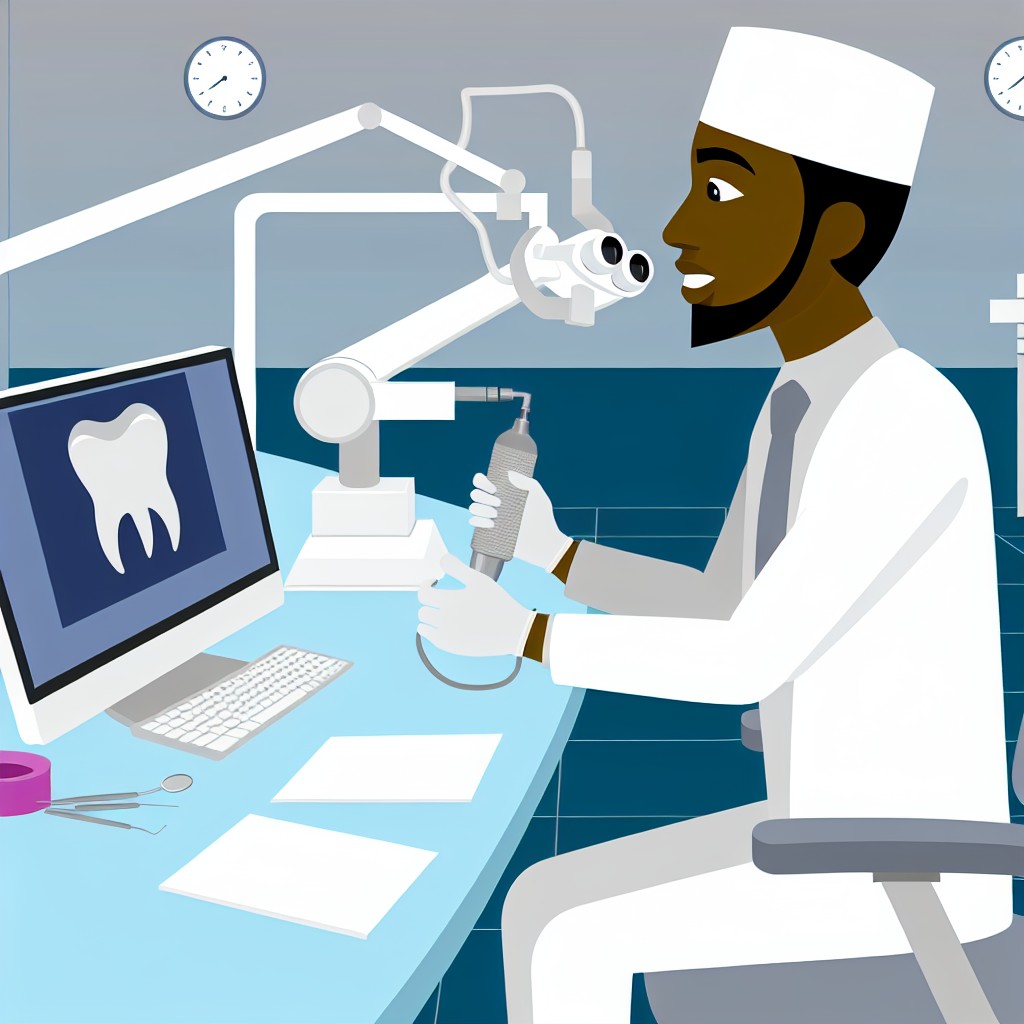
Cone Beam CT Scans and Their Role in Dental Care
Cone Beam CT scans are advanced imaging techniques used in dentistry.
They provide 3D images of the teeth, jaw, and surrounding structures.
Cone Beam CT scans are more precise and detailed compared to traditional CT scans.
In Nigeria, these scans assist in diagnosing complex dental issues accurately.
They help dentists in planning intricate procedures such as dental implants.
Cone Beam CT scans reduce the risk of errors during surgery or treatment.
Dentists in Nigeria rely on these scans for precise measurements and treatment planning.
The significance of Cone Beam CT scans lies in their ability to detect hidden dental problems.
Compared to traditional CT scans, Cone Beam technology reduces radiation exposure.
Dentists can visualize the entire oral cavity in 3D, improving accuracy.
Cone Beam CT scans are particularly useful in assessing bone density for implants.
Planning complex dental procedures becomes more efficient with Cone Beam CT scans.
Dentists in Nigeria can accurately locate nerves and plan treatments accordingly.
Cone Beam CT scans provide a comprehensive view of the oral and maxillofacial region.
They are essential in diagnosing conditions like impacted teeth or jaw abnormalities.
With Cone Beam technology, dentists can customize treatment plans for each patient.
In Nigeria, Cone Beam CT scans enhance the precision and success rate of procedures.
Dentists can identify potential complications before surgery using Cone Beam imaging.
Discover More: Nigerian Pediatric Dental Care FAQs
Dental Technology Equipment Used in Nigeria
Nigeria has seen a rapid growth in the use of modern dental technology equipment.
This development has occurred in recent years.
One commonly used equipment is the digital X-ray machine.
It provides high-quality imaging with minimal radiation.
Intraoral cameras are also popular among dentists.
They allow dentists to show patients real-time images of their teeth and gums.
Another essential tool is the dental laser.
Dentists use it for various procedures like gum reshaping and cavity treatment.
CAD/CAM technology is gaining popularity in dental practices.
This technology creates precise crowns, bridges, and dental implants.
Dental microscopes help dentists perform intricate procedures.
They improve precision and accuracy during treatments.
3D imaging equipment such as Cone Beam Computed Tomography (CBCT) is used.
It provides detailed views of oral structures for better diagnosis.
Modern autoclaves ensure proper sterilization of instruments.
This helps maintain a hygienic environment for patients.
The Importance of Advanced Dental Technology in Nigerian Practices
Advanced dental technology equipment plays a crucial role in modern dental practice.
It allows for accurate diagnosis and efficient treatment.
Nigerian dental professionals are encouraged to embrace these technologies.
Investing in modern equipment improves patient outcomes.
Ultimately, modern technology enhances the overall quality of care.
Additional Resources
Dental Technology Dental Technology is the branch of … – Facebook


