




Introduction
Cartography is the art and science of creating maps.
Maps are essential tools for navigation, planning, and decision-making.
Definition of Cartography and its Importance
Cartography involves the design, production, and study of maps.
Maps serve as powerful visual aids for analyzing and interpreting spatial data.
Brief History of Cartography in Nigeria
Cartography in Nigeria dates back to the colonial era.
Maps were used for exploration, land demarcation, and administrative purposes.
Overview of the Role of Cartographers in Society
Cartographers play a crucial role in various sectors.
These sectors include urban planning, disaster management, environmental conservation, and resource allocation.
They use cutting-edge technologies such as GIS, remote sensing, and GPS to collect geographic information accurately.
Cartographers analyze and visualize geographic information effectively.
In Nigeria, cartographers work in government agencies, private companies, research institutions, and non-governmental organizations.
They contribute to sustainable development through their work.
They create maps for agriculture, infrastructure development, tourism, and natural resource management.
These maps support informed decision-making and policy formulation.
Education and Training
- Required education and qualifications to become a cartographer in Nigeria
- Availability of specialized training programs or courses in cartography
- Skills and knowledge needed for a successful career in cartography
Required Education and Qualifications to Become a Cartographer in Nigeria
In Nigeria, to become a cartographer, you typically need a bachelor’s degree in geography.
You can also study geomatics, surveying, or a related field.
Some employers require a master’s degree for more advanced positions.
Additionally, certifications from professional bodies such as the Nigerian Institution of Surveyors enhance your credentials.
Availability of Specialized Training Programs or Courses in Cartography
Several institutions in Nigeria offer specialized training programs or courses in cartography.
The programs teach skills in map creation, GIS technology, remote sensing, and spatial analysis.
Examples of these institutions include the University of Lagos, Ahmadu Bello University, and the Federal University of Technology, Minna.
Skills and Knowledge Needed for a Successful Career in Cartography
A successful career in cartography requires a combination of technical skills and creative abilities.
Proficiency in GIS software and an understanding of spatial data are important.
You also need attention to detail, critical thinking, and problem-solving skills.
Effective communication skills are necessary to convey complex information clearly.
Moreover, a strong background in geography, mathematics, and computer science benefits your career.
Being a cartographer in Nigeria opens up a world of career opportunities in various industries and sectors.
Cartographers play an essential role in creating maps, charts, and spatial data used in different fields.
Let’s explore the career opportunities in cartography.
Different Industries and Sectors Where Cartographers Can Find Employment
- Government Agencies: Cartographers are in demand in government agencies for map creation, urban planning, and land surveying.
- Environmental Organizations: Cartographers work on mapping projects related to environmental conservation and natural resource management.
- Oil and Gas Industry: Cartographers create maps for exploration, drilling, and production activities in the oil and gas sector.
- Telecommunications: Telecom companies employ cartographers for network planning and coverage mapping.
- Transportation Sector: Cartographers design maps for road networks, public transportation systems, and logistics companies.
- Academic Institutions: Cartographers can work as educators or researchers in universities and research institutes.
Job Roles and Responsibilities of Cartographers in Various Fields
- Map Creation: Cartographers are responsible for creating accurate and visually appealing maps using GIS software.
- Data Analysis: Cartographers analyze spatial data to identify patterns, trends, and relationships for decision-making.
- Field Surveying: Cartographers conduct field surveys to gather data for map production and validation.
- Map Digitization: Cartographers digitize paper maps and convert them into digital formats for online use.
- Cartographic Design: Cartographers design map layouts, symbols, colors, and fonts to enhance readability and aesthetics.
- Quality Control: Cartographers ensure the accuracy and integrity of maps by conducting quality control checks.
Career Growth and Advancement Opportunities in Cartography
Cartography offers a promising career path with opportunities for growth and advancement.
Some potential career paths for cartographers include the following.
- Senior Cartographer: Experienced cartographers can advance to senior roles, overseeing mapping projects and leading teams.
- GIS Specialist: Cartographers specializing in Geographic Information Systems (GIS) can pursue roles in data analysis and modeling.
- Mapping Supervisor: Cartographers with leadership skills can become mapping supervisors, managing a team of cartographers.
- Project Manager: Cartographers can transition into project management roles, overseeing mapping projects from conception to completion.
- Consultant: Experienced cartographers can work as independent consultants, offering expertise in cartography and GIS services.
A career in cartography in Nigeria offers diverse opportunities across many industries.
Roles range from map creation to data analysis and field surveying.
With the right skills and experience, cartographers can achieve career growth and advancement in this dynamic field.
Discover More: Educational Pathways for Nigerian Biomedical Engineers
Challenges Faced by Cartographers in Nigeria
Cartographers in Nigeria face several challenges that hinder their work.
These challenges impact their ability to produce accurate and reliable maps.
- Lack of recognition and appreciation for the work of cartographers: Despite the important role cartographers play in creating maps for various purposes, their work is often undervalued and underappreciated in Nigeria.
- Limited resources and technology for cartographic work: Many cartographers in Nigeria lack access to modern mapping tools and technologies.
- Difficulty in obtaining accurate and up-to-date geographical data in Nigeria: Cartographers rely on accurate data to create maps that reflect the current state of the landscape.
This lack of recognition can lead to low morale among cartographers and decreased motivation to produce high-quality maps.
Without adequate resources, cartographers may struggle to create maps that meet required standards and specifications.
However, obtaining reliable data can be a challenge due to data scarcity, outdated information, and lack of standardized processes.
Transform Your Career with Expert Guidance
Get personalized mentorship consulting that’s tailored to your unique path. Our expert advice is actionable and exclusive.
Get StartedThis can result in inaccurate or incomplete maps and lead to errors in spatial representations.
These challenges significantly impact cartographers’ work in Nigeria.
They hinder the production of high-quality maps essential for urban planning, disaster management, navigation, and environmental monitoring.
Addressing these challenges requires concerted efforts from government agencies, private organizations, and educational institutions.
These bodies must provide cartographers with necessary support, resources, and recognition.
Such support will enhance cartographers’ work and improve the quality of mapping services in Nigeria.
Discover More: Land Surveying Ethics and Professional Conduct
Contribution of Cartography to Urban Planning and Infrastructure Development
Cartography plays a vital role in urban planning by providing accurate maps for city development projects.
Cartographers create detailed maps that help urban planners identify suitable locations for infrastructure development.
These maps help determine the best routes for roads, highways, and public transportation systems.
By analyzing topographic data, cartographers assist in the design of efficient drainage systems.
These systems prevent flooding in urban areas.
Role of Cartographers in Disaster Management and Environmental Conservation
Cartographers are crucial in disaster management as they create maps showing vulnerable areas prone to natural disasters.
They produce maps that provide valuable information for emergency response teams during rescue operations.
Cartographers also map out areas of environmental significance to promote conservation efforts.
Their work encourages sustainable development.
Their expertise in GIS technology enables them to assess and monitor environmental changes over time.
This monitoring aids in conservation efforts.
Influence of Cartography on Decision-Making and Policy Formulation in Nigeria
Cartography influences decision-making by providing accurate spatial data.
Policymakers rely on this data to make informed choices.
Maps created by cartographers help analyze demographic trends.
They also show resource distribution and population density for policy formulation.
Decision-makers use cartographic data to plan strategies for economic development.
They also plan land use and infrastructure projects based on this data.
Visual representation of data through maps simplifies complex information.
This simplification makes it easier for policymakers to understand and act upon.
Cartography plays a significant role in urban planning, disaster management, and policy formulation in Nigeria.
The expertise of cartographers in mapping spatial data is invaluable for sustainable development and decision-making processes.
Explore Further: Career Opportunities for Mechanical Engineers in Nigeria
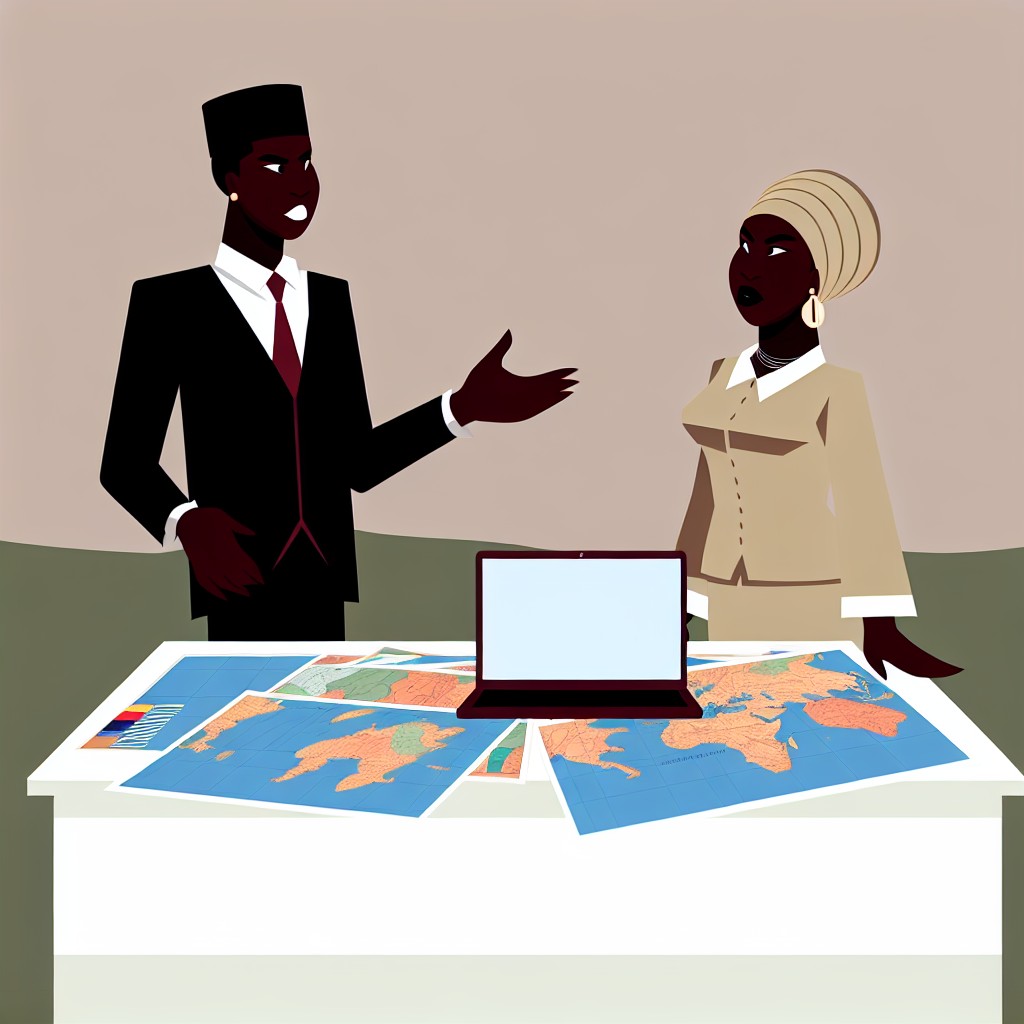
When it comes to careers in cartography in Nigeria, one important aspect that potential cartographers consider is the salary and benefits that come with the job.
Understanding the average salary range can help individuals make informed decisions about their career path.
Additional perks and comparing salary potential in different sectors are also important factors.
Average Salary Range for Cartographers in Nigeria
Cartographers in Nigeria can expect to earn a competitive salary.
The exact amount varies depending on experience, education, and location.
On average, the salary ranges between N150,000 and N500,000 per month.
Additional Benefits and Perks Offered to Cartographers
Cartographers in Nigeria may receive various benefits as part of their compensation package.
Common benefits include health insurance, paid time off, retirement plans, and professional development opportunities.
Employers might also provide performance bonuses, travel allowances, and flexible work arrangements.
These incentives help attract and retain top talent in cartography.
Comparison of Salary Potential in Different Sectors of Cartography
Salary potential varies significantly depending on the sector cartographers work in.
The following is a comparison of salary potential across sectors in cartography.
Government Sector
Government-employed cartographers typically enjoy job security.
They may receive housing allowances and educational assistance as benefits.
Salaries in this sector are often lower compared to the private sector.
Private Sector
Cartographers working in multinational companies or consulting firms often earn higher salaries.
Private sector workers may also access performance-based bonuses and financial incentives.
Non-Profit Sector
Salaries in non-profit organizations are competitive but usually lower than in the private sector.
Cartographers may feel a strong sense of fulfillment and purpose in their work.
Academic Sector
Academic cartographers often enjoy stable salaries with growth opportunities.
They might also have access to research funding and grants.
Freelance Sector
Freelance cartographers can earn higher incomes depending on projects and expertise.
They have more control over their schedules and can negotiate their rates.
Salaries and benefits in cartography in Nigeria depend on sector, experience, and responsibilities.
Considering salary ranges, benefits, and sector differences helps individuals plan their careers better.
Explore Further: Mechatronics Engineering: Key Research Areas
Role and Recognition of Cartography in Nigeria
Cartography plays a significant role in Nigeria.
It aids in urban planning, resource management, and disaster response.
If you have an interest in geography, technology, and mapping, a career in cartography could be fulfilling.
It is essential to recognize and support cartographers in Nigeria.
Supporting them involves promoting their work and providing necessary resources.
By fostering appreciation for cartography, we can ensure its continued advancement and impact in Nigeria.
Additional Resources
The Nigerian Diaspora in the United States
Nigerian College of Aviation Technology , Zaria | NCAT Zaria