




Introduction
Biomedical engineers play a crucial role in improving healthcare in Nigeria.
They design and maintain medical equipment.
Essential skills help Nigerian biomedical engineers excel in their field.
Strong Technical Skills
- Proficiency in medical equipment design and maintenance
- Understanding of medical imaging technologies
- Knowledge of biomedical instrumentation
Strong technical skills help Nigerian biomedical engineers succeed in their field.
These skills support effective equipment design, maintenance, and operation.
They also help engineers address healthcare needs as technology evolves.
Medical Equipment Design and Maintenance
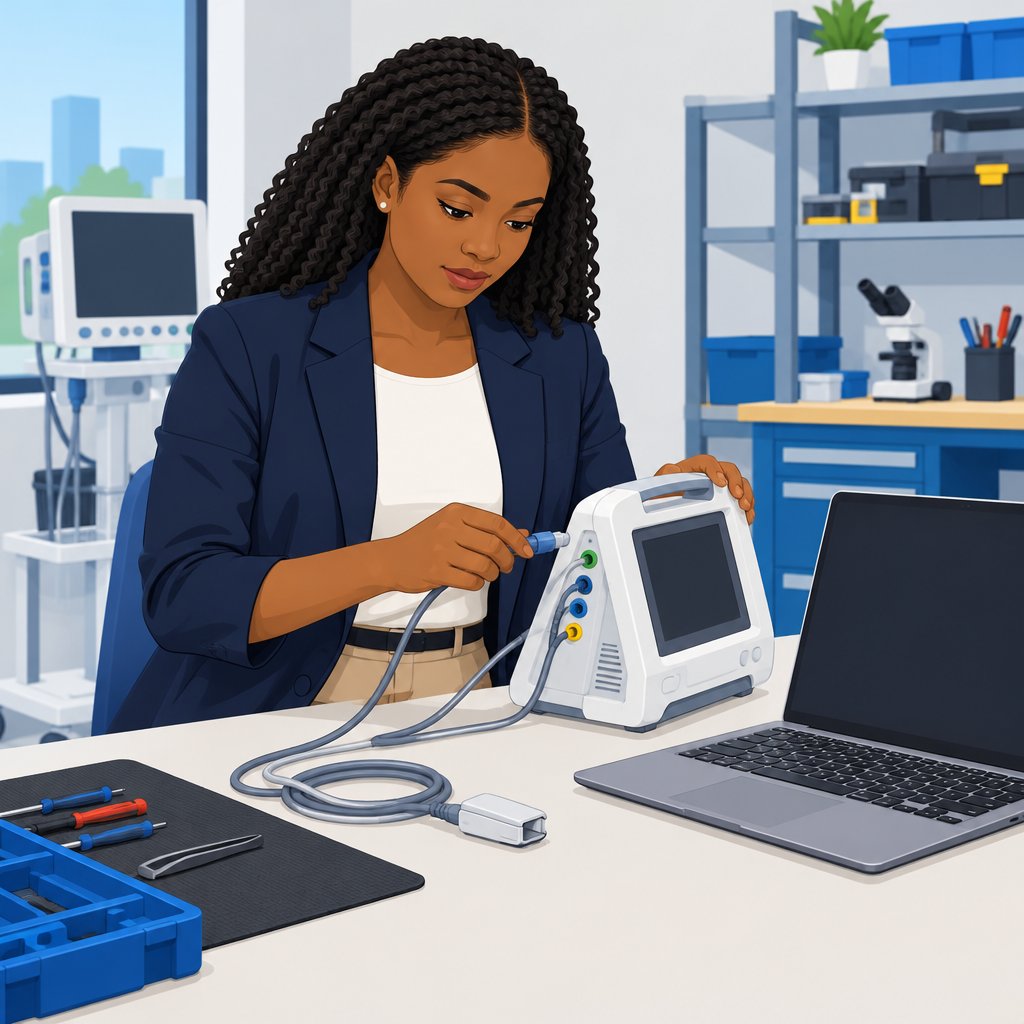
Biomedical engineers design and maintain equipment used in hospitals, clinics, and other healthcare settings.
They apply engineering principles to develop practical solutions for healthcare environments.
Additionally, engineers use problem-solving skills to identify equipment issues promptly.
Medical Imaging Technologies
Medical imaging technologies support the diagnosis and treatment of patients.
Biomedical engineers must understand X-rays, ultrasound, MRI, and CT scans.
They also stay updated on imaging advances to improve equipment use and diagnostic processes.
Biomedical Instrumentation Knowledge
Biomedical instrumentation includes devices that monitor, diagnose, and treat medical conditions.
Engineers study instruments, sensors, and systems to develop effective healthcare solutions.
They also examine how these instruments interact with the human body.
This knowledge supports customized solutions, technology integration, and medical device safety.
Biomedical engineers should continuously strengthen their technical skills as healthcare technology changes.
By doing so, they can contribute meaningfully to improved patient care.
Problem-Solving Skills in Biomedical Engineering
Problem-solving skills help Nigerian biomedical engineers excel in their field.
These skills enable engineers to recognize challenges and develop structured responses.
They also support effective contributions to biomedical engineering and healthcare.
Identifying and Addressing Complex Biomedical Problems
Biomedical engineers recognize intricate issues within their professional field.
They examine each problem carefully to understand its underlying causes.
Then, engineers divide complex challenges into manageable parts and create systematic solutions.
Creative Thinking for Innovative Solutions
Innovation helps biomedical engineers address problems without straightforward answers.
Engineers can generate fresh ideas through brainstorming and collaboration with colleagues.
They also remain informed about developing technologies and advancements in biomedical engineering.
Critical Analysis of Problem-Solving Approaches
Critical thinking helps biomedical engineers compare different approaches to each problem.
They weigh potential advantages, disadvantages, risks, and benefits before choosing solutions.
Engineers use evidence and data to support informed professional decisions.
Contributions to Healthcare Improvement
Strong problem-solving skills help Nigerian biomedical engineers succeed professionally.
These abilities enable engineers to make meaningful contributions to biomedical engineering.
Their work can support improved healthcare outcomes in Nigeria.
Explore Further: Latest Trends in Nigerian Automobile Engineering
Communication skills help biomedical engineers interact effectively with healthcare professionals and patients.
Clear documentation ensures that engineers accurately record and easily access procedures and designs.
Additionally, strong presentation skills help engineers communicate findings and recommendations to various stakeholders.
- Active listening helps engineers understand healthcare professionals’ and patients’ needs and concerns.
- Engineers must explain complex technical information clearly and concisely during successful collaborations.
- They must also write reports and document procedures to maintain accurate records.
- Effective communication with healthcare professionals supports collaboration and improves patient care outcomes.
- Furthermore, effective communication helps engineers build rapport and trust with patients.
Strong communication skills enable biomedical engineers to collaborate effectively with healthcare industry stakeholders.
See Related Content: Latest Metallurgical Engineering Projects in Nigeria
Teamwork Skills in Biomedical Engineering
Teamwork skills are essential for Nigerian biomedical engineers.
Transform Your Career with Expert Guidance
Get personalized mentorship consulting that’s tailored to your unique path. Our expert advice is actionable and exclusive.
Get StartedThese professionals often collaborate with healthcare workers and engineers to achieve shared goals.
Such cooperation supports innovative solutions that improve healthcare delivery and patient outcomes.
Collaboration with Healthcare Professionals
- Biomedical engineers work closely with doctors, nurses, technicians, and other healthcare professionals.
- These partnerships help engineers understand healthcare needs and facility requirements.
- Together, professionals design innovative solutions for facilities and patients.
- They combine medical knowledge with technical expertise to create effective biomedical devices and systems.
Multidisciplinary Teamwork
- Biomedical engineers often join teams that include biology, medicine, physics, and computer science experts.
- They use diverse expertise and perspectives to solve complex biomedical problems.
- Moreover, multidisciplinary teamwork encourages creativity and innovation.
- Cross-pollination of ideas produces comprehensive and efficient solutions.
Leadership and Task Coordination
- Biomedical engineers oversee projects, manage timelines, allocate resources, and coordinate task completion.
- Effective leaders set clear goals and communicate expectations to team members.
- They motivate colleagues and resolve conflicts during projects.
- Furthermore, leaders delegate tasks according to individual strengths and expertise.
- This approach improves resource use, productivity, and team performance.
These skills help Nigerian biomedical engineers develop innovative solutions that improve healthcare delivery and patient outcomes.
Uncover the Details: Marine Engineering: Safety Practices and Standards
Regulatory Compliance Knowledge for Biomedical Engineers
Regulatory compliance knowledge supports safe and effective medical devices and equipment.
Nigerian biomedical engineers need this foundation for quality, safety, and ethical healthcare technology practices.
It guides their work across design, manufacturing, and equipment use.
Healthcare Regulations and Standards in Nigeria
Biomedical engineers must understand Nigeria’s healthcare regulatory framework.
This framework includes laws, guidelines, and standards affecting medical devices.
That knowledge supports compliant design, manufacturing, and use of healthcare equipment.
Ethical Guidelines and Legal Requirements
Engineers must follow ethical principles and legal requirements throughout their professional practice.
These responsibilities protect patients and preserve integrity in healthcare practices.
They include patient confidentiality, informed consent, and professional standards.
Quality Control and Assurance Processes
Quality control and assurance processes help engineers deliver reliable and safe medical devices.
Engineers monitor and evaluate equipment performance through established procedures.
They also identify and address issues that may arise.
Uncover the Details: The Future of Marine Engineering in Nigeria
Continuous Learning
Continuous learning supports success in biomedical engineering.
It strengthens professional development and encourages personal growth.
It also helps engineers serve patients and the healthcare industry more effectively.
- Biomedical engineers must follow the latest advancements in their field.
- Professional development opportunities and certifications support career growth.
- Workshops, conferences, and training programs help engineers remain current.
The Importance of Continuous Learning in Nigeria
Nigeria continues to experience technological advances in healthcare.
Biomedical engineers need current knowledge to respond effectively to these changes.
Continuous learning helps them develop solutions that address healthcare challenges.
Keeping Pace with Biomedical Advancements
Biomedical engineering constantly introduces new technologies, techniques, and treatments.
Engineers who monitor these developments can remain involved in innovation.
Current knowledge helps them provide suitable solutions for healthcare needs.
Professional Development and Certification
Specialized courses, workshops, and certifications can expand professional expertise.
These opportunities allow engineers to strengthen skills in selected areas.
Credentials can also demonstrate commitment and improve professional credibility.
Learning Through Industry Events
Workshops, conferences, and training programs expose engineers to emerging practices.
These events also encourage networking and collaboration with experienced professionals.
Participants can discover practical approaches for addressing real-world challenges.
Practical Strategies for Lifelong Learning
Biomedical engineers can cultivate continuous learning through deliberate, regular activities.
They can combine independent study with guidance from experienced professionals.
They can also learn through collaboration with peers and industry experts.
Self-Study and Online Education
Scientific journals, textbooks, and online resources provide valuable learning materials.
Online courses and webinars can deepen understanding of specific subjects.
Regular self-study helps engineers follow developments between formal training opportunities.
Mentorship and Professional Guidance
Experienced professionals can provide useful guidance for career development.
Mentors can share experiences and offer advice about workplace challenges.
They can also support engineers as they plan future learning activities.
Collaboration and Knowledge Sharing
Collaborative projects can broaden engineers’ perspectives and strengthen their abilities.
Research initiatives encourage professionals to exchange knowledge and practical ideas.
Diverse teams can also support creativity and innovation.
Professional Growth Through Continuous Learning
Continuous learning helps Nigerian biomedical engineers remain prepared for professional demands.
It supports innovation and strengthens their contributions to healthcare.
A lifelong learning mindset can ultimately improve the quality of patient care.
Analytical Skills in Biomedical Engineering
Biomedical engineers in Nigeria need strong analytical skills to address complex medical challenges.
These skills help them evaluate information, identify patterns, and develop effective healthcare solutions.
Analytical abilities also support accurate decisions throughout biomedical engineering projects.
- Ability to analyze data and interpret results accurately
- Strong research skills for gathering and synthesizing information
- Attention to detail to ensure precision in biomedical engineering projects
Accurate Data Analysis
Biomedical engineers analyze data from patient records, medical imaging, and laboratory tests.
They interpret results carefully to identify patterns, trends, and abnormalities.
For example, blood test results can support disease diagnosis and treatment planning.
Research and Information Synthesis
Research enables biomedical engineers to explore ideas, conduct experiments, and improve healthcare technologies.
Strong research skills help engineers evaluate existing studies and gather relevant information.
By synthesizing findings effectively, they can apply current knowledge to biomedical engineering projects.
Attention to Detail and Precision
Biomedical engineering requires precision because small errors can affect patient health.
Engineers must check details when designing devices, conducting experiments, and analyzing results.
Careful work helps them create safe, effective, reliable, and high-quality healthcare solutions.
Analytical Skills and Healthcare Improvement
Analytical skills help Nigerian biomedical engineers manage the complexities of their profession.
Furthermore, accurate analysis and careful research can support innovation in healthcare.
These abilities enable engineers to improve healthcare outcomes and positively affect patients’ lives.
Essential Skills for Biomedical Engineering in Nigeria
Nigerian biomedical engineers require a diverse skill set for successful careers.
These skills include technical expertise, problem-solving abilities, communication skills, and adaptability.
Developing these abilities remains crucial for biomedical engineering careers in Nigeria.
Furthermore, engineers must stay current with industry trends as the field continues evolving rapidly.
By strengthening these skills, Nigerian biomedical engineers can contribute significantly to the healthcare sector.
Moreover, these abilities help engineers address complex challenges and promote innovation within biomedical engineering.
Therefore, aspiring engineers should prioritize continuous learning and professional development.
The future of biomedical engineering in Nigeria remains promising.
Engineers with the right skills will help advance healthcare technology throughout the country.
Additional Resources
Google search results for Essential Skills for Nigerian Biomedical Engineers Engineering
Bing search results for Essential Skills for Nigerian Biomedical Engineers Engineering


