




Introduction
Applied microbiology conferences and workshops in Nigeria provide a platform for professionals to share ideas.
These events help advance knowledge and research in microbiology across the country.
Microbiology conferences and workshops play a crucial role in bringing together professionals.
These events facilitate researchers and students in microbiology to exchange knowledge.
They also showcase research findings and discuss the latest trends and developments.
In Nigeria, such events provide platforms for networking, collaboration, and learning.
These efforts help advance the microbiology field within the country.
Overview of Microbiology Conferences in Nigeria
Nigeria hosts a vibrant microbiology community that organizes events throughout the year.
One key event is the Nigerian Society for Microbiology Annual Conference.
This conference attracts microbiologists from Nigeria and beyond.
Key Conferences in Nigeria
- Nigerian Society for Microbiology Annual Conference
- International Conference on Microbiology
- West African Society for Microbiology Conference
Focus Areas and Themes
These conferences cover a wide range of microbiology focus areas.
They include medical, environmental, industrial, and food microbiology.
- Medical Microbiology
- Environmental Microbiology
- Industrial Microbiology
- Food Microbiology
The themes vary yearly and address current challenges and opportunities.
Common themes include microbial biotechnology and antimicrobial resistance.
Other topics include microbial diversity and public health microbiology.
- Microbial Biotechnology
- Antimicrobial Resistance
- Microbial Diversity
- Public Health Microbiology
The conferences aim to foster discussions, knowledge sharing, and collaborations.
These activities contribute to advancing microbiology research and practice in Nigeria.
Networking Opportunities with Fellow Researchers and Professionals
Microbiology conferences and workshops provide a platform for researchers and professionals to connect and build relationships.
Networking with peers in the field can lead to collaborations, new ideas, and potential career opportunities.
By attending these events, attendees can expand their professional network and stay connected with colleagues in the industry.
Access to Latest Research and Industry Trends
One key benefit of attending microbiology conferences and workshops is the opportunity to stay updated on the latest research and industry trends.
These events bring together experts from around the world to share their knowledge and insights.
Attendees can learn about cutting-edge research, emerging technologies, and new developments in the field.
This access to current information can help individuals stay ahead of the curve and make informed decisions in their work.
Opportunities to Present and Receive Feedback on Research Findings
Microbiology conferences and workshops provide a platform for researchers to present their work and receive valuable feedback from peers in the field.
Presenting at these events allows researchers to showcase their findings, discuss their methodologies, and receive constructive criticism from experts.
This feedback can help researchers refine their work and improve their research methods.
It also contributes to the advancement of the field.
Additionally, presenting at conferences helps researchers gain recognition for their work and build their professional reputation.
Professional Growth and Staying Informed in Microbiology
Attending microbiology conferences and workshops offers numerous benefits for researchers and professionals.
These events provide networking opportunities, access to the latest research, and chances to present and receive feedback on research findings.
Such participation can be instrumental in advancing one’s career and staying informed in the field of microbiology.
Discover More: The Role of Applied Geophysics in Oil Exploration
Key speakers and experts in the field
- Highlight renowned microbiologists who have presented at these conferences
- Discuss their contributions to the field and impact on research in Nigeria
One of the key elements of any Applied Microbiology Conference in Nigeria is the presence of leading experts and speakers in the field.
These individuals play a crucial role in shaping the discourse and sharing the latest developments in microbiology research.
Renowned microbiologists
One such expert who has graced these conferences is Dr. Amina Olutola, a pioneer in the field of antibiotic resistance.
Dr. Olutola’s groundbreaking research on the mechanisms of antibiotic resistance has significantly advanced our understanding of this critical issue.
Another notable speaker is Professor Michael Eze, an expert in microbial ecology.
Professor Eze’s work on the impact of climate change on microbial communities has had a profound influence on the field, particularly in the context of environmental microbiology.
Contributions to the field
These experts have made significant contributions to microbiology research in Nigeria and beyond.
Transform Your Career with Expert Guidance
Get personalized mentorship consulting that’s tailored to your unique path. Our expert advice is actionable and exclusive.
Get StartedTheir insights and findings have not only pushed the boundaries of scientific knowledge but have also inspired a new generation of researchers.
For example, Dr. Olutola’s research has led to the development of novel strategies for combating antibiotic resistance in Nigeria.
Her work has underscored the importance of antimicrobial stewardship and the need for sustainable practices in healthcare settings.
Professor Eze’s research has highlighted the intricate relationships between microbial communities and environmental factors in Nigeria.
His findings have provided valuable insights for policymakers and researchers seeking to address pressing environmental challenges in the country.
Impact on microbiology research in Nigeria
The presence of these esteemed microbiologists at conferences and workshops in Nigeria has had a profound impact on research in the country.
Their collaborations with local researchers and institutions have fostered a culture of innovation and knowledge exchange.
This culture is critical for advancing microbiology research in Nigeria.
By sharing their expertise and insights, these experts have raised awareness about key issues in microbiology.
They have also inspired local researchers to pursue cutting-edge research projects.
This collaboration has resulted in the development of new research initiatives and a vibrant microbiology research community in Nigeria.
The participation of key speakers and experts at Applied Microbiology Conferences in Nigeria is paramount to advancing research in the field.
Their contributions and impact on research in the country are invaluable.
These efforts continue to shape the future of microbiology research in Nigeria.
See Related Content: Success Stories of Nigerian Bioinformaticians
Workshop Sessions and Hands-On Activities in Applied Microbiology
Workshop sessions are a vital component of Applied Microbiology conferences and workshops in Nigeria.
These sessions provide participants with practical experience.
They allow attendees to apply theoretical knowledge to real-world scenarios.
Here are key points about the practical aspects of microbiology workshops in Nigeria.
- Hands-on training: Workshops in Nigeria focus on hands-on training to ensure participants gain practical experience in microbiology techniques.
- Lab-based activities: Participants engage in lab-based activities during workshops to perform experiments and analyze results under expert guidance.
- Equipment utilization: Workshops provide access to state-of-the-art equipment, allowing participants to familiarize themselves with tools used in microbiology research.
- Collaborative learning: Participants work in groups during workshop sessions, fostering collaboration and knowledge sharing among peers.
Hands-on activities play a crucial role in enhancing the skills and knowledge of participants in Applied Microbiology workshops in Nigeria.
These activities allow participants to put theory into practice.
They gain practical experience essential for professional development.
Below are some skills and knowledge gained through hands-on activities during microbiology workshops in Nigeria.
- Microbial identification: Participants learn to identify different types of microorganisms by culturing and staining techniques.
- Antimicrobial susceptibility testing: Participants gain practical experience performing testing to determine antibiotic effectiveness against pathogens.
- Molecular biology techniques: Hands-on activities cover methods like PCR, DNA sequencing, and gene expression analysis to enhance understanding of genetic mechanisms.
- Quality control procedures: Participants learn about quality control to ensure accuracy and reliability in experiments and research.
Practical experiences in microbiology workshops in Nigeria equip participants with necessary skills to excel in Applied Microbiology.
These hands-on activities enhance learning outcomes significantly.
They contribute to the professional development of participants in the industry.
Learn More: Key Ecology Research Institutes in Nigeria
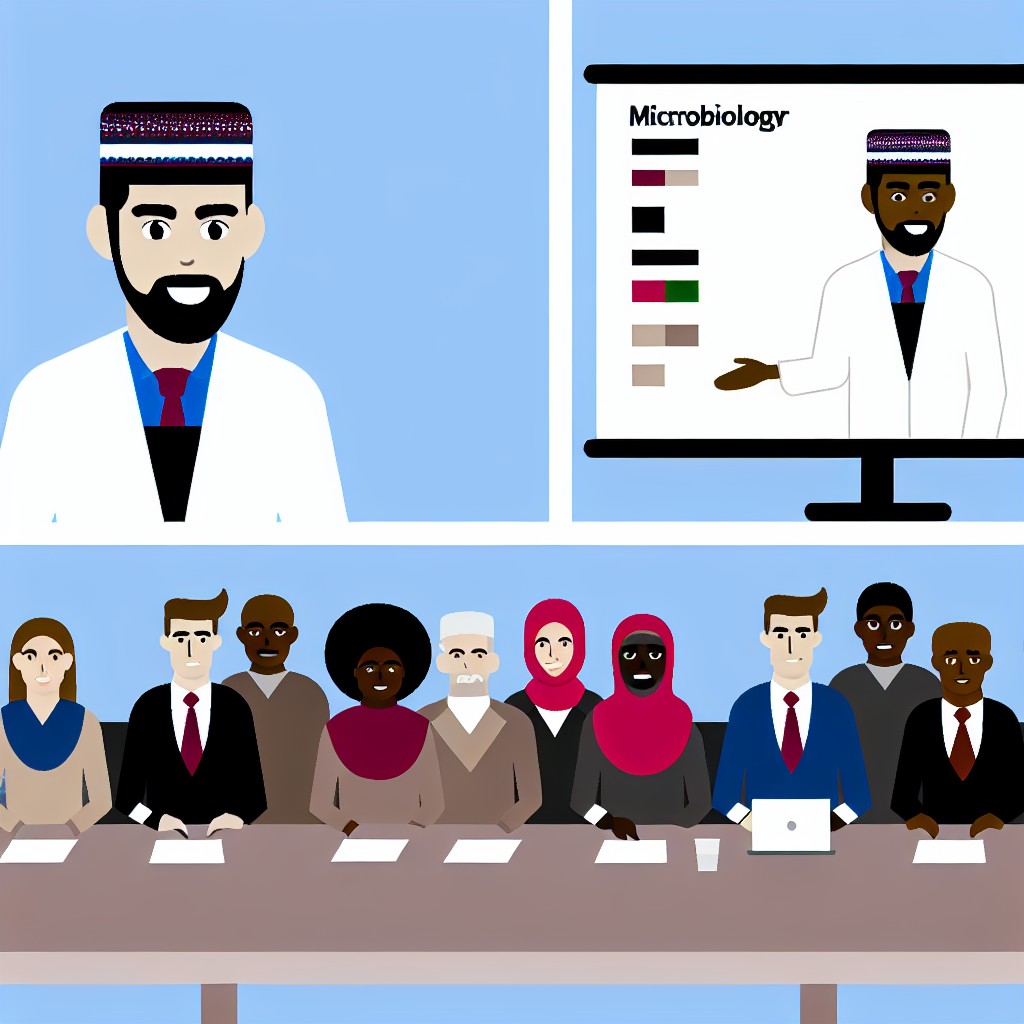
Collaboration opportunities for researchers and institutions
Nigerian and international researchers can benefit from collaboration at these conferences.
The exchange of ideas, resources, and expertise can lead to groundbreaking discoveries.
Collaborations can enhance the quality and impact of research projects.
International researchers bring diverse perspectives and methodologies to the table.
Networking opportunities at conferences facilitate the formation of new collaborations.
Collaborations can lead to joint publications, grants, and innovative projects.
Joint research efforts can address complex scientific challenges more effectively.
- Nigerian and American microbiologists collaborated on antimicrobial resistance studies.
- Their joint research discovered new mechanisms of resistance in common pathogens.
- A partnership between Nigerian and European researchers focused on vaccine development.
- This collaboration resulted in the successful creation of a novel vaccine against a prevalent disease.
- Collaborations between Nigerian universities and international institutions led to faculty exchanges.
- These exchanges allowed researchers to share best practices and improve teaching methods.
- Successful collaborations produced joint research projects that secured international grant funding.
Examples of successful collaborations from conferences
One notable collaboration involved Nigerian and American microbiologists studying antimicrobial resistance.
Their joint research led to the discovery of new resistance mechanisms in common pathogens.
Another partnership between Nigerian and European researchers focused on developing vaccines.
This effort resulted in creating a novel vaccine to combat a widespread disease.
Collaborations between Nigerian universities and international institutions have facilitated faculty exchanges.
Such exchanges allowed sharing of best practices and enhanced teaching methodologies.
Many collaborations produced joint research projects that secured funding from international grants.
Gain More Insights: Role of Chemical Sciences in Nigeria’s Economy
Importance of Attending Microbiology Conferences in Nigeria
Participating in microbiology conferences supports continual professional growth.
These events provide valuable opportunities to expand knowledge and skills.
Researchers can share findings and receive critical feedback for improvement.
Additionally, professionals can build connections to advance their careers effectively.
Additional Resources
American Society for Microbiology
Dr. Mudasiru Iyanda Omowale Raji – Usmanu Danfodiyo University …


