



Market trends play a crucial role in shaping Nigeria’s agricultural business sector.
Stakeholders track these trends to make informed decisions.
They also use market information to adapt to changing conditions.
Importance of Market Trends
Market trends reveal consumer preferences across the agricultural sector.
They also show pricing dynamics and emerging business opportunities.
Therefore, businesses can remain competitive and support growth by following these signals.
Growth of the Agricultural Sector
Nigeria’s agricultural sector has experienced significant growth in recent years.
Increasing food demand has helped fuel this expansion.
Government initiatives have also supported agricultural productivity, attracting investment and encouraging innovation.
Analysis of Current Market Trends
This analysis examines current market trends in Nigeria’s agricultural business sector.
It considers technology adoption, sustainability practices, and market competitiveness.
It also explores consumer behavior to identify opportunities for growth and development.
Nigeria’s Agricultural Business Sector
- Agriculture contributes about 25% to Nigeria’s gross domestic product.
- Smallholder farmers, agribusiness companies, and government agencies lead the sector.
- However, limited finance, weak infrastructure, and climate impacts challenge farmers and agribusinesses.
Investment and Technology Developments
- In recent years, investors have shown growing interest in Nigeria’s agribusiness opportunities.
- Meanwhile, technological advances have encouraged farmers to adopt precision agriculture techniques.
- Additionally, e-commerce platforms now help farmers sell products directly to consumers.
Government Support for Agricultural Development
- The Nigerian government has introduced several policies that support agricultural development.
- For example, the Anchor Borrowers Program provides credit facilities to smallholder farmers.
- Furthermore, agricultural clusters and special economic zones create opportunities for agribusinesses.
Growth Opportunities in Agriculture
- Nigeria’s large population creates substantial demand for agricultural products.
- Also, demand for organic and value-added products enables businesses to diversify.
- International donors and investors can collaborate with local businesses to attract foreign direct investment.
Infrastructure, Climate, and Security Risks
- Inadequate roads and storage facilities continue to restrict agricultural productivity.
- Climate change brings irregular rainfall and droughts that can reduce crop yields.
- Insecurity in some regions restricts farmland access and disrupts agricultural activities.
Prospects for Economic and Food Security
Despite these challenges, Nigeria’s agricultural business sector holds significant potential for growth and investment.
Suitable policies, initiatives, and investments can strengthen the sector’s contribution to economic development.
They can also help improve food security across the country.
Demand for Organic and Locally Sourced Products
- Nigerian consumers increasingly seek organic and locally sourced agricultural products.
- Growing awareness of health and environmental benefits drives this trend.
- Furthermore, consumers will pay more for healthier and more sustainable products.
- This demand creates opportunities for farmers and businesses in this profitable market segment.
- Smallholder farmers benefit by adopting sustainable farming practices.
- Demand for organic and locally sourced products should continue growing in coming years.
Impact of COVID-19 on the Agricultural Market
- The COVID-19 pandemic significantly affected Nigeria’s agricultural sector.
- Movement restrictions and supply disruptions limited farmers’ ability to harvest and sell produce.
- Many farmers struggled to obtain seeds and fertilizers during lockdown measures.
- Additionally, closed markets and restaurants reduced demand for fresh produce.
- However, the pandemic highlighted the importance of resilient and diversified agricultural value chains.
- The government implemented support measures to help farmers manage pandemic-related challenges.
Rise of E-commerce Platforms for Agricultural Products
- E-commerce platforms have become increasingly popular for agricultural products in Nigeria.
- These platforms connect farmers directly with consumers and reduce reliance on traditional middlemen.
- Consumers can access wider product varieties and receive deliveries at home.
- Meanwhile, e-commerce helps farmers reach larger markets and increase sales.
- Some platforms provide traceability features that show consumers product sources.
- Convenience and transparency have made these platforms popular among many consumers.
Find Out More: Agricultural Business and Environmental Conservation Nigeria
Technology and Innovation in the Agricultural Business Sector
Technology has become a game-changer in Nigeria’s agricultural business sector, transforming operations and boosting productivity.
The adoption of innovative technologies has revolutionized traditional farming, marketing, and agricultural product sales.
These changes help agribusinesses work more efficiently.
- Mobile Apps for Selling Agricultural Products
Mobile applications for selling agricultural products have gained significant momentum in Nigeria.
These apps help farmers and agribusinesses showcase products to wider audiences.
They also connect sellers with potential buyers and streamline the selling process.
FarmCrowdy, for example, lets users invest in agriculture and buy fresh produce directly from farmers.
- Role of Precision Agriculture in Improving Productivity
Precision agriculture uses technology to optimize inputs and maximize yields.
Nigerian farmers increasingly use soil testing, crop monitoring, and data analytics.
These practices can improve productivity and reduce operational costs.
GPS technology, drones, and sensors help farmers assess soil conditions accurately.
Farmers can also monitor crop growth and apply fertilizers or pesticides precisely.
This targeted approach minimizes waste, improves crop quality, and increases yields.
Technology and innovation are making Nigeria’s agricultural sector more efficient, sustainable, and profitable.
As agritech solutions advance, they can support sector growth and improve food security.
They can also empower farmers to thrive in the modern digital economy.
Find Out More: Challenges Facing Nigerian Agricultural Business Industry
Government Policies and Regulations Affecting Nigeria’s Agricultural Market
Government policies strongly influence Nigeria’s agricultural business environment.
They can create growth opportunities or impose barriers that restrict agricultural progress.
Land ownership, taxation, trade agreements, and infrastructure policies significantly affect agricultural businesses.
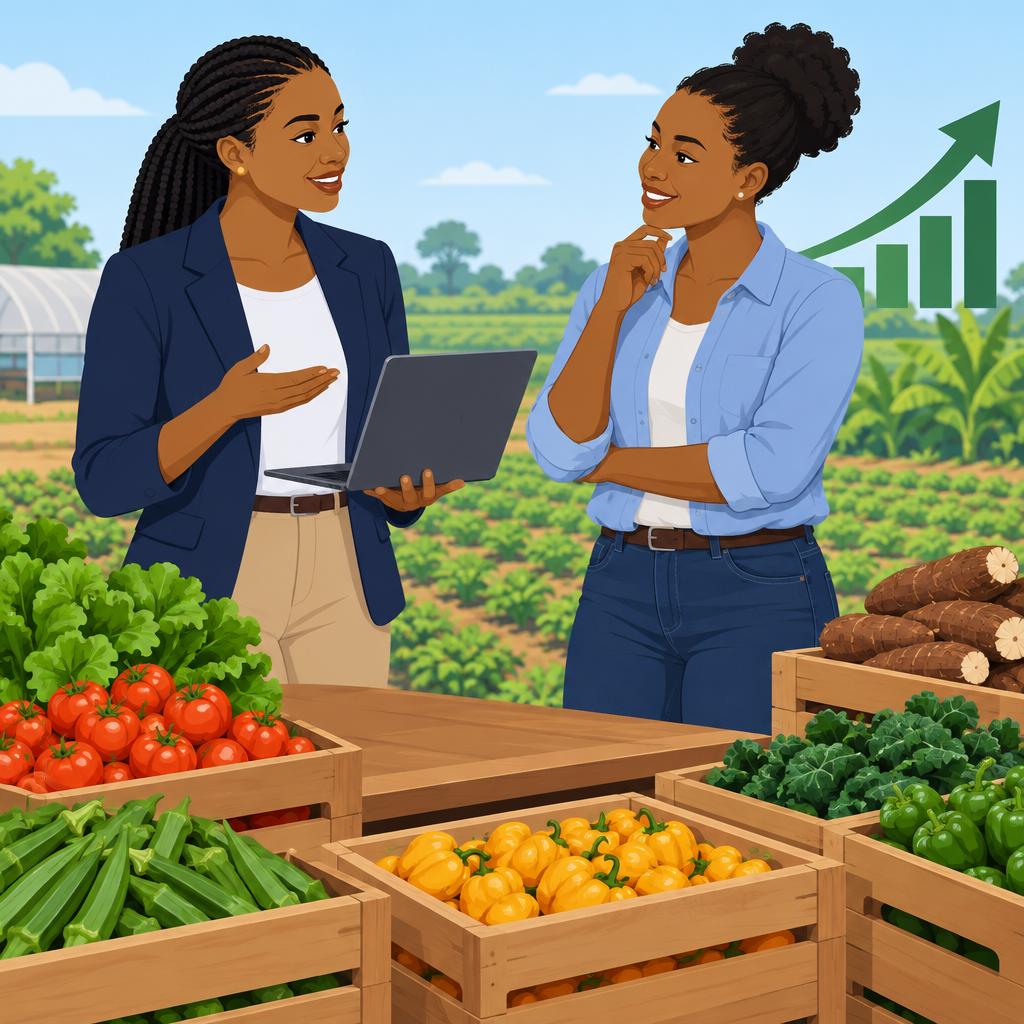
Policy Effects on Agricultural Investment and Operations
Land reform policies can provide farmers with secure rights and encourage long-term agricultural investment.
Secure land ownership can also improve farmers’ confidence when developing productive agricultural enterprises.
However, excessive taxation can increase operating costs and discourage farmers and agribusinesses.
Bureaucratic hurdles can further delay business activities and limit sector participation.
Transform Your Career with Expert Guidance
Get personalized mentorship consulting that’s tailored to your unique path. Our expert advice is actionable and exclusive.
Get StartedInfrastructure development policies also influence market access, production efficiency, and agricultural expansion.
Subsidies and Incentives Supporting Agricultural Growth
Governments use subsidies and incentives to support agricultural production and encourage sector growth.
These measures may include input subsidies, price supports, and market incentives.
In Nigeria, subsidy programs have provided smallholder farmers with fertilizer, seedlings, and agricultural equipment.
These inputs can improve yields while reducing farmers’ production costs.
Consequently, incentives can make agriculture more attractive as a livelihood option.
They also support food security and reduce dependence on imported food.
Recent Regulatory Changes Affecting Agribusinesses
Recent Nigerian regulatory changes have produced mixed effects across the agricultural business sector.
The government has introduced policies designed to attract private investment into agriculture.
The Agricultural Promotion Policy, introduced in 2016, is also known as the Green Alternative.
This policy promotes agribusiness as a viable economic activity.
It emphasizes value addition, finance access, and stronger market linkages for agricultural products.
Nevertheless, inconsistent implementation continues to limit the effectiveness of several agricultural policies.
Corruption and inadequate infrastructure also hinder agribusiness development.
Regulatory bottlenecks can delay permits and create entry barriers for new market participants.
Improving Policy Implementation in Agriculture
Government policies can create significant opportunities for Nigeria’s agricultural business sector.
However, effective implementation requires greater consistency, transparency, and accountability.
Reducing regulatory delays can help more agribusinesses enter and operate within the market.
Addressing these challenges can strengthen agriculture’s contribution to Nigeria’s economic development.
You Might Also Like: Impact of Foreign Investment on Nigerian Agriculture
Export Opportunities for Nigerian Agricultural Products
Nigeria can expand agricultural exports by connecting suitable products with international buyers.
European, American, and Asian markets offer opportunities for several Nigerian agricultural products.
However, farmers must address infrastructure, compliance, and market access challenges.
Main International Markets for Nigerian Agricultural Products
Several international markets import Nigerian agricultural goods and create opportunities for export growth.
European buyers, American consumers, and Asian importers show interest in different Nigerian products.
Therefore, exporters can target markets according to product demand and buyer preferences.
- Europe includes major importers such as the Netherlands, Spain, and Germany.
- The United States shows growing demand for Nigerian spices and cocoa products.
- China and India show interest in importing Nigerian cashew nuts and sesame seeds.
Challenges Affecting International Market Access
Nigerian farmers face several obstacles when they seek international buyers.
Weak transport systems and limited storage can make agricultural exports more difficult.
Additionally, farmers may need support with international standards, regulations, tariffs, and quotas.
- Poor infrastructure includes inadequate roads, ports, and storage facilities for perishable goods.
- Limited information makes it harder for farmers to meet international standards and regulations.
- Tariffs, quotas, and other market barriers can restrict Nigerian agricultural exports.
Successful Nigerian Agricultural Products in Global Markets
Several Nigerian agricultural products have attracted international attention.
These products benefit from qualities that appeal to buyers in different regions.
Cocoa, cashew nuts, and ginger demonstrate Nigeria’s potential in global agricultural trade.
- Nigeria ranks among the world’s largest cocoa producers and has a reputation for quality beans.
- International markets value Nigerian cashew nuts for their size and flavor.
- Nigerian ginger attracts global buyers with its distinctive taste and aroma.
Discover More: Agricultural Business and Food Security in Nigeria
Nigeria’s agricultural business sector increasingly embraces sustainable agricultural practices.
This shift reflects environmental concerns and the need to strengthen the industry’s long-term viability.
Importance of Sustainable Agriculture Practices
Sustainable agriculture supports the longevity and productivity of Nigeria’s agricultural sector.
By using sustainable methods, farmers can protect the environment and conserve natural resources.
Furthermore, these practices can strengthen farm resilience and support continued agricultural production.
Benefits of Sustainable Agriculture
These methods improve soil health while reducing farmers’ dependence on synthetic inputs.
They also conserve water, improve water quality, and support biodiversity.
Additionally, sustainable practices can help farms respond more effectively to climate change.
- Increased soil fertility and health
- Reduced dependency on synthetic inputs
- Improved water quality and conservation
- Enhanced biodiversity and ecosystem services
- Greater resilience to climate change
Initiatives Promoting Sustainability
Several initiatives promote sustainable agricultural practices among Nigerian farmers.
These programs provide training, resources, and support for farmers adopting more sustainable methods.
As a result, participating farmers can improve their practices and strengthen overall productivity.
Examples of Sustainability Initiatives
Government programs encourage farmers to use conservation agriculture methods.
Meanwhile, nongovernmental organizations support sustainable land management through dedicated initiatives.
Private partnerships, research services, and extension programs also promote sustainable agricultural systems.
- Government-led programs promoting conservation agriculture
- NGO initiatives focused on sustainable land management
- Private sector partnerships promoting sustainable supply chains
- Research and extension services promoting agroecology
Challenges and Opportunities
Farmers still face barriers when they consider sustainable agricultural methods.
Limited resources, insufficient awareness, and established farming habits can slow adoption.
Nevertheless, the sector offers opportunities for innovation, collaboration, and sustainable growth.
Addressing Challenges
Stakeholders can improve adoption by expanding access to training and practical resources.
They can also explain sustainability’s benefits and create incentives for participating farmers.
Moreover, stronger collaboration can help stakeholders address barriers more effectively.
- Providing access to training and resources
- Raising awareness about the benefits of sustainability
- Incentivizing farmers to adopt sustainable practices
- Fostering collaboration between stakeholders
Expanding Opportunities
Farmers and businesses can develop sustainable value chains that connect production with suitable markets.
Research and innovation can further improve sustainable agricultural practices.
Additionally, supportive policies can encourage youth and women to participate in sustainable agriculture.
- Developing sustainable value chains and markets
- Investing in research and innovation in sustainable agriculture
- Creating policies that support sustainable practices
- Engaging youth and women in sustainable agriculture
Long-Term Direction for Nigerian Agriculture
Nigeria’s growing focus on sustainable agriculture supports a more resilient agricultural sector.
Farmers can protect natural resources while maintaining the long-term health of their operations.
Ultimately, sustainability can strengthen agricultural productivity and support the industry’s future.
Strategic Opportunities in Nigerian Agribusiness
Nigerian agribusinesses must monitor evolving market forces to remain competitive.
Technology, consumer preferences, and government policies continue to shape the agricultural industry.
Therefore, businesses should stay informed about market changes and adjust their strategies accordingly.
That approach can help companies respond effectively and pursue growth opportunities.
Businesses can also use technology to improve efficiency and explore suitable export markets.
Additionally, niche products may offer opportunities for growth and innovation.
Additional Resources
Google search results for Market Trends in Nigeria's Agricultural Business Sector Agriculture
Bing search results for Market Trends in Nigeria's Agricultural Business Sector Agriculture


