



Introduction
Agricultural business in Nigeria plays a crucial role in the country’s economy.
It remains the country’s largest economic sector.
Over 70% of Nigerians engage in agriculture.
The sector provides food security and income generation.
Additionally, it supplies raw materials for industries.
Historical Background of Nigeria’s Agricultural Sector
Nigeria’s agricultural sector has a rich historical background that reaches back to ancient times.
Agriculture developed through pre-colonial, colonial, and post-colonial periods.
Each period shaped the country’s agricultural practices, policies, and economic role.
- Evolution of agriculture in Nigeria
- Role of agriculture in pre-colonial, colonial, and post-colonial eras
Pre-colonial Agricultural Practices
Before colonial rule, agriculture served as the mainstay of Nigeria’s economy.
Indigenous communities practiced subsistence farming to support their livelihoods.
Farmers cultivated crops such as yams, cassava, maize, and millet.
They also passed agricultural knowledge and cultural practices between generations.
Communities used slash-and-burn farming, irrigation, and traditional tools to improve production.
Moreover, communal work helped communities achieve food security and sustain their livelihoods.
Colonial Changes in Agricultural Production
Colonial powers introduced major changes to Nigeria’s agricultural sector during the nineteenth century.
European settlers promoted cash crops such as cocoa, palm oil, and rubber for export.
This shift moved production beyond subsistence farming toward commercial agriculture.
Colonial authorities established plantations and introduced mechanization and monocropping.
Indigenous farmers adapted to European practices, which displaced some traditional methods.
Meanwhile, colonial powers and appointed local elites received much of the agricultural profit.
Post-colonial Agricultural Development
Nigeria’s agricultural sector faced new challenges after independence in 1960.
The government introduced policies supporting food security and economic development.
These policies included land reforms, subsidies, and agricultural research institutes.
However, poor infrastructure and limited access to credit continued to restrict agricultural growth.
Unstable market prices also created difficulties for farmers and agricultural businesses.
Additionally, dependence on oil revenue weakened attention to agricultural development.
In recent years, initiatives such as the Agricultural Transformation Agenda renewed efforts to revitalize agriculture.
The Growth Enhancement Support Scheme also supported renewed attention to agricultural production.
Addressing these challenges can help Nigeria strengthen agriculture and support future socioeconomic development.
Major Agricultural Products in Nigeria
Nigeria produces major crops, including cocoa, palm oil, and cassava.
- Cocoa, palm oil, and cassava remain important agricultural products in Nigeria.
- Livestock farming supports household income, food supplies, employment, and agro-industrial activities.
Cocoa Production in Nigeria
Cocoa ranks among Nigeria’s major cash crops.
Nigeria ranks as the world’s fourth-largest cocoa producer.
Southern states, particularly Ondo and Cross River, provide suitable cocoa-growing conditions.
The cocoa sector employs farmers and generates foreign exchange through exports.
However, aging trees and weak processing facilities continue to limit industry growth.
Limited government support also affects productivity.
Efforts now aim to revitalize cocoa production and improve productivity.
Palm Oil Industry in Nigeria
Palm oil remains one of Nigeria’s key agricultural products.
Nigeria ranks among the world’s largest palm oil producers.
Farmers grow oil palms across several Nigerian regions.
Transform Your Career with Expert Guidance
Get personalized mentorship consulting that’s tailored to your unique path. Our expert advice is actionable and exclusive.
Get StartedEdo, Ondo, and Delta states rank among the major producing areas.
The industry supports exports, employment, and domestic consumption.
Nigeria can expand the sector by improving processing facilities.
Producers can also promote sustainable practices and expand market access.
Cassava Production and Processing
Cassava serves as a staple food crop throughout Nigeria.
Nigeria ranks as Africa’s largest cassava producer.
The country also ranks third globally for cassava production.
Farmers grow cassava across several regions.
Ekiti, Benue, and Oyo states rank among the major producing areas.
Manufacturers use cassava for food, animal feed, and industrial products.
The sector supports food security, rural livelihoods, and industrial development.
Current efforts target higher productivity, value addition, and wider market opportunities.
Importance of Livestock Farming
Livestock farming plays an important role in Nigeria’s agricultural sector.
It provides income for rural households and supplies dietary protein.
The sector also supports agro-industrial activities.
Nigerian livestock production includes cattle, sheep, goats, poultry, and pigs.
Different regions specialize in various livestock types.
Livestock farming strengthens food security, employment, and poverty reduction.
However, disease outbreaks and inadequate breeding practices restrict sector performance.
Limited market access also creates difficulties for livestock farmers.
Current efforts seek to improve productivity, quality standards, and market connections.
Learn More: Urban Agriculture Disciplines in Nigeria: How City Dwellers are Embracing Farming
Contribution of Agricultural Business to Nigeria’s GDP
- Statistics on agriculture’s GDP contribution
Agriculture plays a significant role in Nigeria’s economic development.
Recent statistics show that agriculture contributes about 25 percent of Nigeria’s GDP.
This contribution highlights agriculture’s importance in driving economic growth.
Agriculture Compared with Other GDP Sectors
- Comparison of agriculture with other GDP sectors
Agriculture remains one of the key sectors supporting Nigeria’s economic development.
Meanwhile, sectors such as oil and gas also contribute significantly to Nigeria’s GDP.
Furthermore, agriculture employs many people and supports national food security.
Discover More: Starting an Agricultural Business in Nigeria: A Guide
Employment Opportunities in Nigeria’s Agricultural Sector
Agriculture creates employment opportunities for many people across Nigeria.
Workers can engage in crop cultivation, livestock farming, processing, and other agricultural activities.
Consequently, the sector supports livelihoods while contributing to Nigeria’s employment landscape.
People Employed in Nigerian Agriculture
Nigeria has a large workforce engaged in various agricultural activities.
The World Bank reports that agriculture employs around 70 percent of Nigeria’s labor force.
Smallholder farmers form a significant part of this workforce and often operate family-owned farms.
- Farmers cultivate crops and raise livestock across Nigeria.
- Smallholder farmers use family-owned farms to support their livelihoods.
- Agricultural work includes diverse tasks requiring different skills.
- Crop cultivation provides employment for people in many communities.
- Livestock farming creates additional work within the agricultural sector.
Livelihoods for Nigeria’s Rural Population
Rural communities rely heavily on agriculture for income and daily sustenance.
Agricultural activities provide employment and income-generating opportunities throughout rural areas.
Furthermore, small-scale farmers depend on agriculture for food security and financial stability.
- Rural households use agriculture to meet their daily needs.
- Farming supports food security among small-scale producers.
- Agriculture helps rural residents generate income.
- Agro-processing creates employment beyond primary farming activities.
- Agri-businesses provide further opportunities for rural workers.
You Might Also Like: Agricultural Business and Export Opportunities in Nigeria
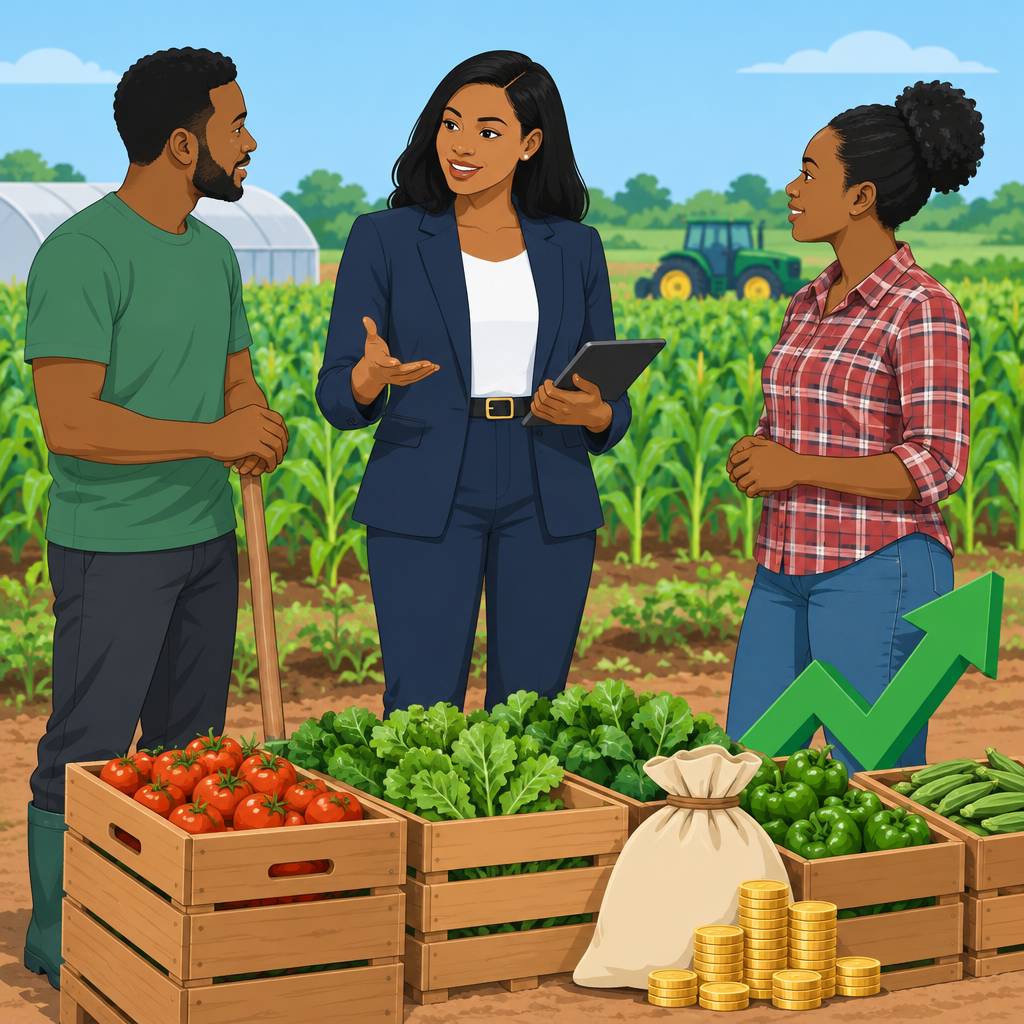
Export Earnings from Agricultural Products
Nigeria exports several agricultural products to international markets.
These exports generate foreign exchange and support economic activity.
They also strengthen Nigeria’s participation in global agricultural trade.
Nigeria’s Top Agricultural Exports
Nigeria exports various agricultural products with strong international demand.
These products include cocoa, oil palm products, cashew nuts, rubber, and sesame seeds.
Exporters ship these products to markets across different countries.
- Nigeria produces high-quality cocoa beans for global chocolate production.
- The country exports crude and refined oil palm products.
- Nigeria exports cashew nuts to Vietnam, India, and the United States.
- Natural rubber exports support industries such as tire manufacturing.
- Nigeria exports sesame seeds for cooking and sesame oil production.
Contribution of Agricultural Exports to Foreign Exchange Earnings
Agricultural exports contribute significantly to Nigeria’s foreign exchange earnings.
They also reduce the country’s dependence on oil revenue.
Furthermore, export earnings support employment, trade, and broader economic growth.
- Agricultural exports diversify Nigeria’s revenue sources.
- Export activities support job creation across the agricultural industry.
- Foreign exchange from exports helps improve Nigeria’s balance of trade.
- Export earnings contribute to economic growth and stronger overall performance.
- Global exports showcase Nigeria’s potential and attract foreign investment.
Effective policies and investment can help Nigeria expand agricultural export earnings.
Consequently, stronger agricultural exports can support the country’s economic prosperity.
Explore Further: Agricultural Business Conferences and Events in Nigeria
Challenges Facing Nigeria’s Agricultural Business
- Inadequate infrastructure limits transportation, storage, and reliable power for agricultural businesses.
- Limited credit prevents small-scale farmers from investing in equipment, fertilizers, and technology.
- Climate change creates unpredictable weather conditions that threaten crops and livestock.
Nigeria’s agricultural business sector faces several challenges that restrict productivity and growth.
Poor roads make it difficult for farmers to transport goods to market.
Likewise, inadequate storage facilities contribute to losses of perishable goods.
Unreliable power supplies further complicate agricultural operations.
Moreover, many small-scale farmers lack credit for modern equipment, fertilizers, and technology.
Without sufficient financing, farmers struggle to expand operations and improve yields.
Erratic weather patterns and seasonal shifts affect crop yields and livestock production.
Floods and droughts can cause crop failures and reduce farm income.
Consequently, these challenges weaken the sector’s ability to meet a growing population’s demands.
Therefore, the government should invest in infrastructure, improve farmer access to credit, and support climate-resilient agriculture.
These measures could help Nigeria’s agricultural sector unlock its potential and contribute more significantly to the economy.
Government Policies Supporting Nigerian Agriculture
The Nigerian government has introduced policies and programs to strengthen agricultural development.
These initiatives aim to improve food security, reduce poverty, create jobs, and support economic growth.
The Agricultural Transformation Agenda promotes higher productivity, value addition, and economic diversification beyond oil.
Additionally, the Growth Enhancement Support Scheme helps farmers obtain seeds and fertilizers through subsidies.
The Anchor Borrowers Program gives smallholder farmers access to credit at low interest rates.
Meanwhile, NIRSAL improves financing access for agribusinesses through incentive-based risk sharing.
Initiatives for Agricultural Productivity and Modernization
The government has launched several initiatives to increase productivity and modernize farming practices.
For example, the National Agricultural Mechanization Program expands farmers’ access to modern machinery.
Farmers can use tractors, harvesters, and irrigation systems through this mechanization initiative.
Furthermore, the FADAMA III Project supports small-scale farmers with training and technology transfer.
The Staple Crop Processing Zones initiative establishes agro-industrial areas for value addition and processing.
In addition, the Livelihood Improvement Family Enterprise program supports youth and women in agribusiness.
This program helps participants improve their incomes and strengthen their livelihoods.
The government also works with the World Bank and African Development Bank on agricultural development.
Through these interventions, farmers and agribusinesses gain access to resources, training, finance, and incentives.
Agriculture’s Role in Nigeria’s Economic Development
Nigeria’s agricultural business supports the country’s economy.
It provides employment opportunities and contributes to GDP growth.
Additionally, it helps ensure food security.
Therefore, government, private sector stakeholders, and individuals should support and invest in agriculture.
Additional Resources
Google search results for Economic Contributions of Nigeria's Agricultural Business Agriculture
Bing search results for Economic Contributions of Nigeria's Agricultural Business Agriculture


