




Introduction
Medical rehabilitation in Nigeria restores functional abilities after illness or injury.
It includes physical therapy, occupational therapy, and speech therapy.
Advancements in medical rehabilitation improve patient outcomes and quality of life.
New technologies and evidence-based practices can enhance rehabilitation programs.
History of Medical Rehabilitation in Nigeria
Medical rehabilitation services in Nigeria developed alongside the country’s expanding healthcare system.
Initially, healthcare providers gave rehabilitation limited attention and resources.
Over time, stakeholders expanded services to support people with disabilities and other rehabilitation needs.
- Introduction of Rehabilitation Services
- Establishment of Specialized Rehabilitation Centers
- Integration of Rehabilitation into Mainstream Healthcare
Evolution of Medical Rehabilitation Services
Earlier services relied mainly on traditional methods and lacked modern techniques and equipment.
However, medical technology has introduced improved approaches for rehabilitation care.
Additionally, increased awareness has encouraged training, cooperation, and broader service development.
- Introduction of Modern Rehabilitation Techniques
- Training of Rehabilitation Specialists
- Collaboration with International Organizations
Challenges During the Early Development of Rehabilitation
Early rehabilitation programs faced several barriers that slowed the sector’s progress.
For example, many communities lacked sufficient awareness and understanding of rehabilitation services.
Furthermore, limited funding, personnel, infrastructure, and equipment restricted service availability.
- Lack of Awareness and Understanding
- Inadequate Funding and Resources
- Shortage of Skilled Rehabilitation Professionals
- Infrastructure and Equipment Limitations
Despite these challenges, the field has advanced through efforts from government, healthcare providers, NGOs, and international organizations.
Consequently, improvements in rehabilitation infrastructure have supported better outcomes for people requiring these services.
Increased awareness and investment have also helped more people access rehabilitation care and support.
This history reflects Nigeria’s progress toward a more inclusive and comprehensive healthcare system.
Continued attention should address remaining barriers and promote equal access throughout the country.
Such access should remain available regardless of people’s socioeconomic status or geographical location.
Technological Advancements in Medical Rehabilitation
Medical rehabilitation in Nigeria has experienced significant technological advancements in recent years.
These developments have transformed treatment delivery and improved patient outcomes.
Healthcare providers now use advanced tools to make rehabilitation more effective and engaging.
- Virtual reality technology
- Robotic rehabilitation devices
Virtual reality provides immersive experiences that support patients during recovery.
By simulating real-life situations, virtual reality helps patients regain mobility and improve motor skills.
Patients can practise virtual sports, driving simulations, and travel experiences during rehabilitation sessions.
These activities can also support patients’ mental health and make treatment more engaging.
Robotic devices assist patients with repetitive movements, including walking and lifting weights.
They provide precise, consistent support while patients complete their rehabilitation exercises.
Additionally, robotic devices collect progress data for healthcare providers.
Providers can use this information to tailor treatment plans to individual patient needs.
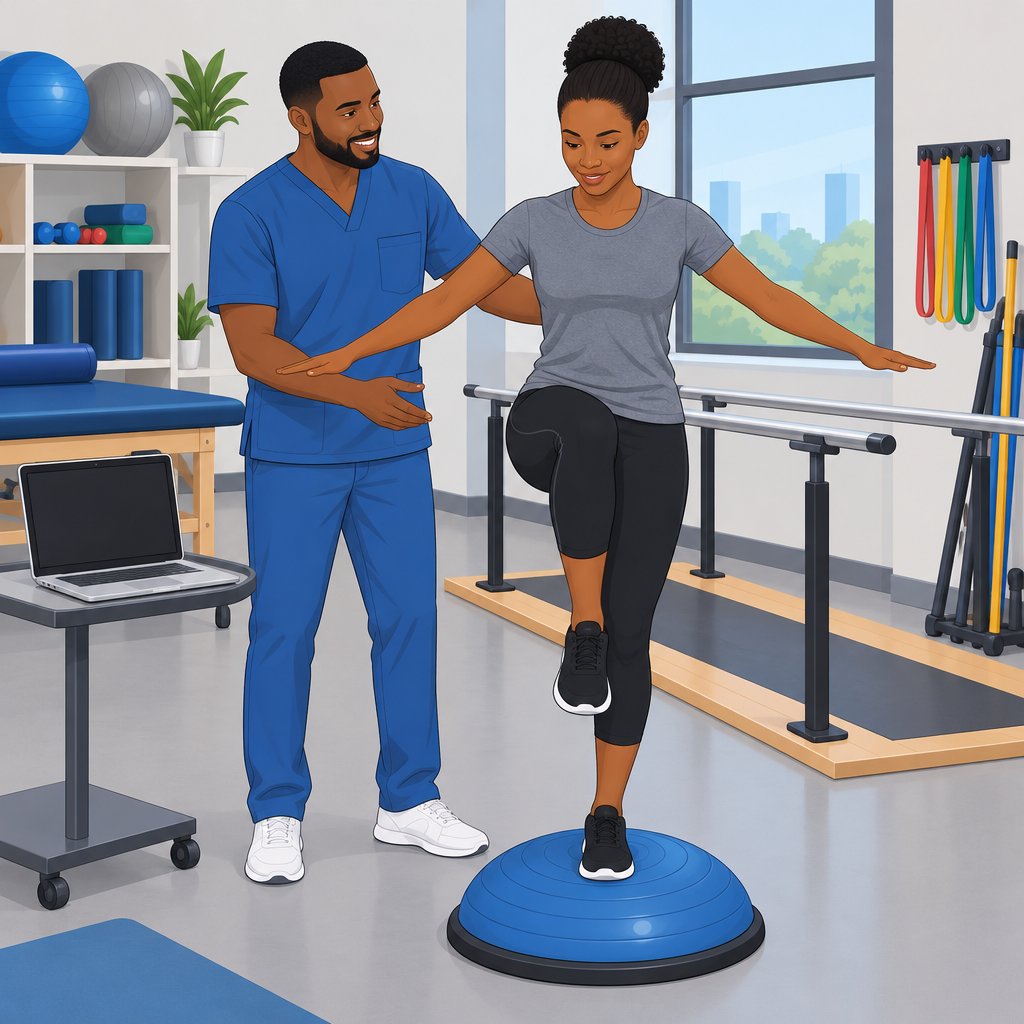
How Technology Improves Rehabilitation Outcomes
Technology has significantly improved rehabilitation outcomes for patients in Nigeria.
Advanced tools help healthcare providers deliver more targeted and personalized treatment.
Furthermore, digital solutions support patient participation and expand access to rehabilitation services.
- Improved treatment efficiency
- Enhanced patient engagement
- Increased access to rehabilitation services
Advanced tools enable healthcare providers to create more focused treatment plans.
Consequently, patients may recover faster and achieve better results.
Interactive technologies also encourage patients to follow their treatment plans consistently.
Virtual reality captures attention and motivates patients to participate actively in recovery.
Engaging sessions can strengthen patient commitment to rehabilitation.
Telemedicine and remote monitoring allow patients to receive rehabilitation services at home.
This access benefits people living in remote areas or managing mobility challenges.
Transform Your Career with Expert Guidance
Get personalized mentorship consulting that’s tailored to your unique path. Our expert advice is actionable and exclusive.
Get StartedPatients can therefore receive care without travelling long distances.
As technology continues evolving, medical rehabilitation in Nigeria can support more effective and accessible care.
Virtual reality, robotics, telemedicine, and remote monitoring offer opportunities for continued innovation.
These developments can improve the quality of care and support patients’ overall well-being.
See Related Content: Role of Nigerian Medical Associations and Councils
Training and Education in Medical Rehabilitation
Specialized training helps healthcare professionals deliver effective medical rehabilitation care.
It develops expertise in physical therapy, occupational therapy, and speech therapy.
It also supports accurate assessment and individualized treatment planning.
- Specialized training develops expertise in physical therapy, occupational therapy, or speech therapy.
- It helps professionals assess patient needs accurately and create personalized treatment plans.
- It keeps professionals informed about rehabilitation advances and evidence-based practices.
Importance of Specialized Training for Healthcare Professionals
Medical rehabilitation training addresses complex patient needs after injuries or during chronic conditions.
Professionals learn to identify causes of physical limitations and select targeted interventions.
They also learn to evaluate progress and adjust treatment plans when necessary.
- Training helps professionals identify underlying causes of physical limitations.
- They can design targeted interventions that enhance patients’ functional abilities.
- They can collaborate with physicians, nurses, and specialists for comprehensive care.
- They can evaluate progress, modify treatment plans, and provide ongoing support.
Initiatives to Improve Medical Rehabilitation Education
Education initiatives strengthen healthcare professionals’ knowledge, skills, and competencies.
Academic institutions, healthcare facilities, and professional organizations can support stronger programs through collaboration.
Practical learning and simulation expose students to clinical scenarios while reinforcing theoretical knowledge.
- Continuous development updates knowledge in treatment techniques, research methodologies, and patient-centered care.
- Collaboration combines theoretical knowledge with practical clinical experience.
- Technology and simulation provide hands-on learning and realistic clinical scenarios.
These educational efforts prepare rehabilitation professionals to deliver high-quality care.
They also help medical rehabilitation in Nigeria respond to changing healthcare needs and improve patient outcomes.
Discover More: ENT Surgery for Sinus Issues in Nigeria
Access to Medical Rehabilitation Services in Nigeria
Access to medical rehabilitation services remains a major concern in Nigeria.
The issue has gained increasing attention in recent years.
As medical care advances, Nigeria must ensure equal rehabilitation access for recovery and improved quality of life.
Disparities Between Urban and Rural Rehabilitation Services
Urban centers typically offer better healthcare facilities and rehabilitation services.
However, rural residents often struggle to reach these essential services.
Rural communities frequently lack specialized professionals and rehabilitation facilities.
Limited infrastructure and transportation problems further restrict access.
Moreover, residents may lack awareness of available rehabilitation services.
Cultural beliefs and financial constraints can also discourage people from seeking rehabilitation services.
These barriers create a substantial gap in quality care across rural communities.
Mobile Clinics and Telemedicine for Expanded Access
To reduce these disparities, healthcare providers use mobile clinics and telemedicine.
Mobile clinics bring healthcare directly to underserved communities.
These clinics carry essential equipment and employ professionals who provide rehabilitation services onsite.
Consequently, rural residents can receive care without traveling long distances.
Telemedicine also expands access through digital technology.
Patients can receive remote consultations, therapy sessions, and monitoring from healthcare professionals.
This approach particularly benefits people living in remote areas.
Through real-time communication, patients receive timely care and support.
These approaches can improve access to comprehensive rehabilitation services across Nigeria.
Learn More: Role of NGOs in Nigerian Microbiology
Collaborations and Partnerships in Medical Rehabilitation
Collaboration helps medical rehabilitation teams provide comprehensive care for patients.
Different professionals can share expertise, resources, and responsibility through coordinated efforts.
This approach addresses patients’ physical, emotional, and social needs.
Moreover, healthcare institutions can create more effective rehabilitation programs through cooperation.
These programs can improve patient outcomes and enhance quality of life.
Research partnerships also help healthcare institutions follow recent rehabilitation advancements.
Similarly, technology partnerships can produce innovative solutions for patient care.
Partnerships That Advance Medical Rehabilitation
Successful partnerships can connect clinical practice, research, community support, and technology.
They can also expand rehabilitation services and strengthen patient support.
In Nigeria, these relationships can improve care and strengthen rehabilitation programs.
- A local hospital and university research center developed a new rehabilitation technique together.
- A rehabilitation center and fitness company created a tailored exercise program for patients.
- A pharmaceutical company and rehabilitation clinic supported new pain management medications.
- A rehabilitation center and community organization established support groups for patients and families.
- A healthcare institution and technology startup created an app for tracking rehabilitation progress.
- A government agency and rehabilitation center secured funding for equipment upgrades.
- A rehabilitation center and telemedicine company enabled remote consultations for rural patients.
- A research institute and rehabilitation facility implemented evidence-based practices to improve outcomes.
- A healthcare institution and nonprofit organization provided free rehabilitation services to underserved communities.
- A rehabilitation center and insurance company developed coverage options for rehabilitation services.
These partnerships improve patient care, encourage innovation, and enhance rehabilitation services.
Learn More: Government Policies on Blood Transfusion in Nigeria
Future Directions for Medical Rehabilitation in Nigeria
Recent advancements have strengthened medical rehabilitation in Nigeria.
Additionally, innovative technologies and techniques have improved the quality of patient care.
Moreover, healthcare professionals and researchers have developed specialized rehabilitation programs through collaboration.
However, limited resources and trained professionals continue to challenge service delivery.
Nevertheless, medical rehabilitation in Nigeria has a promising future.
With continued investment in research and infrastructure, the field can grow further.
Ultimately, rehabilitation services aim to enhance the quality of life for individuals who need them.
Additional Resources
Google search results for Advancements in Medical Rehabilitation Nigeria Medical
Bing search results for Advancements in Medical Rehabilitation Nigeria Medical


