



Marine Biology in Nigeria
Nigeria’s marine biology field remains nascent, with limited resources and research facilities.
Despite these challenges, marine biology remains vital to Nigeria’s ecosystem and economy.
Marine biodiversity in Nigerian waters supports a wide variety of marine life and ecosystems.
Therefore, understanding and conserving this biodiversity supports sustainable development and environmental preservation.
Furthermore, marine resources support Nigeria’s economy, coastal livelihoods, and food security.
Consequently, investment in marine biology could advance conservation and economic growth.
This blog post explores marine biology’s future in Nigeria and its research and development opportunities.
Current Challenges Facing Marine Biology in Nigeria
Marine biology in Nigeria faces several challenges that hinder its growth and development.
These challenges affect marine ecosystems, biodiversity, livelihoods, and public health.
Therefore, effective policies, public awareness, and scientific investment remain necessary.
- Pollution of water bodies
- Overfishing
- Lack of funding and resources for research
Pollution of Water Bodies
Pollution of Nigerian water bodies requires urgent attention.
Industrial waste, agricultural runoff, untreated sewage, oil spills, and plastic waste reduce water quality.
Consequently, contaminants threaten aquatic organisms, marine biodiversity, and human health.
Pollution also harms fishermen who depend on the ocean for their livelihoods.
Overfishing
Overfishing remains another critical challenge for marine biology in Nigeria.
Weak regulations and limited enforcement have depleted fish stocks in Nigerian waters.
Illegal equipment and unsustainable techniques further threaten fish species and disrupt marine ecosystems.
Funding and Research Resources
Marine biologists in Nigeria often lack sufficient funding and research resources.
Limited financial support and inadequate infrastructure restrict the progress and scope of research projects.
As a result, scientists struggle to gather data, conduct experiments, and share findings effectively.
Pathways for Marine Conservation
Nigeria can support sustainable marine ecosystems by addressing pollution, overfishing, and research constraints.
Effective policies and public awareness can strengthen conservation efforts.
Moreover, research investment can improve evidence-based marine biodiversity management.
Potential Growth Opportunities for Marine Biology in Nigeria
Marine biology in Nigeria has promising opportunities for future growth.
Several priorities can help the field expand and thrive.
These priorities include conservation education, international collaboration, and sustainable fishing practices.
- Increasing awareness and education about marine conservation
- Collaboration with international organizations and research institutions
- Implementation of sustainable fishing practices
Increasing Awareness and Education About Marine Conservation
Public awareness represents an important growth area for marine biology in Nigeria.
Education can explain why marine ecosystems and their species require protection.
Consequently, greater awareness can encourage communities to adopt more sustainable practices.
Marine biologists can use public campaigns, workshops, and educational programs to share conservation knowledge.
They can engage communities and schools through accessible learning activities.
Furthermore, education can encourage future generations to protect oceans and marine life.
Collaboration With International Organizations and Research Institutions
International collaboration offers another opportunity to strengthen marine biology in Nigeria.
Nigerian researchers can gain resources, expertise, and funding through established partnerships.
These partnerships can also support knowledge exchange among marine science institutions.
Additionally, international cooperation can connect Nigerian scientists with global research projects.
Researchers may participate in conferences and expeditions through these professional relationships.
They can also learn new methods and contribute to global marine biology knowledge.
Implementation of Sustainable Fishing Practices
Sustainable fishing practices can support the future development of marine biology in Nigeria.
Overfishing, habitat destruction, and pollution place pressure on marine ecosystems.
Transform Your Career with Expert Guidance
Get personalized mentorship consulting that’s tailored to your unique path. Our expert advice is actionable and exclusive.
Get StartedResponsible fishing can protect biodiversity and preserve marine resources for the future.
Marine biologists can guide the development of sustainable fishing practices.
They can research fish populations, monitor changes, and advise policymakers.
Therefore, their work can support regulations that protect marine biodiversity.
Future Directions for Marine Biology in Nigeria
Marine biology can grow when conservation education, research partnerships, and responsible fishing advance together.
These efforts can strengthen protection for Nigeria’s marine environment.
They can also support marine biodiversity for future generations.
Delve into the Subject: Nigerian Biochemists in International Research
Government Support for Marine Biology Research in Nigeria
Government and policymakers play a crucial role in supporting marine biology research in Nigeria.
They can strengthen research through effective policies, dedicated funding, and consistent regulatory enforcement.
These measures can protect marine resources while encouraging sustainable scientific development.
Policies for Protecting Marine Resources
The government should develop policies that protect and conserve Nigeria’s marine resources.
Such policies should address overfishing, pollution, and habitat destruction.
Consequently, clear policies can support sustainable resource use and strengthen marine biology research.
Funding for Research and Conservation
Government funding can support marine biology research and conservation efforts across Nigeria.
These resources can finance research projects, train marine biologists, and support conservation programs.
Furthermore, sustained investment can improve understanding of marine ecosystems and biodiversity.
Better knowledge can guide stronger conservation strategies and more effective management practices.
Enforcement Against Illegal Fishing
Illegal fishing threatens marine ecosystems by reducing fish stocks and damaging habitats.
It also contributes to biodiversity loss and harms the sustainability of fisheries.
Therefore, authorities should enforce regulations against destructive fishing methods and excessive catches.
They should also establish marine protected areas and monitor compliance with fishing regulations.
These actions can safeguard marine resources and support coastal communities that depend on fisheries.
Discover More: How to Apply for Applied Biology Programs Abroad
Technological Advancements in Marine Biology Research
Technology now gives marine biologists powerful tools for studying ocean ecosystems.
Researchers can monitor habitats, identify species, and explore environments with greater precision.
These tools also help scientists collect information while limiting environmental disturbance.
Drones and Satellites for Marine Monitoring
Drones and satellites provide researchers with a bird’s-eye view of marine areas.
They help scientists monitor habitat changes and track animal movements across wide areas.
Furthermore, these technologies support research in remote locations that boats or people cannot easily reach.
Researchers can gather valuable ecosystem data without disturbing marine organisms or their surroundings.
DNA Analysis of Marine Biodiversity
DNA analysis allows researchers to identify species that physical features cannot easily distinguish.
This method helps scientists measure genetic diversity among marine organisms.
It also reveals how organisms connect within marine ecosystems.
By analyzing samples, scientists can discover species, study populations, and track animal movements.
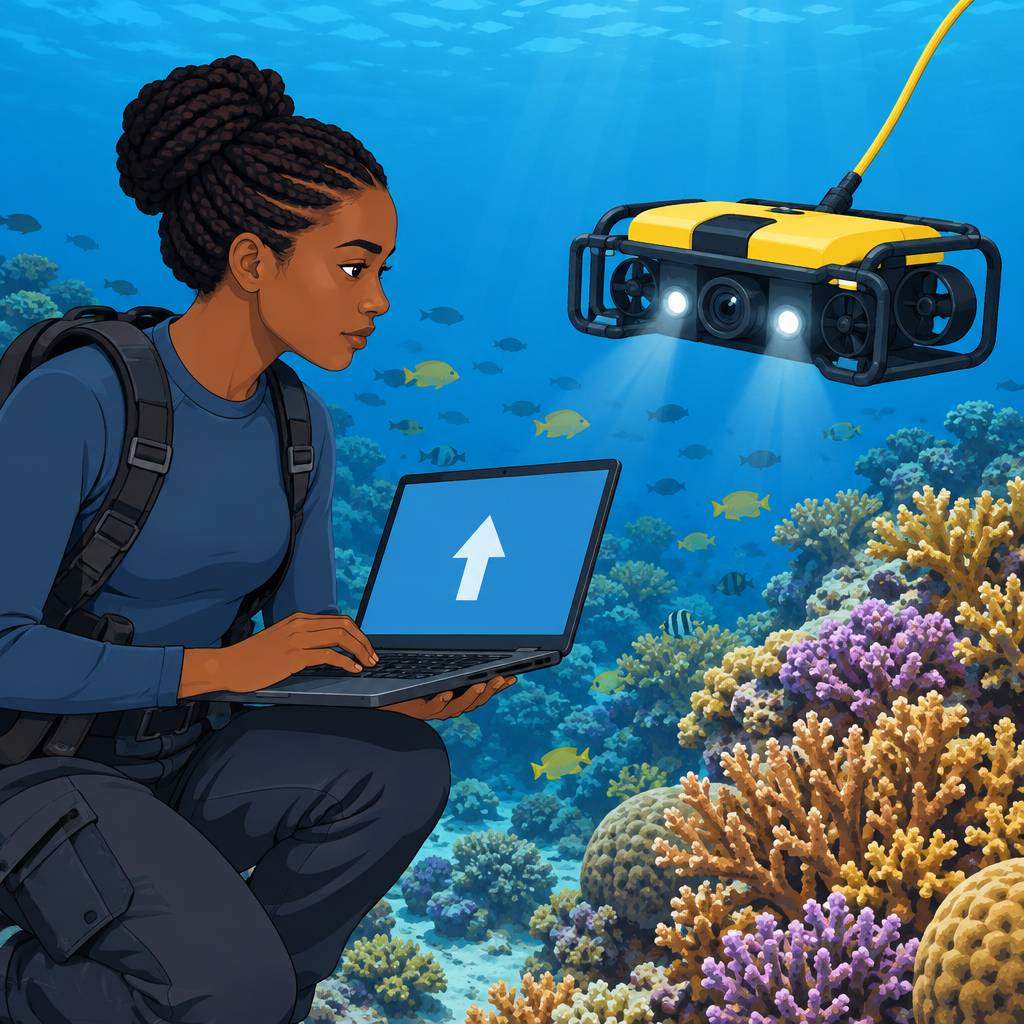
Underwater Robotics for Deep-Sea Exploration
Underwater robots are transforming research in deep-sea environments.
These machines carry cameras, sensors, and scientific instruments for detailed exploration.
Their designs withstand extreme pressure and temperatures in deep ocean habitats.
Consequently, researchers can discover species, map habitats, and examine human impacts.
Future Applications of Marine Research Technology
These technologies can transform marine biology research in Nigeria and beyond.
They enable researchers to gather more data and conduct deeper investigations.
As technology advances, scientists can uncover ocean mysteries and support resource protection.
Gain More Insights: Applied Biology Fieldwork and Practical Training
Community Involvement in Marine Conservation
Community involvement strengthens collaboration and supports long-term sustainability in marine conservation.
Moreover, local partnerships help communities protect marine resources for future generations.
Training and education promote sustainable fishing practices.
These practices help reduce overfishing and protect marine ecosystems.
Additionally, eco-tourism increases awareness of marine biodiversity.
It also highlights the importance of ongoing conservation efforts.
Together, communities can protect marine resources for future generations.
Explore Further: Online Resources for Applied Math Students in Nigeria
Future Directions for Marine Biology in Nigeria
Nigeria’s future in marine biology looks promising.
Rich biodiversity and untapped marine resources create significant potential for growth and development.
Marine biology helps sustain marine ecosystems and supports responsible resource management.
However, Nigerian marine biologists face challenges that require stronger research and conservation efforts.
Despite these challenges, stakeholders can advance the field through research, education, and conservation.
These investments can support sustainable marine resource management for future generations.
Therefore, everyone should support marine biology research and conservation efforts in Nigeria.
Together, we can protect the marine environment for present and future generations.
Additional Resources
Google search results for The Future of Marine Biology in Nigeria Sciences
Bing search results for The Future of Marine Biology in Nigeria Sciences


