



Geology and Environmental Studies in Nigeria
Geology and environmental studies play crucial roles in Nigeria’s development and sustainability.
Understanding geological formations supports natural resource exploration and responsible management.
Meanwhile, environmental studies assess and mitigate human impacts on nature.
These disciplines matter because Nigeria contains diverse ecosystems and abundant natural resources.
Geologists study Nigeria’s mineral deposits and petroleum reserves.
Environmentalists preserve biodiversity, combat pollution, and promote sustainable practices.
Together, both fields support economic growth and environmental conservation efforts.
Furthermore, research and effective policies help Nigeria address environmental challenges and achieve sustainable development.
History of Geology and Environmental Studies in Nigeria
Geology and environmental studies developed gradually in Nigeria through exploration, education, research, and environmental regulation.
Early geological work focused on identifying mineral resources during the colonial era.
Later, environmental concerns expanded attention toward pollution, deforestation, and sustainable development.
Origins of Geology and Environmental Studies
European geologists conducted early explorations that helped establish geological knowledge in Nigeria.
During the colonial era, geological mapping supported efforts to identify the country’s mineral resources.
Nigerian universities later provided foundations for formal education and research in geology and environmental studies.
Meanwhile, government recognition connected these disciplines with sustainable national development.
Milestones in Geological and Environmental Research
Late in the nineteenth century, the first geological survey of Nigeria established a foundation for later investigations.
Then, the Nigerian Geological Survey Agency emerged during the 1960s as a major institutional development.
Oil discoveries in the Niger Delta during the 1950s transformed the national economy.
However, petroleum production also created new demands for environmental management.
During the 1980s, environmental impact assessments helped regulate human activities affecting the environment.
Influence on Nigeria’s Environment
Geological and environmental knowledge has supported more sustainable management of Nigeria’s natural resources.
Furthermore, specialists have informed policies concerning conservation and resource exploitation.
They have also improved understanding of geological hazards and environmental risks across the country.
These insights have supported efforts to reduce flooding and erosion impacts.
Consequently, these disciplines contribute to environmental sustainability and responsible resource management.
Educational Institutions Offering Geology and Environmental Studies Programs
Geology and environmental studies offer Nigerian students opportunities to explore earth sciences and environmental conservation.
These programs examine natural resources, environmental challenges, and sustainable development.
Furthermore, fieldwork and practical training support preparation for related professional careers.
University of Ibadan
The University of Ibadan offers bachelor’s, master’s, and doctoral programs in geology and environmental studies.
Its curriculum includes mineralogy, petrology, hydrogeology, and environmental impact assessment.
Additionally, students can develop knowledge across several areas of earth and environmental science.
Obafemi Awolowo University
Obafemi Awolowo University offers undergraduate and postgraduate programs in geology and environmental studies.
The university is located in Ile-Ife, Osun State.
Moreover, students receive fieldwork and hands-on training in these disciplines.
University of Lagos
The University of Lagos provides geology and environmental studies programs covering several specialized topics.
Students study sedimentology, environmental management, geochemistry, and geophysics.
Meanwhile, field trips and practical sessions provide experience connected to real-world applications.
Ahmadu Bello University
Ahmadu Bello University offers geology and environmental studies programs at undergraduate and postgraduate levels.
The university is located in Zaria, Kaduna State.
Its curriculum covers geological mapping, pollution control, climate change, and environmental regulations.
Transform Your Career with Expert Guidance
Get personalized mentorship consulting that’s tailored to your unique path. Our expert advice is actionable and exclusive.
Get StartedFederal University of Technology, Akure
The Federal University of Technology, Akure, provides education in geology and environmental studies.
Students study soil mechanics, environmental modeling, and environmental monitoring.
In addition, coursework addresses sustainable development through theoretical and practical learning.
University of Nigeria, Nsukka
The University of Nigeria, Nsukka, offers programs focused on geology, environmental management, and climate change adaptation.
Students participate in fieldwork, laboratory experiments, and research projects.
Consequently, the curriculum builds knowledge and skills relevant to these areas.
Academic Preparation for Environmental and Geological Careers
Studying these subjects helps students explore the Earth’s natural resources and environmental challenges.
Students can also contribute to sustainable development through research and practical training.
Furthermore, these programs support careers in geology, environmental consulting, and natural resource management.
Fieldwork and laboratory activities remain important for building practical understanding in both disciplines.
Discover More: Nigerian Applied Zoologists Making a Global Impact
Career Opportunities in Geology and Environmental Studies
Graduates in geology and environmental studies can pursue diverse professional opportunities.
These careers support natural resource management, environmental protection, and sustainable development.
Furthermore, employers seek professionals who understand geological processes and environmental challenges.
Career Options for Graduates
Geology graduates can investigate Earth’s structure, composition, and geological processes.
Environmental studies graduates can assess human impacts and develop practical solutions.
Additionally, specialized roles allow professionals to focus on water, climate, engineering, or natural resources.
- Geologists study Earth’s structure and processes for mining, oil and gas, and environmental consulting industries.
- Environmental scientists assess human impacts and create solutions for environmental problems.
- Hydrogeologists examine groundwater movement, water resources, and groundwater contamination.
- Climatologists analyze climate patterns and trends affecting the environment.
- Environmental engineers design solutions for pollution, waste management, and sustainable development.
Demand for Professionals in Nigeria
Nigeria’s rapid industrialization and urbanization have increased environmental degradation and pollution.
Consequently, organizations need professionals who can address environmental challenges and protect natural resources.
Oil and gas activities also require geological and environmental expertise to assess extraction impacts.
Government agencies, nonprofit organizations, and private companies employ professionals across these fields.
Salary Prospects and Job Security
Professionals in these disciplines can receive competitive salaries in Nigeria.
However, earnings vary according to education, experience, specialization, and industry.
Advanced qualifications and specialized skills generally improve earning potential.
Job security remains favorable because many industries need geological and environmental expertise.
Moreover, sustainability and environmental conservation continue to create opportunities for professional growth.
Find Out More: Overview of Applied Chemistry Programs in Nigeria
Environmental Challenges in Nigeria
Nigeria faces several environmental challenges that affect communities, ecosystems, agriculture, and livelihoods.
These challenges include deforestation, pollution, climate change, land degradation, and water scarcity.
Effective environmental management requires research, sustainable practices, community participation, and appropriate regulation.
Key Environmental Challenges
Deforestation removes trees, increases soil erosion, and reduces biodiversity.
Furthermore, industrial activities, oil spills, and improper waste disposal damage air and water quality.
Climate change, land degradation, and water scarcity also threaten agriculture, livelihoods, and access to clean water.
- Rampant tree cutting causes soil erosion and biodiversity loss.
- Industrial activities and oil spills degrade air and water quality.
- Improper waste disposal increases pollution and environmental damage.
- Rising temperatures and unpredictable weather affect agriculture and livelihoods.
- Sea-level rise creates additional risks for affected communities.
- Unsustainable farming practices cause soil erosion and desertification.
- Pollution and over-extraction reduce the availability of clean drinking water.
Roles of Geologists and Environmental Specialists
Geologists and environmental specialists investigate the causes and effects of environmental challenges.
They also develop sustainable solutions for deforestation, pollution, and land degradation.
Through collaboration, they support responsible resource management and environmental awareness.
- They research geological factors that contribute to environmental challenges.
- They develop sustainable solutions for environmental degradation.
- They implement policies and regulations that promote sustainable practices.
- They use technology to monitor and manage environmental resources.
- They collaborate with government agencies, NGOs, and local communities.
- They raise awareness and provide environmental education.
Environmental Initiatives and Case Studies
Several initiatives address pollution, deforestation, plastic waste, water access, and climate change.
These projects apply cleanup activities, tree planting, recycling, sustainable water sources, and renewable energy development.
Together, they demonstrate practical approaches for addressing environmental challenges in Nigeria.
- The Ogoni Cleanup Project addresses decades of oil pollution in the Niger Delta region.
- The Greening Nigeria Initiative promotes tree planting and sustainable forestry practices.
- The Zero Plastic Campaign raises awareness about plastic pollution and recycling.
- The Clean Water for All Project supports clean drinking water access in rural communities.
- Renewable energy development reduces carbon emissions and addresses climate change.
You Might Also Like: Role of Geophysics in Nigerian Groundwater Studies
Research and Innovation in Geology and Environmental Studies
Research and innovation advance geology and environmental studies in Nigeria.
These activities guide studies of natural resources, geological hazards, climate change, and groundwater.
Furthermore, Nigerian researchers address environmental challenges through focused research projects.
Current Research Trends and Projects
Current projects examine mineral resources and their potential contribution to economic development.
Researchers also assess mining impacts, geological hazards, climate change, and groundwater conditions.
These investigations provide knowledge for addressing environmental challenges in Nigeria.
- Exploration of mineral resources for economic development
- Assessment of mining activities and their environmental impacts
- Study of geological hazards and disaster management
- Research on climate change and environmental effects
- Investigation of groundwater quality and availability
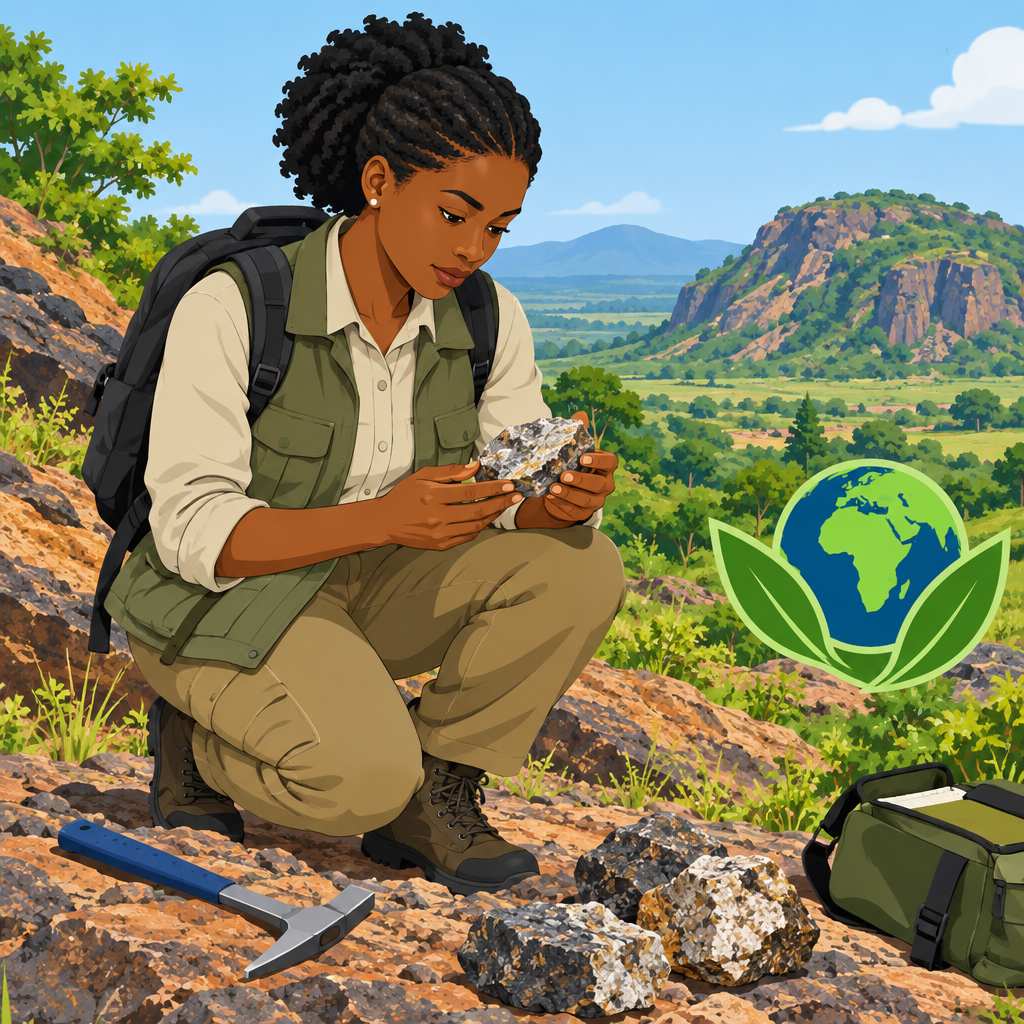
Collaboration with International Research Partners
Nigerian researchers collaborate with international universities and organizations on environmental issues.
These partnerships support knowledge sharing, joint projects, training, and capacity building.
Moreover, international collaboration provides access to research funding, resources, expertise, and technology.
- Partnerships with international universities and organizations
- Researcher exchange programs that support knowledge sharing
- Joint projects addressing shared environmental issues
- Training and capacity building initiatives
- Access to funding and research resources
Research Contributions to Sustainable Development
Research findings support sustainable mining practices and evidence-based environmental policies.
They also encourage renewable energy development, environmental monitoring, and improved management systems.
Additionally, researchers strengthen community awareness and participation in environmental conservation.
- Development of sustainable mining practices
- Implementation of policies based on research findings
- Promotion of renewable energy for environmental conservation
- Improvement of environmental monitoring and management systems
- Enhancement of community awareness and conservation participation
Continued Investment in Research and Innovation
Research and innovation provide evidence-based approaches to Nigeria’s environmental challenges.
International partnerships further strengthen research capacity and support practical environmental solutions.
Continued investment can advance geology, environmental studies, and sustainable development in Nigeria.
Find Out More: Importance of Bioinformatics in Nigerian Public Health
Government Policies and Initiatives in Geology and Environmental Studies
Government policies shape geology and environmental studies practice in Nigeria.
These policies establish the framework that guides professional activities and environmental decision-making.
Therefore, professionals must understand relevant regulations, conservation initiatives, and opportunities for policy participation.
- Government policies and regulations related to geology and environmental studies
- Initiatives promoting environmental conservation and sustainable development
- Opportunities for professionals to contribute to policy development
Regulation of Mining Activities
Mining regulation represents a major government policy area related to geology.
The government requires mining companies to conduct environmental impact assessments before starting operations.
This requirement encourages companies to consider environmental effects during project planning and implementation.
Environmental Conservation and Sustainable Development
The government also supports initiatives that promote environmental conservation and sustainable development.
The National Environmental Standards and Regulations Enforcement Agency enforces environmental laws and regulations.
Furthermore, the agency monitors compliance with environmental standards across various sectors.
Professional Contributions to Policy Development
Professionals in geology and environmental studies can contribute valuable scientific knowledge to policy development.
They often support the formulation of environmental policies and regulations through their expertise.
Additionally, stakeholder consultations allow experts to influence policies and projects with environmental implications.
Advisory committees also provide opportunities for professionals to shape sustainable development initiatives.
Through these activities, experts can help strengthen environmental responsibility within government decision-making.
Sustaining Nigeria’s Future Through Earth Sciences
- Geology and environmental studies support Nigeria’s development and sustainability.
- People interested in these fields can pursue careers that contribute to Nigeria’s growth.
- Furthermore, continued research and innovation can address environmental challenges and support Nigeria’s sustainable future.
Additional Resources
Google search results for Geology and Environmental Studies in Nigeria Sciences
Bing search results for Geology and Environmental Studies in Nigeria Sciences


