




Introduction
Nigeria faces critical ecological challenges.
These challenges threaten the country’s environment and prosperity.
Addressing them supports sustainable development.
Major Ecological Challenges
Nigeria experiences deforestation, soil erosion, pollution, and biodiversity loss.
Rapid urbanization and industrial growth intensify these ecological pressures.
Together, these issues create significant environmental challenges.
Importance of Sustainable Development
Addressing ecological challenges protects Nigeria’s natural resources.
It also improves public health and promotes economic stability.
Sustainable development balances economic growth with environmental conservation.
Deforestation in Nigeria
Deforestation remains a major ecological challenge in Nigeria.
The problem affects forests, wildlife, soil, and water cycles.
Its causes and consequences require coordinated action from government and organizations.
Causes and Consequences of Deforestation
Agricultural expansion, logging, and infrastructure development drive forest loss.
These activities remove trees and reduce forest cover.
As a result, exposed soil can erode, biodiversity can decline, and water cycles can become disrupted.
Impact on Biodiversity and Climate Change
Deforestation destroys habitats for many plant and animal species.
Consequently, affected species lose places to live, and biodiversity declines.
It also releases carbon dioxide into the atmosphere, contributing to climate change.
Efforts to Combat Deforestation
The Nigerian government and organizations have introduced initiatives to address deforestation.
For example, reforestation projects support the recovery of forest areas.
Furthermore, sustainable logging practices can help protect remaining forests.
Protected areas also conserve forests and provide habitats for wildlife.
Despite these measures, deforestation continues to require stronger and sustained action.
Pollution in Nigeria
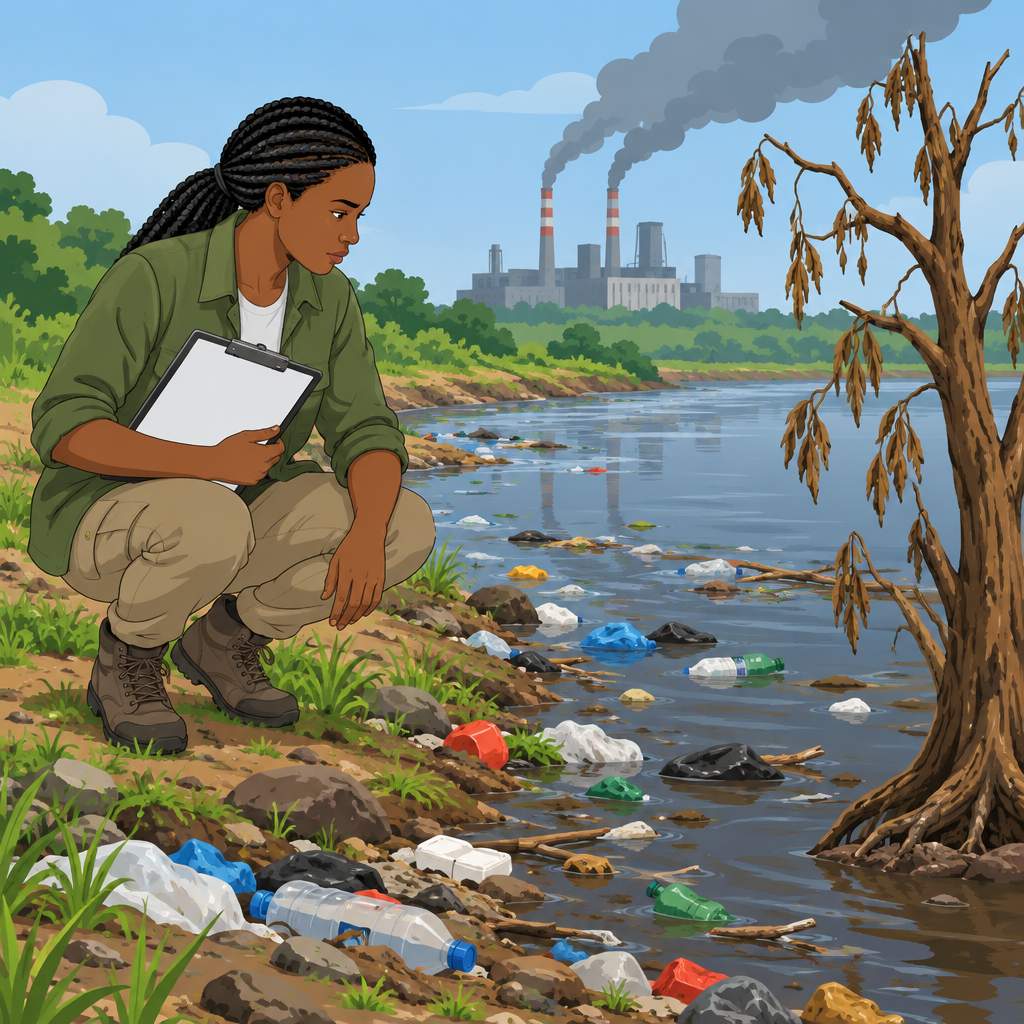
Pollution affects air, water, and soil in Nigeria.
It creates health risks and damages natural environments.
Government regulations and enforcement can help reduce these effects.
Sources of Pollution
Several human activities release pollutants into Nigeria’s air, water, and soil.
Industrial operations, transport, energy use, and waste practices contribute to contamination.
Agricultural chemicals and oil-related pollution also affect land and water resources.
- Industrial emissions, vehicle exhaust, and generator fumes contribute to poor air quality.
- Oil spills, wastewater discharge, and inadequate sanitation contaminate water sources.
- Agricultural chemicals, waste dumping, and oil spills degrade soil quality.
Health and Environmental Impacts
Pollution has severe consequences for human health and the environment in Nigeria.
Health impacts include respiratory diseases, waterborne illnesses, and higher cancer rates.
Environmental impacts include deforestation, biodiversity loss, and contaminated water bodies.
These effects harm ecosystems and increase risks for communities exposed to pollution.
Government Regulations and Enforcement
The Nigerian government plays a crucial role in combating pollution through regulations and enforcement.
Regulators can set emission standards, waste management guidelines, and pollution monitoring requirements.
Authorities can enforce compliance through penalties, regular inspections, and support for eco-friendly practices.
Government action and citizen participation can help address pollution’s ecological challenges.
Uncover the Details: Understanding Ecology: Basics and Importance in Nigeria
Oil Spills in Nigeria
Oil spills have harmed Nigeria’s communities and ecosystems for many years.
Understanding their history and frequency can guide stronger responses.
Transform Your Career with Expert Guidance
Get personalized mentorship consulting that’s tailored to your unique path. Our expert advice is actionable and exclusive.
Get StartedEffective action requires cooperation among companies, government agencies, and local communities.
History and Frequency of Oil Spills
Nigeria has experienced oil spills for decades.
Reports identify hundreds of incidents each year.
Several operational and criminal actions contribute to these events.
- Pipeline ruptures and equipment failures frequently release oil.
- Criminal actors also cause spills through sabotage.
- The Niger Delta’s fragile ecosystem heightens its exposure.
Effects on Communities and Ecosystems
Oil spills contaminate water and soil in affected communities.
They also reduce livelihoods and create serious health concerns.
Fishing and farming communities face particular threats to their daily lives.
- Spills damage vegetation, marine life, and water sources.
- Contamination disrupts fishing and farming activities.
- Pollution threatens community wellbeing and local livelihoods.
Responsibilities for Prevention and Cleanup
Oil companies must maintain pipelines and facilities to help prevent spills.
Companies must also clean affected areas promptly after spills occur.
The Nigerian government must regulate the industry and enforce environmental requirements.
- Companies should use proper maintenance to reduce spill risks.
- Cleanup efforts should limit environmental and community harm.
- Government agencies should hold companies accountable for environmental breaches.
Preventive measures can reduce the environmental damage caused by oil pollution.
Effective responses can protect communities and support ecosystem recovery.
Collaboration can strengthen efforts among companies, government agencies, and local communities.
Find Out More: Prominent Nigerian Ecology Conferences and Events
Desertification in Nigeria
Desertification is a major ecological challenge facing Nigeria today.
It degrades land in arid, semi-arid, and dry sub-humid areas.
Climatic variations and human activities drive this process.
Northern states, including Kano, Katsina, Borno, Yobe, and Sokoto, experience severe desertification.
Causes of Desertification
Several human activities accelerate desertification across affected areas.
Overgrazing compacts soil and removes vegetation cover.
Deforestation and climate change further increase land degradation.
- Uncontrolled livestock grazing compacts soil and reduces vegetation cover.
- Cutting trees for firewood, construction, and agriculture encourages soil erosion.
- Increasing temperatures and changing rainfall patterns intensify desertification in Nigeria.
Strategies for Combating Desertification
Effective strategies can restore degraded land and protect remaining vegetation.
These approaches combine land restoration, water management, and community participation.
Government policies and sustainable practices can support long-term environmental protection.
- Planting trees restores vegetation cover and helps prevent soil erosion.
- Integrating trees into farmland improves soil fertility and water retention.
- Terracing and mulching reduce soil erosion and conserve soil.
- Collecting rainwater provides water for irrigation and domestic use.
- Community participation promotes sustainable land restoration and land use practices.
Combating desertification requires coordinated action from government and local communities.
Sustainable land management can reduce degradation and support environmental sustainability.
Addressing its root causes can help Nigeria restore degraded land.
See Related Content: Innovative Research in Nigeria's Environmental Biology
Water Scarcity
- Access to clean water remains a major challenge in Nigeria.
- Furthermore, limited clean water access severely affects public health.
- Inadequate water supplies also reduce agricultural production.
Challenges of Access to Clean Water in Nigeria
- First, Nigeria lacks enough infrastructure to provide clean water.
- Many rural communities still lack reliable access to safe drinking water.
- Additionally, polluted water sources worsen existing water scarcity.
- Climate change also affects water availability and quality across Nigeria.
- Finally, poor water management practices increase water scarcity problems.
Impact on Public Health and Agriculture
- Water scarcity increases the spread of waterborne diseases, including cholera and typhoid.
- Moreover, insufficient clean water can cause malnutrition and stunted growth among children.
- Without adequate supplies, farmers struggle to irrigate their crops and achieve strong harvests.
- Consequently, agricultural productivity depends directly on available irrigation water.
Initiatives to Improve Water Management and Conservation
- The Nigerian government has introduced water management projects to improve clean water access.
- Meanwhile, organizations promote conservation practices such as rainwater harvesting.
- NGOs and international organizations help underserved communities obtain clean water.
- Education and awareness campaigns encourage communities to conserve water.
- Finally, investments in water infrastructure remain crucial for improving access.
You Might Also Like: Funding Opportunities for Ecology Research in Nigeria
Wildlife Trafficking
Wildlife trafficking creates a major ecological challenge for Nigeria.
Illegal trade in endangered species threatens the country’s rich biodiversity and delicate ecosystems.
Protecting wildlife requires legislation, enforcement, education, and international cooperation.
Illegal Trade in Endangered Species
Nigeria’s diverse flora and fauna attract illegal wildlife traders.
Traffickers smuggle endangered species for traditional medicine, exotic pets, and trophies.
Consequently, captured animals enter black markets and lose protection in their natural habitats.
Elephants, pangolins, and several primate species rank among Nigeria’s most trafficked animals.
These animals often come from the wild and enter illegal markets.
Their removal reduces populations and disrupts ecosystem balance.
Consequences for Biodiversity and Ecosystems
Wildlife trafficking profoundly affects biodiversity and ecosystem stability.
When keystone species disappear, cascading effects can alter entire ecosystems.
These changes affect pollination, seed dispersal, and predator-prey relationships.
Furthermore, depleted populations lose genetic diversity.
Reduced genetic diversity increases vulnerability to diseases and environmental changes.
Eventually, ecosystem collapse can eliminate valuable ecosystem services.
Legislation and Enforcement Against Wildlife Trafficking
Nigeria has adopted several measures to address wildlife trafficking.
Robust legislation prohibits endangered-species trade and establishes strict penalties for offenders.
Meanwhile, law enforcement agencies raid black markets and disrupt smuggling networks.
Conservation organizations and community groups raise awareness about wildlife protection.
They also encourage communities to report illegal activities.
International cooperation remains essential because traffickers move many species across borders.
Nigeria participates in international conventions and agreements targeting wildlife trafficking.
Through cooperation, participating countries strengthen enforcement and information-sharing networks.
Effective action combines legislation, enforcement, education, and international cooperation.
These measures can help preserve Nigeria’s biodiversity and sustain its ecosystems.
Climate Change Impacts in Nigeria
Climate change creates a major ecological challenge for Nigeria.
Extreme weather conditions, including droughts, floods, and heatwaves, affect Nigeria’s environment and livelihoods.
Consequently, vulnerable communities face increasing pressure from climate-related impacts.
Mitigation and Adaptation Strategies
Nigeria has developed strategies to mitigate climate change and adapt to its effects.
The National Adaptation Strategy and Plan of Action supports resilience among vulnerable communities.
Additionally, renewable energy and reforestation efforts can reduce emissions and strengthen environmental protection.
- Nigeria uses adaptation measures to improve vulnerable communities’ resilience to climate change.
- The country invests in renewable energy sources, including solar and wind power.
- These renewable energy investments aim to reduce greenhouse gas emissions.
- Nigeria has initiated reforestation projects to enhance carbon sequestration.
- Reforestation projects also aim to reduce deforestation rates.
International Cooperation on Climate Change
Nigeria participates in international agreements and cooperation efforts addressing climate change.
The country has signed agreements such as the Paris Agreement.
Furthermore, Nigeria aligns its climate commitments with global targets and sustainable development goals.
- Nigeria works to reduce greenhouse gas emissions and increase climate resilience.
- The government collaborates with international organizations and donor agencies.
- These partnerships provide funding and technical assistance for climate projects.
- Nigeria shares knowledge and builds capacity with other countries.
- These initiatives strengthen Nigeria’s response to climate change challenges.
Building Climate Resilience in Nigeria
Climate change continues to challenge Nigeria’s ecosystems and population.
However, effective adaptation and mitigation measures can help communities build resilience.
International cooperation can further support Nigeria’s efforts toward sustainable development.
Collaborative Action for Nigeria’s Environmental Future
Nigeria faces major ecological challenges that require immediate attention.
Deforestation, pollution, and climate change threaten the country’s environment and its people.
Individuals, government, and businesses must work together to address these challenges.
Therefore, Nigerians must adopt sustainable practices to protect environmental health and citizens’ futures.
Without action now, neglecting these issues will cause severe consequences.
Let us commit to protecting Nigeria’s natural resources and preserving its biodiversity.
Together, we can create a more sustainable future for generations to come.
Additional Resources
Google search results for Major Ecological Challenges Facing Nigeria Today Sciences
Bing search results for Major Ecological Challenges Facing Nigeria Today Sciences


