




Nigerian Maritime Heritage and Women’s Participation
Nigeria has a rich maritime heritage shaped by a long history of boat and ship building.
Traditionally, men have dominated this industry.
Recently, more women have entered the sector and expanded its participation.
Women Expanding Their Roles in Boat Building
In recent years, more Nigerian women have entered the boat and ship building industry.
These women challenge stereotypes within a traditionally male-dominated sector.
Furthermore, their participation strengthens the industry’s range of skills and perspectives.
Women’s Contributions to Nigerian Boat Building
Despite limited resources, Nigerian women demonstrate strong skills in boat and ship building.
They also develop innovative approaches to design and construction.
Consequently, their fresh perspectives support continued development within the sector.
Barriers Affecting Women in the Industry
Cultural norms sometimes discourage women from entering male-dominated fields.
Women also face limited access to funding and essential resources.
Moreover, they often encounter insufficient training and mentorship opportunities.
Support Systems for Women’s Advancement
Skill development initiatives can help women strengthen their boat and ship building abilities.
Access to funding can provide resources needed for participation and growth.
Additionally, mentorship programs can connect women with valuable guidance and encouragement.
Opportunities for a More Inclusive Maritime Sector
Women continue to make progress within Nigeria’s boat and ship building industry.
With appropriate support, they can contribute further to innovation and sector growth.
Their participation can help create a more diverse and inclusive maritime industry in Nigeria.
Historical Perspectives on Women’s Involvement in Boat and Shipbuilding
Women have played a crucial role in boat and shipbuilding throughout history.
However, historical accounts have often overlooked or underestimated their contributions.
Their work included designing, crafting, and managing watercraft construction.
- Traditional roles of women in watercraft construction
- Historical examples of women’s significant contributions
Traditional Roles in Watercraft Construction
Across many cultures, women have helped construct boats and ships.
Some women gathered raw materials, including wood and reeds, for construction.
Others worked as skilled artisans alongside men, building and repairing vessels.
Women in maritime communities passed their knowledge and skills between generations.
This knowledge helped preserve boatbuilding traditions and cultural heritage.
Women Who Influenced Historical Boatbuilding
Claudette Colvin was a French shipwright who lived during the eighteenth century.
She became known for exceptional design and construction skills.
Colvin built some of the fastest and most innovative ships of her time.
Her work established her reputation as an influential female shipbuilder.
Bessie Busby was an African American boatbuilder who worked during the early twentieth century.
She established herself in a male-dominated industry through dedication and skill.
Busby overcame gender and racial barriers within the boatbuilding industry.
Her achievements encouraged future generations of women to pursue boatbuilding careers.
Recognizing these contributions helps celebrate women’s lasting influence on watercraft construction.
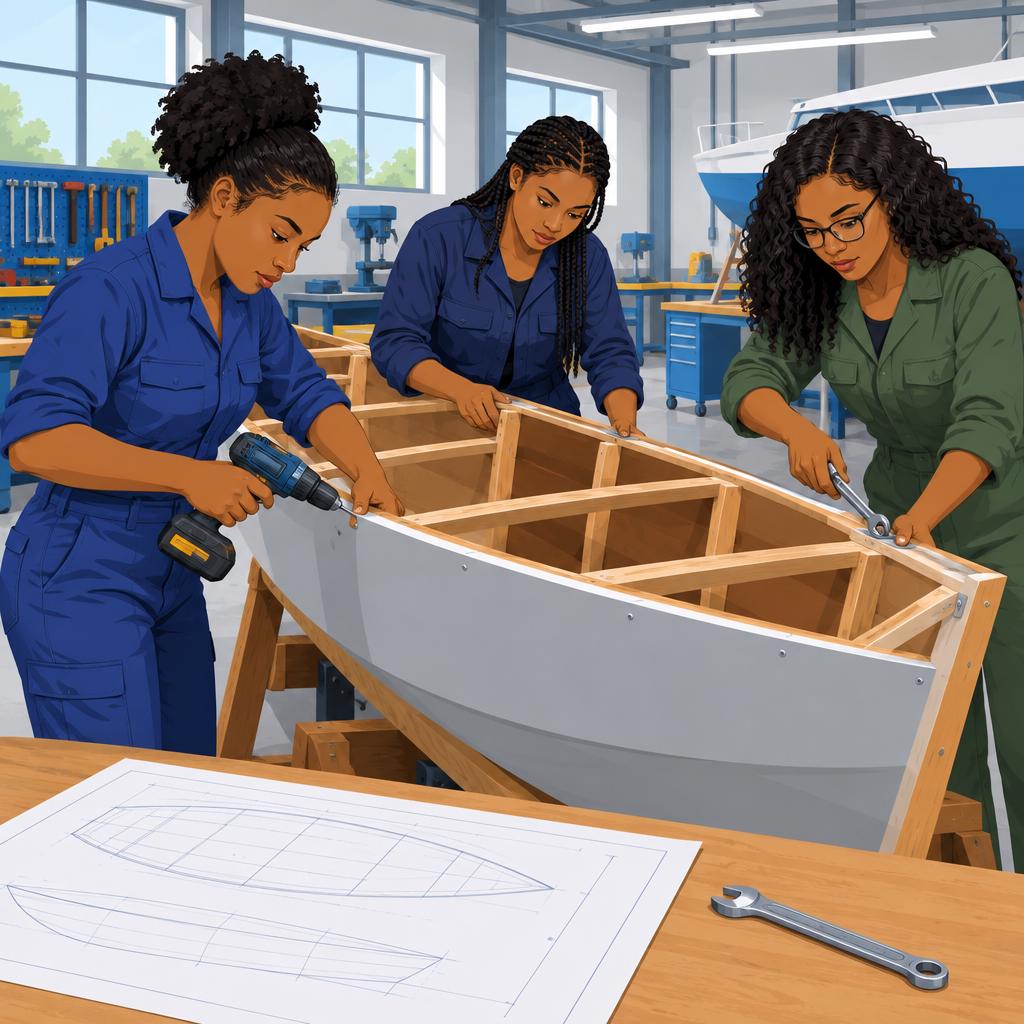
Challenges Faced by Women in the Industry
Women face social, cultural, and economic barriers in Nigerian boat and ship building.
These barriers restrict entry, recognition, leadership opportunities, and career advancement.
Access to training, workplace attitudes, and financial limitations shape women’s opportunities in the industry.
- Women encounter several barriers to entering boat and ship building:
- Women often lack access to training and technical skills development programs.
- Gender stereotypes and cultural norms limit women’s participation in this male-dominated industry.
- Financial constraints make it difficult for women to establish boat or ship building businesses.
- Women often lack access to training and technical skills development programs.
- Gender discrimination and limited opportunities create additional challenges:
- Companies often overlook women for leadership positions and promotions.
- Some male colleagues dismiss women’s ideas and contributions.
- Limited professional growth restricts women’s career advancement.
- Companies often overlook women for leadership positions and promotions.
Social, cultural, and economic factors restrict women’s full participation in the industry.
These factors also limit their advancement and reinforce gender inequality.
Transform Your Career with Expert Guidance
Get personalized mentorship consulting that’s tailored to your unique path. Our expert advice is actionable and exclusive.
Get StartedUncover the Details: Collaborative Projects in Applied Mathematics
Success Stories of Women in Nigerian Boat and Ship Building
Nigerian women continue to break barriers within the growing maritime industry.
They contribute valuable skills and innovative ideas to boat and ship building.
Their achievements encourage more women to pursue maritime careers and leadership roles.
Olayinka Ogunsanwo
Olayinka Ogunsanwo began her career as an apprentice at a shipyard in Lagos.
She overcame gender stereotypes and steadily advanced through the industry.
Today, she owns a shipbuilding company that specializes in fishing vessels.
- She advocates for more women to join the industry.
- She mentors young girls who show interest in ship building.
Aisha Bello
Aisha Bello entered boat building as a welder at a local shipyard.
Her exceptional skills earned her a promotion to a supervisory role.
She later designed and built a solar-powered boat for sustainable transportation.
- She received recognition for her innovative boat design.
- Her work demonstrates commitment to green technology.
Fatima Ibrahim
Fatima Ibrahim studied naval architecture and marine engineering at university.
She gained practical boat construction experience during a shipyard internship.
Afterward, she launched a design consultancy specializing in yacht design.
- She combines traditional craftsmanship with modern technology.
- Her consultancy works on projects involving innovative yacht design.
These women have made significant contributions to Nigerian boat and ship building.
Their experiences show how skill, innovation, and persistence can support professional success.
Furthermore, their leadership inspires aspiring female professionals across the maritime sector.
Find Out More: Curriculum of Applied Math with Statistics Programs
Training and Education Opportunities for Women
Several programs encourage more women to pursue careers in boat and ship building.
These opportunities support greater diversity and gender equality across the maritime industry.
They also help women develop practical skills, technical knowledge, and professional confidence.
Women in Maritime Education
- Specialized training programs support women interested in boat and ship building.
- These programs combine hands-on skills development with theoretical maritime engineering knowledge.
- Additionally, industry experts provide guidance through internships and apprenticeships.
Scholarships and Financial Aid
- Financial assistance helps women pursue education and training in boat and ship building.
- Scholarships reduce financial barriers for female students entering maritime education.
- Furthermore, grants and sponsorships support women’s educational and career advancement.
Mentorship Programs
- Mentorship programs connect women with experienced professionals in boat and ship building.
- These relationships provide guidance, networking opportunities, career advice, and skill development.
- Moreover, mentors encourage women to overcome challenges and excel in their chosen fields.
Skills Development Workshops
- Hands-on workshops strengthen women’s technical abilities and practical maritime knowledge.
- Sessions cover welding, carpentry, electrical work, and other essential boatbuilding skills.
- Interactive learning builds confidence and improves proficiency in maritime engineering tasks.
Women’s Advancement Through Maritime Education
Training and education opportunities give women practical pathways into Nigerian boat and ship building.
These initiatives promote gender diversity while supporting women’s professional development.
As a result, women can build the skills and confidence needed to succeed in this industry.
Discover More: Ecology Curriculum in Nigerian Secondary Schools
Impact of Women in Nigerian Boat and Ship Building
Women’s participation has produced positive effects across Nigerian boat and ship building.
Their presence broadens the workforce and strengthens the industry’s capacity for growth.
It also supports fresh thinking, stronger cooperation, and improved construction outcomes.
Positive Effects of Women’s Participation
Women contribute different experiences and viewpoints to boat and ship building.
They introduce new approaches to technical challenges and workplace problem-solving.
Consequently, their involvement strengthens creativity, teamwork, and professional empowerment.
- Greater diversity within the workforce
- New perspectives for solving industry problems
- More creativity in design and construction
- Stronger teamwork and collaboration among workers
- Greater empowerment for women in a traditionally male-dominated field
Diversity, Inclusion, and Industry Growth
Active inclusion creates a more dynamic and innovative working environment.
Diverse teams consider more ideas when they design, construct, and improve boats and ships.
Furthermore, inclusive workplaces encourage collaboration, productivity, and equal opportunity.
- Broader representation of perspectives and ideas
- Greater creativity and out-of-the-box thinking
- A more collaborative and inclusive workplace culture
- Higher productivity and efficiency through diverse teams
- Equal opportunities for individuals across the industry
Therefore, women’s participation helps Nigerian boat and ship building pursue innovation and sustainable growth.
Uncover the Details: Job Market for Environmental Biologists in Nigeria
Future Prospects for Women in Boat and Ship Building
The future offers women expanding opportunities in Nigerian boat and ship building.
Supportive workplaces, accessible training, and mentorship can help women advance.
Gender equality initiatives can strengthen participation, leadership, and innovation across the industry.
- Women can access increasing opportunities in the boat and ship building industry.
- Employers can create supportive and inclusive work environments for women.
- Accessible training and education programs can prepare women for industry careers.
- Mentorship and networking opportunities can encourage women’s professional development.
- Industry leaders can promote gender diversity and equality in leadership positions.
- Financial support and scholarships can assist women pursuing boat and ship building careers.
- Organizations can collaborate with initiatives that empower women in male dominated industries.
- Advocates can support policies that promote gender equality and combat workplace discrimination.
- Celebrating women’s achievements can inspire future generations to enter the industry.
- Research and development can support innovative and sustainable industry practices.
- Support networks and career resources can help women begin work in boat and ship building.
Women can excel in traditionally male dominated roles.
They can also contribute to industry success and innovation.
With support, empowerment, and opportunity, their participation can continue to grow.
Women’s Role in Nigerian Boat and Ship Building
Women play a crucial role in Nigerian boat and ship building.
Their skills, dedication, and innovative ideas have transformed the sector.
Consequently, the industry has become more competitive and sustainable.
Therefore, stakeholders should promote gender equality and inclusivity throughout this field.
This approach can harness talented women’s potential and create a more diverse workforce.
Moreover, empowering women can drive greater success, innovation, and sustainability across the industry.
Additional Resources
Google search results for Women in Nigerian Boat and Ship Building Sciences
Bing search results for Women in Nigerian Boat and Ship Building Sciences


