




Applied Zoology and Public Health in Nigeria
Applied zoology uses zoological principles to address practical problems.
In Nigeria, this field supports efforts to protect public health.
This article explains how applied zoology addresses disease surveillance, vector control, and wildlife conservation.
Disease Surveillance Through Applied Zoology
Active surveillance tracks zoonotic diseases before they spread widely among human populations.
For example, wildlife monitoring can identify risks involving Ebola and Lassa fever.
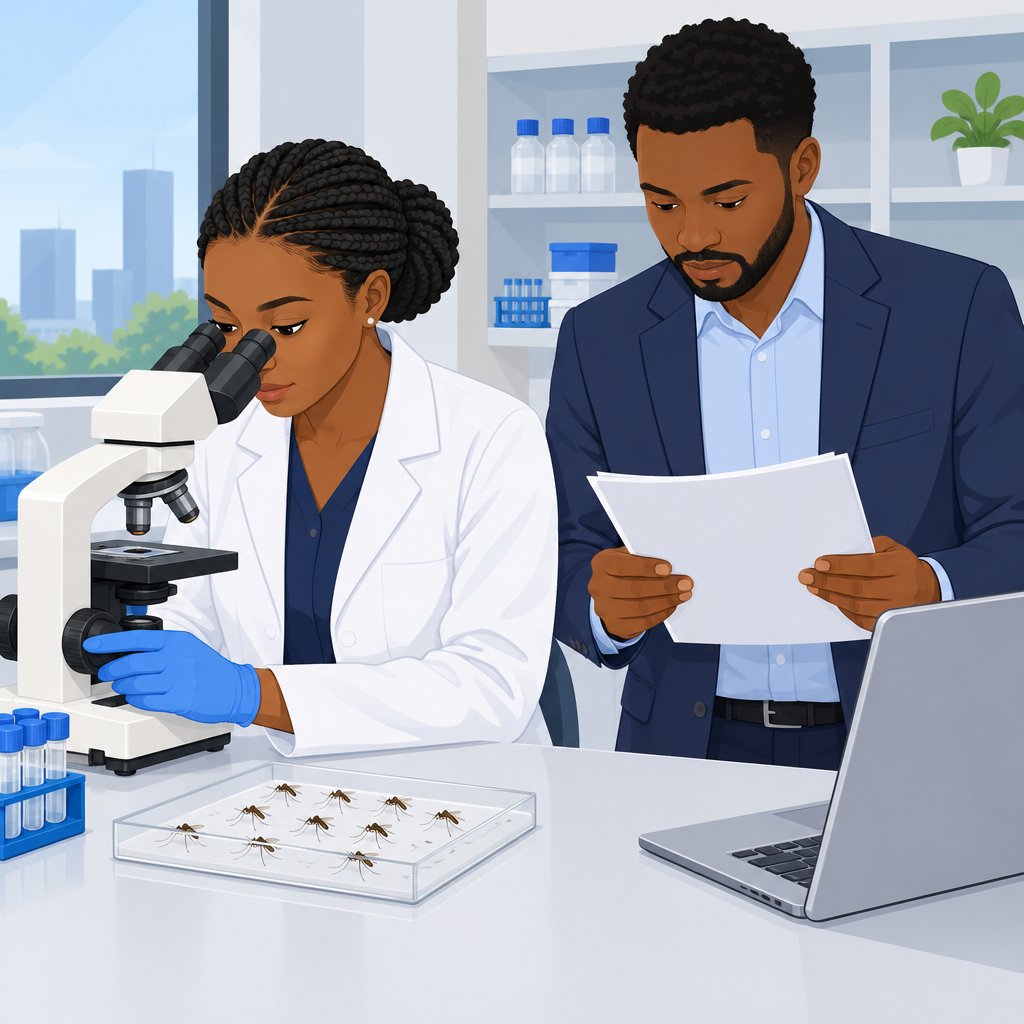
Meanwhile, zoologists study mosquitoes and ticks to clarify disease transmission patterns.
Vector Control and Disease Prevention
Knowledge of mosquito breeding sites helps communities reduce malaria transmission.
Additionally, parasite life cycle research supports more effective control strategies.
Community education encourages people to apply practical measures that limit vector-borne disease spread.
Wildlife Conservation and Public Health
Biodiversity protection helps preserve ecological balance and reduce disease spillover risks.
Furthermore, animal behavior studies can help researchers anticipate outbreaks affecting human populations.
Conservation efforts also reduce human-wildlife conflicts and related transmission risks.
Public Health Benefits of Applied Zoology
Applied zoology connects scientific knowledge with practical public health action in Nigeria.
By combining surveillance, vector control, and conservation, professionals can address several health threats.
These measures can strengthen community protection while supporting healthier relationships between people and animals.
History of Applied Zoology in Nigeria
Applied zoology in Nigeria developed gradually through changing scientific and public health needs.
Early pioneers established important foundations for research and practical zoological work.
Historical events also influenced how Nigerian researchers applied zoology to health challenges.
Evolution of Applied Zoology in Nigeria
Applied zoology in Nigeria began during the colonial period.
At first, practitioners focused mainly on controlling pests and diseases.
Over time, researchers expanded the field to address wider public health concerns.
Contributions of Early Pioneers
Dr. L.A. Adamu helped establish applied zoology in Nigeria.
He researched insect-borne diseases and supported later investigations.
Dr. J.O. Olubunmi and other pioneers also advanced the field through significant contributions.
Historical Events and Applied Zoology
The Nigerian Civil War significantly affected public health conditions.
Disease outbreaks during the war demonstrated the importance of applied zoological research.
Afterward, public health efforts emphasized disease prevention and control through applied zoology.
This history reflects Nigeria’s continuing efforts to improve population health.
Applied zoology remains important for protecting the health and well-being of Nigerians.
Applied Zoology and Disease Control in Nigeria
Applied zoology uses animal-related knowledge to help prevent and manage diseases.
Researchers study animals, vectors, and their environments to support disease control.
These efforts strengthen public health protection and reduce infectious disease burdens.
Diseases Addressed Through Applied Zoology
Several diseases require zoological knowledge because animals or vectors contribute to their transmission.
Therefore, studying vector behavior and animal ecology helps researchers design suitable control measures.
These approaches support prevention efforts for malaria, Lassa fever, and rabies.
- Researchers study mosquito vectors to develop strategies that reduce malaria transmission rates.
- Understanding rodent ecology helps prevent the spread of Lassa fever.
- Vaccinating stray animals helps prevent rabies transmission.
Applied Zoology Success Stories in Nigeria
Nigeria has applied zoological methods in several disease control programs.
These programs target disease vectors or monitor animal populations.
Consequently, applied zoology has supported progress against important infectious diseases.
- Nigeria reduced onchocerciasis by targeting black fly vectors through a control program.
- Controlling tsetse flies helped eliminate trypanosomiasis in certain regions.
- Monitoring bird populations helped Nigeria prevent avian influenza outbreaks in poultry farms.
Learn More: Top Nigerian Universities for Animal and Environmental Biology
Wildlife Conservation and Public Health
Wildlife conservation and public health remain closely connected in Nigeria.
Transform Your Career with Expert Guidance
Get personalized mentorship consulting that’s tailored to your unique path. Our expert advice is actionable and exclusive.
Get StartedApplied zoology supports conservation by studying and protecting diverse animal species.
Furthermore, Nigerian biodiversity supports ecological balance and provides natural resources essential to public health.
Conservation efforts preserve wildlife habitats and help limit zoonotic disease transmission to humans.
By studying animal behavior and populations, zoologists clarify disease transmission and help prevent outbreaks.
Moreover, conservation projects support sustainable development and economic growth through ecotourism and biodiversity protection.
Wildlife monitoring and management help prevent overpopulation and extinction, both of which can harm public health.
In addition, ecosystem biodiversity regulates disease by controlling vectors and reservoirs that transmit infections to humans.
Scientists, researchers, and government agencies must collaborate to manage conservation and public health effectively in Nigeria.
Therefore, wildlife conservation protects animal species while safeguarding public health and community well-being.
Explore Further: Environmental Biology: Protecting Nigeria's Biodiversity
Vector Control and Applied Zoology
Vector control protects public health by preventing insects and other organisms from spreading diseases.
Applied zoology uses animal biology to develop strategies for controlling disease-carrying vectors in Nigeria.
For example, larvicides target mosquito breeding grounds and can reduce malaria transmission.
Additionally, biological control introduces natural predators that reduce disease-carrying mosquito populations.
Integrated vector management combines several control methods to address vector-borne diseases in Nigeria.
Furthermore, communities strengthen these programs by participating actively in prevention efforts.
Educational campaigns raise awareness and encourage people to prevent vector spread.
Government agencies, nonprofit organizations, and research institutions must collaborate on effective strategies.
Regular monitoring and evaluation measure public health effects and guide necessary adjustments.
Delve into the Subject: Internship Opportunities for Geology Students
Education and Research in Applied Zoology
Educational institutions play a crucial role in promoting applied zoology in Nigeria.
They provide essential training and knowledge for professionals working in this field.
Universities offer specialized courses in zoology, entomology, parasitology, and related disciplines.
This education helps students understand animal diversity and its impact on public health.
Moreover, research advances applied zoology and addresses important public health challenges.
Researchers study the behavior, ecology, and biology of animals that threaten human health.
They also identify effective strategies for controlling vector-borne diseases.
Additionally, research supports better management of wildlife-human interactions.
Universities, research institutions, and government agencies must collaborate effectively.
Such partnerships combine expertise and resources to develop innovative applied zoology solutions.
Finally, collaboration encourages the sharing of knowledge, data, and best practices.
Learn More: Career Opportunities in Bioinformatics for Nigerians
Challenges and Future Prospects
Applied zoology programs in Nigeria face several implementation challenges.
These challenges affect research, training, partnerships, and public health applications.
However, targeted investment and cooperation can strengthen the field’s future development.
Challenges Affecting Applied Zoology Programs
Limited resources can restrict applied zoology research and training activities.
Furthermore, weak institutional support can reduce collaboration with government agencies and organizations.
Public health stakeholders may also overlook applied zoology’s importance without broader awareness.
- Insufficient funding limits research and training programs in applied zoology.
- Inadequate infrastructure restricts field studies and experimental work.
- A shortage of skilled professionals weakens applied zoology programs.
- Limited awareness reduces recognition of applied zoology’s public health importance.
- Organizations may struggle to secure partnerships with government agencies and other stakeholders.
Strategies for Strengthening Implementation
Government support can provide a stronger foundation for applied zoology initiatives.
Moreover, improved facilities can help professionals conduct reliable field studies and experiments.
Partnerships and public education can increase participation in applied zoology programs.
- Increase government funding for applied zoology research and training initiatives.
- Improve infrastructure and resources for field studies and experiments.
- Invest in capacity building programs for applied zoology professionals.
- Use public awareness campaigns to explain applied zoology’s public health significance.
- Establish partnerships with relevant stakeholders to support program implementation.
Future Directions for Applied Zoology
Applied zoology can expand its contribution to public health through stronger research opportunities.
Additionally, innovative methods can improve disease control and prevention efforts.
Interdisciplinary and international cooperation can support knowledge exchange and capacity building.
- Expand research and training opportunities in applied zoology.
- Develop innovative technologies and methods for disease control and prevention.
- Integrate applied zoology practices into public health programs and policies.
- Apply interdisciplinary approaches to complex public health challenges.
- Strengthen international collaborations for knowledge exchange and capacity building.
Applied Zoology and Public Health
Applied zoology strengthens public health in Nigeria.
It applies animal science to understand disease transmission and develop effective control measures.
Therefore, it helps protect human populations from zoonotic diseases.
Public Health Contributions of Applied Zoology
Applied zoology identifies and controls vectors responsible for disease transmission.
It also supports research on animal-borne illnesses.
Consequently, the field improves health outcomes for humans and animals.
Support for Applied Zoology Programs
Government agencies, private organizations, and individuals should recognize applied zoology’s public health value.
They should allocate resources for research, education, and training.
Such support can strengthen applied zoology programs in Nigeria.
Careers in Applied Zoology
Individuals can pursue applied zoology careers to support public health in Nigeria.
Their expertise can address emerging health challenges.
Additionally, their dedication can help protect communities from infectious disease spread.
Additional Resources
Google search results for The Role of Applied Zoology in Nigeria's Public Health Sciences
Bing search results for The Role of Applied Zoology in Nigeria's Public Health Sciences


