




Applied Microbiology and Disease Control in Nigeria
Applied microbiology supports disease control in Nigeria.
Infectious diseases pose significant health threats across the country.
Microbiologists study pathogens and develop effective interventions.
Overview of Disease Control in Nigeria
Nigeria faces major challenges from diseases that affect communities and healthcare services.
Several illnesses spread through mosquitoes, contaminated food, unsafe water, and poor sanitation.
Effective control requires prevention, public education, healthcare support, and community participation.
Common Diseases in Nigeria
Malaria, typhoid, and cholera remain important health concerns in Nigeria.
These diseases spread through different pathways and produce serious symptoms.
Prevention depends on reducing exposure, improving hygiene, and seeking timely medical care.
- Malaria spreads through mosquitoes and causes fever and flu-like symptoms.
- Typhoid spreads through contaminated food and water and can cause high fever.
- Cholera results from contaminated food or water and causes severe diarrhea and dehydration.
Impact on Population and Healthcare Services
These diseases place substantial pressure on Nigeria’s population and healthcare system.
Malaria causes many deaths, especially among children under five.
Meanwhile, typhoid and cholera outbreaks increase healthcare costs and strain medical resources.
- Malaria contributes to a large number of deaths among vulnerable children.
- Typhoid outbreaks increase demands on healthcare facilities and medical workers.
- Cholera outbreaks require urgent treatment for severe diarrhea and dehydration.
- Limited access to clean water and sanitation encourages disease transmission.
Current Disease Control Efforts
The Nigerian government works with international organizations to control these diseases.
These partners support prevention programs, vaccination campaigns, and public health education.
Furthermore, communities receive guidance about hygiene and safe water consumption.
- Mosquito net distribution programs help prevent malaria transmission.
- Vaccination campaigns aim to reduce typhoid and cholera cases.
- Public health education promotes hygiene and safe water consumption.
Challenges Affecting Disease Control
Disease control efforts continue to face several obstacles across Nigeria.
Limited healthcare infrastructure and resources restrict effective disease management.
Additionally, socioeconomic conditions reduce access to healthcare and preventive measures.
- Healthcare shortages make disease prevention and treatment more difficult.
- Socioeconomic factors limit access to healthcare services and protective measures.
- Climate change creates favorable conditions for disease vectors to thrive.
- Environmental degradation can support the spread of disease vectors.
Future Directions for Disease Control
Nigeria can improve disease control by strengthening healthcare systems and expanding infrastructure.
Stronger surveillance can help authorities identify outbreaks and support timely interventions.
Community engagement can also encourage healthier behaviors and sustainable practices.
- Increased funding can strengthen healthcare systems and infrastructure.
- Enhanced surveillance can improve outbreak monitoring and response.
- Community health activities can encourage behavioral changes and sustainable practices.
Successful disease control requires coordinated action from government, healthcare providers, and communities.
Addressing disease causes can improve population health and strengthen Nigeria’s healthcare system.
Microorganisms exist throughout Nigeria’s environment.
They influence how infectious diseases develop and spread among people.
Microorganisms Involved in Disease Transmission
Bacteria, viruses, fungi, and parasites can transmit infectious diseases.
Each group uses different pathways to move between people, animals, environments, or contaminated materials.
Recognizing these groups supports accurate disease identification and appropriate control planning.
- Bacteria can cause diseases such as typhoid fever and tuberculosis.
- Viruses cause diseases including influenza, HIV/AIDS, and COVID-19.
- Fungi can transmit infections such as candidiasis and ringworm through contact or contaminated surfaces.
- Parasites cause diseases such as malaria and schistosomiasis through vectors or contaminated water.
Transmission Routes Used by Microorganisms
Microorganisms act as infectious disease agents.
They can pass between people through direct contact or airborne transmission.
Contaminated food, contaminated water, and vectors such as mosquitoes provide additional transmission routes.
Microbiology and Disease Identification
Microbiology helps identify the microorganisms responsible for infectious diseases.
Diagnostic techniques based on microbiological principles support accurate pathogen identification.
Rapid identification helps health professionals select suitable disease prevention and control measures.
Microbial Behavior and Disease Control
Scientists study microbial behavior to understand how microorganisms cause and transmit disease.
They also examine virulence when developing disease prevention and control strategies.
Consequently, microbiological knowledge supports more effective responses to infectious disease transmission.
Microbiological Surveillance for Early Detection
Regular surveillance examines microorganisms in the environment, food, and water.
This monitoring supports early detection of disease outbreaks.
Surveillance also shows whether disease control programs achieve their intended results.
Transform Your Career with Expert Guidance
Get personalized mentorship consulting that’s tailored to your unique path. Our expert advice is actionable and exclusive.
Get StartedMonitoring Antimicrobial Resistance
Microbiologists monitor microbial resistance patterns during disease surveillance.
These patterns help guide treatment decisions.
They also help prevent the spread of drug-resistant pathogens.
Challenges Affecting Microbiological Disease Control
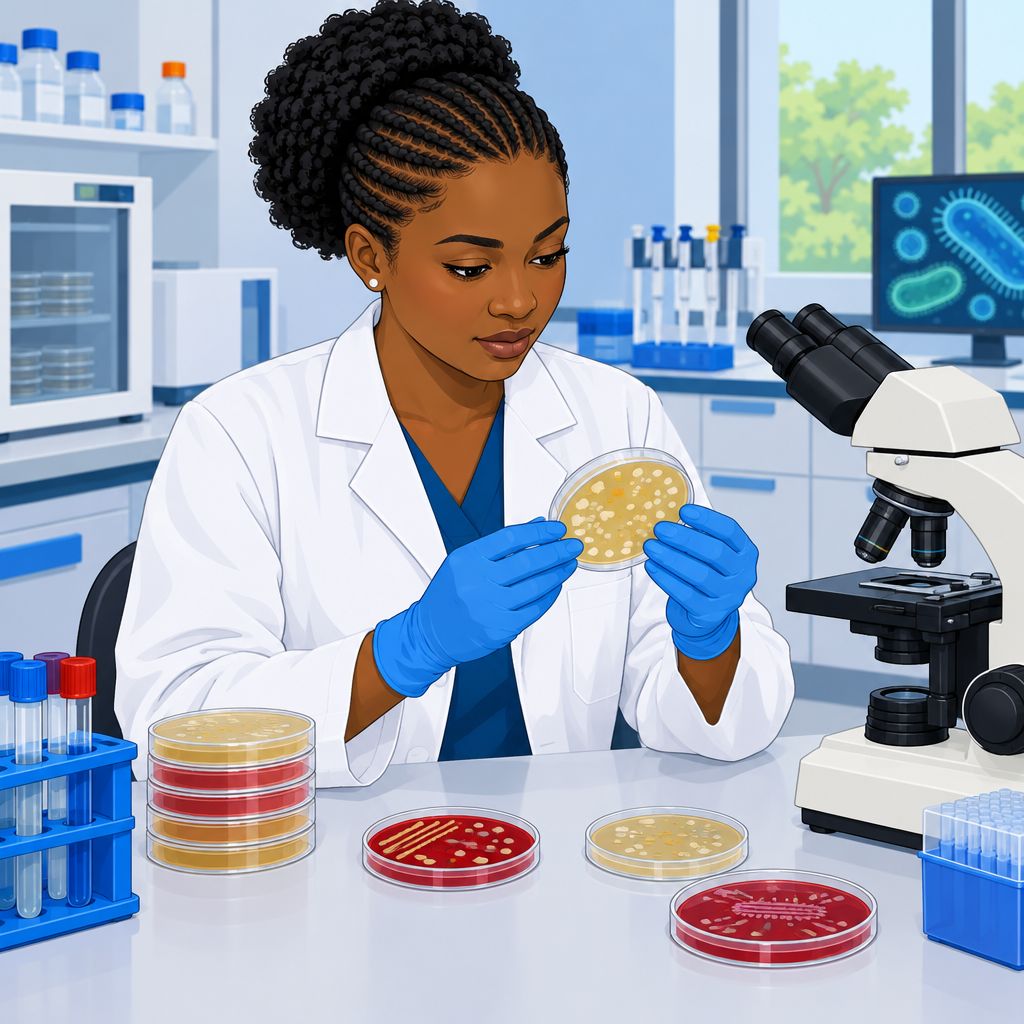
Limited laboratory facilities can delay pathogen identification and outbreak responses.
A shortage of trained personnel further restricts timely microbiological investigations.
Inadequate funding limits microbiological research and surveillance programs.
Infrastructure and Environmental Barriers
Poor infrastructure can weaken disease monitoring and response activities.
Limited access to clean water increases exposure to water-borne diseases.
Improved sanitation remains important for reducing transmission through contaminated water.
Strengthening Nigeria’s Microbiological Capacity
Investment in microbiological research can improve infectious disease identification.
Stronger surveillance and infrastructure can support more effective monitoring and control.
Government agencies, research institutions, and healthcare providers must collaborate against infectious diseases.
Discover More: How to Choose the Right Applied Zoology Program in Nigeria
Laboratories use several microbial techniques to support disease diagnosis and surveillance in Nigeria.
These methods help professionals detect pathogens, identify infections, and monitor disease patterns.
Together, they strengthen clinical decisions and guide research into vaccines and treatments.
PCR for Pathogen Detection
PCR amplifies specific DNA sequences, making pathogens easier to detect in clinical samples.
Healthcare laboratories use PCR to support diagnosis of malaria, HIV, tuberculosis, and other infectious diseases.
Because PCR produces rapid results, professionals can identify pathogens and begin appropriate treatment promptly.
- PCR amplifies pathogen DNA for easier detection.
- Laboratories apply PCR when diagnosing several infectious diseases.
- Rapid PCR results support accurate clinical decisions.
ELISA for Disease Surveillance
ELISA detects antibodies or antigens within collected samples.
Surveillance teams use ELISA to track disease prevalence across populations.
Researchers also use ELISA to measure immune responses during vaccine development.
- ELISA identifies antibodies and antigens in samples.
- Surveillance programs use ELISA to monitor disease prevalence.
- Vaccine researchers measure immune responses with ELISA.
Microbial Culturing for Infection Diagnosis
Microbial culturing grows microorganisms from clinical samples for identification.
This method helps laboratories diagnose bacterial and fungal infections that molecular tests may miss.
Researchers can study cultured pathogens and examine characteristics relevant to targeted treatment development.
- Culturing isolates microorganisms from clinical samples.
- Laboratories use culturing to investigate bacterial and fungal infections.
- Researchers study cultured pathogens when developing targeted treatments.
Microbiology in Vaccine and Treatment Development
Microbiology helps researchers understand pathogens and develop vaccines against infectious diseases.
It also supports the discovery of treatments that target pathogen behavior.
Laboratory findings guide vaccine testing and therapeutic research before broader use.
Microbiology in Vaccine Development
Microbiology reveals how the immune system responds to pathogens.
Researchers use pathogen genetics to design vaccines targeting specific antigens.
Testing helps researchers evaluate vaccine safety and efficacy before distribution.
- Microbiology informs vaccine design through immune response research.
- Pathogen genetics helps researchers identify vaccine targets.
- Laboratory testing supports vaccine safety and efficacy evaluations.
Microbiology in Treatment Development
Microbiology helps researchers identify drug targets and develop antimicrobial agents.
Studying pathogen virulence can reveal treatments that disrupt harmful biological pathways.
Microbiology also supports personalized treatment based on patient microbiomes and pathogen profiles.
- Researchers use microbiology to identify antimicrobial drug targets.
- Virulence studies support treatments that disrupt pathogen pathways.
- Patient microbiomes can inform personalized treatment approaches.
PCR, ELISA, and microbial culturing provide valuable tools for disease control and surveillance in Nigeria.
These techniques connect laboratory evidence with clinical diagnosis and population monitoring.
Microbiology therefore drives progress in vaccine research and treatment development for infectious diseases.
Discover More: Geophysical Data Interpretation Techniques in Nigeria
Challenges in Applied Microbiology for Disease Control in Nigeria
- Limited funding restricts research and development of microbial control methods.
- Many laboratories lack equipment and facilities for accurate, reliable microbiological analyses.
- Healthcare professionals need stronger microbiology training and expertise.
Limited financial support prevents researchers from exploring new techniques and technologies against infectious diseases.
Furthermore, inadequate laboratory infrastructure weakens accurate testing and slows responses to disease outbreaks.
Additionally, insufficient professional training can hinder diagnosis, treatment, and proper management of microbial infections.
Opportunities for Improvement in Applied Microbiology for Disease Control in Nigeria
- International collaborations can provide resources, expertise, and funding for research and development.
- Governmental and nongovernmental funding can support innovative projects addressing infectious diseases.
- Capacity building can train professionals in advanced microbiology techniques.
International collaborations can provide resources, expertise, and funding for research and development.
Moreover, governmental and nongovernmental funding can support innovative projects addressing infectious diseases.
Capacity building can train professionals in advanced microbiology techniques.
These initiatives can strengthen Nigeria’s ability to respond to public health emergencies.
They can also improve the country’s capacity to control disease outbreaks effectively.
You Might Also Like: Professional Bodies for Biochemists in Nigeria
Case Studies of Successful Disease Control Programs
Nigeria has implemented several successful disease control programs using microbiology techniques.
These programs offer practical lessons for strengthening future disease control efforts.
Their experiences show how scientific methods, community participation, and partnerships can improve public health outcomes.
The Polio Eradication Campaign
Nigeria used vaccination campaigns and surveillance systems during its polio eradication campaign.
These microbiology-supported interventions helped Nigeria eradicate polio in 2020.
The campaign demonstrates how targeted interventions can achieve significant disease control outcomes.
- Strong surveillance systems help health professionals track disease transmission.
- Community engagement and trust-building support successful vaccination campaigns.
- International partnerships can strengthen disease control activities.
COVID-19 Response in Nigeria
Nigeria used PCR testing, contact tracing, and genomic sequencing during the COVID-19 response.
These microbiology techniques helped professionals monitor infections and control viral transmission.
The response highlighted the importance of rapid and accurate laboratory testing.
- Laboratory infrastructure supports effective disease control.
- Timely, transparent communication can build public trust and encourage compliance.
- Evidence-based strategies can improve disease control outcomes.
Malaria Control Programs
Malaria control programs in Nigeria have combined several microbiology-supported interventions.
These interventions include treated bed nets, indoor spraying, and rapid diagnostic testing.
Together, they have helped reduce malaria incidence and demonstrate the value of integrated control approaches.
- Combining interventions can produce stronger disease control effects.
- Monitoring and evaluation help professionals assess intervention impacts.
- Local engagement and existing healthcare infrastructure can extend program reach.
Lessons for Future Disease Control
These Nigerian programs demonstrate the important role of microbiology techniques in disease control.
Future programs can apply their lessons by combining surveillance, testing, community engagement, and partnerships.
Such coordinated efforts can strengthen and expand disease control activities across Nigeria.
Delve into the Subject: Impact of Agricultural Economics on Nigeria's Economy
Applied Microbiology’s Role in Nigeria’s Health Future
Applied microbiology provides solutions to various health challenges in Nigeria.
Microbiology techniques improve disease diagnosis, treatment, and prevention across the country.
These advances strengthen healthcare services and disease control efforts.
Furthermore, Nigeria needs greater investment in microbiology research and education.
Research institutions can develop innovative strategies for combating infectious diseases effectively.
Healthcare professionals also need strong microbiology education to support these efforts.
Therefore, the government, private sector, and international organizations should increase investment in research and education.
Such investment can improve disease control in Nigeria.
It can also support the population’s general health and well-being.
Ultimately, applied microbiology can help Nigeria build a healthier, more resilient society.
Collective support for microbiology research and education can promote a brighter, healthier future for Nigerians.
Additional Resources
Google search results for Applied Microbiology for Disease Control Nigeria Sciences
Bing search results for Applied Microbiology for Disease Control Nigeria Sciences


