




Geophysics and Climate Change Studies in Nigeria
Geophysics and climate change studies in Nigeria help researchers understand natural processes affecting the environment.
Additionally, geophysical studies help monitor seismic activity and predict natural disasters throughout the country.
Moreover, the Nigerian Geological Survey Agency and Nigerian universities actively support this research.
Role of Geophysics in Studying Earth’s Structure and Processes
Geophysics helps researchers examine Earth’s interior, including composition, temperature, and seismic activity.
It maps faults, rock formations, and mineral deposits beneath the surface.
Additionally, it supports groundwater assessment and hazard evaluation through several measurement techniques.
- Geophysicists use seismic methods to investigate subsurface structures and properties.
- Magnetic surveys help researchers examine variations associated with underground materials.
- Gravity and electrical methods provide further information about subsurface conditions.
Methods and Techniques Used in Geophysics Studies in Nigeria
Nigerian geophysicists combine multiple methods to investigate subsurface structures and Earth’s dynamics.
Seismic surveys send shock waves underground and record the reflected waves.
Meanwhile, ground-penetrating radar reveals shallow subsurface features and buried objects.
- Seismic surveys create subsurface images by measuring reflected shock waves.
- Ground-penetrating radar explores archaeological sites, pipelines, and other shallow features.
- Gravity surveys identify density changes through variations in Earth’s gravitational field.
Landmark Geophysics Studies Conducted in Nigeria
Nigeria uses geophysics to support natural resource exploration and geological assessment.
The Nigerian National Petroleum Corporation conducts surveys for oil and gas exploration.
The Nigerian Geological Survey Agency applies geophysical methods to assess hazards and mineral resources.
- Research institutions contribute geophysical studies across various scientific fields.
- The University of Ibadan has conducted significant geophysical research.
- Ahmadu Bello University has also conducted important geophysical studies.
These applications improve knowledge of Earth’s processes and support sustainable natural resource management in Nigeria.
Climate Change Studies in Nigeria
Climate change significantly affects Nigeria’s environment and economy.
The country faces rising temperatures, changing rainfall patterns, and extreme weather events.
These conditions create environmental challenges and increase economic vulnerability.
Environmental and Economic Impacts
Rising sea levels contribute to coastal erosion and threaten coastal communities.
Unpredictable weather conditions reduce agricultural productivity and increase food insecurity.
Floods and droughts occur more frequently and affect communities, infrastructure, and livelihoods.
- Rising sea levels lead to coastal erosion.
- Changing weather patterns affect agricultural productivity.
- Floods and droughts occur with greater frequency and intensity.
- Climate change causes biodiversity and ecosystem losses.
Agriculture employs a significant portion of Nigeria’s population and remains especially vulnerable.
Erratic rainfall affects crop yields, food security, and economic stability.
Fishing and forestry industries also experience negative effects from changing climatic conditions.
Importance of Climate Change Research
Climate research helps Nigeria understand changing conditions and develop effective adaptation strategies.
Researchers also examine mitigation measures that can reduce greenhouse gas emissions.
Such studies support vulnerable communities, protect ecosystems, and promote sustainable development.
- Research supports effective climate adaptation strategies.
- Mitigation measures can reduce greenhouse gas emissions.
- Climate studies help protect vulnerable communities and ecosystems.
- Research promotes sustainable development practices.
Policymakers and stakeholders use research findings to make informed environmental decisions.
These decisions can strengthen resilience and adaptive capacity across the country.
Local research also helps develop solutions suited to Nigeria’s changing climatic conditions.
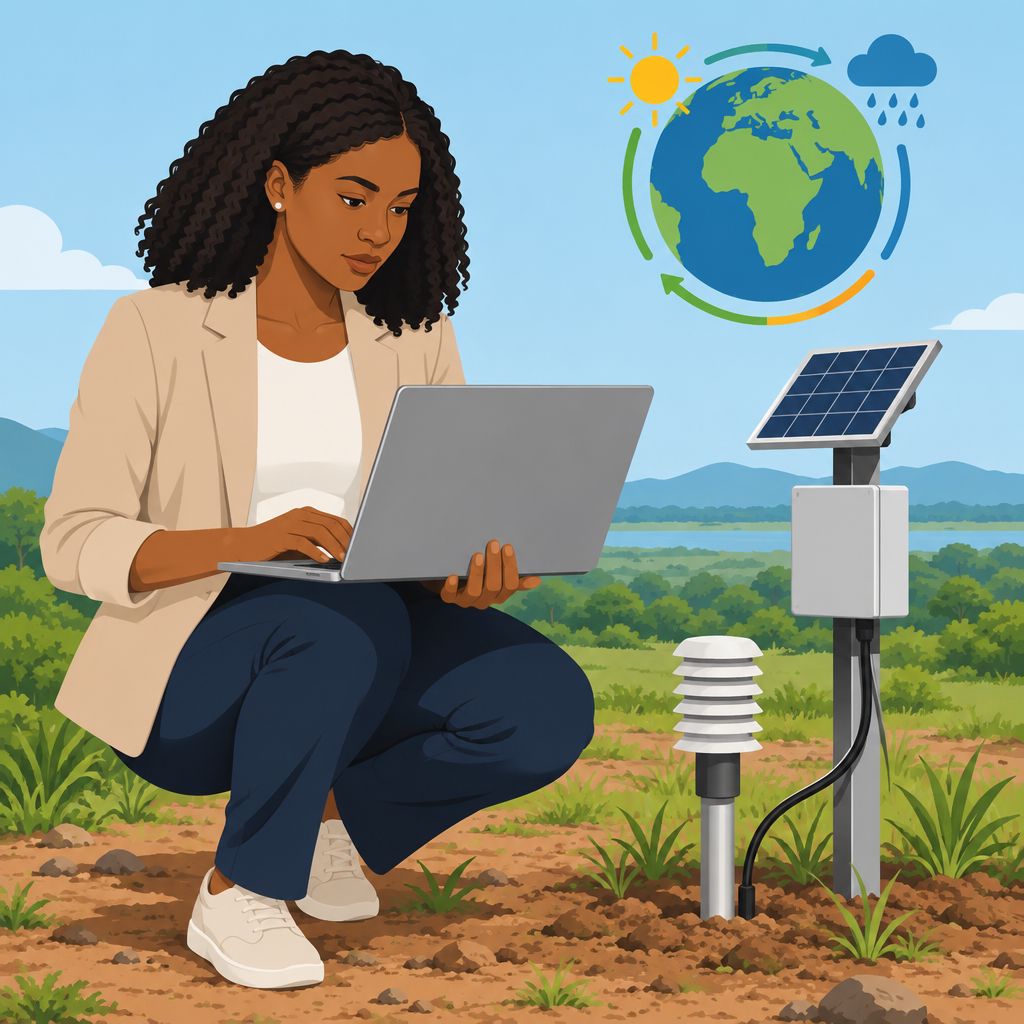
Findings from Nigerian Climate Studies
Climate studies project temperature increases across Nigeria.
Rainfall patterns are expected to change, with some regions experiencing more frequent droughts.
These changes threaten food security and agricultural productivity.
- Temperatures are projected to increase across the country.
- Rainfall patterns are changing in different regions.
- Some areas may experience more frequent droughts.
- Climate change affects food security and agricultural productivity.
- Water conservation supports climate change adaptation.
- Sustainable agriculture practices can strengthen resilience.
Researchers recommend water conservation and sustainable agriculture practices.
These recommendations can improve resilience and support sustainable development.
Consequently, climate research provides valuable guidance for addressing Nigeria’s environmental challenges.
You Might Also Like: Admission Requirements for Agri-Science in Nigeria
Challenges in Geophysics and Climate Change Studies
Researchers in Nigeria face several challenges when conducting geophysics and climate change studies.
These challenges limit research quality, slow scientific progress, and restrict practical applications.
Addressing these barriers can strengthen research and improve understanding of environmental processes.
Research Funding Constraints
Researchers often struggle to secure adequate funding for geophysics and climate change studies.
Consequently, limited funding reduces access to equipment, research materials, and reliable data collection.
Transform Your Career with Expert Guidance
Get personalized mentorship consulting that’s tailored to your unique path. Our expert advice is actionable and exclusive.
Get StartedResearchers can improve funding opportunities through partnerships and collaborative grant applications.
- Government agencies can support research projects through dedicated grants and funding programs.
- Industry partners can provide financial support for relevant studies and technical activities.
- International organizations can offer grants that expand research opportunities and available resources.
- Universities can share resources and reduce financial burdens through institutional collaboration.
Limited Access to Research Equipment
Many Nigerian research facilities lack advanced equipment for geophysics and climate change investigations.
Without suitable technology, researchers may collect inaccurate data and produce less reliable findings.
Partnerships can help researchers access specialized equipment and improve the quality of their investigations.
- Research institutions can share advanced equipment through formal collaborative arrangements.
- Universities can partner with well-equipped organizations to support field studies.
- Research facilities can invest in equipment maintenance to preserve operational capacity.
- Domestic investment can improve access to essential technologies within Nigeria.
Data Access and Availability
Researchers frequently encounter difficulties when accessing reliable and current data.
Weak collection methods, limited storage facilities, and poor information sharing restrict data availability.
Better data systems can help scientists collect, store, and share information more effectively.
- Government agencies can establish data-sharing agreements with researchers and institutions.
- Meteorological centers can provide relevant datasets for climate change investigations.
- Research institutions can develop platforms that support secure data storage.
- Scientists can improve collaboration by sharing relevant datasets through organized networks.
Strengthening Research Capacity
Researchers can advance these fields by addressing funding, equipment, and data limitations together.
Stronger collaboration can help institutions share expertise, resources, and research opportunities.
These improvements can support high-quality studies of geophysical processes and climate change impacts in Nigeria.
You Might Also Like: Internship Opportunities for Geophysics Students
Current Research and Projects
Geophysics and climate change studies are receiving more attention in Nigeria.
Several projects now examine environmental factors affecting the region.
Together, these efforts support better understanding and sustainable solutions.
Ongoing Research
Researchers are investigating several environmental issues through coordinated studies.
These projects examine natural processes, environmental changes, and possible mitigation strategies.
Furthermore, collaborative work supports more accurate assessments across Nigeria.
- Researchers conduct seismic studies to examine tectonic activity and its climate change impacts.
- Scientists study coastal erosion patterns along Nigeria’s coastline and develop mitigation strategies.
- Collaborative projects develop climate models for Nigeria and improve regional predictions.
Research Findings
Recent findings identify several human activities that influence Nigeria’s environmental conditions.
Researchers connect these activities with changes affecting land, water, and local climates.
Additionally, the findings clarify environmental pressures requiring further study.
- Deforestation reduces carbon sequestration and significantly contributes to climate change in Nigeria.
- Rapid urbanization creates heat island effects and alters local climate patterns in major cities.
- Oil exploration activities affect land and water resources across affected areas.
Research Collaborations and Knowledge Exchange
Nigerian researchers work with international institutions on climate-related projects.
These partnerships combine expertise from different scientific communities.
Moreover, conferences help researchers share findings and develop professional connections.
- Nigerian and American researchers study climate change effects on agriculture in Nigeria.
- Nigerian and German scientists develop renewable energy solutions for climate change.
- Nigerian researchers participate in international conferences to share findings and collaborate globally.
These research efforts advance geophysics and climate change studies in Nigeria.
They also support better understanding of environmental challenges and sustainable solutions.
Uncover the Details: Chemical Industry Trends and Jobs in Nigeria
Role of Government and Policy in Geophysics and Climate Change Studies
The Nigerian government plays a crucial role in supporting geophysics and climate change research.
Through relevant policies and initiatives, it addresses climate challenges and promotes sustainable development.
Government support also helps researchers investigate environmental changes and develop practical responses.
Government Support for Geophysics and Climate Change Research
The government provides funding for geophysics and climate change research projects.
It also establishes research institutes and centers that study climate change impacts.
Furthermore, government agencies collaborate with international organizations to access expertise and resources.
- The government funds research projects related to geophysics and climate change.
- Research institutes and centers examine the effects of climate change.
- Government agencies work with international organizations on research activities.
- Policy frameworks guide researchers conducting climate change studies.
Relevant Policies and Initiatives
Nigeria has developed policies that address climate change mitigation and adaptation.
These initiatives also respond to erosion, land degradation, and greenhouse gas emissions.
Together, they provide direction for environmental management and sustainable development.
- The National Policy on Climate Change and Response Strategy targets climate change effects.
- The National Adaptation Strategy and Plan of Action promotes climate adaptation measures.
- The Nigeria Erosion and Watershed Management Project addresses erosion and land degradation.
- The Renewable Energy Master Plan promotes clean energy sources and reduced emissions.
Strengthening Government Support
Additional government support can improve geophysics and climate change research in Nigeria.
Increased funding would expand research activities and strengthen scientific investigations.
Moreover, collaboration and private sector participation could broaden available expertise and resources.
- Government should increase funding for geophysics and climate change research.
- International collaboration should provide additional expertise and research resources.
- Policies should encourage sustainable practices and climate-resilient technologies.
- Incentives should encourage private sector participation in climate change research.
Government policies provide an important foundation for geophysics and climate change studies.
By improving funding and partnerships, Nigeria can strengthen its response to climate change challenges.
Effective policy implementation can also support sustainable development across the country.
See Related Content: Traditional vs. Modern Boat Building in Nigeria
Geophysics and climate change studies in Nigeria support environmental sustainability.
By understanding Earth’s processes and climate patterns, researchers can develop effective strategies.
These studies provide valuable insights into how human activities affect the environment.
Meanwhile, scientists, policymakers, and local communities must collaborate to achieve sustainable development goals.
Continued research and partnerships can produce innovative solutions for environmental protection.
Therefore, Nigeria must prioritize these fields to address pressing climate change challenges.
Together, we can promote a greener, healthier future for generations to come.
Additional Resources
Google search results for Geophysics and Climate Change Studies in Nigeria Sciences
Bing search results for Geophysics and Climate Change Studies in Nigeria Sciences


