




Applied Geology and Oil Exploration in Nigeria
Applied geology and oil exploration in Nigeria play crucial roles in the country’s economy.
Furthermore, the oil industry provides significant revenue for the Nigerian government.
Oil exploration also supports infrastructure development in Nigeria.
Additionally, it contributes to social welfare programs across the country.
Overview of Geology in Nigeria
- Nigeria contains diverse geological formations, including sedimentary, igneous, and metamorphic rocks.
- Major structures include the Benue Trough, Niger Delta Basin, and Bornu Basin.
- These formations reveal important aspects of Nigeria’s geological history.
- They also indicate potential areas for hydrocarbon exploration.
- Nigeria possesses substantial oil and gas reserves within several geological settings.
Geological Formations and Characteristics in Nigeria
- The Benue Trough contains extensive sedimentary deposits across a major geological structure.
- The Niger Delta Basin forms a prominent sedimentary region with considerable hydrocarbon potential.
- The Bornu Basin occupies northeastern Nigeria and may contain additional hydrocarbon resources.
- Nigeria also contains mineral deposits such as tin, limestone, coal, and gold.
Oil and Gas Reserves in Nigeria
- Nigeria ranks among Africa’s leading oil-producing countries.
- Its reserves occur in both onshore and offshore locations.
- The Niger Delta contains abundant oil reserves and supports extensive exploration activity.
- Offshore fields such as Bonga, Agbami, and Egina contribute substantially to oil production.
- Nigeria also holds significant natural gas reserves for power generation and industrial use.
Geologists’ Role in Reserve Assessment and Exploration
- Geologists evaluate geological characteristics across different Nigerian regions.
- Their assessments help identify promising locations for oil and gas exploration.
- They use geophysical surveys, seismic analysis, and well drilling during exploration.
- Geologists develop reservoir models to support efficient resource extraction.
Multinational Exploration Activities
Since the early twentieth century, multinational companies have explored and extracted oil across Nigeria.
Shell, Chevron, ExxonMobil, and Total have participated in exploration activities.
These companies used seismic surveys, drilling, and exploration wells to identify potential reservoirs.
Their technology and expertise expanded Nigeria’s ability to participate in global oil production.
Discovery of Oil at Oloibiri
In 1956, Shell Petroleum Development Company drilled an exploration well at Oloibiri, Bayelsa State.
The well discovered commercial quantities of oil.
This discovery established Oloibiri as Nigeria’s first commercial oil-producing field.
Consequently, international companies increased exploration and investment across the country.
That expansion helped establish Nigeria’s petroleum industry and supported the later creation of NNPC.
Economic and Social Effects of Oil Exploration
Oil exploration has produced benefits and serious challenges for Nigerian society.
Oil exports provide government income and support public spending.
The industry also creates direct and indirect employment.
Moreover, foreign investment brings technology and specialized expertise.
The industry supports services, transportation, and construction.
- Oil companies create jobs within the industry and related sectors.
- Export earnings support government spending on education, healthcare, and social welfare.
- Foreign investment strengthens Nigeria’s capacity to explore, produce, and export oil.
- Oil revenue can support infrastructure development and poverty reduction.
However, dependence on oil revenue exposes Nigeria to economic volatility and governance problems.
Changes in oil prices can produce budget deficits and economic instability.
Oil exploration also affects communities, ecosystems, and public health.
- Oil spills and gas flaring contribute to environmental degradation.
- Pollution affects local communities and surrounding ecosystems.
- Oil wealth can intensify corruption, inequality, conflict, and social unrest.
- Dutch Disease can weaken agriculture, manufacturing, and broader economic diversification.
Nigeria can reduce these risks by diversifying its economy and strengthening governance.
Effective environmental management can also protect communities and ecosystems.
These measures can support sustainable development and more inclusive growth.
Explore Further: Government Policies Impacting Animal Science in Nigeria
Major Oil Fields and Petroleum Companies
Nigeria ranks among Africa’s oil-rich countries and holds significant petroleum reserves.
The Niger Delta remains the country’s primary oil-producing region.
Notable fields include OML 58, OML 40, and OML 123.
Meanwhile, Shell, ExxonMobil, Chevron, Total, and Eni operate within Nigeria’s petroleum industry.
These companies support exploration, production, and petroleum export activities.
Consequently, their operations contribute substantially to the country’s oil sector.
Technological Advancements in Oil Exploration
Recent technological developments have transformed oil exploration practices in Nigeria.
For example, seismic surveys help companies identify underground petroleum reserves.
Furthermore, three-dimensional imaging improves the accuracy of exploration decisions.
Horizontal drilling enables operators to reach oil deposits in difficult locations.
Hydraulic fracturing also supports extraction from challenging underground formations.
Additionally, automation and robotics streamline operations while reducing human intervention.
Challenges and Opportunities in the Nigerian Oil Industry
Despite its reserves, Nigeria’s oil industry faces several obstacles.
Security threats from militant groups continue to affect operations in the Niger Delta.
Moreover, corruption and mismanagement hinder progress throughout the petroleum sector.
Transform Your Career with Expert Guidance
Get personalized mentorship consulting that’s tailored to your unique path. Our expert advice is actionable and exclusive.
Get StartedGlobal oil price fluctuations create additional economic uncertainty.
Economic instability further complicates planning and investment decisions.
Nevertheless, technology and infrastructure investment can improve exploration and production efficiency.
Economic diversification can also create sustainable opportunities beyond oil and gas.
Finally, international collaboration and industry best practices can help address persistent challenges.
Uncover the Details: Women in Nigerian Boat and Ship Building
Environmental and Social Impacts of Oil Exploration
Environmental and social impacts of oil exploration in Nigeria affect ecosystems, livelihoods, health, and community stability.
This section examines oil spills, pollution, regulatory oversight, and efforts toward sustainable exploration practices.
These concerns require responsible operations, careful monitoring, and meaningful engagement with affected communities.
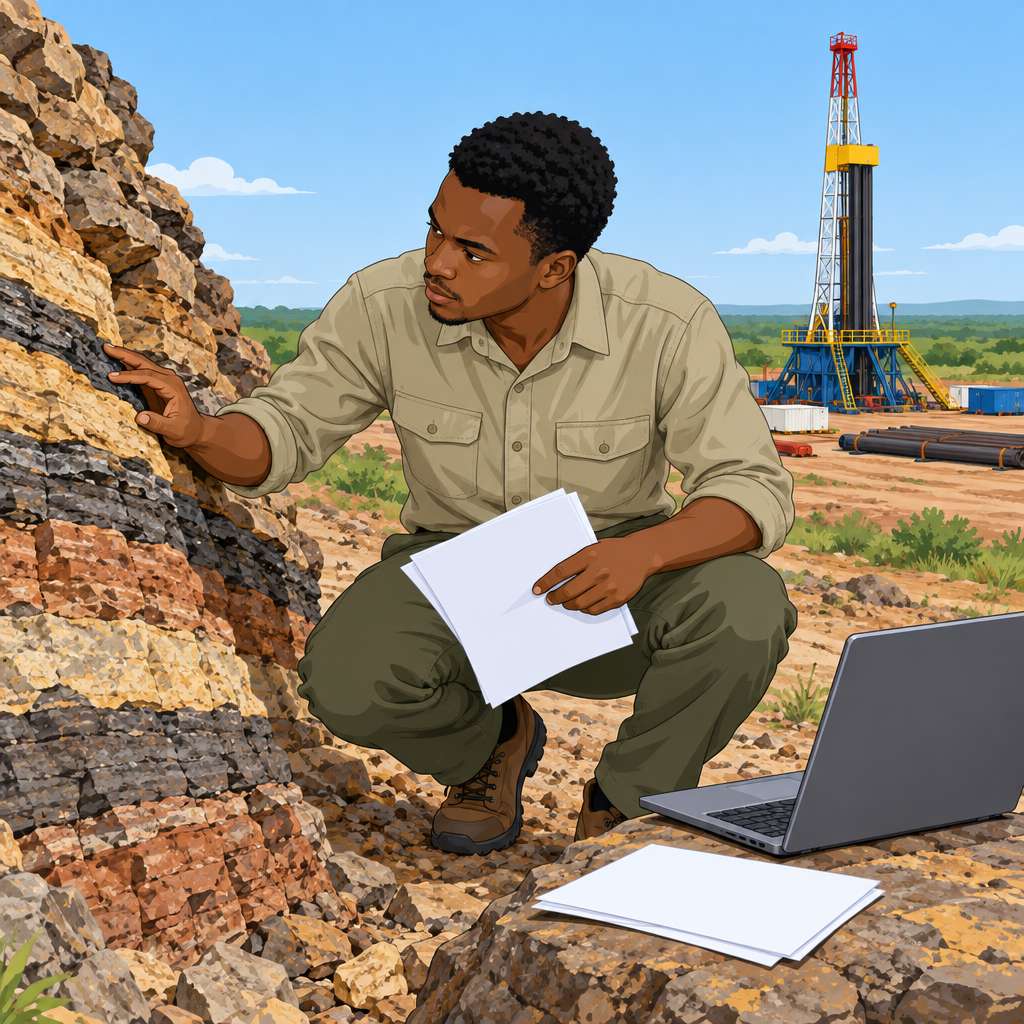
Effects of Oil Spills and Pollution on Local Communities
- Oil spills and pollution severely damage the environment and disrupt local communities.
- Contaminated water and land can harm wildlife, vegetation, and natural resources.
- Fishing and farming communities face serious risks because they depend on local natural resources.
- Exposure to polluted air and water can contribute to respiratory problems and skin diseases.
- Oil exploration can also cause social disruption, cultural loss, and economic instability.
Regulatory Oversight of Oil Exploration Activities
- Regulatory agencies oversee oil exploration activities and enforce environmental and safety requirements.
- These agencies conduct inspections, audits, and assessments to monitor environmental effects.
- They can impose penalties and sanctions when companies violate regulations or neglect mitigation measures.
- Regulators also work with communities to address concerns and explain exploration impacts.
- Through oversight, agencies seek to protect the environment and support sustainable development.
Efforts Toward Sustainable Oil Exploration Practices
- Nigeria increasingly recognizes the need for sustainable oil exploration practices.
- Companies are adopting technologies and practices that reduce environmental damage.
- Industry efforts also seek stronger spill response and more effective cleanup techniques.
- Stakeholder engagement and community consultation support more sustainable exploration decisions.
- Research into renewable energy can help reduce dependence on fossil fuels.
Oil exploration provides economic benefits, but it also creates serious environmental and social challenges.
Responsible practices can reduce harm to ecosystems and communities while supporting more inclusive development.
Careful monitoring, stakeholder engagement, and sustainable operations can guide the industry toward greater responsibility.
Discover More: Collaborative Projects in Applied Mathematics
Career Opportunities in Applied Geology and Oil Exploration
Applied geology and oil exploration offer diverse career opportunities for geologists.
These professionals support oil and gas exploration, extraction, and processing activities.
Furthermore, their work helps identify and manage valuable underground resources.
Job Roles for Geologists in the Oil Industry
Geologists perform specialized duties throughout the oil exploration and production process.
Some professionals locate reserves, while others manage reservoirs or interpret subsurface data.
Together, these roles support informed decisions during exploration and extraction activities.
- Exploration geologists locate potential oil and gas reserves using geological data, surveys, and tests.
- Reservoir geologists analyze and manage underground reservoirs to improve oil and gas extraction.
- Production geologists maximize extraction from existing reservoirs through monitoring and management strategies.
- Geochemists study rocks, soil, and fluids to understand oil and gas formation and migration.
- Seismic interpreters analyze seismic data to identify subsurface formations and potential drilling locations.
Each role requires technical knowledge and careful interpretation of geological information.
Moreover, geologists often collaborate with specialists during exploration and reservoir management.
Their responsibilities connect field observations with decisions about oil and gas resources.
Skills and Qualifications for Oil Exploration Careers
A successful career in oil exploration requires a strong foundation in geology and earth sciences.
Professionals also need specialized knowledge of petroleum geology and exploration techniques.
Additionally, communication, teamwork, and adaptability support effective work in challenging environments.
- A strong background in geology and earth sciences supports technical decision-making.
- Knowledge of reservoir engineering and petroleum geology strengthens exploration capabilities.
- Proficiency in geophysical and geological mapping improves subsurface interpretation.
- The ability to interpret seismic data helps identify subsurface structures.
- Experience with reservoir modeling and simulation supports resource management.
- Excellent analytical and problem-solving skills help geologists evaluate complex information.
- Effective communication and teamwork abilities support cooperation across professional teams.
- Adaptability and willingness to work in challenging environments support field activities.
These qualifications help geologists evaluate geological evidence and support exploration decisions.
They also prepare professionals to work with geological, geophysical, and reservoir information.
Practical training can further strengthen the knowledge required for oil industry roles.
Training Programs and Educational Institutions
Several institutions provide education and training for people interested in oil exploration careers.
These programs cover geology, petroleum engineering, reservoir engineering, and exploration geology.
Students can develop technical knowledge through academic courses, workshops, internships, and industry programs.
- The University of Ibadan offers undergraduate and postgraduate programs in geology and petroleum engineering.
- The Federal University of Technology, Owerri provides reservoir engineering and exploration geology courses.
- Shell Petroleum Development Company offers training programs for geologists and petroleum engineers.
- The Nigerian National Petroleum Corporation provides internships and career development opportunities in oil exploration.
- The American Association of Petroleum Geologists offers online courses and workshops in petroleum geology.
Academic institutions establish the foundational knowledge required for specialized oil industry responsibilities.
Meanwhile, internships and training programs provide additional opportunities for professional development.
With appropriate skills and qualifications, geologists can contribute to oil and gas resource development.
You Might Also Like: Curriculum of Applied Math with Statistics Programs
Future Prospects for Oil Exploration in Nigeria
Nigeria has untapped areas with potential oil reserves.
Exploration efforts continue to seek new opportunities.
Technology and improved techniques support future oil discoveries.
Potential for New Oil Discoveries in Untapped Areas
Nigeria has vast untapped areas with potential oil reserves awaiting discovery.
Exploration efforts continuously seek new opportunities across challenging terrains.
Advancements in technology help companies uncover hidden oil reserves.
Geological surveys and seismic studies identify areas with high oil potential.
These studies guide exploration activities more effectively.
Companies invest in advanced drilling methods for previously inaccessible regions.
These investments could support future discoveries.
Government Policies and Initiatives Supporting Oil Sector Investment
The Nigerian government has introduced policies encouraging local and foreign investment.
These policies support exploration and development within the oil and gas industry.
Fiscal incentives can make exploration investments more attractive.
Regulatory frameworks also provide structure for industry activities.
The Nigerian Content Development Act promotes local participation and capacity building.
These initiatives support sustainable growth within the oil industry.
Transparency and legal stability can strengthen the investment environment.
The government also seeks to streamline approvals and improve security.
These efforts can reduce operational risks and encourage long-term investment.
Balanced and Sustainable Development in the Oil Industry
Nigeria must balance economic development with environmental sustainability.
This balance supports the oil industry’s long-term viability.
Responsible exploration and production practices can minimize environmental impacts.
Effective waste management helps protect natural resources.
Oil companies should integrate environmental concerns into exploration projects.
This approach can reduce adverse effects on local communities.
Economic growth, social responsibility, and environmental protection require careful coordination.
Stakeholder engagement and community development can support responsible resource use.
Consequently, the oil sector can contribute to Nigeria’s broader development goals.
Sustainable Management of Nigeria’s Oil Resources
Applied geology guides oil exploration in Nigeria by revealing geological structures and regional characteristics.
These insights help exploration teams identify areas that may contain oil reserves.
Consequently, geological knowledge influences national economic planning and energy security.
Nigeria’s continued reliance on oil revenue makes sustainable resource management increasingly important.
Therefore, industry stakeholders must protect the environment and engage affected communities during operations.
Furthermore, best practices and innovative technologies can improve exploration efficiency and resource longevity.
Continuous research and geoscience investment can strengthen Nigeria’s exploration capabilities and global competitiveness.
Finally, stakeholders must collaborate to maximize benefits while minimizing effects on society and the environment.
Responsible management can help preserve oil resources for current and future generations.
Additional Resources
Google search results for Applied Geology and Oil Exploration in Nigeria Sciences
Bing search results for Applied Geology and Oil Exploration in Nigeria Sciences


