




Introduction
Applied chemistry plays a crucial role in Nigerian universities.
It provides practical skills for students.
However, stakeholders continue to scrutinize the country’s applied chemistry curriculum.
Historical Background of Applied Chemistry in Nigerian Universities
Applied chemistry in Nigerian universities has changed significantly over time.
Universities have revised curricula to address industry and technological developments.
These revisions have also reflected advances in academic research.
- Universities introduced applied chemistry during the early years of higher education.
- Educators added practical applications to course content.
- Researchers strengthened the field’s focus on research and development.
Curriculum development has responded to technological progress and changing industry requirements.
Furthermore, applied chemistry courses provide students with practical experience and relevant professional skills.
Academic research has also influenced the subjects, methods, and applications included in university training.
- Universities align course content with industry needs and standards.
- Departments collaborate with research institutions and organizations.
- Lecturers integrate innovative teaching methods and technologies.
These influences have encouraged continuous improvement across applied chemistry programmes.
Consequently, students develop stronger problem-solving and critical-thinking abilities.
Practical training and research activities help graduates respond to changing professional demands.
Universities must therefore remain responsive as applied chemistry continues to evolve.
They can support career preparation by combining industry-relevant knowledge with practical experience.
Comparison with International Standards
Nigerian universities share several curriculum features with international chemistry programs.
However, international comparisons reveal differences in specialization, industry engagement, and curriculum flexibility.
These similarities and differences highlight both the curriculum’s strengths and areas requiring further development.
Similarities Across Chemistry Programs
- Nigerian universities teach core subjects, including organic, inorganic, and analytical chemistry.
- International chemistry programs also commonly teach these fundamental subjects.
- Both Nigerian and international programs include practical laboratory sessions.
- Most chemistry programs emphasize critical thinking, problem-solving, and research skills.
These shared features give students a common foundation for chemistry education.
Laboratory sessions connect theoretical principles with practical learning experiences.
Furthermore, critical thinking prepares students to address chemistry-related problems.
Differences in Applied Chemistry Education
- Nigerian universities may provide less specialized applied chemistry focus than some international programs.
- Some international programs maintain stronger industry collaborations and internship opportunities.
- Nigerian programs could strengthen students’ exposure to real-world chemistry applications.
- Curriculum flexibility and elective choices vary between Nigerian and international institutions.
- These variations affect students’ ability to tailor their education.
Specialized tracks can help students develop deeper knowledge within particular applied chemistry fields.
Industry partnerships can also connect academic learning with workplace expectations.
Additionally, elective courses can help students pursue individual academic interests.
Strengths of the Current Curriculum
- The curriculum provides a strong foundation in core chemistry principles.
- This foundation prepares students for further study and chemistry-related careers.
- Hands-on laboratory experiences develop students’ practical skills.
- Laboratory work reinforces students’ theoretical knowledge.
- Critical thinking and problem-solving prepare students to address real-world chemistry challenges.
Core principles support academic progression across several chemistry-related fields.
Practical work allows students to apply concepts through laboratory activities.
Moreover, problem-solving skills help students respond to practical chemistry demands.
Weaknesses Requiring Curriculum Development
- Limited specialization may hinder students seeking advanced knowledge in particular applied chemistry fields.
- Insufficient industry collaboration may reduce students’ exposure to real-world chemistry applications.
- Few internship opportunities may limit practical experience outside university laboratories.
- A rigid curriculum structure may restrict interdisciplinary exploration.
- Limited flexibility may prevent students from tailoring education to their interests.
Students may need broader opportunities to study specialized areas of applied chemistry.
Stronger partnerships could expose students to additional practical applications.
Greater flexibility could also support interdisciplinary study and personal academic interests.
Explore Further: Career Opportunities in Applied Geology in Nigeria
Obstacles Affecting Applied Chemistry Education
Educators and institutions face several obstacles when implementing applied chemistry curricula in Nigerian universities.
These obstacles can weaken comprehensive instruction and reduce alignment with industry needs.
Therefore, institutions must identify barriers before developing practical and relevant learning experiences.
- Lack of resources
- Outdated teaching methods
- Limited research opportunities
Limited resources remain a major barrier to effective applied chemistry education.
Universities often lack adequate laboratory equipment, research funding, and qualified faculty members.
Consequently, educators may struggle to provide essential hands-on experience and practical skills.
Traditional lecture-based teaching methods also limit preparation for the dynamic chemical industry.
Interactive approaches can improve students’ understanding and retention of applied chemistry concepts.
Furthermore, limited research opportunities restrict students’ exposure to advanced facilities and collaborative projects.
Students may consequently miss opportunities to gain experience and contribute to developments in applied chemistry.
Transform Your Career with Expert Guidance
Get personalized mentorship consulting that’s tailored to your unique path. Our expert advice is actionable and exclusive.
Get StartedStrategies for Strengthening Applied Chemistry Curricula
Institutions can address these challenges through targeted funding, curriculum updates, and stronger research support.
These measures can improve learning quality while connecting academic preparation with chemical industry requirements.
Additionally, collaboration can help universities expand opportunities for students and faculty members.
- Seeking external funding and partnerships
- Updating curricula and teaching methodologies
- Increasing investment in research infrastructure
Educators can seek funding from industry stakeholders, government agencies, and nonprofit organizations.
Grants, sponsorships, and donations can help universities obtain resources for applied chemistry programs.
Updated curricula should incorporate blended learning, flipped classrooms, and suitable online resources.
These methods can create engaging environments that support diverse student learning needs.
Universities should also invest in state-of-the-art research facilities and support ongoing projects.
Stronger collaboration among faculty members, students, and industry partners can expand research opportunities.
Such investment can encourage innovation and research excellence within applied chemistry education.
Learn More: Internship Opportunities for Anthropology Students in Nigeria
Strategies for Improving Applied Chemistry Education
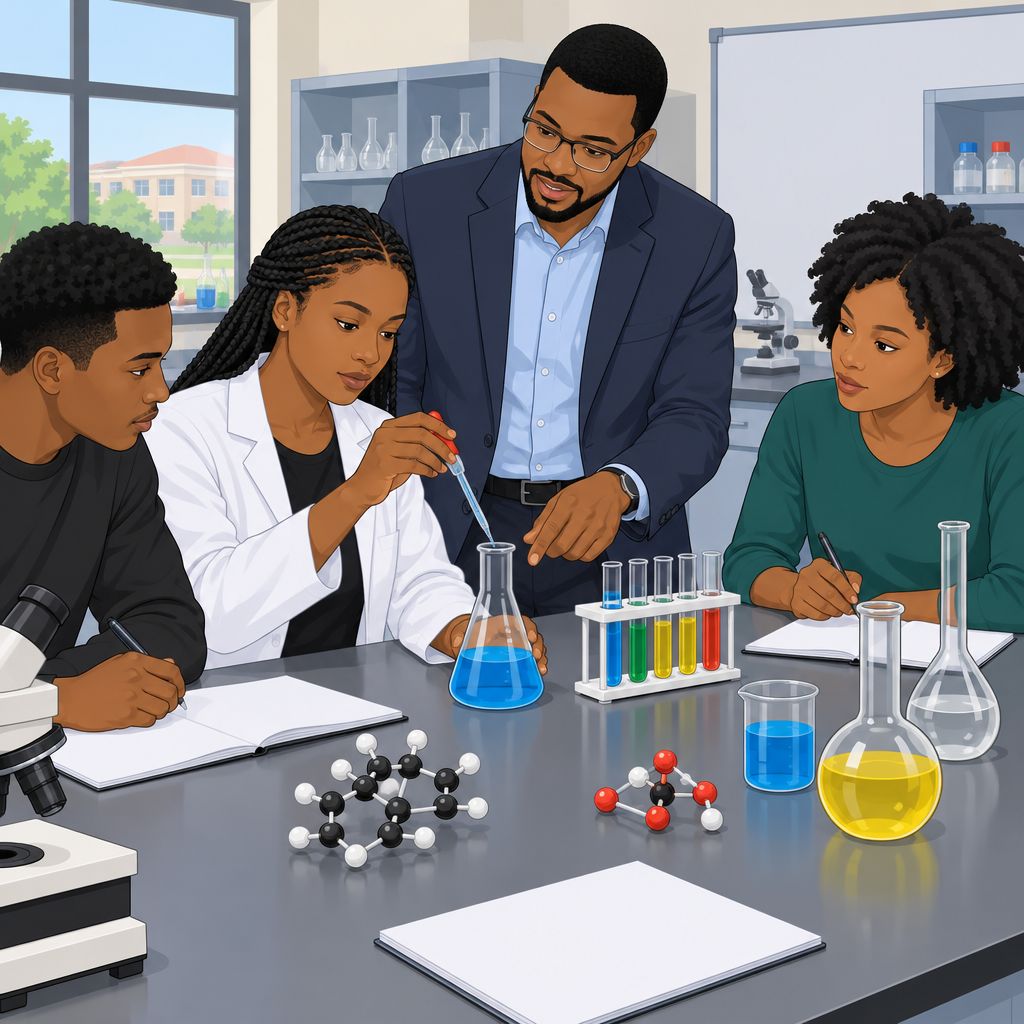
Universities can strengthen applied chemistry education through targeted curriculum improvements.
These measures can improve teaching quality and support stronger preparation for professional responsibilities.
Students also need practical opportunities that connect classroom concepts with workplace applications.
- Universities should propose solutions that improve applied chemistry curriculum quality.
- Programs should add practical and hands-on learning experiences for students.
Curriculum Development and Industry Collaboration
Universities should review applied chemistry course content regularly.
Updated material can include recent research findings, technological advances, and industry trends.
This approach helps students respond to changing employment requirements.
Additionally, institutions can collaborate with industry partners to create meaningful learning opportunities.
Such partnerships can support internships, research projects, and industry placements.
Students can then apply theoretical knowledge in professional settings.
Industry partners can also help universities align curriculum content with workplace needs.
Practical and Experiential Learning
Practical learning gives applied chemistry students valuable experience with scientific procedures.
Laboratory sessions can develop essential technical skills, problem-solving abilities, and critical thinking.
Experiments allow students to apply theoretical concepts in practical settings.
Furthermore, field trips can introduce students to chemistry applications beyond the classroom.
Site visits can demonstrate how pharmaceutical, petrochemical, and environmental industries use chemistry.
Guest lectures can connect academic knowledge with professional experience.
These activities can clarify the relevance and importance of applied chemistry studies.
Discover More: Overview of Animal Science Courses in Nigerian Universities
Successful Applied Chemistry Programs
Nigerian universities have introduced innovative applied chemistry programs.
These programs connect classroom learning with practical experiences.
Several institutions demonstrate how applied chemistry education can support student development.
University of Lagos
- The University of Lagos uses project-based learning in its chemistry curriculum.
- Students address real-life industry problems with guidance from professors.
- This approach improves critical thinking, problem-solving skills, and job readiness.
Ahmadu Bello University
- Ahmadu Bello University requires chemistry students to complete internships.
- The university collaborates with industry partners to provide practical experience.
- This program increases practical knowledge and employability after graduation.
Federal University of Technology, Minna
- The Federal University of Technology, Minna emphasizes green chemistry principles.
- Its laboratories promote sustainable practices and environmental conservation.
- The program prepares graduates to use eco-friendly chemistry methods.
Impact on Students and Industry
These programs give students practical experiences that strengthen their engagement with chemistry.
Furthermore, employers value the practical skills and industry knowledge students gain.
Consequently, the chemistry industry receives graduates prepared for professional demands.
- Hands-on experiences make students more engaged and motivated to learn.
- Employers value graduates with practical skills and industry knowledge.
- The industry benefits from graduates prepared for professional demands.
These successful programs show why applied chemistry curricula should include practical, real-world experiences.
Learn More: Applied Zoology Projects in Nigerian Universities
Student Perspectives
Student feedback helps universities assess how well applied chemistry programs meet learner needs.
It also reveals whether students consider the curriculum relevant to their expectations.
Therefore, universities can use these perspectives to guide curriculum improvements.
Course Relevance
Students can describe how closely courses connect with real-world applications.
They can also identify subjects that reflect current industry needs.
Consequently, their feedback can guide course updates and curriculum revisions.
Teaching Methods
Student responses can evaluate lectures, practical sessions, and group projects.
Moreover, learners can explain which methods support their understanding most effectively.
This information can help educators improve the learning experience.
Laboratory Facilities
Students can assess the quality and adequacy of laboratory facilities.
Their observations may reveal shortages involving equipment and other resources.
As a result, universities can identify priorities for laboratory investment.
Research Opportunities
Student feedback can show whether research opportunities remain sufficiently available.
Hands-on research experience supports a well-rounded applied chemistry education.
Therefore, learners should describe how research opportunities contribute to their development.
Industry Partnerships
Students can comment on the extent of industry partnerships and collaborations.
Such feedback indicates how effectively the curriculum supports career preparation.
Additionally, it can show whether academic learning connects with applied chemistry work.
Curriculum Refinement
Universities can strengthen applied chemistry curricula by considering student perspectives.
These perspectives help institutions respond to student needs and industry demands.
Continued feedback can support ongoing refinement of the applied chemistry curriculum.
Curriculum Priorities for Industry Readiness
The current Applied Chemistry curriculum requires sustained attention from Nigerian universities.
A robust curriculum can help universities meet the demands of the industry.
Practical training, industry collaboration, and updated course content should remain central priorities.
Additionally, research opportunities and internships can strengthen students’ professional skills.
Universities must continue improving their programs to prepare graduates for workforce responsibilities.
These improvements should also reflect industry standards and global trends.
A strong curriculum can produce competent professionals for the Applied Chemistry field.
Additional Resources
Google search results for Applied Chemistry Curriculum in Nigerian Universities Sciences
Bing search results for Applied Chemistry Curriculum in Nigerian Universities Sciences


