




Government Policy and Animal Science in Nigeria
Animal science plays a critical role in Nigeria’s economy and food security.
It encompasses livestock production, health, and research.
Government policies greatly influence the advancement and sustainability of animal science in Nigeria.
These policies cover animal welfare, research funding, and disease control.
Policymakers should prioritize animal science to enhance agricultural productivity and address food security challenges.
They should also improve the livelihoods of farmers.
Government interventions can support infrastructure, training programs, and research initiatives.
These initiatives can strengthen the animal science sector.
Effective policy implementation can elevate animal science standards in Nigeria.
It can ensure sustainable growth and profitability for stakeholders.
History of Government Policies on Animal Science in Nigeria
Government policies on animal science in Nigeria have changed over time.
These initiatives have influenced livestock production, farmer training, research, and industry development.
Their combined effects continue to shape animal science practices across the country.
Previous Government Policies Relating to Animal Science
During the 1970s, Livestock Development Projects targeted better animal husbandry and higher livestock productivity.
During the 1980s, Agricultural Development Programs expanded extension services for farmers.
In 2019, the National Livestock Transformation Plan sought modernization and value addition.
- Livestock Development Projects improved animal husbandry practices and supported livestock productivity during the 1970s.
- Agricultural Development Programs provided extension services that strengthened farmers’ animal science knowledge during the 1980s.
- The National Livestock Transformation Plan promoted livestock modernization and value addition from 2019.
Successes and Failures of Past Policies
Past policies increased livestock productivity and improved animal health in several areas.
They also strengthened farmers’ knowledge and practical skills.
However, weak implementation and limited funding reduced the effectiveness of many initiatives.
- Successful initiatives increased livestock productivity and improved animal health.
- Farmer education programs enhanced knowledge and practical skills.
- Inadequate implementation, insufficient funding, and limited resources weakened policy outcomes.
- Infrastructure shortages, limited research, and climate change continue to challenge animal production.
Policy Effects on the Current State of Animal Science
Collectively, these policies produced both positive and negative effects on animal science.
Improved productivity and farmer knowledge represent important gains from previous government efforts.
Nevertheless, inadequate infrastructure and limited funding continue to restrict the sector’s progress.
Future Development of Animal Science in Nigeria
Government policies remain essential for advancing Nigeria’s animal science sector.
Policymakers can strengthen the sector by addressing persistent infrastructure, funding, and technology gaps.
Learning from earlier policies can support sustainable livestock industry development.
Current Government Support for Animal Science in Nigeria
The Nigerian government supports animal science through research, extension services, and professional training.
It also works with universities and research institutions to strengthen education and research.
Additionally, livestock programs seek to improve animal productivity and encourage sustainable agricultural practices.
Current Government Initiatives and Programs
Government initiatives provide support across research, education, extension, and livestock development.
These programs connect public institutions with universities and research organizations.
Furthermore, the National Livestock Transformation Plan promotes productivity and sustainable agricultural practices.
- The government funds research activities in animal science.
- Extension services help transfer knowledge to livestock producers.
- Capacity building develops skills among animal science professionals.
- Partnerships with universities support animal science education and research.
- The National Livestock Transformation Plan targets improved animal productivity.
Challenges Affecting Government Support
Several limitations reduce the reach and effectiveness of government support for animal science.
Funding shortages restrict research, training, and program implementation.
Moreover, weak coordination and inconsistent policies create additional implementation difficulties.
- Limited funding remains a major challenge for animal science initiatives.
- Inadequate infrastructure limits research and program implementation.
- Poor coordination reduces cooperation among government agencies and stakeholders.
- Policy inconsistency creates gaps between plans and implementation.
Effectiveness of Current Government Support
Government support has produced several positive outcomes despite persistent challenges.
Research funding has supported progress in animal genetics, nutrition, and disease management.
International partnerships have also encouraged knowledge exchange and technology transfer.
- Research funding has advanced animal genetics studies.
- Research has also improved knowledge of animal nutrition.
- Studies have contributed to better disease management approaches.
- Capacity building has trained a new generation of animal science professionals.
- International partnerships have supported knowledge exchange and technology transfer.
Future Needs for Animal Science Support
Government initiatives have strengthened animal science, but significant limitations remain.
Continued investment can improve research, training, infrastructure, and livestock development.
Stronger collaboration and policy reforms can further support animal science in Nigeria.
Transform Your Career with Expert Guidance
Get personalized mentorship consulting that’s tailored to your unique path. Our expert advice is actionable and exclusive.
Get StartedDiscover More: Women in Nigerian Boat and Ship Building
Impact of Government Regulations on Animal Health and Welfare
- Government regulations play a crucial role in safeguarding animal health and welfare in Nigeria.
- These rules require humane treatment and protect animal well-being.
- Therefore, animal scientists and farmers must follow these requirements during their work.
Government Regulations Supporting Animal Health and Welfare
- Government regulations establish standards for housing, handling, and transporting animals.
- They also control veterinary drugs and vaccines to prevent diseases and protect animal health.
- In addition, these rules require regular health checks, proper nutrition, and suitable living conditions.
Regulatory Effects on Animal Scientists and Farmers
- Animal scientists and farmers must follow strict guidelines to satisfy regulatory requirements.
- Consequently, they must invest in suitable infrastructure, training, and compliance resources.
- However, compliance can raise operating costs and reduce profitability for farmers and scientists.
Effectiveness of Regulations in Promoting Animal Welfare
- Government regulations produce mixed results in promoting animal health and welfare in Nigeria.
- Although the rules establish standards, authorities often lack effective enforcement and monitoring systems.
- Furthermore, corruption and limited resources can weaken regulatory implementation and outcomes.
See Related Content: Collaborative Projects in Applied Mathematics
Government Funding for Research and Development in Animal Science
Government funding plays a crucial role in advancing animal science in Nigeria.
Evaluating funding levels helps identify their effects and potential areas for improvement.
This assessment considers research resources, development outcomes, and future funding priorities.
Evaluation of Government Funding for Research and Development
Government funding for animal science research remains relatively low compared with funding for other sectors.
This limitation restricts research activity, innovation, and technological advancement.
Consequently, researchers face several financial and institutional challenges.
- Researchers lack adequate financial resources for research projects.
- Research facilities receive insufficient funding for infrastructure and equipment.
- Training and capacity-building programs receive limited support.
- International collaborative research initiatives receive inadequate funding.
Impact of Government Funding on the Advancement of Animal Science
Inadequate funding has significantly affected animal science research and development in Nigeria.
It limits cutting-edge research and slows innovation across the field.
Moreover, researchers have less capacity to address animal health, nutrition, and production challenges.
- Scientific discoveries and technological advancements remain stagnant.
- Nigerian animal products face reduced competitiveness and marketability.
- Researchers have fewer opportunities for global collaboration and knowledge exchange.
- Young scientists receive less motivation to pursue animal science careers.
Potential Areas for Improving Government Funding
The government can strengthen animal science by improving research and development funding.
Targeted investment can support innovation, scientific capacity, and practical solutions.
Additionally, better funding systems can benefit agriculture, food security, and environmental sustainability.
- Increase the overall budget allocation for animal science research.
- Establish specialized funding programs for specific animal science research areas.
- Improve transparency and accountability when disbursing research funds.
- Provide incentives for public-private research and development partnerships.
Delve into the Subject: Curriculum of Applied Math with Statistics Programs
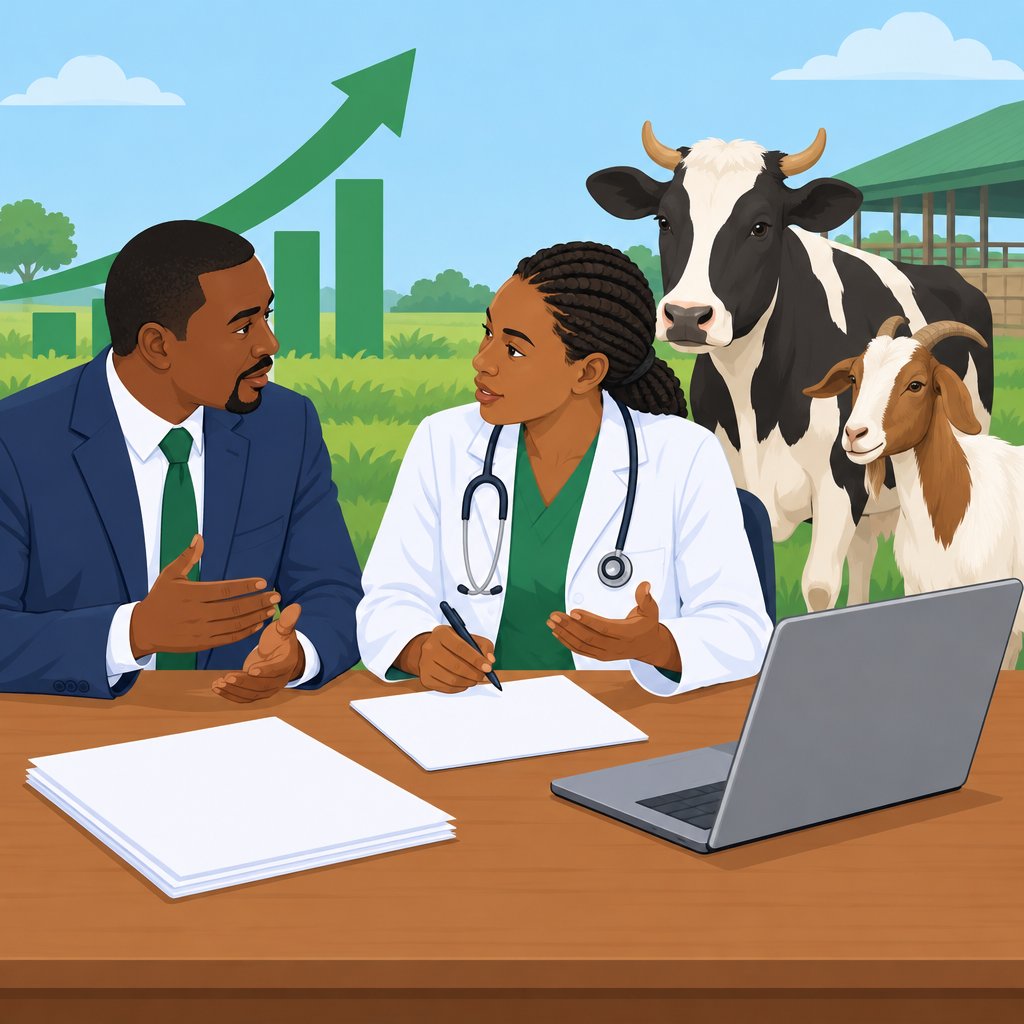
Government Policies and Livestock Industry Development
Government policies strongly influence Nigeria’s livestock industry and its development.
These policies guide farmers, breeders, and other stakeholders when they make operational decisions.
Furthermore, policy choices affect production practices, market access, and industry sustainability.
Policy Effects on Farmers
Farmers receive important support through subsidies and financial programs.
These resources help farmers invest in their farms and improve production activities.
Additionally, management regulations protect animal health, consumer safety, and product quality.
- Government subsidies and financial support help farmers obtain necessary farm resources.
- Livestock management regulations improve animal health and protect consumers.
- Trade policies influence imports, exports, market prices, and local competitiveness.
Policy Effects on Livestock Breeders
Breeders follow government standards and certification requirements to maintain livestock quality.
Moreover, breeding regulations help preserve genetic diversity and support sustainable livestock populations.
Research incentives can also encourage breeders to adopt improved technologies and methods.
- Breeding standards help breeders maintain livestock quality and genetic diversity.
- Breeding regulations help prevent diseases and sustain livestock populations.
- Research incentives encourage innovation in breeding technologies and practices.
Policy Effects on Industry Stakeholders
Government policies also affect veterinarians, feed suppliers, and equipment manufacturers.
Environmental policies guide stakeholders as they manage resources and reduce ecological harm.
Meanwhile, animal welfare policies encourage responsible treatment throughout the livestock industry.
- Industry regulations shape veterinary services, feed supplies, and equipment manufacturing.
- Environmental policies encourage efficient resource management and reduced ecological impact.
- Animal welfare policies promote responsible and sustainable livestock practices.
Policy Challenges and Industry Opportunities
Inconsistent policy enforcement remains a major challenge for Nigeria’s livestock industry.
Weak enforcement can encourage non-compliance and unethical practices among industry participants.
However, coordinated policies can support sustainable agriculture, infrastructure, technology, and industry growth.
- Inconsistent enforcement can increase non-compliance and unethical livestock practices.
- Sustainable policies can support infrastructure, technology, and livestock industry development.
- Government agencies, stakeholders, and researchers can collaborate to address policy challenges.
Learn More: Ecology Curriculum in Nigerian Secondary Schools
Advocacy for Improved Government Support
Advocacy can strengthen government support for animal science in Nigeria.
Better support can improve regulations, infrastructure, and research opportunities within the sector.
Stakeholders can also highlight animal science contributions to food security, economic growth, and environmental sustainability.
- Highlight the importance of stronger government support for animal science in Nigeria.
- Engage policymakers through evidence-based discussions about sector challenges and practical solutions.
- Promote cooperation between government, academia, and industry to advance animal science.
Strategies for Engaging Policymakers
Stakeholders should build constructive relationships with policymakers.
They can organize workshops, conferences, and meetings to present sector challenges clearly.
Furthermore, evidence-based proposals can explain how investment supports food security and sustainable development.
Collaboration Across the Animal Science Sector
Government, academia, and industry each contribute important resources to animal science advancement.
Government institutions can provide policy support and funding for relevant initiatives.
Meanwhile, academic institutions can conduct research and provide professional training.
Shared Priorities for Sector Advancement
Industry participants can offer practical knowledge and support commercial applications.
Collaborative efforts can address disease control, genetic improvement, and sustainable farming practices.
Through coordinated action, stakeholders can promote lasting progress in Nigerian animal science.
Policy Priorities for Animal Science in Nigeria
Government policies affect animal science through regulations, funding, and research initiatives.
These policies shape research, breeding, and conservation efforts by providing essential guidelines.
Stakeholders must collaborate to advocate for stronger government support for animal science in Nigeria.
Additional Resources
Google search results for Government Policies Impacting Animal Science in Nigeria Sciences
Bing search results for Government Policies Impacting Animal Science in Nigeria Sciences


