



Core Subjects in Animal and Environmental Biology
Studying animal and environmental biology helps people understand the natural world.
Moreover, core subjects support wildlife conservation and ecosystem protection.
Ecology, genetics, and evolution help researchers preserve biodiversity.
By studying these subjects, researchers understand relationships between species and their environments.
This knowledge supports effective strategies for protecting endangered species and habitats.
Furthermore, animal behavior, population dynamics, and environmental interactions reveal ecological complexity.
Understanding these factors helps people maintain ecological balance and sustain healthy ecosystems.
Therefore, these subjects support informed decision-making and sustainable conservation practices.
Zoology
Zoology is the scientific study of animals, their behavior, physiology, and classification.
It explores animal diversity and examines the mechanisms behind biological processes.
This field also supports efforts to understand and protect the animal kingdom.
Importance of Zoology in Wildlife Conservation
- Zoology reveals animal behavior, physiology, and habitat preferences, which guide wildlife conservation efforts.
- Moreover, zoological research shows how human activities affect wildlife populations and ecosystems.
- By studying animal adaptations, zoologists help protect endangered species and restore threatened biodiversity.
Specific Courses in Zoology
- Comparative Anatomy examines structural similarities and differences among animal species.
- It also provides a foundation for understanding evolutionary relationships.
- Animal Physiology examines metabolism, reproduction, and responses to environmental stimuli.
- Ecology and Conservation Biology explores organism interactions and sustainable resource management.
Thus, zoology reveals the animal world’s diversity and complexity.
It also equips people with knowledge to preserve biodiversity for future generations.
Botany
Botany is the scientific study of plants, including their structure, function, growth, evolution, distribution, and taxonomy.
It includes several disciplines that explain plant biology and environmental interactions.
Plant studies reveal how these organisms develop, adapt, and support life within ecosystems.
Study of Plants
Plants are multicellular organisms that perform essential roles within Earth’s ecosystems.
Botanists examine plant anatomy to understand the structure and function of different tissues.
They also investigate how plants grow, function, and respond to surrounding conditions.
- Plants are multicellular organisms that play crucial roles in Earth’s ecosystems.
- Botanists study plant anatomy to understand the structure and function of different tissues.
- Plant physiology examines photosynthesis, respiration, and nutrient uptake.
- Botanical ecology explores relationships between plants, environments, and other organisms.
Role in Environmental Conservation
Botany supports environmental conservation by examining plant diversity and ecosystem structure.
It also helps conservationists protect endangered species and preserve natural habitats.
Furthermore, botanical research clarifies how plants respond to changing environmental conditions.
- Botany supports conservation by studying plant diversity and ecosystems.
- Plant conservation protects endangered species and preserves natural habitats from destruction.
- Botanists support restoration projects by reintroducing native plants to degraded ecosystems.
- Plant adaptations reveal how species respond to environmental changes, including climate change.
Core Botany Courses
Botany courses introduce students to plant classification, ecology, physiology, and anatomy.
These subjects connect plant structures with biological processes and environmental responses.
Together, they provide a foundation for understanding plant diversity and function.
- Plant Taxonomy teaches students to identify, name, and classify plant species.
- Plant Ecology examines interactions between plants and their environments.
- Plant Physiology explores processes governing plant growth, development, and environmental responses.
- Plant Anatomy examines internal plant structures, including tissues and cells.
Botany provides valuable insights into plant biology and environmental importance.
By studying plants, botanists support conservation and encourage sustainable practices.
You Might Also Like: Benefits of Studying Applied Botany in Nigeria
Ecology and Its Scope
Ecology studies relationships between organisms and their environment.
Understanding ecology helps researchers comprehend ecosystems and biodiversity.
Ecology also reveals interactions involving species, nutrient cycles, and energy flow.
Core Ecology Subjects
Population ecology examines population dynamics and environmental interactions.
Conservation biology protects biodiversity by studying ecosystems and their components.
Population ecology considers birth rates, death rates, and migration patterns.
- Population Ecology: This field focuses on population dynamics and environmental interactions.
- Conservation Biology: This field protects biodiversity by studying ecosystems and their components.
Meanwhile, conservation biology addresses threats affecting species and ecosystems.
These subjects provide complementary perspectives on ecological relationships and environmental change.
Importance of Ecology
Ecology explains how organisms adapt to their environments.
It helps researchers predict how human activities may affect ecosystems.
Additionally, ecological knowledge supports conservation strategies and sustainable resource management.
- Ecology helps explain how organisms adapt to their environments.
- It aids predictions about human impacts on ecosystems.
- Ecology supports conservation strategies for endangered species.
- It contributes to sustainable resource management and environmental policies.
Researchers use ecological insights to guide ecosystem preservation.
Transform Your Career with Expert Guidance
Get personalized mentorship consulting that’s tailored to your unique path. Our expert advice is actionable and exclusive.
Get StartedThey also examine relationships between species, nutrient cycles, and energy flow.
Consequently, ecology informs decisions that affect biodiversity and environmental resources.
Conservation Challenges
Conservation biologists study threats that damage species and ecosystems.
Habitat loss, resource overexploitation, climate change, and invasive species create major conservation challenges.
These pressures can reduce biodiversity and disrupt ecological relationships.
- Urbanization and deforestation cause habitat loss.
- Fishing and logging can overexploit natural resources.
- Climate change can shift species distributions.
- Invasive species can disrupt native ecosystems.
Conservation biologists work to mitigate these challenges.
They aim to protect biodiversity for future generations.
Their efforts support the preservation of ecosystems and their components.
Gain More Insights: Project Ideas for Applied Math Students in Nigeria
Environmental Science and Sustainable Development
Environmental science examines interactions between organisms and their surroundings.
It explores pollution, climate change, and sustainability.
Understanding these issues helps societies address global environmental challenges.
It also supports sustainable development.
Environmental science courses give students knowledge and skills for addressing environmental problems.
Environmental policy develops regulations that protect the environment.
Environmental impact assessment evaluates potential project effects on the environment.
By studying this field, students gain insight into complex environmental issues.
They also learn to make informed decisions.
The field emphasizes conservation efforts and sustainable practices.
These practices help protect natural resources.
Environmental science therefore helps create a more sustainable future for the planet.
Find Out More: How to Excel in Nigerian Chemical Science Programs
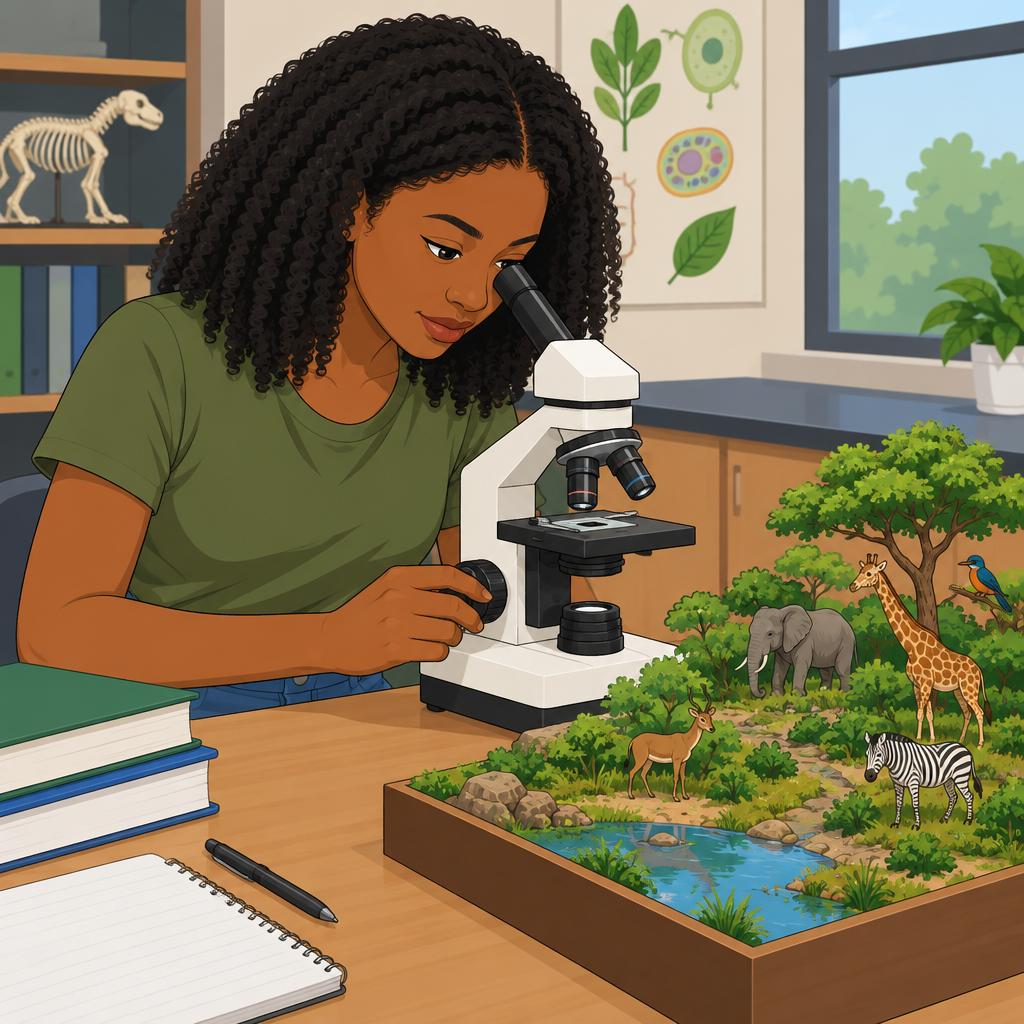
Genetics and Biological Diversity
Genetics examines genes and heredity in organisms.
It helps explain variation among organisms and the evolution of species.
Moreover, researchers use genetic knowledge to study biological diversity and adaptation.
Significance of Genetics in Animal and Environmental Biology
Genetics supports conservation decisions by revealing diversity within populations.
It also helps scientists trace evolutionary history through genetic variation.
Furthermore, genetic evidence clarifies adaptive traits and informs ecosystem management.
- Conservation Genetics: Genetics helps determine genetic diversity within populations and supports endangered species conservation.
- Evolutionary Biology: Genetic variation helps scientists investigate evolutionary history and understand adaptive traits.
Core Genetics Courses
Students need several genetics courses for animal and environmental biology.
These subjects examine genes from molecular mechanisms to population-level patterns.
Together, they provide tools for analyzing genetic material, inheritance, and change.
- Molecular Genetics: This course examines gene structure, function, expression, and regulation.
- Population Genetics: Students study genetic variation, evolution, genetic drift, and natural selection.
- Genomics: This subject explores complete genetic material through sequencing, analysis, and functional genomics.
- Epigenetics: This course examines heritable gene expression changes that do not alter DNA sequences.
- Genetic Engineering: Students study genetic material manipulation for biotechnology and gene therapy applications.
Genetics reveals mechanisms that drive biological diversity and adaptation.
By studying heredity, researchers can investigate evolution and conservation.
They can also support sustainable ecosystem management through genetic understanding.
Gain More Insights: Overview of Applied Microbiology Courses in Nigeria
Anatomy and Physiology
Anatomy and physiology examine the structures and functions of organisms.
These subjects help researchers understand how animals live and interact with their surroundings.
They also provide essential foundations for studying animal biology.
Importance of Anatomy and Physiology
Anatomy reveals the physical structures of animals, including their organs, tissues, and systems.
Researchers use anatomical knowledge to identify adaptations that help animals survive in different habitats.
Meanwhile, physiology explains how animal structures function and support life.
- Physiological studies examine how animals regulate their internal environments.
- They also explain how animals respond to stimuli and maintain homeostasis.
Contributions to Animal Biology
Anatomy and physiology establish a foundation for understanding animal diversity.
Researchers compare anatomical and physiological features to classify organisms by similarities and differences.
These comparisons also help scientists investigate how animals evolved and adapted to changing environments.
- Comparative studies can reveal evolutionary relationships between different species.
- They can also clarify how body structures and functions changed over time.
Core Courses in Anatomy and Physiology
Students develop this knowledge through courses that examine animal structures and functions.
Comparative anatomy emphasizes similarities and differences among animal body plans.
Animal physiology explores the processes that allow animals to survive and function.
- Comparative anatomy examines anatomical structures across different animal species.
- Students study organ systems and body plans to explore animal evolutionary history.
- Animal physiology covers metabolism, circulation, respiration, reproduction, and sensory mechanisms.
These subjects reveal the mechanisms that support life across the animal kingdom.
They also encourage appreciation for biological diversity and responsibility toward the shared environment.
Applying Knowledge to Environmental Conservation
Core subjects in animal and environmental biology help students understand the natural world.
These subjects also support studies of wildlife behavior, ecosystems, and biodiversity.
Furthermore, they provide foundations for conservation efforts and sustainable environmental management.
Students can pursue careers that help preserve the environment for future generations.
This knowledge helps protect and conserve the planet’s rich diversity of life.
Additional Resources
Google search results for Core Subjects in Animal and Environmental Biology Sciences
Bing search results for Core Subjects in Animal and Environmental Biology Sciences


