



Introduction
Greenhouse farming is a modern cultivation method.
It grows crops in controlled environments.
Transparent structures regulate temperature, humidity, and light for plant growth.
Brief Overview of Greenhouse Farming
Greenhouse structures use transparent materials.
These materials help regulate temperature and humidity.
They also manage light for optimal plant growth.
Importance of Greenhouse Farming as a Business in Nigeria
In Nigeria, greenhouse farming enables year-round production.
It can produce higher yields and protect crops from unpredictable weather.
Farmers can cultivate high-value crops and meet growing demand for fresh produce.
The venture can generate significant income for entrepreneurs.
Additionally, it can create employment opportunities within the agricultural sector.
Greenhouse farming offers a sustainable business opportunity in Nigeria.
Advantages of Greenhouse Farming
Greenhouse farming offers several benefits for Nigerian farmers seeking greater productivity and income.
These benefits support consistent production, stronger crop quality, and improved business performance.
Additionally, farmers can use controlled conditions to manage production throughout the year.
Protection from Harsh Weather Conditions
Greenhouses shield crops from extreme weather events, including heavy rainfall, strong winds, and intense sunlight.
As a result, this protection helps farmers prevent weather-related crop damage.
Consequently, farmers can maintain a more consistent supply of produce throughout the year.
Year-round Production
Greenhouse farming allows farmers to extend their growing seasons.
Therefore, farmers can cultivate crops throughout the year and meet market demands consistently.
This continuous production can also help farmers generate steady income during off-seasons.
Greater Control over the Growing Environment
Greenhouses allow farmers to regulate important conditions, including temperature, humidity, and light levels.
With this control, farmers can create conditions that support healthy crop growth.
Furthermore, controlled conditions can minimize pest infestations and improve overall crop quality.
Higher Crop Yields
Greenhouses create favorable growing conditions that can increase crop yields.
Compared with traditional open-field farming, this controlled environment can improve agricultural productivity.
Higher yields can help farmers maximize profits and expand their operations effectively.
These advantages make greenhouse farming a sustainable and profitable business model for Nigerian farmers.
By using controlled conditions, farmers can optimize agricultural practices and compete more effectively in the market.
Greenhouse farming can support greater productivity, profitability, and long-term success in Nigeria’s agricultural sector.
Greenhouse Structure Options in Nigeria
Greenhouse farming has gained popularity in Nigeria because it offers several benefits.
Farmers must select suitable structures to support their cultivation goals.
Each structure provides distinct advantages and disadvantages.
Traditional Plastic Greenhouses
Traditional plastic greenhouses remain common in Nigeria because farmers can install them affordably.
Plastic coverings trap heat inside and create a warm environment for plant growth.
However, these structures may require regular maintenance.
Farmers may also need to replace the plastic coverings periodically.
Glass Greenhouses
Glass greenhouses provide durability and an attractive appearance.
They allow substantial light penetration, which supports photosynthesis.
However, constructing a glass greenhouse can require significant financial investment.
Transform Your Career with Expert Guidance
Get personalized mentorship consulting that’s tailored to your unique path. Our expert advice is actionable and exclusive.
Get StartedFarmers may also need additional heating during colder seasons.
Polyethylene Greenhouses
Polyethylene greenhouses use durable plastic material that provides effective insulation.
They offer a cost-effective option for greenhouse farmers.
Furthermore, farmers can maintain these structures relatively easily.
However, polyethylene coverings may not last as long as glass.
Farmers may therefore need to replace the coverings more frequently.
Choosing a Suitable Greenhouse Structure
Farmers should consider their available budget before selecting a greenhouse structure.
They should also assess their location and specific agricultural needs.
These factors can guide farmers toward the most suitable structure for their businesses.
Gain More Insights: Mentorship Programs in Nigeria's Agricultural Business
Suitable Crops for Greenhouse Farming in Nigeria
Greenhouse farming is gaining popularity in Nigeria because it protects crops from harsh weather conditions.
It can also increase yields and improve resource efficiency.
Therefore, farmers should select crops that suit controlled environments and local market demand.
Tomatoes
Tomatoes remain a high-demand crop in Nigeria.
Inside greenhouses, farmers can produce larger yields throughout the year.
Consequently, steady production can support more consistent income.
Bell Peppers
Bell peppers also perform well in greenhouse environments.
Controlled temperature and humidity support optimal growth and high-quality produce.
As a result, farmers may reach markets offering premium prices.
Cucumbers
Cucumbers suit greenhouse production because farmers can manage their growing conditions carefully.
With proper care, they can provide harvests throughout the year.
Meanwhile, consistent supply helps meet demand for this nutritious vegetable.
Lettuce
Lettuce grows quickly and benefits from greenhouse control.
Farmers can regulate moisture and temperature to produce crisp, fresh leaves.
Thus, growers can offer lettuce that commands good market prices.
Strawberries
Strawberries need specific growing conditions, yet greenhouses can provide suitable environments.
Careful planning and close attention can support high-quality harvests.
Additionally, consumer and restaurant demand creates opportunities for growers.
Crop Choice and Agricultural Opportunities
These crop choices can help farmers respond to Nigerian market demand.
Greenhouse production can also support food security and economic development.
With suitable planning, growers can pursue profitability while supplying important markets.
Gain More Insights: Career Paths in Nigeria's Agricultural Business Sector
Steps to Starting a Greenhouse Farming Business
Greenhouse farming can support commercial produce production in Nigeria when operators plan carefully.
It allows farmers to grow high-quality crops throughout the year within a managed setting.
Successful operators match production decisions with customer demand, available resources, and local conditions.
- Conducting research and feasibility study: Research market demand for greenhouse produce before beginning operations.
- Acquiring suitable land and greenhouse structure: Secure suitable land and install a durable greenhouse structure.
- Sourcing quality seeds or seedlings: Purchase reliable seeds or seedlings from reputable suppliers.
- Implementing proper irrigation and fertilization systems: Establish systems that support consistent crop growth.
Researching the Greenhouse Farming Market
Begin by examining demand for greenhouse produce in your target area.
Study competing producers and identify the crops customers prefer.
A feasibility study can help you assess whether the proposed venture suits your available resources.
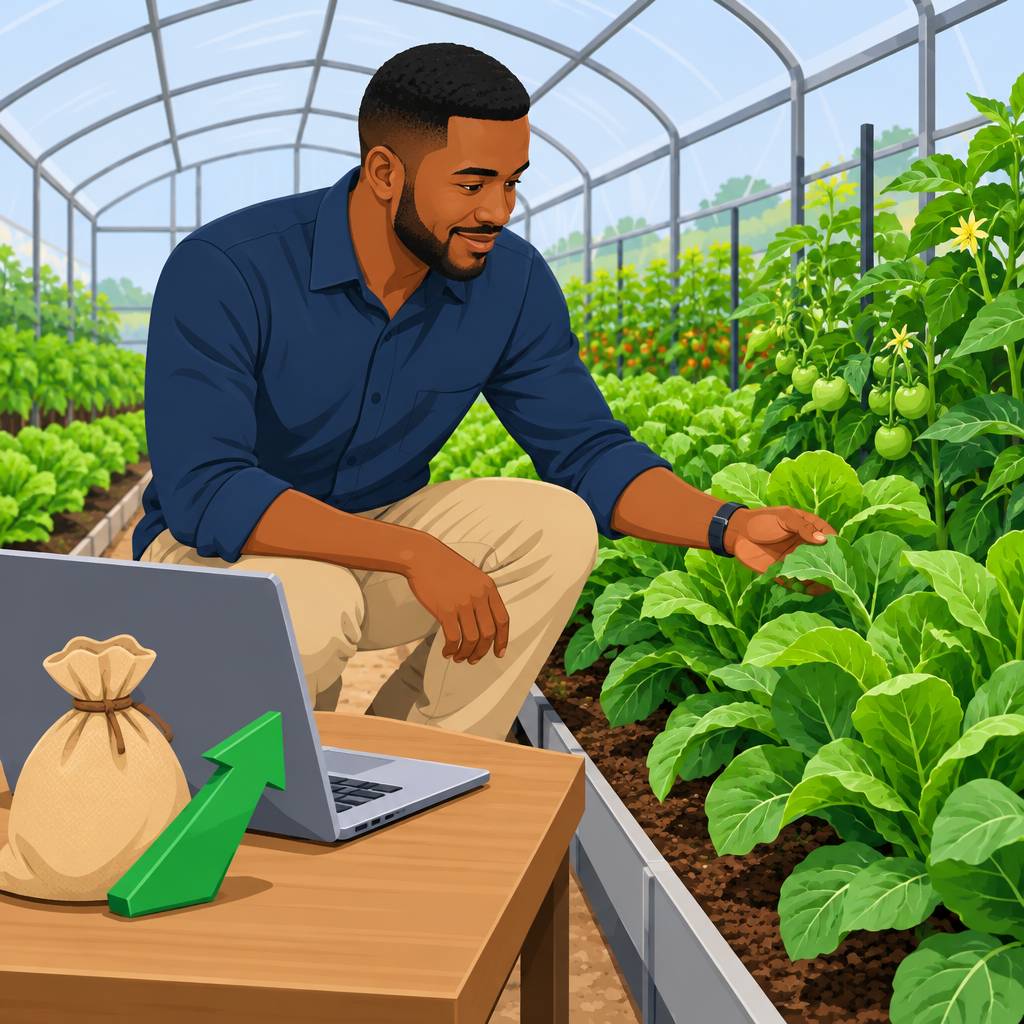
Choosing Land and a Suitable Greenhouse Structure
Next, secure land that receives sufficient sunlight for crop production.
Choose a site with convenient access to reliable water sources.
Install a durable greenhouse structure that matches your cultivation needs and local climate conditions.
Selecting Quality Seeds and Seedlings
Select seeds or seedlings from suppliers with reliable quality standards.
Choose varieties that suit greenhouse cultivation and demonstrate strong germination or establishment.
Disease-resistant planting materials can support healthier crops within the managed growing environment.
Managing Irrigation and Fertilization Systems
Design irrigation systems that deliver consistent moisture to every crop.
Create a fertilization schedule that supplies nutrients during plant development.
Organic fertilizers may improve soil fertility while reducing chemical residue concerns in harvested produce.
These preparations can improve production consistency and support better crop quality.
Greenhouse farming can provide higher yields and year-round production opportunities for Nigerian farmers.
You Might Also Like: Role of Technology in Nigerian Agricultural Business
Marketing Strategies for Greenhouse Produce
Effective marketing helps greenhouse operators present their produce to potential buyers.
Moreover, direct engagement can help businesses attract customers and maintain existing relationships.
Operators can combine digital promotion, discounts, partnerships, and industry events to reach different audiences.
- Use social media platforms to showcase products and engage with potential customers.
- Offer discounts or promotions to attract new customers and retain existing ones.
- Partner with restaurants or catering services to supply them with fresh produce.
- Attend food fairs or agricultural expos to promote greenhouse products to a larger audience.
Relationships with Local Markets and Grocery Stores
Local markets and grocery stores can provide useful sales channels for greenhouse produce.
Therefore, suppliers should communicate clearly with store managers and buyers.
Consistent quality, responsive service, and flexible arrangements can support strong retail relationships.
- Contact local markets and grocery stores to discuss supplying them with fresh produce.
- Build rapport with store managers or buyers by consistently providing high-quality products and excellent customer service.
- Offer competitive prices and flexible delivery schedules to meet retail partners’ needs.
- Provide product samples or conduct taste tests to demonstrate the quality of greenhouse produce.
Participation in Farmers’ Markets
Farmers’ markets allow greenhouse operators to sell produce directly to consumers.
In addition, face-to-face conversations help sellers explain their growing methods.
A varied selection can help attract shoppers with different preferences.
- Secure a booth at local farmers’ markets to sell greenhouse produce directly to consumers.
- Promote farmers’ market participation through social media and local advertising channels.
- Offer diverse selections of fruits, vegetables, and herbs to attract more customers.
- Engage shoppers by sharing information about growing methods and greenhouse farming benefits.
Online Sales Through E-Commerce Platforms
Online stores can help greenhouse operators reach customers beyond nearby markets.
Clear product information helps shoppers understand available produce and pricing.
Furthermore, convenient payments and secure delivery can support a smoother purchasing experience.
- Create an online store or list products on popular e-commerce platforms to reach a broader audience.
- Provide detailed descriptions, high-quality images, and pricing information for each product.
- Offer convenient payment options and secure shipping methods for online customers.
- Promote the online store through digital marketing campaigns, social media ads, and influencer partnerships.
You Might Also Like: Economic Contributions of Nigeria's Agricultural Business
Challenges of Greenhouse Farming in Nigeria
One main challenge of greenhouse farming in Nigeria involves high initial investment costs.
Setting up a greenhouse requires significant capital for infrastructure, equipment, and technology.
Moreover, limited financing access creates a major obstacle for aspiring greenhouse farmers in Nigeria.
Many financial institutions hesitate to fund greenhouse projects because they perceive significant risks.
Furthermore, greenhouse farmers often lack the technical expertise and knowledge required for successful operations.
Proper training and education can help farmers apply effective greenhouse farming practices.
Market Fluctuations and Competition
- Market fluctuations constantly threaten greenhouse farmers in Nigeria.
- Agricultural product prices can change drastically and reduce greenhouse profitability.
- Other greenhouse and traditional farmers also create strong market competition.
- Therefore, farmers should identify niche markets and develop unique selling points.
Greenhouse farming in Nigeria offers increased crop yields and reduced environmental impact.
However, the business also presents several significant challenges.
Farmers can overcome these challenges through careful planning, strategic decisions, and continuous innovation.
Business Value of Greenhouse Farming
Greenhouse farming can support consistent production throughout the year in Nigeria.
It also protects crops from harsh weather and creates controlled growing conditions.
Moreover, controlled production can improve resource use, crop quality, and yield potential.
- Greenhouses support year-round crop production.
- They protect crops from harsh weather conditions.
- Controlled conditions can produce higher yields and better-quality produce.
- Greenhouses help farmers use water and fertilizers efficiently.
- Efficient resource use can reduce agricultural waste.
- Growing demand for fresh, local produce creates market opportunities.
Entrepreneurial Opportunities in Greenhouse Farming
Entrepreneurs can explore greenhouse farming as technology becomes more accessible and cost-effective.
With proper planning and implementation, the business can become profitable in Nigeria.
Furthermore, greenhouse investment can support food security and economic development.
- Advancing technology can make greenhouse farming more accessible to entrepreneurs.
- Proper planning can help entrepreneurs develop profitable greenhouse businesses.
- Government support and initiatives can promote agricultural entrepreneurship.
- Greenhouse investments can contribute to food security in Nigeria.
- Entrepreneurs can support economic development through greenhouse farming.
Additional Resources
Google search results for Greenhouse Farming as a Business in Nigeria Agriculture
Bing search results for Greenhouse Farming as a Business in Nigeria Agriculture


