



Agriculture’s Role in Nigeria
Agriculture plays a crucial role in Nigeria’s economy.
The industry employs a significant portion of the population.
It also contributes significantly to the country’s gross domestic product.
Challenges Facing Nigerian Agricultural Businesses
Despite its importance, the agricultural industry faces several challenges.
These challenges hinder growth and development across agricultural businesses.
Addressing these barriers can improve farming operations and market opportunities.
- Small-scale farmers struggle to secure financing because lenders impose stringent requirements.
- Poor roads and inadequate storage facilities cause post-harvest losses for farmers.
- Weak stakeholder coordination creates delays and inefficiencies throughout the agricultural supply chain.
- Erratic weather patterns and natural disasters threaten crop production and livestock farming.
- Land disputes and unclear tenure systems create barriers to agricultural investment.
- Limited adoption of modern tools and techniques reduces farming productivity and efficiency.
- Pests and diseases can devastate crops and livestock, causing significant losses.
- Insufficient extension services limit farmers’ access to information and recommended practices.
- Inconsistent government policies and regulations create uncertainty for agricultural businesses.
- Limited local and international market access restricts business expansion and profitability.
Lack of Access to Modern Agricultural Technologies
Nigerian farmers often lack affordable access to modern agricultural technologies.
Moreover, limited equipment availability prevents many small-scale farmers from adopting advanced farming practices.
Inadequate transportation and storage infrastructure also delays the movement of agricultural products to markets.
- Modern farming equipment remains limited and expensive.
- Transportation and storage infrastructure cannot efficiently support agricultural distribution.
- These limitations reduce farmer productivity and competitiveness.
Without suitable facilities and transport networks, farmers face spoilage and reduced prices for their products.
Consequently, farmers struggle to meet global market demands and compete with other agricultural producers.
Increased investment could improve access to equipment, transportation networks, and storage facilities.
Subsidies and low-interest loans could also help farmers purchase essential modern equipment.
Limited Access to Finance
Limited access to finance remains a major challenge for Nigeria’s agricultural business industry.
It restricts business growth and weakens development across the sector.
Therefore, agricultural businesses struggle to secure resources for expansion.
High Interest Rates on Agricultural Loans
Financial institutions often charge high interest rates on agricultural loans.
These rates make borrowing difficult for many farmers.
Consequently, farmers find it harder to invest in their businesses.
Limited Collateral Options for Small-Scale Farmers
Small-scale farmers also face limited collateral options when seeking finance.
Many financial institutions require assets before approving loans.
However, some farmers lack valuable property to pledge as security.
Insufficient Government Support for Agricultural Financing
Insufficient government support and investment create another financing barrier.
Without proper funding, agricultural businesses struggle to survive and grow.
Moreover, limited public investment restricts the financing available to farmers.
Addressing limited finance is crucial for sustainable growth in Nigerian agriculture.
Lower interest rates could make agricultural loans more accessible.
Expanding collateral options and increasing government support could help farmers thrive.
Learn More: Impact of Foreign Investment on Nigerian Agriculture
Inadequate extension services remain a major challenge for Nigeria’s agricultural business industry.
Shortage of Agricultural Extension Workers
Rural Nigerian farmers often lack sufficient agricultural extension workers.
These professionals teach farmers about best practices, new technologies, and changing market trends.
However, limited resources and weak government support restrict their availability across rural areas.
Limited Training and Information Access
Many farmers have limited access to training on modern farming practices.
Meanwhile, rapid agricultural changes make current knowledge increasingly important for effective farm management.
Without sufficient resources and opportunities, farmers struggle to obtain relevant information and training.
Low Technology Adoption and Productivity
Consequently, inadequate extension services reduce farmers’ adoption of new technologies and modern practices.
This limitation creates inefficiencies and contributes to low productivity across agricultural production.
Proper guidance could help farmers improve their skills, apply new techniques, and increase their output.
Strengthening Agricultural Extension Services
Addressing inadequate extension services remains essential for the sector’s growth and sustainability.
Transform Your Career with Expert Guidance
Get personalized mentorship consulting that’s tailored to your unique path. Our expert advice is actionable and exclusive.
Get StartedMore extension workers and better training access could strengthen support for Nigerian farmers.
Furthermore, encouraging new technology adoption could help the agricultural business industry overcome these obstacles.
See Related Content: Agricultural Business and Food Security in Nigeria
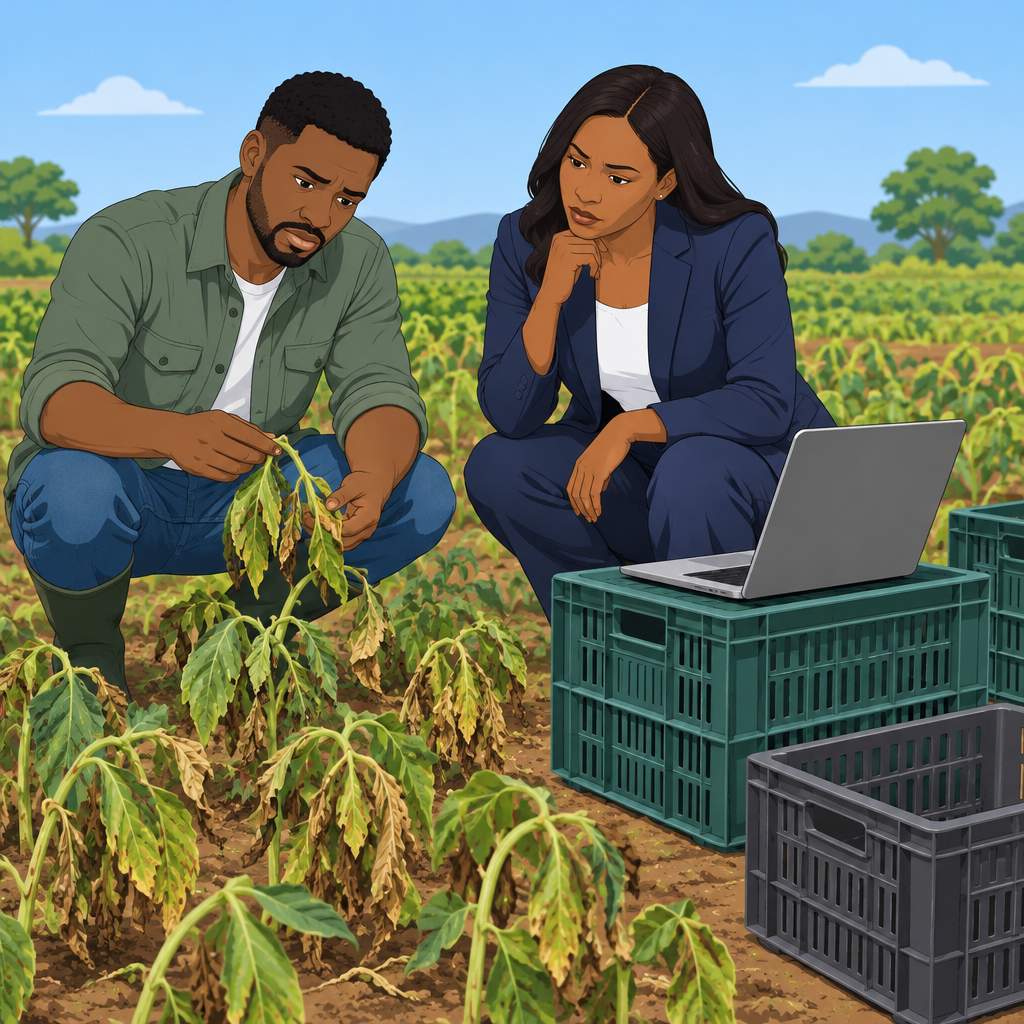
Climate Change and Environmental Degradation
Climate change and environmental degradation create serious challenges for Nigerian agricultural businesses.
These pressures threaten agricultural productivity, sustainability, and long-term business stability.
Therefore, farmers and other stakeholders must address environmental risks through practical and sustainable measures.
Increasing Droughts, Floods, and Extreme Weather Events
Unpredictable weather patterns can cause crop failures and financial losses for farmers.
Droughts reduce water availability and crop productivity, while floods can destroy crops and agricultural infrastructure.
Additionally, extreme weather can disrupt planting and harvesting schedules, reducing yields and business profits.
- Droughts can create water shortages and reduce crop productivity.
- Floods can destroy crops, farms, roads, storage facilities, and other infrastructure.
- Extreme weather events can interrupt planting and harvesting activities.
Soil Erosion, Deforestation, and Agricultural Pollution
Improper land management can accelerate soil erosion and reduce agricultural soil fertility.
Deforestation removes vegetation, reduces biodiversity, and disrupts local ecosystems.
Furthermore, pollution can contaminate soil and water, creating health risks for farmers and consumers.
- Soil erosion can degrade land and weaken its agricultural productivity.
- Deforestation can increase erosion and reduce biodiversity across affected areas.
- Chemical fertilizers, pesticides, and industrial waste can pollute soil and water sources.
Effects on Crops, Livestock, and Agricultural Sustainability
Heat stress, water shortages, and pest infestations can reduce crop yields.
Changing temperatures and rainfall patterns can weaken livestock health and reduce productivity.
Over time, environmental degradation can threaten food security and economic stability in Nigeria.
- Climate change can reduce harvests and increase losses for agricultural businesses.
- Livestock can experience health problems when environmental conditions change.
- Environmental damage can weaken the agricultural industry’s long-term sustainability.
The Nigerian government and agricultural stakeholders should promote sustainable farming practices.
They should also invest in climate-resilient technologies and strengthen environmental conservation.
These actions can improve agricultural resilience and support food security for future generations.
Discover More: Balancing Tradition and Innovation in Nigerian Agriculture
Poor Market Access and Post-Harvest Losses
- Limited infrastructure for market linkages and distribution channels
- Lack of storage facilities and poor handling practices cause significant post-harvest losses
- Challenges limit access to domestic and international markets for Nigerian agricultural products
These challenges reduce farmers’ ability to connect efficiently with consumers and expand their businesses.
Furthermore, weak distribution systems can reduce sales and lower profits for agricultural businesses.
Improving market connections and product handling can strengthen Nigeria’s agricultural business industry.
Market Access Challenges
Poor market access remains a major challenge for Nigeria’s agricultural business industry.
Limited infrastructure prevents farmers from reaching consumers efficiently through reliable distribution channels.
Consequently, farmers may experience reduced sales and lower profits from their agricultural products.
Post-Harvest Losses
Insufficient storage facilities and poor handling practices contribute to significant post-harvest losses.
Without suitable storage, perishable products can spoil before farmers sell them.
Improved storage and handling infrastructure can reduce waste and increase agricultural business profits.
Domestic and International Market Access
Nigerian agricultural products face difficulties entering both domestic and international markets.
These restrictions limit industry growth and prevent farmers from exploring additional market opportunities.
Better infrastructure and distribution channels can help farmers reach wider consumer markets.
Addressing these challenges can support the development and growth of Nigeria’s agricultural business industry.
Farmers can reach more consumers by improving storage facilities, infrastructure, and market linkages.
These improvements can strengthen access to consumers within Nigeria and beyond its borders.
Explore Further: Agricultural Business Financing Options in Nigeria
Policy and Regulatory Challenges
Agricultural businesses face significant policy and regulatory challenges in Nigeria.
Inconsistent government policies create uncertainty and discourage investment across the agricultural sector.
When authorities poorly design or implement policies, businesses struggle to plan growth.
Consequently, investors may delay decisions, limiting expansion and sector development.
- Inconsistent government policies affect agricultural businesses and investment decisions.
- Bureaucratic hurdles and corruption complicate permits and licensing processes.
- The industry needs policies that promote investment, innovation, and sustainable growth.
Furthermore, bureaucratic hurdles and corruption can obstruct access to necessary permits and licenses.
Entrepreneurs often face long, tedious procedures before starting or expanding agricultural businesses.
These delays can discourage entrepreneurs and hinder efficient business operations.
The government should create an enabling environment that encourages private sector participation in agriculture.
Additionally, policymakers should provide investment incentives and encourage innovation within agricultural businesses.
Streamlined permit procedures would reduce bureaucratic red tape and improve operational efficiency.
Addressing these challenges can attract investment, support innovation, and strengthen Nigeria’s agricultural business industry.
Strengthening Nigeria’s Agricultural Business Industry
The Nigerian agricultural business industry still faces four major challenges: limited finance, weak infrastructure, poor market linkages, and climate change.
Therefore, stakeholders must collaborate to provide financial support, improve infrastructure, create market opportunities, and promote climate-smart agriculture.
Government, private businesses, and other stakeholders can coordinate these efforts to strengthen the industry.
A stronger agricultural industry can support food security, create jobs, and advance economic development in Nigeria.
Furthermore, agriculture remains essential to the nation’s economic progress.
All stakeholders should therefore address these challenges and unlock the full potential of Nigeria’s agricultural business industry.
Additional Resources
Google search results for Challenges Facing Nigerian Agricultural Business Industry Agriculture
Bing search results for Challenges Facing Nigerian Agricultural Business Industry Agriculture


