




Dental Crowns and Bridges
What are dental crowns and bridges?
Dentists cement these restorations onto existing teeth or implants.
Crowns cover damaged teeth, while bridges replace missing teeth.
They serve both restorative and cosmetic purposes.
Dental crowns and bridges help maintain oral health.
They preserve tooth structure, prevent further damage, and improve aesthetics.
Types of Dental Crowns
Dental crowns use several different materials.
Each material offers distinct advantages.
Each material also has potential drawbacks.
Ceramic Crowns
- Many patients choose ceramic crowns for dental restorations.
- Ceramic crowns provide a natural look that blends with surrounding teeth.
- They work well for front teeth when aesthetics receive priority.
- However, ceramic crowns may chip or crack more easily than other materials.
Porcelain Crowns
- Porcelain crowns provide another common option for dental restorations.
- They resist stains more effectively than ceramic crowns.
- Porcelain crowns offer durability and strength for molars and back teeth.
- However, they may appear less translucent than ceramic crowns.
Metal Crowns
- Manufacturers typically make metal crowns from gold alloy, palladium, or other metals.
- These crowns withstand the forces of chewing and biting.
- Metal crowns resist chipping and breaking better than ceramic or porcelain crowns.
- However, some patients prefer less noticeable materials because metal looks less natural.
Choosing the Best Type of Crown
Patients should consider several factors when selecting a crown material.
Durability, aesthetics, location, and cost can influence that decision.
Ultimately, each patient needs an option that matches personal priorities.
Durability
Durability matters when patients prioritize long-term performance.
Metal crowns provide an especially durable option.
They withstand chewing and biting forces effectively.
Aesthetics
Aesthetics matter when patients focus on their smiles.
Ceramic crowns can mimic the appearance of natural teeth.
Porcelain crowns also provide a tooth-colored restoration option.
Location of the Crown
The crown’s location can influence the most suitable material.
Patients may choose ceramic crowns for front teeth when appearance matters.
Porcelain crowns can suit molars and back teeth because of their strength.
Cost
Cost can also influence a patient’s choice.
Metal crowns typically cost less than ceramic or porcelain options.
Patients can weigh affordability alongside durability and appearance.
The best crown material depends on each patient’s needs and preferences.
Dental Crown Procedure
A dental crown can restore a tooth’s function.
It can also improve the tooth’s appearance.
The procedure follows several important stages.
Examination
- Before treatment, your dentist examines the tooth to determine whether a crown suits your needs.
- Your dentist may take X-rays to evaluate the tooth and surrounding tissues.
- The dentist discusses crown materials and helps you choose an appropriate option.
Tooth Preparation
- Your dentist removes decay or damage from the tooth.
- Next, the dentist shapes the tooth to create room for the crown.
- The dentist takes impressions to support a custom fit.
Dental Impressions
- During the visit, your dentist records impressions of the prepared tooth.
- These impressions help create a crown that fits the prepared tooth.
- A dental laboratory uses the impressions to make your custom crown.
Temporary Crown
- While the laboratory makes your permanent crown, your dentist places a temporary crown.
- The temporary crown protects the prepared tooth during this waiting period.
- Avoid sticky or hard foods to help prevent the temporary crown from dislodging.
Permanent Crown Placement
- Once the permanent crown arrives, your dentist places it on the prepared tooth.
- The dentist adjusts the crown to improve its fit and comfort.
- Finally, the dentist bonds the crown securely and checks its natural appearance.
Common Concerns About Crowns
Many patients have concerns about receiving a dental crown.
Addressing these concerns can make the procedure feel more manageable.
Your dentist can explain each stage and answer questions about treatment.
- Local anesthesia numbs the tooth and surrounding tissues during the procedure.
- Over-the-counter pain medication may help manage soreness or sensitivity afterward.
- Crowns can restore damaged teeth as well as improve their appearance.
Care After Crown Placement
Proper care supports the crown’s longevity and helps protect your oral health.
Daily cleaning removes plaque that can collect around the crown.
Regular dental visits help your dentist monitor the crown’s condition.
- Brush and floss regularly to prevent plaque buildup around the crown.
- Avoid hard or sticky foods that could damage or dislodge the crown.
- Visit your dentist regularly for check-ups and any needed adjustments.
Explore Further: Professional Associations for Optometrists in Nigeria
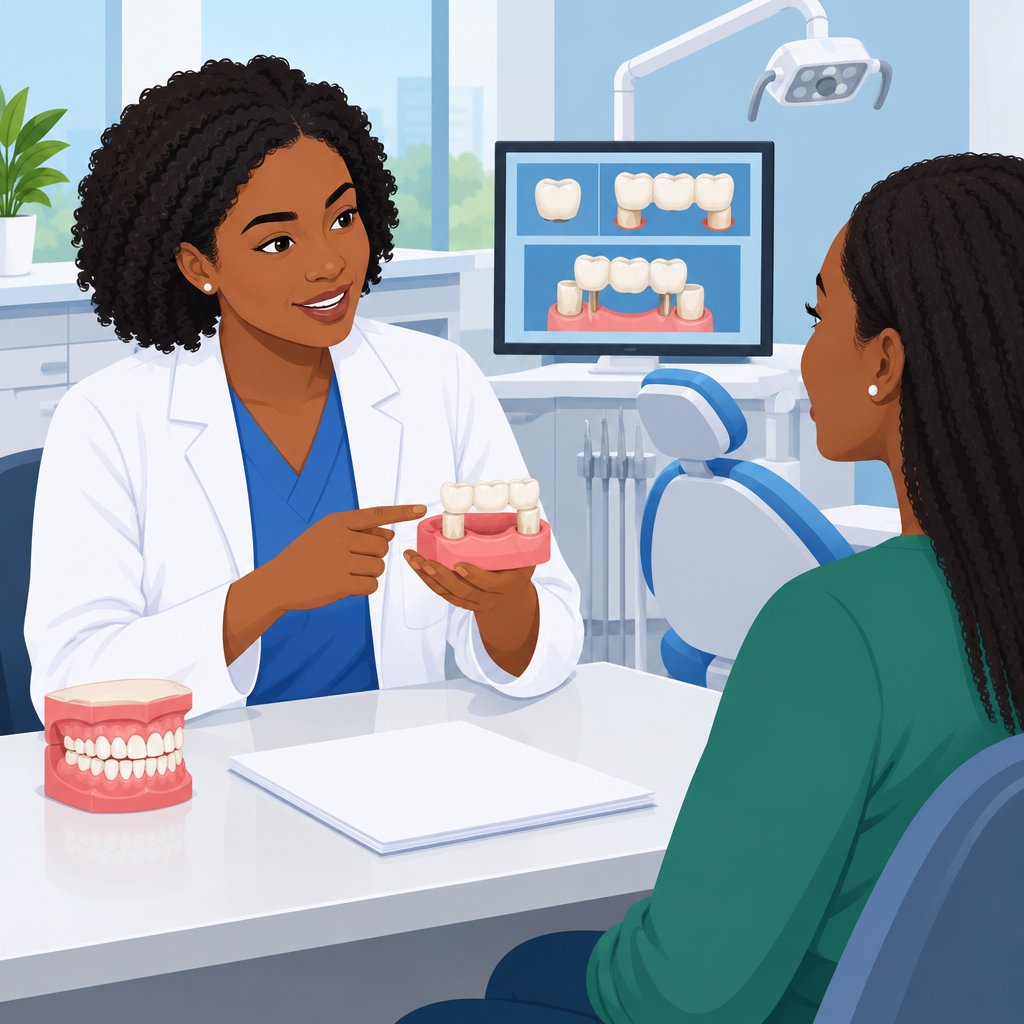
Benefits of Dental Crowns
- Dental crowns restore the shape, size, and function of damaged teeth.
- Dental crowns improve the appearance of teeth.
- Dental crowns provide long-term benefits by preventing further dental issues.
Learn More: Role of Anaesthesiologists in Nigerian Hospitals
Types of Dental Bridges
Dental bridges replace missing teeth with prosthetic devices.
Unlike crowns, bridges span gaps created by missing teeth.
Crowns cover individual damaged teeth instead.
Traditional Dental Bridges
- Traditional bridges use a false tooth held by crowns on both sides of the gap.
- They offer a cost-effective, simple procedure that restores chewing function.
- However, they require healthy neighboring teeth and may affect those teeth.
Cantilever Dental Bridges
- Cantilever bridges support a false tooth with one dental crown.
- They affect fewer adjacent teeth and suit areas with fewer teeth.
- However, the crown may detach more easily and place stress on the supporting tooth.
Maryland Dental Bridges
- Maryland bridges use metal or porcelain wings bonded behind adjacent teeth.
- They require minimal preparation and preserve more adjacent tooth structure.
- However, they do not suit molars and offer less strength than other bridges.
Implant-Supported Dental Bridges
- Implant-supported bridges use dental implants placed surgically in the jawbone.
- They provide a natural feel and avoid relying on neighboring teeth.
- However, they require more invasive surgery, higher costs, and longer treatment times.
Each bridge type offers different advantages and disadvantages.
Transform Your Career with Expert Guidance
Get personalized mentorship consulting that’s tailored to your unique path. Our expert advice is actionable and exclusive.
Get StartedTherefore, consult your dentist about the option that suits your oral health.
Uncover the Details: Mental Health First Aid: Tips for Nigerians
Procedure for Getting Dental Bridges
- Preparation of adjacent teeth
- Impression of the prepared area
- Placement of a temporary bridge
- Final placement of the permanent bridge
First, your dentist prepares the teeth beside the gap.
The dentist shapes these adjacent teeth to create room for the bridge.
Next, the dentist takes an impression of the prepared area.
This impression helps create a custom-fit bridge that blends with your natural teeth.
Meanwhile, a temporary bridge protects your teeth while the permanent bridge is being made.
The temporary bridge also helps maintain your dental appearance and function.
Finally, your dentist places the permanent bridge.
Porcelain or ceramic materials provide strength for daily biting and chewing.
With proper care, a dental bridge can last for many years.
Durability and Longevity of Dental Bridges
- Dental bridges are designed to remain durable and long-lasting.
- Proper care can help a bridge last 10 to 15 years or longer.
- Regular dental check-ups help confirm that the bridge remains in good condition.
- Check-ups can identify decay or bridge damage early.
Many patients worry about how long dental bridges will last.
Fortunately, dental bridges can withstand the daily pressure of biting and chewing.
Regular brushing and flossing support the health and longevity of your bridge.
Additionally, regular dental check-ups help your dentist monitor the restoration.
During these appointments, your dentist checks for damage, decay, or other problems.
Early treatment can prevent larger problems and preserve a healthy, functional smile.
Oral Hygiene and Maintenance for Dental Bridges
- Proper oral hygiene helps maintain the health of your dental bridge.
- Regular brushing and flossing reduce plaque around the bridge and adjacent teeth.
- Fluoride toothpaste helps strengthen the enamel of your natural teeth.
- Regular dental visits help monitor your bridge through check-ups and cleanings.
Good oral hygiene supports the health and longevity of your dental bridge.
Brush and floss regularly to reduce plaque and bacteria around the bridge.
These habits also lower the risk of decay and gum disease.
Furthermore, fluoride toothpaste strengthens natural tooth enamel against cavities and decay.
An antibacterial mouthwash may also reduce the risk of infections around the bridge.
Regular dental check-ups and cleanings allow your dentist to monitor the bridge.
Your dentist can identify damage or wear and address problems promptly.
Consistent care helps keep your dental bridge strong and functional for many years.
Explore Further: Choosing the Right ENT Surgeon in Nigeria
Benefits of Dental Bridges
- Improves oral health by filling gaps left by missing teeth
- Enhances chewing and speaking ability for better functionality
- Boosts confidence and self-esteem by enhancing smile aesthetics
Dental bridges provide several benefits for people with missing teeth.
They improve oral health, restore daily function, and support a more confident smile.
These restorations address practical concerns while also improving smile appearance.
Understanding these advantages can help patients consider their options.
Improved Oral Health
A dental bridge fills the space left by a missing tooth.
Neighboring teeth may shift into that space and create alignment concerns.
By occupying the gap, the bridge helps maintain the proper arrangement of the teeth.
Enhanced Chewing and Speech
Missing teeth can make chewing uncomfortable or difficult.
A bridge restores a biting surface, helping people chew food more effectively.
It can also support clearer speech and more confident communication.
Greater Smile Confidence
Spaces from missing teeth can affect a person’s self-esteem.
A dental bridge completes the visible smile and improves its appearance.
As a result, many people feel more comfortable in social situations.
Making Informed Restoration Decisions
Dental crowns and bridges restore damaged or missing teeth.
Furthermore, professional dental care helps ensure the best results from these procedures.
Therefore, readers should schedule a dentist consultation to learn how these treatments may benefit them.
Additional Resources
Google search results for Dental Crowns and Bridges: What to Expect Medical
Bing search results for Dental Crowns and Bridges: What to Expect Medical


